How to Reroof a Shingle Roof Queens NY – Full Process Guide | Free Quotes
Blueprint’s how you treat a reroof in Queens-you don’t start by picking shingles or calling for a dumpster, you start by crouching at the eave, lifting one shingle tab where the gutter meets the roof, and physically checking what’s hidden underneath before you promise anyone a price or a timeline. I’m going to walk you through the whole reroof process by following the water path, from that first lifted edge all the way to the ridge cap, because if you understand where a raindrop wants to go, the rest of it makes sense.
Start Where the Water Starts: Checking What’s Under Your Shingles
At the edge of the roof, right where the gutters meet the shingles, is where I always start-on one August afternoon in Ridgewood, about 94 degrees and the shingles practically melting in my hands, I opened up what the homeowner swore was a “simple reroof, only one layer,” and found three old layers underneath like a lasagna stack: 1950s three-tab, 80s architectural, early 2000s patchwork. I called her up the ladder to show her each one because I’m never promising a price or a schedule on a reroof until I’ve physically lifted a shingle edge and seen what’s hiding. You follow the water-ask where a raindrop lands when it hits that eave, how it flows down to the gutter, and what layers or gaps it might sneak behind along the way-and you think like a raindrop before you touch a pry bar. If you skip this first lift and just start tearing or overlaying, you’re not reroofing, you’re gambling.
In Queens, that first check matters even more because of the older housing stock, the two- and three-family homes that have been reroofed multiple times over seventy years, and the snow-ice-thaw cycles that sit heavy on the eaves and valleys. Water from a rainstorm or melting snow at your gutter edge is the start of the whole system, and if the deck underneath is spongy, or if there are already two layers instead of one, or if the underlayment is brittle tar paper from decades ago, you’re setting yourself up to pay twice-once for the cheap “overlay” and once for the full tear-off six months later when your ceiling stains appear. Skipping that physical confirmation of what’s under the shingles is skipping the part where you control the water path from the very first inch.
Should You Overlay or Fully Tear Off Your Shingle Roof in Queens?
START: Lift a shingle at the gutter edge and count layers.
Q1: Do you see more than one existing shingle layer?
→ Yes: Full tear-off required (Queens code + weight on old framing).
→ No: Go to Q2.
Q2: Is the decking under that shingle solid (no bounce, no rot, no crumbling)?
→ No: Full tear-off required to replace bad plywood/boards.
→ Yes: Go to Q3.
Q3: Any signs of leaks inside (stains on ceilings/walls, peeling paint) under that area?
→ Yes: Full tear-off strongly recommended to trace water path and fix flashing/underlayment.
→ No: Go to Q4.
Q4: Is your home likely older than 40 years (most of Queens housing)?
→ Yes: Tear-off recommended due to hidden layers and old nails.
→ No: Overlay possible but not ideal-talk through pros/cons before deciding.
Step-by-Step Reroof Sequence: Think Like a Raindrop in Queens
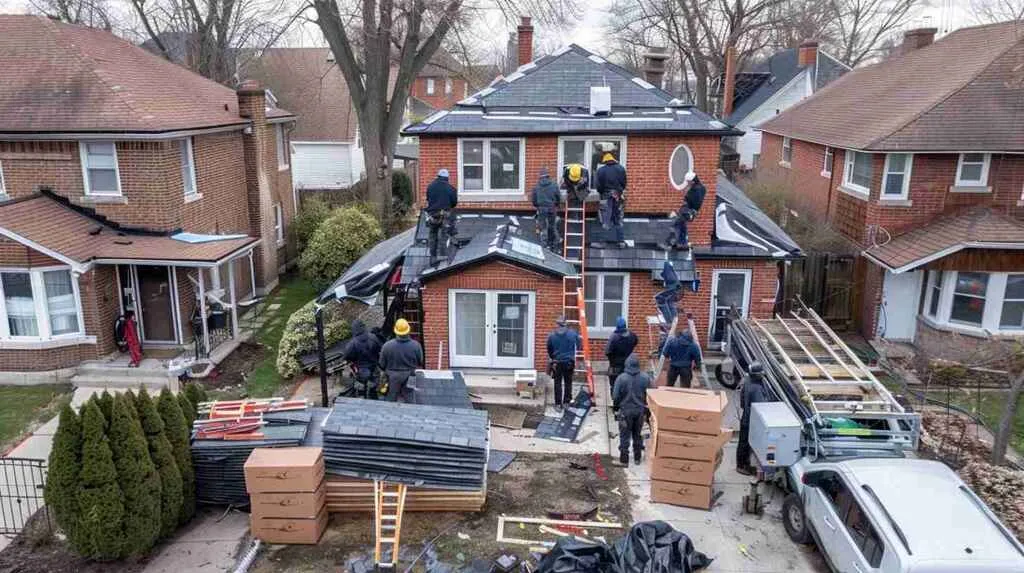
I’ll be blunt: if you haven’t checked what’s under your existing shingles, you’re not “reroofing,” you’re gambling. Another time, in Maspeth in late October, we started a tear-off at 7:30 a.m. under clear skies, and by noon a surprise coastal storm rolled in off the Atlantic while we had half the south slope stripped down to the deck-I’ll never forget sprinting across wet rafters with a roll of synthetic underlayment while my foreman stapled like he was playing a drum solo, and we got that slope dried-in with ice & water shield just as the heavy rain hit. Standing in the attic afterward, seeing not a single drop come through, that’s when I understood the sequence of a reroof matters more than the brand of shingle. You think like a raindrop: where does it land when it hits the ridge? How does it flow down the slope, past each course of shingles, past every valley and chimney, until it drips cleanly into the gutter? In Queens, with weather swinging from coastal storms off the Atlantic to sudden summer cloudbursts, and with roof styles ranging from small capes to attached row houses with party walls, the sequence is everything-if you dry-in one slope before moving to the next, water can’t find a shortcut through your half-finished work.
Here’s the real reroof sequence when you follow the water path through each step: you tear off shingles and underlayment down to bare deck, cleaning every nail and scrap so water has a smooth surface instead of bumps and punctures. Then you inspect and replace rotten or spongy plywood or boards, especially at eaves and around chimneys where water likes to sit and soak in over years. Next, you install ice & water shield at eaves, valleys, and around every penetration to block backed-up snowmelt and wind-driven rain that tries to crawl uphill under the shingles. Roll out synthetic underlayment from eave to ridge with correct overlaps so water always sheds onto the layer below it, never behind it. Flash chimneys, skylights, and walls with step flashing and counterflashing, directing water back onto the shingle surface instead of letting it sneak behind siding or masonry. Install starter strip shingles at eaves and rakes with the correct overhang, forming the first controlled drip edge for water into the gutter. Lay field shingles in straight lines with correct nail placement and stagger so water flows down the courses without finding shortcuts between tabs. Finally, cut in and install ridge caps and vents, letting hot, moist air escape so condensation doesn’t become a hidden leak from the inside out.
Here’s an insider tip about working efficiently in Queens weather: always dry-in one full slope-deck repair, underlayment, flashing-before lunch, and never leave a south-facing slope exposed overnight because that’s where surprise afternoon storms hit hardest and where the sun heats everything into a sweatbox by 10 a.m. Every single step in that sequence is anchored to the question, “where does the water go next?”-if you can’t answer that for each layer, you’re inviting leaks you won’t see until they’re dripping on your ceiling six months later.
Full Reroof Sequence on a Queens Shingle Roof (Water-Path Focused)
- Strip shingles and underlayment down to bare deck, cleaning nails and debris so water has a smooth path without punctures or ridges to catch on.
- Inspect and replace rotten or spongy plywood/boards, especially at eaves and around chimneys where water likes to sit and soak through over the years.
- Install ice & water shield at eaves, valleys, and around penetrations to block backed-up snowmelt and wind-driven rain that tries to crawl uphill under the shingles.
- Roll out synthetic underlayment from eave to ridge with correct overlaps, so water always sheds onto the layer below, never behind it.
- Flash chimneys, skylights, and walls with step flashing and counterflashing, directing water back onto the shingle surface instead of behind it.
- Install starter strip shingles at eaves and rakes with correct overhang, forming the first controlled drip edge for water into the gutter.
- Lay field shingles in straight lines with correct nail placement and stagger, so water flows down the courses without finding shortcuts between tabs.
- Cut in and install ridge caps and vents, letting hot, moist air escape so condensation doesn’t become a hidden leak from the inside out.
What It Really Costs to Reroof a Shingle Roof in Queens, NY
$9,000 on one house in Bayside and $15,500 on a seemingly “similar” cape in Middle Village-that’s the range I quoted last spring, and here’s why costs swing so much in Queens: layers, access, plywood condition, steepness, and chimneys all change how long it takes and how much material ends up in the dumpster. I had a retired engineer in Bayside who wanted to understand every detail of his reroof-nail spacing, vent calculations, even pitch ratios-so on a cool, dry morning in May, I ended up drawing his whole roof system on the back of a pizza box using colored Sharpies, explaining airflow through his soffits and ridge like it was a subway map. Midway through, he caught mistakes from his last roofer just from my sketch, and that’s how I explain costs now: you’re paying for what controls water-underlayment that sheds rain in the right direction, flashing that keeps chimneys from leaking, ventilation that stops condensation from rotting your deck, and skilled labor that knows the sequence. Never compare quotes without confirming whether underlayment, flashing, ventilation, and wood replacement are included line by line, because that’s where the real water-control work lives, not just the shingles on top.
Typical Reroof Price Ranges for Queens Shingle Roofs
(Labor + Materials)
| Scenario | Roof Type / Condition | Approx. Price Range | Notes (Water-Path Factors) |
|---|---|---|---|
| 1 | Small one-family cape, single layer, decent decking | $7,500 – $10,000 | Basic tear-off, new underlayment, standard flashing; water path is simple and short. |
| 2 | Two-family in Ridgewood with two existing layers | $11,000 – $15,000 | Extra labor and dump fees, more plywood surprises; more edges and penetrations for water to find. |
| 3 | Bayside colonial with multiple valleys and a big chimney | $13,000 – $18,000 | Complex water paths: extra ice & water, step flashing, and ridge venting. |
| 4 | Attached row house in Astoria, tight access | $9,000 – $14,000 | Labor-intensive setup, careful tie-in at party walls so water doesn’t run into the neighbor’s house. |
| 5 | Older Jackson Heights home with bad plywood at eaves | $12,000 – $17,000 | Significant deck repair where water has sat for years; critical to reset the whole water path from deck up. |
DIY vs Pro in Queens: Where a Handy Homeowner Can Help (and Where You Shouldn’t Touch It)
When I come to your house in Queens and you ask, “Can I just put new shingles over these?” here’s what I look at first: how many layers are already there, whether the decking bounces when I step on it, if your attic shows any daylight through nail holes, and whether your chimney or skylight flashing is open or missing. I’m thinking like water-where would a raindrop sneak in if you cut corners and just slapped new shingles on top of old, brittle underlayment and hidden rot? If the answer is “everywhere,” then no, you can’t overlay, and yes, you need a full tear-off. Every evaluation starts with following the water path: does the existing system actually control where rain and snowmelt go, or is it just a stack of patches hoping gravity does the work?
If you’re handy, here’s what you can safely do: look under a few shingle tabs at the eave from a secured ladder to count layers, check your attic after a storm for new stains or damp insulation, clean gutters and make sure downspouts discharge away from the foundation, snap photos of suspicious areas like chimneys or skylights to show a roofer, and compare written quotes line by line to confirm they include underlayment, flashing, and vents. But leave the real work to a licensed pro: full tear-off and disposal of one or more layers, replacing rotten or uneven plywood so water doesn’t pond or track sideways, installing ice & water shield and synthetic underlayment with correct laps, walking steep or slick pitches (especially on attached houses where you’re tying into a neighbor’s roof), working near power lines, and designing a complete ventilation system tuned to your roof layout. In Queens, you’ve got everything from flat roofs in Astoria to steep pitches in Bayside, and each one has different access challenges and code requirements-what looks like a simple weekend project can turn into a dangerous mess if you don’t know how to keep water flowing in the right direction at every single seam.
⚠️ Why Layering New Shingles Over Old Ones in Queens Is Usually a Bad Idea
Overlaying new shingles on top of old ones might look cheaper on paper, but in Queens it often traps heat, hides rotten decking, and keeps you from fixing the very spots where water is sneaking in-chimneys, valleys, and low eaves. Once you add the extra weight to older framing and skip fresh underlayment and flashing, you’re asking that first coastal storm to do your inspection for you, from inside your living room ceiling.
Queens-Specific Reroof Questions Answered
Queens roofs deal with subway soot settling on shingles, coastal storms rolling in off the Atlantic, and framing that’s often older than most of the people reading this, so the questions I get are about how those realities affect a shingle reroof and the way water moves across these particular roofs. Here’s what homeowners ask most.
How long does a full shingle reroof usually take in Queens?
Most one- or two-family homes take 1-3 days for a full tear-off and reroof, depending on layers, wood repair, and details like chimneys or skylights. We plan the sequence slope by slope so each area is torn off, dried-in with underlayment, and shingled before the next storm line can catch us off guard.
Do I really need ice & water shield if I’m in Queens and not upstate?
Yes-Queens still sees ice dams at the eaves and valleys, especially on north-facing slopes and over uninsulated soffits. Ice & water shield is the safety net for when melting snow backs up under shingles instead of flowing neatly into the gutter.
Can you reroof in winter around here?
We can reroof through most of the year, but we’re picky about temperature and wind when it comes to shingle sealing and underlayment handling. The key is scheduling on days when the shingles can warm enough to seal and making sure every slope is watertight before sundown.
What kind of warranty should I expect on a Queens shingle reroof?
You should see both a manufacturer material warranty and a written workmanship warranty from your roofer. At Shingle Masters, we spell out exactly what’s covered, because if the system was built as a system-deck, underlayment, flashing, shingles, vents-the warranty is really about keeping that water path controlled for the long haul.
How do I know if my ventilation is enough for Queens humidity?
We calculate intake and exhaust based on your attic square footage and roof design, then confirm with what we see-mold, rusted nails, or uneven shingle aging are red flags. Proper soffit and ridge venting keeps humid air moving out so condensate doesn’t become a slow, invisible roof leak.
Why Queens Homeowners Hire Shingle Masters for Reroofs
- ✓ Licensed and fully insured to work on homes across Queens, NY.
- ✓ 17+ years of hands-on roofing experience from Jackson Heights to Bayside.
- ✓ Fast, honest quoting after physically lifting shingle edges and checking layers.
- ✓ Emergency dry-in capability when surprise coastal storms hit mid-job.
Truth is, a Queens reroof lives or dies on controlling the water path-from that first lifted shingle at the eave to the final ridge cap that lets air out and keeps rain off your attic insulation-and Shingle Masters handles the full process with on-roof inspections, clear pricing, and written quotes that spell out what you’re paying for. If you’re ready for a no-pressure reroof assessment and a line-by-line quote on your Queens home, call us today and we’ll start by lifting that first shingle together.