How to Replace an Asphalt Shingle Roof Queens NY – Full Guide | Free Quotes
Honestly, the biggest mistake I see on Queens blocks-Jackson Heights, Woodhaven, Bayside, wherever-is homeowners thinking roof replacement is just about shingles. It’s not. Your shingles are just the outer layer, and if you replace them without fixing what’s underneath-underlayment, flashing, ventilation, rotten sheathing-you’re basically putting new train cars on bad tracks. I’m Carlos, I’ve been replacing asphalt shingle roofs across Queens for 19 years, and I treat every roof like a subway line where one weak junction can back everything up, leak into your living room, and cost you twice as much a few winters later.
On a typical Queens block: what really fails first on an asphalt shingle roof
On a typical Queens block, if you look up at ten roofs in a row, you’ll see at least three with the same problem: new-looking shingles covering old, failing underlayment and cheap flashing patches that leak at the first ice dam or windstorm. Most Queens homes-whether you’re in a tight row house with shared walls, a small detached in Rego Park, or a four-story walk-up in Jackson Heights-already have two layers of shingles, and the real weak links aren’t visible from the street. They’re the felt paper that’s turned to dust, the step flashing at dormers that was never installed correctly in the first place, and attic ventilation that’s been blocked by insulation or just doesn’t exist. One August afternoon in Woodhaven, it was about 95°F and we were halfway through tearing off a two-layer roof on a narrow row house when the homeowner came home early and saw daylight through their attic boards and panicked-I walked them up to the sidewalk and explained that for three hours their house was “between trains,” old roof gone, new roof in progress, and that’s exactly when you find hidden rot and bad 1980s duct-tape patches. We discovered sheathing that changed the whole scope, but we still got them dried-in before the evening thunderstorm. If your contractor talks only about shingles and not about underlayment, flashing, and ventilation, that’s a red flag and I’d keep looking.
Here’s what makes Queens different: tight lots, shared party walls, driveways barely wide enough for a work van, and neighbors two feet away mean every tear-off and replacement has to be staged carefully. In Jackson Heights or Woodhaven, you can’t just throw debris off the side of the house-you need chutes, tarps, and a plan for protecting the neighbors’ yards and windows. Weather matters too: summer heat softens self-adhered membranes so they seal better, but winter cold makes them brittle and you have to adjust timing and technique or risk leaks the first thaw. On row houses and semi-detached homes, drainage and flashing at party walls and parapets are critical because one bad detail sends water sideways into shared structure, and that turns into calls from angry neighbors and potential code violations. If you skip these local details and try to run a “one day, any house” replacement, you’re setting up bottlenecks that’ll bite you within a year.
Common Misconceptions About Replacing an Asphalt Shingle Roof in Queens, NY
| Myth | Fact |
|---|---|
| “If the shingles look worn, I just need a new layer over the old one.” | In Queens, many roofs already have 2 layers; adding more hides rotten sheathing and bad flashing, and often violates code. |
| “Shingle replacement doesn’t affect my attic or ventilation.” | Shingles, underlayment, vents, and soffits work like a whole subway line; one blocked vent can overheat shingles and shorten roof life. |
| “A one-day roof job is always better and cheaper.” | Fast tear-off with no time to fix sheathing, flashing, and ventilation is like skipping track repairs-quicker today, expensive tomorrow. |
| “Flashing only matters around chimneys.” | Queens roofs leak at valleys, sidewalls, and dormers just as often; those flashing details are usually the first failure points. |
| “Any roofer can work the same way on every house.” | Attached row houses, semi-detached homes, and small multifamily walk-ups in Queens all need different staging and drainage details. |
Why Trust Carlos and Shingle Masters for Queens Shingle Replacements
-
✓
Licensed in NYC for residential roofing – all work meets Department of Buildings requirements for Queens properties -
✓
Fully insured for liability and workers’ comp – protecting you, your neighbors, and our crew on tight Queens lots -
✓
19+ years replacing asphalt shingle roofs across Jackson Heights, Woodhaven, Bayside, Rego Park, Corona, and every other Queens neighborhood -
✓
Same-day tarp and temporary dry-in if tear-off reveals surprise damage and weather’s moving in -
✓
Familiar with DOB permitting and multi-layer tear-off rules for Queens attached and detached properties
How I decide if your Queens shingle roof needs full replacement or repair
When I sit at your kitchen table and you ask, “Do we really need to tear everything off?”, here’s exactly how I decide: I look at the number of shingle layers you’ve got, the condition of the sheathing underneath, attic moisture and ventilation, the history of your flashing, and any interior stains or peeling paint on top-floor ceilings. In Rego Park, older homes from the 1920s and 30s often have original sheathing that’s held up fine but flashing that’s been patched ten times with tar and caulk-those need surgical flashing upgrades, not necessarily full replacement if the deck and underlayment are sound and there’s only one shingle layer. In Bayside, you’ll find newer construction from the 60s and 70s where builders cut corners on ventilation, so even if shingles look OK, your attic’s cooking at 150°F in summer and that’s killing the roof from the inside. One winter morning in January, just after sunrise, I was in Bayside on a full replacement where the previous contractor nailed high and skipped underlayment at a valley-during tear-off we found ice-damage lines exactly where the customer always saw interior stains, like an echo of the last five winters, and the temp never got above 30°F that day so I had to walk the homeowner through why we were pausing certain steps, like why self-adhered ice and water membrane goes down differently in the cold and how rushing that would be like sending a train through a track repair zone too soon. Corona and Jackson Heights row houses tend to be older, tight, and already on their second or third roof, so by the time you see a leak, there’s usually hidden rot or bad party-wall flashing that only shows up once you pull the shingles.
Here’s my personal decision tree in plain language: if you’ve got active leaks or recurring stains after every rain, I check the number of layers first. If you’re sitting on two layers already, full tear-off is non-negotiable because adding more or patching hides problems and violates code in most cases. If you’ve only got one layer and leaks are limited to one small, obvious area-like around a chimney or a single valley-a targeted repair with new flashing may buy you a few more years, but only if the underlayment and sheathing in that zone are still solid. If your attic shows mold, frost on nails in winter, or feels like a sauna in summer, ventilation upgrades have to be part of the scope, not an afterthought, because bad ventilation will cook your new shingles and you’ll be back in the same boat in ten years instead of twenty. Winter timing matters: I can do full replacements in cold weather, but I adjust the schedule-watching temps for when membranes and sealants will bond correctly-and sometimes I’ll break the project into shorter, well-timed work windows instead of rushing and compromising details. If you’re near or past the 18-20 year mark and have no leaks yet, you’re probably OK to monitor and schedule an inspection in the next year, but don’t wait until the next big storm to make a call.
Do You Need a Full Asphalt Shingle Roof Replacement in Queens, NY?
Start: Do you have active leaks or recurring stains after heavy rain or snow?
If NO → Is your roof over 18-20 years old or unknown age?
→ If NO → Monitor and schedule an inspection in 12 months.
→ If YES → Check number of shingle layers.
If YES → Check number of shingle layers.
Number of layers: Can you see only 1 layer of shingles at the edges?
If YES (1 layer) → Are leaks limited to one small, obvious area (chimney, skylight, single valley)?
→ If YES → Targeted repair with new flashing may be OK.
→ If NO → Recommend full replacement and system check (underlayment, ventilation, flashing).
If NO (2+ layers) → Full tear-off and replacement is recommended; additional layers can trap moisture and hide rotten decking, especially in Queens row houses.
Attic check: If attic shows mold, frost, or extreme heat → Add ventilation upgrades to the scope, not just shingles.
Typical Queens Asphalt Shingle Roof Replacement Scenarios and Price Ranges
| Scenario | Home Type (Queens example) | Scope | Estimated Range* |
|---|---|---|---|
| Basic tear-off & replace | Small attached row house in Jackson Heights | 1 layer tear-off, new architectural shingles, basic underlayment, minimal flashing work | $8,000 – $11,000 |
| Two-layer removal & sheathing repairs | Semi-detached home in Woodhaven | 2-layer tear-off, replace 5-10 sheets of rotten plywood, upgraded underlayment, new flashing | $11,000 – $16,000 |
| Complex roof with valleys & dormers | 1-2 family in Rego Park | Full tear-off, ice & water in valleys, multiple dormers and sidewall flashing, ridge vent | $15,000 – $21,000 |
| Winter-weather installation plan | Detached home in Bayside | Cold-weather detailing, extra fastening, careful scheduling for membranes and sealants | $12,000 – $18,000 |
| Emergency leak + fast-track replacement | Older Corona row house | Temporary tarp, priority tear-off, full system replacement with code upgrades | $9,000 – $14,000 |
*Actual pricing depends on roof size, access, pitch, and material choices. These are ballpark ranges for planning only.
Step-by-step: how a proper Queens asphalt shingle roof replacement flows
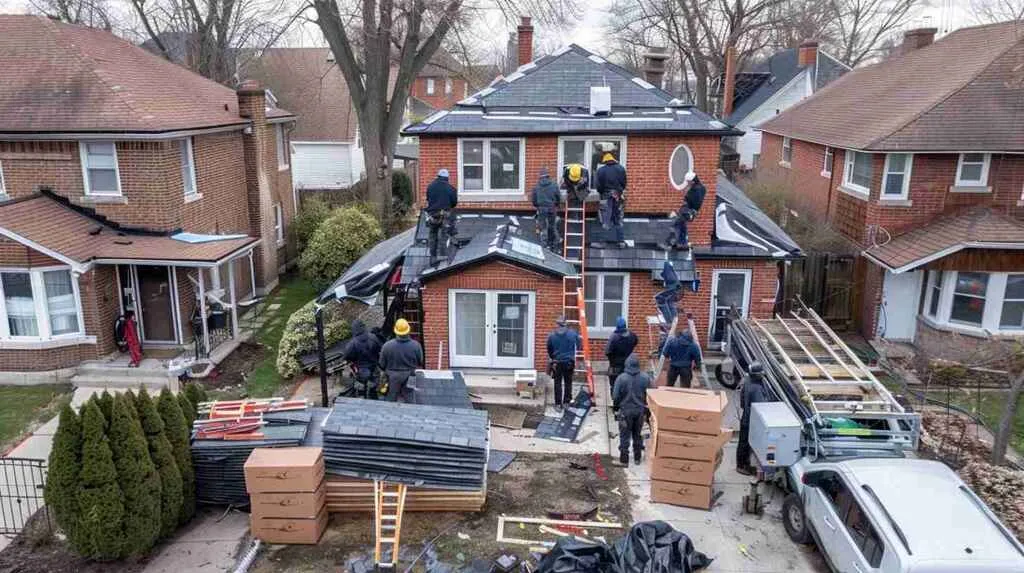
Think of your roof like the 7 train: it only works well when every section of track, signal, and station is doing its job in sequence. A professional replacement starts with staging-covering landscaping and neighbors’ areas, setting up ladders and debris chutes that fit tight Queens driveways-then moves to full tear-off, where we strip all shingle layers and old underlayment down to bare sheathing so hidden rot, bad patches, or someone’s duct-tape “repair” from 1985 are exposed. Next comes deck inspection and repairs: we replace rotten or delaminated plywood, re-nail loose boards, and straighten edges so new shingles have a flat, solid base. After that, we install self-adhered membrane in eaves, valleys, and trouble spots, then synthetic underlayment across the field, lapped the right way so water sheds instead of funneling sideways. Flashing is the most critical junction on the whole line-we rebuild chimney, sidewall, dormer, and valley flashing with proper step flashing and counterflashing instead of caulk-only “fixes”-and if you skip this step or rush it, you’re creating a bottleneck that backs up every storm for the next ten years. One job that sticks with me was a Saturday in late April in Corona, where a couple tried to DIY half their roof and called us when they realized their “YouTube valley” was basically a funnel right into the living room-it had just rained overnight, so I spent my first hour showing them, shingle by shingle, what was wrong: upside-down starter, exposed nail heads, and a ridge vent cut too wide, and instead of just ripping into them, I used their own tools and materials to demo the right sequence so by the time we started the full replacement they understood exactly why the job had gone off the rails. Shingles come next-we lay starter, field shingles, and ridge shingles in manufacturer pattern, nailing in the correct zone and count for local wind conditions-then ventilation tuning, where we add or adjust ridge vents, intake vents, and baffles so the attic “breathes” and doesn’t cook your new shingles. Final walkthrough includes a magnet sweep for nails, photos of critical details, and a walk so you can see how each bottleneck was fixed.
Here’s what’s different in Queens: material hoisting on tight streets means we often hand-carry bundles up narrow staircases or use a hoist from the street when driveways won’t fit equipment, and we have to protect neighboring properties because your row house neighbor is two feet away and doesn’t want shingle debris in their yard. Coordinating around shared party walls and parapets is critical-bad flashing at a shared wall sends water sideways into both structures, and that turns into neighbor disputes and potential code violations. Each step either fixes or worsens the weakest link we found during tear-off: if your valley was the leak point, we rebuild it with ice and water shield and metal flashing so it’s a smooth, sealed junction instead of a funnel; if your attic was cooking at 150°F in summer, we add intake vents at soffits and a continuous ridge vent so air moves through like an express train instead of stalling. Valleys, chimneys, and ridge vents are like transfer stations on the subway-ask your roofer to show you photos of these details after replacement to prove they were done right, because that’s where 90% of callbacks and leaks happen if someone cut corners.
Professional Queens Shingle Roof Replacement Sequence with Carlos
- On-site assessment & photos – Inspect shingles, flashing, attic, and interior ceilings; document issues like soft decking, ice lines, or bad valleys.
- Protection & staging – Cover landscaping and neighbors’ areas, set up ladders and debris chutes that work in tight Queens driveways and side yards.
- Full tear-off – Remove all shingle layers and old underlayment down to bare sheathing so hidden rot, bad patches, or duct-tape “repairs” are exposed.
- Deck repairs – Replace rotten or delaminated plywood, re-nail loose boards, and straighten edges so new shingles have a flat, solid base.
- Underlayment & ice protection – Install self-adhered membrane in eaves, valleys, and trouble spots, then synthetic underlayment across the field, lapped the right way.
- Flashing upgrades – Rebuild chimney, sidewall, dormer, and valley flashing with proper step flashing and counterflashing instead of caulk-only “fixes.”
- Shingle installation – Lay starter, field shingles, and ridge shingles in manufacturer pattern, nailing in the correct zone and count for local wind conditions.
- Ventilation tuning – Add or adjust ridge vents, intake vents, and baffles so the attic “breathes” and doesn’t cook your new shingles.
- Final walkthrough & cleanup – Magnet sweep for nails, photos of critical details, and a walk-through so you see how each bottleneck was fixed.
⚠️ DIY and Cut-Corner Risks During Shingle Replacement in Queens
Common shortcuts that lead to repeat leaks in Queens homes: skipping full tear-off on 2-layer roofs; reusing old flashing around chimneys and sidewalls; nailing shingles too high or too few fasteners; cutting ridge vents too wide or without matching intake; using felt only with no ice & water in valleys; ignoring code-required setbacks on attached row houses. Any of these can turn your roof into a funnel, especially around valleys and party walls.
Before you call for a quote: quick Queens-specific checklist
A little prep makes the quote visit smoother and more accurate-it helps me see the “whole line” of your roof system instead of guessing. Here’s what to have ready before you call Shingle Masters for a Queens shingle roof quote.
What to Have Ready Before Calling Shingle Masters for a Queens Shingle Roof Quote
-
✓
Your best guess at the roof age and whether it has ever been re-roofed (layer added) instead of fully torn off. -
✓
Recent photos of leaks or stains on ceilings or top-floor walls, especially near chimneys, dormers, and exterior walls. -
✓
Any past roofing or repair invoices, even from 10-20 years ago, so we know what’s under there. -
✓
A note of attic conditions: is it unbearably hot in summer, musty, or showing mold/frost on nails? -
✓
Access details: narrow driveway, shared side yard, no alley, or issues getting ladders to the back. -
✓
Your preferred timing window (weekdays vs weekends, avoiding certain months) so we can plan around Queens weather and your schedule.
Deciding If You Need Shingle Masters Urgently or Can Schedule Ahead
| Call ASAP (Urgent) | Can Usually Wait a Few Weeks |
|---|---|
| Active dripping during normal rain, not just extreme storms | Minor ceiling stain that hasn’t grown in the last 6 months |
| Visible shingles missing or torn after a windstorm | Granules in gutters but no leaks inside |
| Soft or spongy spots you can feel when walking on the top-floor hallway | Roof near or just past its expected age but still watertight |
| Water coming in around electrical fixtures or near stairwells | Curled or slightly lifted shingles with no interior damage |
| Any leak near a party wall shared with a neighbor | Planning to sell in 1-2 years and budgeting for a future roof project |
Keeping your new Queens shingle roof on schedule for the long haul
Once your new roof is on, keeping it running smoothly is like keeping trains running on time: you need regular checks at the junctions-valleys, vents, and flashing-and you can’t let small bottlenecks turn into full breakdowns. In Queens, common issues are clogged gutters from street trees, debris piling up at eaves, and snow sitting too long at lower roof edges where it melts and refreezes into ice dams. Clean gutters twice a year so water flows off the roof instead of backing up under shingles. Check from the ground or a safe window after major storms for missing or slipped shingles, and call for a pro inspection every 2-3 years to catch small flashing issues or ventilation imbalances before they leak inside. Your attic should never feel like a sauna in summer or show frost on nails in winter-if it does, your ventilation’s off and you’re shortening your roof’s life. At the 10-12 year mark, have someone walk the roof and check shingle wear patterns and whether upgrades like extra intake vents are needed, because a midlife tune-up can add five years to the back end.
Simple Maintenance Plan for a New Asphalt Shingle Roof in Queens, NY
| Interval | Task | What to Look For |
|---|---|---|
| Every 6 months (spring & fall) | Gutter and downspout cleaning | Granule buildup, standing water near eaves, downspouts draining near foundations or neighbor walls. |
| Every 12 months | Visual roof check from the ground or a safe vantage | Missing or slipped shingles, exposed nails at ridge or flashing points, sagging lines. |
| Every 2-3 years | Professional roof and attic inspection | Ventilation balance, moisture in attic, small flashing issues before they leak inside. |
| After major storms | Storm damage check | Wind-lifted shingles, impact marks from branches, new interior spots or peeling paint. |
| At 10-12 years | Midlife condition review | Shingle wear patterns, attic temperatures, and whether upgrades like extra intake vents are needed. |
Common Questions About Queens Asphalt Shingle Roof Replacement with Shingle Masters
How long does a typical Queens shingle roof replacement take?
Most single-family Queens homes take 1-2 working days, depending on access, number of layers to remove, and how much hidden decking or flashing damage we find. Tight lots and multi-family walk-ups can add time because we stage more carefully to protect neighbors and keep debris under control.
Can you replace my roof in winter in Queens?
Yes, but we adjust the plan: we watch temperatures for when self-adhered membranes and sealants will bond correctly, and we may break the project into shorter, well-timed work windows. Rushing cold-weather details is like running full speed through a track repair-possible, but not smart.
Do I have to be home during the roof replacement?
You don’t have to, but it helps if you’re available by phone for decisions when we uncover hidden issues, like rotten sheathing or bad valleys. We also need interior access at least once to check the attic and top-floor ceilings before and after the job.
What shingle brands and types do you install?
We typically install architectural asphalt shingles from major manufacturers that stand up well to Queens wind and freeze-thaw cycles, along with matching starter, ridge, and accessory components. If you have a preferred brand, we can usually work with it as long as it meets code and performance standards.
Do you handle permits and debris removal?
Yes. For full replacements we handle any required NYC paperwork and arrange for dumpsters or truck hauls that fit in driveways or on the street within local rules. All old roofing, nails, and debris are removed from the site unless you specifically want to keep any materials.
A proper asphalt shingle replacement in Queens is a whole-system job-not just new shingles slapped over old problems-and treating it like a subway line where every junction, signal, and station has to work together means you’ll get twenty-plus years instead of ten. If you’re ready to have me walk your roof like a subway map, identify bottlenecks, and give you a clear, written quote with no surprises, call Shingle Masters and we’ll schedule a time to sit at your kitchen table, look at your attic, and lay out exactly what your roof needs. Free quotes, honest answers, and a crew that’s been working Queens blocks for almost two decades.