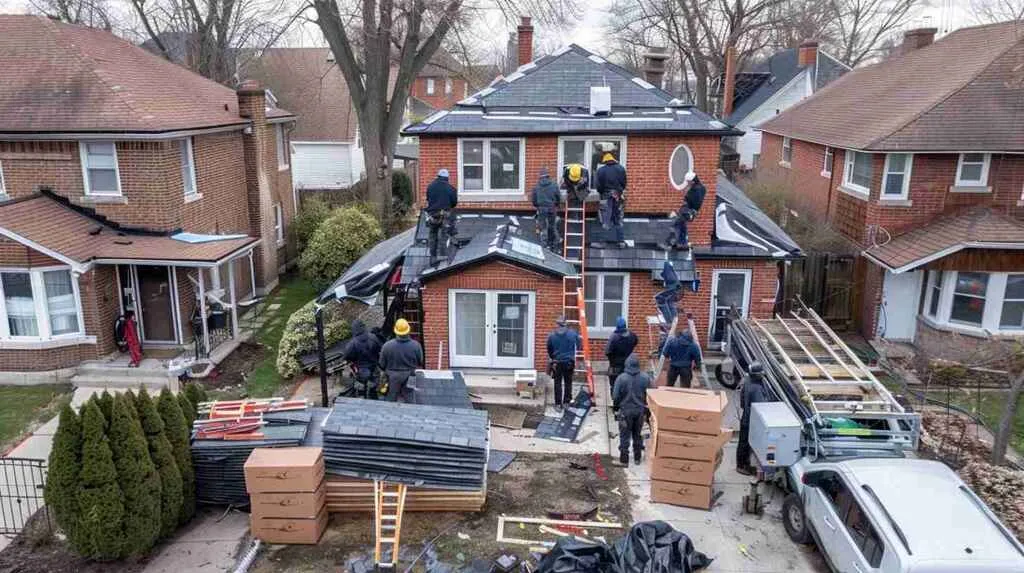
How to Replace a Roof Shingle Queens NY – Step-by-Step Process | Call Today
Blueprint for mistake-free shingle repair: most DIYers see a cracked or missing shingle and immediately pry upward on the exposed tab-and that’s exactly how you rip the surrounding shingles, break the adhesive seal on the row below, and turn one small fix into a bigger leak. The correct first move? Start by gently breaking the seal on the shingle above the damaged one, then work your way down the nail line with a flat bar, listening to what the roof is telling you through the way the tabs lift and release. I’m Victor Delgado, and after 19 years roofing across Queens-from Jackson Heights rowhouses to two-family homes in Astoria-I’ve learned that reading those curls, cracks, and nail pops is half the job; the other half is knowing when to stop and call someone who can trace the real source of the problem.
How to Replace a Roof Shingle in Queens, NY Without Creating a New Leak
On most Queens blocks, the first thing I see when I look up is someone’s “quick fix” that turned into a slow disaster-and it always starts with prying the wrong part of the shingle. Here’s the thing: shingles overlap like cards in a tight deck, and each one is held down by nails and an adhesive strip. If you yank upward on the exposed tab without loosening the shingle above first, you’ll tear the surface, rip the sealant bond, and leave a path for water to run straight into your attic. The correct sequence is methodical, not forceful: start at the row above your damaged shingle, slide a flat bar under the nail line gently to break the adhesive, and work your way down, listening for resistance that tells you where nails are hiding. Think of each shingle like a playing card in a tight deck-pull the wrong one and the whole row shifts. My personal opinion, after nearly two decades on Queens roofs? Most “single shingle” problems are actually small patterns of damage-curls in a diagonal line, cracks that echo the way wind hit the house, nail pops that repeat every six feet. Once you learn to read that story, the proper first move (where to pry, what to leave alone) becomes obvious.
Before you even touch a ladder, you need a safe, dry sequence: inspect from the ground to understand the full scope (not just the one shingle you see), set your ladder on solid, level ground with the feet secured, check the weather forecast for at least 48 hours of dry, mild temps, and gather proper materials-a replacement shingle that matches your roof’s brand and color, roofing nails (not random hardware-store nails), a flat pry bar, roofing sealant, and a hammer. Around here, with wind coming off the East River and mixed building types-brick rowhouses in Jackson Heights, vinyl-sided two-families in Woodside, older Tudors in Forest Hills-I see shingles lift along the exposed west and south faces first, especially after nor’easters or summer thunderstorms. That wind pattern is the roof talking, and if you ignore it and just patch the one obvious spot, you’ll be back on the ladder in six months.
One August afternoon, around 3 p.m., I got a call from a guy in Flushing who’d “just replaced one shingle himself” after a storm. He used a random nail he found in the toolbox, drove it right through the top of the shingle, and didn’t seal anything. By the time I got there two weeks later, water had run down that nail path, soaked the insulation, and stained his daughter’s bedroom ceiling. That job taught me how dangerous one bad shingle repair can be-and I still use his story when I explain why proper nails and sealant matter. Nail placement isn’t optional: roofing nails must go in the manufacturer’s nailing zone (usually about an inch below the adhesive strip), you need four nails minimum per shingle (six in high-wind areas like coastal Queens), and every lifted tab must get a dab of roofing sealant underneath to re-bond it to the layer below. Skip any of those, and you’ve just installed a leak path with a two-week timer.
Correct First Moves vs Common Wrong Moves
✓ Do This First
- Break the seal on the shingle above your target-slide flat bar under the adhesive strip gently
- Work in warm, dry weather-shingles flex when warm, snap when cold or wet
- Identify all damaged shingles in the surrounding area, not just the one obvious piece
- Slide the flat bar under nail lines, lifting tabs carefully to expose fasteners without tearing
✗ Don’t Do This
- Don’t pry directly on the exposed tab-you’ll rip the surface and create a bigger leak
- Don’t yank nails straight up through the shingle surface-lift tabs first, then remove fasteners
- Don’t use random interior nails or screws-only galvanized roofing nails with wide heads
- Don’t work while the roof is damp or icy-slip risk and brittle shingles will cost you more
Step-by-Step: Safe Shingle Replacement Process I Use on Queens Roofs
Here’s the part nobody likes to hear, but needs to: these are the exact steps I follow on real Queens homes, from steep-pitched Tudors in Forest Hills to flat-front rowhouses in Jackson Heights, and there’s no shortcut that doesn’t cost you later. Your roof is already talking through those curls, cracks, and nail pops-a diagonal line of lifted tabs means wind loads hit that corner hardest, a cluster of granule loss in one valley means water’s pooling there during storms, and nail pops that repeat every six feet? That’s telling you the framing members underneath are moving. I’ve worked roofs along the East River where prevailing winds rip shingles off the south and west faces first, and roofs in tight Astoria alleys where trapped heat makes the adhesive fail early. If you ignore what the roof is saying and just swap one shingle without checking the pattern, you’ll be back up there in six months-or worse, you’ll miss the hidden rot and end up with a ceiling leak.
There was a December morning in Astoria, about 28 degrees and windy, when a landlord insisted I swap a couple of cracked shingles “before the snow”-he’d already bought the cheapest shingles he could find. As I tried to lift the tabs on the existing shingles, they were so brittle from the cold that they snapped like crackers. We ended up needing to replace a much larger section, and I spent half the morning showing him how temperature changes the way shingles flex and how risky it is to do replacements in the wrong conditions. That’s why timing matters as much as technique: if it’s below 50 degrees, shingles are brittle and the adhesive won’t bond; if it’s raining or the deck is damp, you’re trapping moisture under new material; and if there’s snow or ice anywhere near your work zone, you’re risking a fall that’ll cost more than a roof. The steps below assume safe, dry, mild conditions-if your gut says it doesn’t feel right, listen to it and wait.
Exact DIY-Friendly Shingle Replacement Sequence
⚠️ When to Stop DIY Mid-Process
If you encounter any of these four red-flag situations, stop immediately and call a professional roofer:
- The deck feels spongy underfoot-possible rotten plywood or damaged OSB that needs structural repair, not just a shingle swap
- Shingles crack as soon as you lift a tab-too cold, too old, or too brittle for spot repair; you’re risking a bigger section replacement
- You see more than three adjacent shingles damaged-this may require a small section replacement with proper underlayment, not individual shingle swaps
- You uncover old, rusted, or missing flashing near a wall, chimney, or pipe-time to call Shingle Masters, not attempt a DIY patch over a failing detail
Is Your Roof Really Only Missing One Shingle?
Let me be blunt: if you’re not sure where your ladder feet belong, you’re not ready to climb up and diagnose shingle damage-and honestly, most people who call me about “one missing shingle” actually have a pattern of damage they just haven’t spotted yet. One Sunday right after a spring rain, I helped an older couple in Bayside who had water dripping right over their kitchen sink; the husband confessed he’d watched a YouTube video on how to replace a roof shingle and tried it in the drizzle “to get ahead of the leak,” but he’d slid the new shingle in crooked, trapped water under it, and created a tiny pond that emptied into the nail holes. I had to undo his work, dry the deck, and relay the shingles correctly-now, whenever I walk a customer through a step-by-step, I remind them that timing and dryness aren’t optional details, they’re half the job. Here’s my insider tip, and it’s saved dozens of homeowners from wasted trips up the ladder: always scan two rows above and two rows below the obvious damage, because roofs speak in rows, not single shingles-if you see a curl repeat, a crack pattern, or granule loss in a diagonal line, you’re looking at a bigger issue that needs a roofer’s eye, not a DIY patch.
Do You Have a One-Shingle Problem or a Bigger Issue?
Start here: Is damage limited to one shingle with no curling, cracking, or granule loss on surrounding shingles?
If YES → Next question below
If NO → Call a roofer for a broader assessment instead of chasing individual shingles-patterns of damage mean underlying issues.
Is the roof otherwise under 15 years old with no interior stains?
If YES → DIY single-shingle replacement may be reasonable-follow the exact step sequence above and work only in safe, dry conditions.
If NO → Schedule a professional inspection-likely a section repair or aging roof issue, not a one-shingle fix.
Queens-Specific Roof Conditions and When to Call Shingle Masters
If I asked you to point to the exact shingle you think is the problem, would you be able to show me from the sidewalk-or would you realize you’re actually guessing based on one water stain inside? Around Queens, roofs speak different languages depending on the neighborhood and building type: older housing stock in Jackson Heights and Woodside shows its age through widespread granule loss and curled tabs that all face the same direction (telling you which way the prevailing wind hits), while newer roofs in Bayside and Little Neck lose shingles near ridge vents or along rake edges after big coastal storms roll in off the East River. After a nor’easter, I’ll get calls from three houses on the same Astoria block-all missing shingles on the south-facing slope, all in the same vertical line-because that’s where wind suction is strongest on a two-story rowhouse with a narrow alley next door. Roofs tell you exactly what happened if you know how to listen: a single cracked tab might be hail, but a cluster of lifted corners in one zone? That’s wind load, poor initial nailing, or both. Sometimes the smartest DIY move is knowing when to pick up the phone and let someone who reads roofs every day trace the real source.
Here’s what a professional visit from me or my crew at Shingle Masters actually looks like for a small shingle job: I start on the ground with you, pointing at what you see and what I see, then I climb up with a checklist-inspect the damaged area and two rows in every direction, check the plywood deck for soft spots or stains, trace any water paths from the shingle damage down to the underlayment, and verify that flashing around pipes, walls, and chimneys is still sealed tight. If it’s truly just one or two shingles, I’ll replace them with the correct nails (galvanized roofing nails in the nailing zone, never through exposed tabs), match the color as closely as possible or pull a spare from a less-visible area like behind a dormer, seal every lifted tab I disturbed during the process, and walk you through what I found so you know whether this is a one-time fix or an early warning sign of a roof nearing the end of its life. Not gonna lie-sometimes I find that the “one shingle” was just the visible symptom of a bigger issue (like a sagging rafter or missing underlayment from an old repair), and in those cases, I’ll give you the honest assessment: patch it now and budget for a section replacement next year, or handle the underlying problem today so you’re not chasing leaks every storm season. Either way, you’ll know exactly what you’re dealing with before I leave.
Urgent – Call Shingle Masters Now
- Missing shingle with exposed black felt or wood-every rainstorm is soaking your deck
- Water stains on ceiling after last storm-active leak path needs tracing and repair
- Shingles missing near a pipe, wall, or chimney-flashing may be compromised
- Multiple shingles lifted or flipped by wind-underlying nailing or adhesive failure
- Active drip inside the home-emergency tarp and repair needed same-day or next-day
Can Wait a Few Days – Monitor and Schedule
- Single cracked tab with intact underlayment-no immediate leak risk, but should be replaced soon
- Minor granule loss in gutters-normal aging, track it over the next season
- One slightly curled shingle on an otherwise young roof-cosmetic for now, may need attention before next winter
- Cosmetic mismatch from an older patch with no leaks yet-plan a color-matched repair when weather permits
Why Hire Shingle Masters for Queens Shingle Repairs
Licensed & Insured in NYC
Full liability coverage and worker’s comp for every job
19 Years Roofing Experience in Queens
Victor Delgado has worked every neighborhood and roof type since 2007
Same-Day or Next-Day Response
For active leak calls, we prioritize emergency tarps and fast repairs
Specialty: Leak Detection
We trace water paths to the real source, not just patch visible damage
Service Areas
Jackson Heights, Astoria, Flushing, Bayside, Woodside, and nearby neighborhoods
Quick Checks Before You Call a Queens Roofer
I still remember one cold morning in Woodside when a homeowner called and said, “I think I need my whole roof replaced,” but after five minutes of questions on the phone, I knew it was just two lifted shingles near a skylight-saved him $15,000 and a week of stress. Before you dial, do these quick checks so we can give you an accurate answer faster.
What to Look at From the Ground and Inside Before Calling
Common Queens Homeowner Questions
Can I replace just one shingle, or do I need to do the whole roof?
If your roof is under 15 years old, the damage is truly isolated to one or two shingles, and there’s no pattern of curling or granule loss around the affected area, then yes-a single shingle replacement can work perfectly fine. But if the roof is older, if you see multiple damaged shingles in a cluster, or if you’re noticing widespread wear, then patching one shingle is like putting a band-aid on a bigger problem. I’ll always give you the honest assessment: sometimes it’s a $150 repair, sometimes it’s a sign you need to budget for a section replacement or even a full roof in the next year or two.
Will a new shingle match my old roof exactly?
Honestly? Probably not perfectly-shingles fade over time from UV exposure, and manufacturers sometimes change color formulations or discontinue lines. What I’ll do is either find the closest current match (usually within a shade or two), or if your roof has a less-visible area like behind a dormer or over a garage, I’ll “borrow” a shingle from there and put the new one in that hidden spot so the front-facing roof stays consistent. After a season of sun and weather, new shingles usually blend in better than you’d expect.
How long does a small shingle repair usually take in Queens?
For a straightforward single-shingle replacement with no complications, I’m typically on-site for 30 to 90 minutes-that includes setup, inspection, the actual repair, sealing, and a final visual check from the ground. If I find additional issues (like soft deck spots, missing flashing, or more damaged shingles than you originally saw), it might stretch to a half-day job, but I’ll walk you through exactly what I’m finding and why it matters before I do any extra work.
Is it safe to walk on my own roof to fix a shingle?
I’ll be blunt-most homeowners shouldn’t be on their own roofs, period. Ladder falls are one of the top causes of serious injuries in home maintenance, and steep or wet roofs multiply that risk. If you have a low-slope roof (like some Queens rowhouses with nearly flat sections), good weather, proper footwear, and a helper on the ground to steady the ladder, and you’re comfortable with heights, then maybe-but even then, one misstep can turn a $200 shingle repair into a $20,000 medical bill. If anything feels off, don’t push it. Call a pro who’s insured and does this every day.
Do you offer emergency service after storms?
Absolutely-Shingle Masters prioritizes active leaks and storm damage. If you call with water dripping inside your home, we’ll typically get someone out same-day or next-day to tarp the affected area, stop the immediate leak, and assess what’s needed for a permanent fix. After big storms like nor’easters, our schedule fills up fast, but we triage based on urgency: active interior leaks first, then exposed deck or missing shingles, then cosmetic damage that can wait a few days. Either way, you’ll get a realistic timeframe and honest advice over the phone before we schedule the visit.
Your roof is already talking-curls, cracks, and missing shingles are sentences you can learn to read, but sometimes the smartest move is calling someone who’s been translating that language for 19 years. If you’re in Queens and you’re staring up at a damaged shingle wondering whether to climb up yourself or pick up the phone, give Shingle Masters a call-we’ll walk you through what we see from the ground, give you an honest assessment, and handle the repair the right way so you’re not chasing the same leak next season.