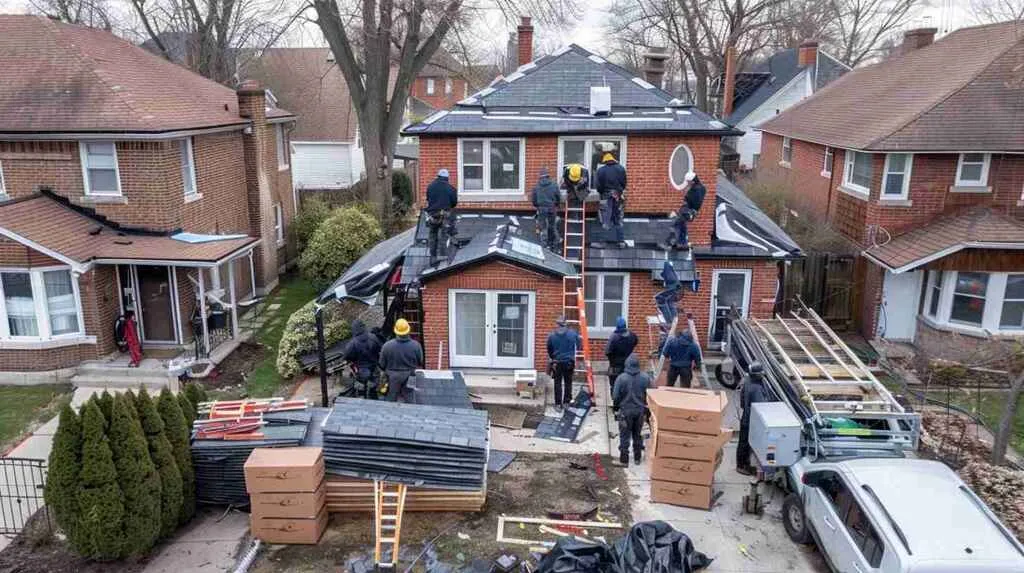
Fiberglass Shingle Roof Replacement Queens NYC – Licensed Install
Sideways math says that most fiberglass shingle roof replacements in Queens run $11,000-$19,000 for an average house, but here’s the one hidden detail that separates a 12-year headache from a 25-year roof: it’s what happens under those shingles-your decking, underlayment, flashing, and ventilation-that decides whether you’re buying a sharp, long-lasting system or just a nice-looking surface that’ll fail when the next nor’easter blows through. I’ve been replacing shingle roofs in Queens for 17 years, and I still think about every job like I’m composing a photograph: the roof is the body, the fiberglass shingles are the lens, and if your focus points-valleys, chimneys, sidewalls-aren’t protected correctly, the whole image falls apart.
Sideways Math: What a Real Fiberglass Shingle Roof Replacement Costs in Queens
That $11,000-$19,000 range isn’t random. It covers tear-off of the old roof, decking repairs (because there’s almost always rot around the edges or near valleys), new synthetic underlayment, proper ice-and-water barrier, all new flashing around chimneys and sidewalls, fiberglass shingles installed to the manufacturer’s specs, ridge venting tuned to your attic airflow, and a licensed crew who knows how to handle Queens wind and permit requirements. What decides where you land in that range? The hidden components under the shingles. If your decking is punky, if your old step flashing is corroded, if your ventilation is a disaster-those are the exposure points that’ll eat through your budget and your roof’s lifespan if you don’t fix them right the first time.
Here’s my honest take: I refuse to cut corners on what you can’t see from the street. The fiberglass shingles themselves-those are the sharp lens everyone notices. But the underlayment, flashing, and deck are the camera body holding everything steady. When I talk about focus points on a roof, I mean the spots where water wants to sneak in: valleys where two slopes meet, the step flashing along a brick sidewall, the counter-flashing around a chimney. If those aren’t detailed correctly, your new fiberglass shingles will look great for maybe three years, and then you’ll start seeing stains on your bedroom ceiling after every big rain.
One August afternoon, around 3:30 pm, we were on a fiberglass shingle roof replacement in Woodhaven, and the forecast said ‘20% chance of showers.’ By 4:15, that ‘20%’ turned into a full-blown thunderstorm right as we had half the old shingles off and the underlayment exposed. I remember standing on that plywood, looking at the black clouds rolling over the J train line, and making the call to tarp, secure, and walk away instead of rushing the fiberglass install. The homeowner was nervous about the delay, but when I showed him how water would’ve tracked under the old, rotted nail holes, he realized that one impatient decision could’ve ruined the entire new roof before day one. That’s the thing about exposure-you protect it from the very first moment.
Typical Fiberglass Shingle Roof Replacement Scenarios in Queens, NY
All scenarios include tear-off, minor wood repair allowance, fiberglass shingles, new synthetic underlayment, new flashings, ventilation tuning, and licensed install. These are ballpark ranges for 1-2 story Queens homes.
Why Queens Homeowners Hire Shingle Masters for Fiberglass Shingles
-
✓
NYC Licensed & Fully Insured: Active roofing contractor license (#placeholder for actual number), full liability and worker’s comp coverage for all NYS roofing projects -
✓
17 Years in Queens: Specialized experience with Queens weather patterns, wind exposure, and local building code requirements since 2008 -
✓
Fiberglass Shingle Specialists: We install architectural fiberglass shingles to exact manufacturer specs so your material warranty stays valid -
✓
Fast Turnaround: Most average Queens homes are completed in 1-3 on-site days, weather permitting, with minimal disruption to your routine -
✓
Permit & DOB Coordination: We handle all Queens DOB permit applications and inspections so you don’t have to navigate the paperwork -
✓
Written Warranties: 10-year workmanship warranty on labor and installation, plus we register your manufacturer’s material warranty (typically 25-50 years on fiberglass shingles)
Here’s My Honest Take on Fiberglass Shingles in Queens Weather
A few years back, on a freezing January morning in Bayside-7:00 am, windchill making my fingers feel like glass-we were replacing an old organic shingle roof that had curled and cracked like potato chips. The client was an engineer who kept asking me for numbers: wind ratings, impact ratings, weight per square. I ended up pulling out my moisture meter and my infrared camera, showing him how the fiberglass shingles we were installing would shed ice better and hold their granules longer under UV exposure. That’s the only time a customer has ever asked me to email the ASTM test data for the exact shingle model before he signed off. But he was onto something: Queens isn’t a gentle climate. You’ve got salt air blowing off Jamaica Bay, wind tunnels along the cross streets when a nor’easter hits, and brutal UV on south-facing slopes during July and August. Fiberglass shingles handle all of that better than the old organic or heavy asphalt shingles because they’re built around a fiberglass mat that doesn’t absorb moisture, doesn’t warp when the temperature swings 60 degrees in a weekend, and holds onto those protective granules even when the wind tries to sandblast them off.
Compare fiberglass shingles to those old organic or paper-based asphalt shingles, and it’s like upgrading from a cheap plastic lens to a multi-coated glass lens that keeps its clarity under harsh lighting. Fiberglass is lighter, so there’s less strain on your decking and framing over the decades. The granule adhesion is stronger, which means you’re not sweeping handfuls of grit out of your gutters every fall. And when a summer microburst dumps two inches of rain in 20 minutes, fiberglass shingles shed water fast because they don’t soak it up and get heavy and saggy. That matters in Queens, where your roof might see freezing rain, hail, 50 mph gusts, and baking sun all in the same week during spring.
Fiberglass Shingles for Queens, NY Homes
Common Misconceptions About Fiberglass Shingle Roof Replacement in Queens
| Myth | Fact (Queens-Specific Reality) |
|---|---|
| “Fiberglass shingles cost way more than regular asphalt.” | Modern fiberglass is asphalt shingle-it’s just built on a fiberglass mat instead of organic felt. Price difference vs cheap 3-tab is $1-2 per sq ft installed, but you gain 8-12 extra years of life in Queens weather. |
| “The install is super loud and messy; I’ll have to leave for days.” | Tear-off is loud for a few hours, but most Queens homes are done in 1-3 days total. We tarp your AC units, cover plantings, and use magnetic rollers to pick up nails. You can stay home; just expect noise during work hours. |
| “If the shingles look okay, I don’t need to replace the wood underneath.” | You can’t see rot or delamination from the ground. On 80% of Queens roofs over 20 years old, we find compromised decking at eaves, valleys, or around old vents. Skipping that repair guarantees early failure and voids your shingle warranty. |
| “’30-year shingles’ will definitely last 30 years in Queens.” | That’s a lab rating under ideal conditions. In Queens, with salt air, freeze/thaw cycles, and UV exposure, realistic lifespan for quality fiberglass shingles is 20-25 years if installed and ventilated correctly, 12-15 if shortcuts were taken. |
| “I can save money by skipping permits or hiring an unlicensed crew.” | Queens DOB requires permits for full roof replacements. No permit = code violation, potential insurance denial if you file a claim, and serious liability if someone gets hurt. A licensed contractor handles permits, inspections, and proper insurance so you’re protected. |
Most People Don’t Realize This Until I Show Them from the Ladder
One job that still bugs me happened in Richmond Hill, late fall, right before daylight savings ended. The homeowner insisted on keeping his old, ‘still good’ flashing while we did a fiberglass shingle roof replacement to save a little money. I told him-twice-that his step flashing along the sidewall was like using a cracked filter on a great camera lens: it doesn’t matter how sharp the glass is if water slips in at the edge. Six months later, he called me in a panic about a leak in his bedroom. The new fiberglass shingles were performing perfectly, but water was sneaking behind that old flashing. We had to open up a section of the roof and siding to fix what should’ve been done right the first time. Here’s the insider truth: flashing-not shingles-is the number one source of leaks on a fiberglass shingle roof, and reusing old, corroded, or improperly sized flashing is the fastest way to turn a $15,000 investment into a $3,000 repair bill two years down the road.
⚠️
Reusing Old Flashing with a New Fiberglass Shingle Roof
- Hidden pinholes and corrosion: Step flashing and counter-flashing around chimneys develop tiny holes you can’t see from the ground. Once the new underlayment is down, those pinholes become direct water highways into your walls.
- Improper overlap with new underlayment: Old flashing was sized for different underlayment thickness. When we install synthetic underlayment (which is thicker and stiffer), reused flashing often doesn’t overlap correctly, creating gaps where wind-driven rain gets in.
- Code and insurance implications: NYC building code requires new flashing for re-roofing projects in many cases. If your insurance adjuster finds reused flashing after a leak, they can deny your claim based on improper installation.
- Warranty voidance: Most fiberglass shingle manufacturers require proper flashing installation per their specs. Reusing old, non-compliant flashing can void your material warranty before you even finish the job.
✅ Non-Negotiable Details I Replace on Every Fiberglass Shingle Roof Job
Installed at eaves (minimum 3 feet up from edge), in all valleys, around chimneys, and along sidewalls-stops ice-dam damage and wind-driven rain intrusion
Replaces old felt paper with tear-resistant, UV-stable synthetic that won’t degrade if exposed during install or if a shingle lifts later
Fresh aluminum or copper step flashing at every sidewall and chimney intersection, sized and lapped to match new underlayment and shingle exposure
Metal drip edge installed at eaves and rakes to direct water cleanly into gutters and protect fascia boards from rot-required by code and good practice
Galvanized or stainless roofing nails, proper length for shingle + underlayment + decking, driven to manufacturer torque specs so shingles stay put during 60+ mph gusts
Picture Your Roof Like a Camera Body: Our Step‑by‑Step Replacement Process
When I walk up to a house, the first question I ask myself is how the roof is framed-wide angle or tight focus. I’m looking at the overall structure first: the pitch, the decking condition, how the attic breathes, whether the soffit vents are clogged with insulation. That’s the wide frame. Then I zoom in on the focus points: chimneys, valleys, skylights, anywhere two surfaces meet and water wants to pool or sneak through. Each step of a fiberglass shingle roof replacement is like layering protection in a photograph-the decking is your sensor, the underlayment is your filter, the flashing is your lens hood keeping stray light out, and the fiberglass shingles are the final, sharp lens that everyone sees and judges you by.
Here’s the thing most roofers won’t tell you: the ventilation and decking condition decide how long your fiberglass shingles actually last, not the shingle brand. If your attic is 150°F in the summer because you have no ridge vent or your soffit vents are blocked, those fiberglass shingles are baking from underneath, the adhesive softens, the granules loosen, and suddenly your “30-year roof” is curling and cracking at year 12. Before I even think about shingle color or style, I check your bathroom exhaust fans-are they venting into the attic instead of outside? Because that’s dumping moisture onto the underside of your new roof deck every single day, and no fiberglass shingle will save you from that. That’s exposure working against you from the inside out, and it’s fixable if you catch it before the re-roof, not after.
How a Fiberglass Shingle Roof Replacement with Shingle Masters Works in Queens
I personally inspect your roof from the ladder and attic, checking decking condition, ventilation, flashing, and existing layers. You get a written breakdown of what needs replacing, what can stay, and exact costs-no surprises.
We file your Queens DOB permit, order your chosen fiberglass shingles and all underlayment/flashing materials, and schedule your job based on weather windows and your availability.
Tarps over AC units, landscaping, and entry areas; dumpster positioned for debris; magnetic sweepers ready. We protect your property like it’s our own-because that’s how you earn trust in Queens.
Complete removal of old shingles, felt, and flashings down to the bare decking. We inspect every plywood sheet, mark damaged areas, and get your approval before replacing any wood-transparent process, no upselling.
Synthetic underlayment across the entire roof, ice & water barrier in critical zones, new drip edge at eaves/rakes, new step and counter flashing at all chimneys and sidewalls-this is where the real waterproofing happens.
Shingles installed with proper exposure, nailing pattern per the spec sheet (usually 6 nails per shingle for wind resistance), starter strip at eaves, hip & ridge cap shingles sealed and fastened. This is where the roof becomes visible-but it’s only as good as what’s underneath.
Magnetic sweeps of the yard and driveway, dumpster haul-away, final inspection with you to review the work. I take photos of every critical flashing detail and give you a digital record-useful for insurance, resale, or future repairs.
Do You Need a Full Fiberglass Shingle Roof Replacement or Targeted Repairs?
├─ YES → Are shingles curling, cracking, or missing granules across most of the roof?
│ ├─ YES → Do you see sagging areas or suspect decking damage?
│ │ ├─ YES → TIME FOR FULL REPLACEMENT – decking + underlayment + shingles all need attention
│ │ └─ NO → LIKELY FULL REPLACEMENT – shingle condition alone justifies it; have us inspect decking
│ └─ NO (shingles look mostly intact) → Are leaks isolated to one chimney, valley, or skylight?
│ ├─ YES → INSPECTION FIRST – might be flashing repair, not full roof
│ └─ NO (leaks in 3+ places) → LIKELY FULL REPLACEMENT – multiple leak points = systemic failure
└─ NO (roof under 18 years, no widespread damage) → INSPECTION & POSSIBLE REPAIR – let’s look before committing to full replacement
This flowchart is a guide. Every Queens roof is different-exposure, maintenance history, and hidden damage all factor in. Call for an honest in-person evaluation.
Before You Call: Quick Queens Roof Check and Common Questions
$500 in early repairs can sometimes save you $5,000 in sheetrock and flooring later. Do a quick visual check from the ground before calling-look for missing shingles, heavy granules in the gutters, or dark spots on your bedroom ceiling after a rainstorm-but don’t climb up there yourself; we’ll verify everything safely from the ladder and attic during your free estimate.
Simple Ground-Level Check Before You Schedule a Fiberglass Shingle Roof Replacement Estimate
Common Fiberglass Shingle Roof Replacement Questions in Queens, NY
How long does a typical Queens home take to re-roof with fiberglass shingles?
Most average single-family homes (1,500-2,200 sq ft) are completed in 1-3 on-site days, weather permitting. Day one is usually tear-off and deck inspection, day two is underlayment and flashing, day three is shingle install and cleanup. Larger or more complex roofs (multiple chimneys, steep pitch, significant carpentry) can take 4-5 days. We’ll give you an accurate timeline during your estimate based on your specific roof.
How do you manage noise and debris during the install?
Not gonna lie: tear-off is loud, especially the first few hours when we’re ripping off old shingles. We work during normal business hours (typically 7:30 am – 5:00 pm) to respect your neighbors. For debris, we position a dumpster in your driveway or closest legal spot, tarp your landscaping and AC units, and run magnetic rollers across your yard and driveway daily to pick up any stray nails. At the end of each day, we do a thorough sweep so your property is safe for kids, pets, and barefoot trips to the mailbox.
Do I really need a permit and a licensed contractor for a fiberglass shingle roof replacement in Queens?
Yes. Queens DOB requires permits for full roof replacements, and they do random inspections. Working without a permit can result in fines, stop-work orders, and serious problems if you ever try to sell your house or file an insurance claim. A licensed roofing contractor (like us) handles all the permit paperwork, coordinates inspections, carries the proper insurance, and makes sure the work meets NYC building code. Hiring an unlicensed crew might save you a few hundred dollars upfront, but it can cost you thousands in fines, liability, and voided warranties down the road.
What warranties do I get on the fiberglass shingles and the installation work?
You get two warranties: a material warranty from the shingle manufacturer (typically 25-50 years, prorated after the first 10-15 years) and a workmanship warranty from us (10 years covering our labor and installation). We register your shingles with the manufacturer so the warranty is active and transferable if you sell. The material warranty covers manufacturing defects like premature granule loss or delamination. Our workmanship warranty covers leaks caused by installation errors-improper nailing, flashing mistakes, etc. Both warranties require proper maintenance (keep gutters clear, don’t let moss grow, fix minor damage promptly).
Can you work around AC units, satellite dishes, and other equipment on my roof?
Absolutely. We carefully remove and reinstall roof-mounted AC units, satellite dishes, solar panel racking (if it’s small-scale), and even decorative elements. For mini-split condensers and small window units mounted on the roof, we temporarily disconnect and tarp them, replace the shingles and flashing underneath, then reset them on new mounting pads with proper sealing. If you have a larger HVAC system or solar array, we coordinate with your HVAC or solar company to make sure everything is done safely and to code. This is routine for us in Queens-almost every house has something mounted up there.
How to Keep Your New Fiberglass Shingle Roof Sharp and Leak‑Free
Schedule a visual inspection to make sure all shingles sealed properly, no wind damage occurred, and flashing is still tight. This is usually covered under your workmanship warranty. Clean gutters in fall to prevent ice dams in winter.
Have a professional check flashing condition, look for lifted or cracked shingles, inspect attic ventilation, and verify your gutters are draining correctly. Trim back any tree branches overhanging the roof-they scrape shingles and dump debris into valleys.
Do a quick visual check from the ground for missing shingles or new damage. Call us for a ladder inspection if you see anything suspicious-we’d rather catch a small problem early than repair major water damage six months later. Most insurance policies give you a limited window to file claims after storm damage.
Keep gutters clean (twice a year minimum), don’t let moss or algae grow on north-facing slopes, and make sure bathroom and dryer vents exhaust outside, not into the attic. These simple steps can add 5-8 years to your fiberglass shingle roof’s lifespan in Queens weather.
Now, zoom in on this part: a fiberglass shingle roof replacement in Queens is really about composing a complete picture, not just slapping on a sharp new lens. The underlayment, flashing, ventilation, and decking are the body and frame that hold everything steady, and the fiberglass shingles are the final, visible exposure everyone judges-but if your focus points aren’t protected, the whole image falls apart in a few years instead of lasting two decades. Shingle Masters has been replacing shingle roofs in Queens for 17 years, we’re fully licensed and insured, and we’re obsessed with the details you can’t see from the street because those are the ones that decide whether you get 25 solid years or 12 frustrating ones. Call us or schedule a visit so I can walk you through your roof’s full frame in person before the next nor’easter hits-because exposure starts the moment you decide to wait another season.