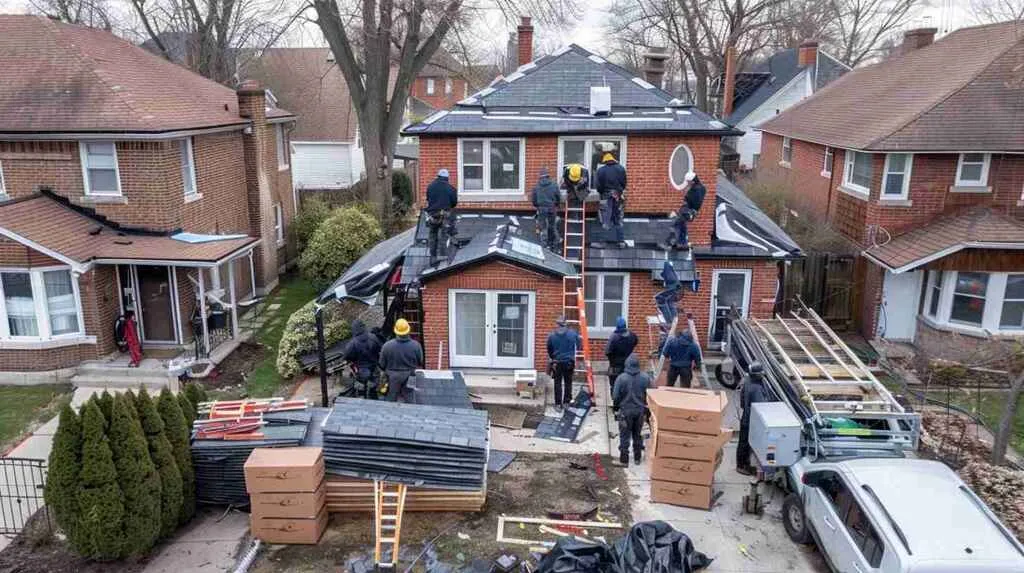
Best Shingles for Roof Replacement Queens NYC – Real Roofer Picks
Sideways rain off the bay, LaGuardia wind that sneaks under edges, and August heat that bakes asphalt roofs into curling chips-in Queens, the best shingles for roof replacement aren’t the fanciest or most expensive, they’re the ones that survive what this borough actually throws at them. I’m Luis Carvajal, I grew up over my parents’ Jackson Heights bodega watching bad roofs leak onto candy shelves, and after 19 years roofing here I can tell you: the right shingle for your house depends on your block’s trees, your street’s wind exposure, and what actually holds up on real Queens roofs, not just what looks good in a brochure.
What “Best Shingles” Really Means in Queens, Not on a Brochure
Most brochures show you smiling families and “lifetime warranty” badges like we all live in some mild Ohio suburb where the biggest weather challenge is a light drizzle. We don’t. In Queens, you’ve got planes rattling overhead from LaGuardia, salt air drifting in from the water, nor’easters that throw sideways rain at your house like a firehose, and summer heat that turns your roof into a griddle. The best shingle here is the one that survives that abuse year after year-think of it like ordering from a Queens diner menu: the house special is reliable, fills you up, never disappoints. The flashy special that costs twice as much but can’t handle real service? That’s the designer shingle that looks Instagram-ready but curls and cracks in two summers. I flat-out avoid cheap three-tab shingles on most Queens jobs-they’re the “looks cheap now, costs you way more later” option.
One August afternoon, about 3 p.m., I was on a roof in Corona during one of those brutal 95-degree heat waves, redoing a botched replacement from a handyman. The homeowner had gone with the cheapest three-tab shingles he could find online, and two summers later they were curling like potato chips, especially on the side that baked in the afternoon sun. I remember actually being able to snap a corner off with my fingers like a cracker. That job locked in my rule: in Queens’ heat and winter swings, I only recommend architectural shingles with a proven track record here, not just on some manufacturer’s spec sheet.
The thing is, every block in this borough is different. Airplane wind from LaGuardia hits harder in open areas like Corona and Elmhurst. Rowhouse layouts in Jackson Heights create wind tunnels that lift edges. Tree shade on streets in Forest Hills and Kew Gardens means less sun damage but more algae. When I say “best shingles,” I mean the ones matched to your street’s conditions-not some citywide average a sales rep gives you over the phone. Brochure “lifetime” means nothing if the shingle can’t survive your block’s specific abuse.
$800 saved on cheap shingles can turn into a $5,000 leak repair when those bargain tabs curl and crack after one hard winter. Ask me how I know.
| Myth | Fact in Queens, NY |
|---|---|
| “The most expensive designer shingle is always the best.” | Some pricey designer shingles look great but run hot and age fast on Queens’ sun-baked, low-slope roofs. |
| “Any shingle with a ‘lifetime’ warranty will last forever.” | Those warranties assume mild climates; Queens’ heat, cold swings, and LaGuardia winds can kill a weak shingle early. |
| “Three-tab shingles are fine if you’re on a budget.” | On many Queens blocks, cheap three-tabs curl and crack in under 10 years, costing you more in leaks and repairs. |
| “All architectural shingles perform about the same.” | Some brands hold granules and seal better in our sideways rain and salt air; others I’ve seen fail in under a decade. |
| “Algae streaks mean your shingles are shot.” | Black streaks often mean algae, not failure; picking algae-resistant shingles up front avoids panic later. |
My Go-To Shingle Types for Different Queens Roofs
I’ll tell you straight: if a shingle can’t handle LaGuardia wind, I don’t even quote it. Back in October 2017, during one of those sideways rain nor’easters, I got an emergency call at 6:30 in the morning from an elderly couple in Bayside. Their brand-new roof was leaking over the living room bay window-the installer had used a good shingle brand, but the wrong style for that low-slope section, and the wind-driven rain was going right under. I stood in their living room, wet boots and all, explaining the difference between standard shingles and designer ones with reinforced seal strips that actually mattered for their wind exposure off the water. That’s when I started insisting on one shingle type for the main roof and a completely different, more storm-ready one for vulnerable edges in Queens. Wind hits harder near the water in Bayside and Whitestone; you can feel it the second you step on a roof there. Calmer interior neighborhoods like Rego Park see less of that, but they’ve got their own challenges.
Think of my shingle recommendations like a diner menu-simple, clear, and built around what actually works. For most pitched roofs on attached and semi-attached homes in Jackson Heights, Corona, and Elmhurst, I use a reliable architectural “house special”-thicker than three-tabs, handles our heat waves and freeze-thaw cycles, survives everyday LaGuardia gusts without drama. For edges, rakes, and low-slope bays that catch sideways rain, especially in Bayside, Whitestone, and coastal-facing blocks, I upgrade to a storm-ready reinforced choice with stronger seal strips and higher wind ratings-that’s what stops wind from sneaking under during nor’easters. And on shady, tree-lined streets in Forest Hills, Kew Gardens, and Woodhaven where north-facing roofs stay damp, I go with an algae-resistant “streak fighter” that has built-in copper or similar additives to slow those black stains that love shade and moisture. Which “dish” your roof gets depends on what your block actually throws at it.
| Shingle “Dish” | Best For | Why It Works in Queens |
|---|---|---|
| Architectural “House Special” | Standard pitched roofs on attached and semi-attached homes in Jackson Heights, Corona, Elmhurst | Thicker than three-tabs, better at handling heat waves, winter freeze-thaw, and everyday LaGuardia gusts. |
| Storm-Ready Edge Upgrade | Edges, rakes, and low-slope bays in Bayside, Whitestone, and coastal-facing blocks | Stronger seal strips and higher wind ratings keep wind-driven rain from sneaking under during nor’easters. |
| Algae-Resistant “Streak Fighter” | North-facing roofs and tree-lined streets in Forest Hills, Kew Gardens, Woodhaven | Built-in copper or similar additives slow black algae streaks that love shady, damp Queens blocks. |
Main Roof Architectural
- Goes on the large field areas you see from the street.
- Optimized for overall durability and value.
- Handles daily sun and temperature swings.
Storm-Ready Edge Shingles
- Used on eaves, rakes, and vulnerable low-slope spots.
- Beefed-up sealant to resist wind uplift off the water.
- Helps stop sideways rain from backing under the roof edge.
Heat, Shade, and Algae: Matching Shingles to Your Block
Truth is, most brochures talk about “lifetime” shingles like we all live in a mild suburb in Ohio-we don’t. One Saturday night in late spring, just as the sun was going down, I stopped by a house in Woodhaven because the homeowner was freaking out about black streaks all over his five-year-old roof. He thought the shingles were failing, but I recognized it right away as algae staining-common on that shady side of the block. We climbed up there with a flashlight, and I showed him how the granules were still intact but the shingle brand he’d chosen didn’t have any algae-resistant copper in the mix. That experience made me almost obsessive about steering clients toward specific “streak-fighter” shingles if they’re on tree-lined streets or north-facing roofs in Queens. It’s not vanity-those black streaks make homeowners panic, call me for replacements they don’t need, and waste money on cleaners that barely work. Pick the right shingle up front, skip the panic calls later.
Here’s my insider trick: before I even quote your job, I look down your block. Tree canopy? House spacing? Which way does your roof face? If you’ve got mature trees throwing shade all day or your roof faces north where it never fully dries, you’re a candidate for algae-resistant shingles-period. It’s like ordering at a deli: if you work long shifts, you don’t order a tiny appetizer that leaves you hungry in an hour; if your roof lives in shade, you don’t pick a pretty but algae-prone shingle that’ll look terrible in three years. I’ve walked streets in Forest Hills where every third house has black streaks because someone sold them the wrong “dish” for their block. Your neighbor’s roof might need a totally different shingle than yours, even if you’re on the same street, because of how the sun, shade, and wind play out house by house.
✅ Signs Your Queens Roof Needs Algae-Resistant or Tougher Shingles
- ✅ Black streaks running down your roof after just a few years-algae loves shade and moisture
- ✅ Your block is tree-lined with mature oaks or maples keeping the roof damp most of the day
- ✅ North-facing roof sections that never get full sun to dry out after rain
- ✅ Nearby water or open exposure in Bayside, Whitestone, or Rockaway-wind and salt air demand tougher options
- ✅ You’re sick of looking at ugly stains that make your house look older than it is
| When | What to Check | Why It Matters in Queens |
|---|---|---|
| Every Spring | Look for missing or lifted shingles after winter winds and nor’easters. | Catches storm damage early before sideways rain turns it into a leak. |
| Every Fall | Clear leaves from valleys and near gutters, especially on tree-lined blocks. | Prevents trapped moisture that feeds algae and rots shingles. |
| After Major Storms | Scan for shingles flapping near edges and low-slope areas. | Edges are the first place Queens wind exposes weak shingles. |
| Every 3-5 Years | Have a pro roof inspection to check granule loss and sealing. | Reveals if your shingle choice is actually holding up in local conditions. |
What to Expect When Shingle Masters Replaces Your Roof
When I come to your house in Queens, the first thing I’m asking is how your roof handled last winter’s storms-did you get leaks, did shingles lift, did you see granules washing down your gutters after a nor’easter? Then I walk your block. I’m looking at trees, sun exposure, how close you are to the water or LaGuardia’s flight path, how your neighbors’ roofs are holding up. Once I’m on your roof, I’m not just measuring square footage-I’m checking where wind hits hardest, where valleys trap leaves, where low-slope sections beg for trouble. And then we sit down and I walk you through the shingle “menu” in plain language: here’s the reliable architectural house special for your main roof, here’s the storm-ready edge upgrade if you’ve got bays or rakes that catch sideways rain, here’s the algae-resistant streak fighter if your block is shady or north-facing. No sugarcoating, no generic city-wide recommendations. Everything I suggest is matched to your specific street and building type, not some brochure fantasy. You’ll know exactly why I’m recommending what I’m recommending, and you’ll get it in writing so there’s no confusion on installation day.
Step-by-Step Queens Roof Replacement Process with the Right Shingles
- Block & Roof Walk-Through: We look at your street, nearby trees, roof shape, and how the last storms treated it.
- Shingle “Menu” Talk: We lay out the house special architectural option, edge upgrades, and algae-resistant choices in plain language.
- Written Scope & Price: You get a clear proposal showing exactly where each shingle type goes and why.
- Installation Day: Old shingles come off, deck is checked, and we install the chosen shingles with Queens-tested details at edges and low-slope spots.
- Final Walk & Photos: We show you photos of key areas so you can see exactly what went on your roof.
Why Queens Homeowners Trust Shingle Masters for Shingle Choices
- ✓ Licensed & Insured in NYC for roofing.
- ✓ 19+ Years Roofing in Queens, from Jackson Heights to Bayside.
- ✓ Same-Week Roof Assessments for most neighborhoods.
- ✓ Manufacturer-Trained on major architectural and algae-resistant shingles.
Quick Answers About Shingles and Roof Replacement in Queens
You’re probably comparing quotes right now, wondering if you really need architectural over three-tabs, if algae resistance is marketing hype or actual protection, and whether that storm-ready edge upgrade is worth the extra few hundred bucks. These FAQs pin down what matters most for your block in plain language-no sales pitch, just what I’ve seen hold up and what I’ve watched fail on real Queens roofs.
Do I really need architectural shingles, or can I save with three-tabs?
In most of Queens, three-tabs are the “looks cheap now, costs you later” option. I’ve watched them curl, crack, and leak in under 10 years on sun-baked blocks. Architectural shingles are the reliable house special: a little more up front, a lot less headache down the road.
Which matters more here: wind rating or algae resistance?
It depends on your block. Near Bayside, Whitestone, or open exposures, I prioritize wind and edge details. Under heavy trees in Woodhaven or Kew Gardens, algae resistance jumps to the top. On many roofs, we mix: wind-smart at edges, algae-fighters where streaks would show.
How long should a good shingle roof last in Queens?
With a solid architectural shingle and proper installation, 20-30 years is realistic here. If someone promises “lifetime” without talking about our heat, cold, and LaGuardia winds, they’re selling, not roofing.
Can I keep my existing shingles and just add a new layer?
You can, but I rarely recommend it in Queens. Tear-offs let us see hidden rot, fix old leaks, and make sure your new shingles actually seal right instead of riding a lumpy base.
How do I know which shingle is on my roof now?
Most homeowners aren’t sure, and that’s fine. I come out, take photos, check the stamp and granules, and then translate what you’ve got now into diner-menu terms so you can see if it’s worth repeating or upgrading.
| Call Us ASAP | Can Usually Wait a Bit |
|---|---|
| Active leak inside after a storm or nor’easter. | Light staining on ceilings with no active dripping. |
| Shingles missing or flapping near edges or low-slope bays. | Minor granule buildup in gutters on an older roof. |
| Soft spots or sagging you can feel when walking the roof (if it’s safe). | Cosmetic algae streaks without any curling or cracking. |
| Recent storm plus fresh ceiling damage or wall bubbling. | Curiosity about whether your current shingles are still a good match for your block. |
The right shingle for your Queens roof depends on your block’s wind, sun, and shade-not on what a brochure says works everywhere. Call Shingle Masters and I’ll come out, look at your roof like a neighbor who actually knows your street, and walk you through a clear, Queens-tested shingle menu before we schedule your replacement.