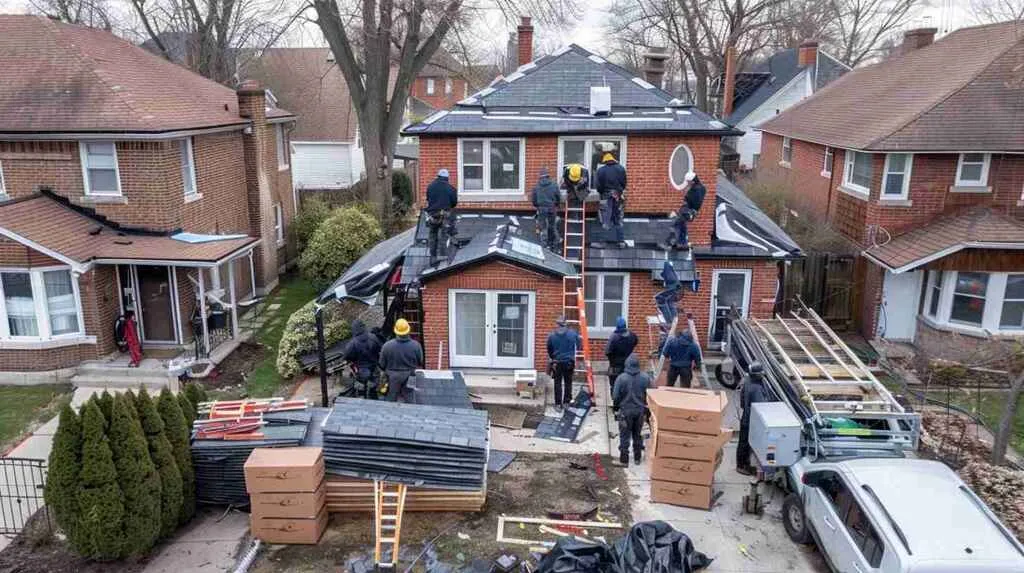
Shingle Over a Leaking Roof Queens NY? Here’s Why Not to Do It | Call Today
Picture a homeowner in Elmhurst who thinks they just saved two grand by having someone nail new shingles right over their leaking roof. Fast-forward two winters, and they’re staring at a ceiling stain, a rotted roof deck, and an invoice for $8,000 because the “cheap fix” turned into a full emergency tear-off in February. In Queens, trying to shingle over a leak doesn’t save money-it usually ends up costing you 40-80% more within a couple of years when the hidden rot finally forces your hand.
What Really Happens If You Shingle Over a Leaky Roof in Queens
On a cold Queens morning standing on a two-family in Elmhurst, I can usually tell in five minutes if someone’s tried to hide a leak with more shingles. The edges are puffy, the nails sit crooked because the deck is soft underneath, and if I step near a valley or chimney, my boot sinks a little. Let me be blunt: if your roof is already leaking, putting new shingles over it is like spraying cologne on a gas leak-you’re just hiding a problem that’s getting worse by the hour. Over 19 years in this borough, I’ve watched that “time-saver” turn into nightmares, and honestly, I flat-out refuse to do a shingle-over on an active leak anymore. It’s not worth the phone call six months later when you’re holding a bucket under a drip and asking me why the “new” roof didn’t work.
One February morning around 7 a.m., I was on a roof in Maspeth in 20-degree weather, looking at shingles someone had installed right over a leaking, soft deck. The owner, an older gentleman, told me proudly he’d “saved” $2,000 by skipping the tear-off. When I stepped near the chimney, my boot actually went through the shingles and the rotten plywood in one shot like it was wet cardboard. That job turned into a full emergency tear-off in the cold, and he ended up paying almost double what a proper job would’ve cost him a year earlier. The real kicker? He’d been living with that leak for months, thinking the new layer had fixed it, while moisture just sat trapped between the old shingles and the deck, rotting everything from the inside out.
Now, follow the water with me for a second. Rain lands on your shingles, but if there’s already a leak-maybe a nail hole, rusted flashing around a skylight, or a cracked valley-that water is sneaking under the first layer and hitting the plywood deck. When you nail a second layer of shingles on top, you’re sealing that moisture inside. In Queens, with our freeze-thaw cycles all winter and humid summers, that trapped water turns the deck spongy, the nails rust out, and the wood starts to delaminate. The new shingles on top look great from the street, sure, but they don’t do a single thing to fix the path the water’s taking underneath. You’ve just built a better-looking trap, and the clock’s ticking until the rot spreads far enough that you have no choice but a full tear-off-plus structural repairs you wouldn’t have needed if you’d addressed the leak properly the first time.
WARNING: Shingling Over an Active Leak
Do NOT add a new shingle layer over an actively leaking roof.
- Traps existing moisture and hidden rot in the deck
- Makes future leak tracing much harder (and pricier)
- Often voids manufacturer warranties on shingles
- In Queens, usually adds 40-80% to your total cost within 2-3 years when you’re forced into a full tear-off anyway
| Myth | Fact |
|---|---|
| “A second layer will buy me a few cheap extra years.” | On a leaking roof in Queens, that “extra layer” usually fails in 2-3 years and turns into a full tear-off plus structural repairs. |
| “If the top shingles look new, the leak is fixed.” | Leaks often start at flashing, nail holes, or rotten plywood you can’t see from the street. |
| “Roofers just want a tear-off to make more money.” | Skipping a tear-off hides problems; when they resurface, you pay more for emergency work and interior damage. |
| “My neighbor did a shingle-over and he’s fine.” | You don’t know if his deck is rotting from the inside; most damage stays hidden until ceilings stain or sag. |
| “New shingles will dry out whatever moisture is left.” | Trapped moisture in wood and insulation creates rot and mold because it has nowhere to evaporate. |
Real Queens Examples: When Shingle-Overs Turned into Nightmares
There was a summer thunderstorm in Jackson Heights-one of those storms where the rain blows sideways-and I got a frantic call from a young couple with a new baby. Their previous roofer had shingled over leaking three-tab shingles without touching the flashing around a skylight. I still remember standing in their nursery at 9 p.m., watching water drip out of a light fixture while lightning flashed outside, and showing them with my flashlight where the old, rusted flashing was hidden under two layers of shingles. The wife was holding the baby, the husband was on the phone with their landlord downstairs, and I’m up there with a bucket thinking about how many Queens walk-ups have these old skylights and how many times I’ve seen this exact scenario play out. Those sideways summer storms we get? They push water up under shingles in ways a regular rain never does, and if your flashing’s already compromised and buried under a second layer, you won’t even know until water’s pouring into the room below.
Here’s the thing: these stories are typical in Queens, especially in older multi-family buildings in Elmhurst, Jackson Heights, and Corona. Most of the real danger is what you can’t see from the sidewalk-rot creeping along the edge of the roof where the deck meets the wall, mold growing on the inside face of your sheathing, flashing that’s rusted through but covered up by fresh shingles. Follow the water: it sneaks up around skylights, runs sideways behind chimneys, seeps under sidewall flashing, and an extra shingle layer doesn’t stop any of that-it just makes it invisible until the damage is severe enough to show up inside your house. By then, you’re not just fixing a roof; you’re fixing framing, insulation, drywall, and sometimes electrical if water got near a junction box.
| Queens Neighborhood | Shortcut Taken | Initial “Savings” | Later Damage Found | Final Cost vs Proper Tear-Off |
|---|---|---|---|---|
| Jackson Heights (3-family) | Shingle-over on skylight leak | ~$1,800 | Rotted deck around skylight, water damage in two bedrooms, rusted flashing | +$6,200 (total $8,000 vs $5,500 proper job) |
| Maspeth (single-family) | Second layer over chimney leak | ~$2,000 | Boot went through deck, emergency winter tear-off, structural repair | +$4,800 (total $6,800 vs $4,200 proper job) |
| Richmond Hill (2-family) | Multiple shingle-overs on porch edge leak | ~$1,200 each time (×3) | Black mold on sheathing and top of wall, extensive rot along eave | +$7,500 (total $11,100 vs $6,000 proper job) |
| Flushing (rental duplex) | Shingle-over on valley leak | ~$2,500 | Ceiling collapse in tenant unit, full tear-off plus interior repairs, lost rent | +$9,200 (total $11,700 vs $7,000 proper job) |
🚨 Urgent – Call Same Day
- Water dripping from light fixtures or electrical boxes
- Ceiling or paint actively bubbling during a storm
- Visible sagging in the ceiling under the leak
- Leaks near a baby’s room, elderly tenant, or rental unit where liability is high
- Any leak on a roof that already has two shingle layers
📞 Soon – Within a Week
- Small, occasional stains that only appear in heavy wind-driven rain
- Minor staining around skylight shafts without active dripping
- Small attic damp spots where structure is still firm and dry most days
How a Proper Fix Works (Step-by-Step, Not a Band-Aid)
When I sit at your kitchen table and you ask, “Can we just go over what’s there to save money?” here’s exactly what I walk you through. A cheap shingle-over takes maybe two days and looks fine for six months, then the phone calls start again. A methodical tear-off and repair might take a week and cost more up front, but it actually solves the problem. On a hot August afternoon in Richmond Hill, we opened up what the owner thought was just a “small leak over the porch,” which someone had “fixed” by putting a new shingle layer on top. Once we peeled everything back, we found black mold all along the edge of the roof sheathing and the top of the exterior wall. I’ll never forget the smell when we pulled the first rotten board off-like a damp basement baked in the sun-and the owner just sat on the stoop quietly, realizing those cheap shingle-over jobs over the years had slowly been rotting his house. That’s when it clicked for him: a real fix always starts by exposing the deck so you can see what you’re actually dealing with.
Here’s the thing about how we handle a leaking shingle roof at Shingle Masters. Think of it like a recipe-you can’t skip the prep and expect the dish to turn out right. We start with a full tear-off, stripping everything down to bare wood so we can walk the deck and probe every suspicious spot, especially around eaves, chimneys, skylights, and where previous leaks were reported. Then we cut out and replace any rotten or soft sheathing, checking the top of exterior walls for hidden moisture damage. After that, we install modern underlayment and ice-and-water shield in all the leak-prone areas-eaves, valleys, skylight perimeters, sidewalls-the spots where Queens roofs always fail if you cut corners. We rebuild or replace flashing around chimneys and skylights instead of burying old rusted metal under new shingles. Finally, we install the new shingles with proper nail pattern, starter strips, and ridge details done to manufacturer spec, so water has a clean, predictable path off your roof. Each step follows the water path and removes the guesswork, which is why these roofs last 20-25 years instead of failing in two.
Proper Leak Repair Process on a Queens Shingle Roof
❌ Shingle-Over on Leak
- Leaves rotten wood and rusted flashing hidden
- Traps moisture and speeds up deck failure
- Makes future leak diagnosis harder and more expensive
- Often only lasts 2-3 years before major issues resurface
- Small upfront bill but big surprise costs later
✅ Proper Tear-Off on Leak
- Exposes and replaces damaged wood and flashing
- Lets everything dry and resets the waterproofing
- Easier to trace and eliminate every leak path
- Typical 20-25 year shingle life when done right
- Higher upfront cost but lowest total cost over time
What You’re Really Likely to Pay in Queens
$2,000 saved the wrong way can easily turn into $8,000-$10,000 spent the hard way in Queens.
The numbers below are ballpark for Queens-two- and three-family homes, small single-families-and they assume asphalt shingle roofs. Here’s what you need to know: shingle-overs on leaks almost always shift you from the cheaper scenarios to the more expensive ones within a couple of seasons, because hidden rot spreads and you end up paying for emergency work, interior repairs, and a full tear-off you could’ve done on your own schedule.
Queens Shingle Roof Leak Scenarios and Typical Cost Ranges
| Scenario | Estimated Range | Notes |
|---|---|---|
| Small leak, single-family, no previous shingle-over | $1,200-$3,000 | Localized tear-off, minor deck repair, new flashing or underlayment in the affected area. |
| Ongoing leak on roof with one shingle-over layer | $4,000-$9,000 | Full tear-off of two layers, moderate deck replacement, new underlayment and shingles on at least one full slope. |
| Multiple leaks on two-family in Elmhurst/Jackson Heights with two layers | $8,000-$16,000 | Full building tear-off, deck repairs, flashing rebuilds, possible gutter and fascia work. |
| Long-term leak with visible interior damage and suspected mold | $10,000-$20,000+ | Roof tear-off plus structural repairs, insulation replacement, possible interior drywall and framing work. |
| Owner just did a shingle-over on a known leak last year, still leaking | $5,000-$12,000 | Remove new and old shingles, fix hidden rot accelerated by trapped moisture, rebuild details that were skipped the first time. |
Why Queens Homeowners Call Shingle Masters First
- 19+ years roofing specifically in Queens neighborhoods
- Fully licensed and insured in New York City
- Specializing in leak tracing on layered shingle roofs
- Familiar with Elmhurst, Jackson Heights, Maspeth, Flushing, Richmond Hill building stock
- Same-week appointments for active leaks whenever weather allows
Quick Self-Check Before You Call a Roofer
The ugly truth is that water doesn’t care how new your shingles look; it follows gravity and the easiest path into your house. Before you pick up the phone, take five minutes to look around-safely. Don’t climb a wet roof or stick your head out a skylight in the rain, but do check for active drips, stains, or bubbling paint on ceilings and top-floor walls. Note if the leak shows up during wind-driven storms or steady rain, and from the sidewalk, count how many shingle layers you can see stacked at the roof edge. Snap photos of any interior damage and the exterior edges you can safely see from the ground. Write down roughly how old the current roof layer is and whether you’ve had previous “repairs” or shingle-overs. All of this gives me a clearer picture over the phone so we can jump straight to the right questions when I come out.
Think of your roof deck like the bones of the house-would you put a fancy jacket on a broken arm instead of setting the bone? If you confirm an active leak and more than one layer of shingles, do not ask for another shingle-over. Ask specifically for a tear-off inspection. When you call, you should specifically ask the roofer how they plan to inspect the deck and flashing-not just “re-shingle”-and be wary of anyone who proposes a shingle-over on a known leak. At Shingle Masters, we’ll walk you through photos and simple sketches (usually on the back of your estimate or a pizza box) so you can actually “see” the water path we’re talking about, and you’ll understand exactly why each step matters and where your money’s going.
✅ Things to Note About Your Leaking Shingle Roof in Queens
- ✅ Look for active drips, stains, or bubbling paint on ceilings and top-floor walls.
- ✅ Note if the leak is worse during wind-driven storms or steady rain.
- ✅ From the sidewalk, count how many visible shingle layers are at the roof edge (one or two).
- ✅ Check around skylights, chimneys, and vent pipes inside for damp spots or staining.
- ✅ Take photos of any interior damage and exterior roof edges you can safely see.
- ✅ Write down roughly how old the current roof layer is and whether you’ve had previous “repairs” or shingle-overs.
Common Questions About Shingling Over Leaking Roofs in Queens
Is it ever okay to shingle over an existing roof?
On a non-leaking, structurally sound roof with only one existing layer, a second layer can sometimes be allowed by code, but I still prefer tear-offs because you can’t inspect the deck. On an actively leaking roof, a shingle-over is a flat no.
Will a shingle-over pass New York City inspection?
NYC code limits how many layers you can have, and many inspectors will insist on a tear-off when there’s known leaking or structural concerns. Even if it squeaks by, you’re the one left holding the bag when damage shows up later.
Can I just repair one spot instead of tearing off everything?
Sometimes, yes-if the leak is isolated and the rest of the roof is in good shape. But we only know that after we open things up around the leak and inspect the deck.
How fast can you get to my house in Queens if there’s an active leak?
For active drips and electrical risks, we aim for same-day tarp or temporary protection when weather lets us, and schedule a full tear-off as soon as it’s safe to work.
What if I already paid someone to shingle over my leaking roof?
You’re not alone. We’ll evaluate how much damage was hidden, show you photos of what we find, and build a plan to undo the shortcut so you don’t keep paying for the same leak.
I still remember a landlord in Flushing who swore his second layer “bought him time”-until his tenant’s ceiling collapsed during a rainstorm. If your roof is leaking right now, the smart move-the only move that actually saves money over time-is to expose the problem, replace what’s damaged, and rebuild the waterproofing layers so you can stop worrying every time the forecast says rain. Call Shingle Masters in Queens today for a proper tear-off-based inspection and an honest estimate that follows the water instead of hiding it.