Temporary Shingle Repair Queens NY – What Actually Buys Time | Free Quotes
Counterintuitively, most temporary shingle repair attempts in Queens fail within one storm because people use the wrong materials – duct tape, caulk, random tar – and ignore how water actually travels across a roof. One February morning, about 6:15 a.m., I was on a two-story in Jackson Heights with sleet hitting me sideways, trying to stop a leak over a baby’s nursery where the dad had already been up there with duct tape and a trash bag, and all he’d really done was funnel water straight under three rows of shingles.
What Actually Buys 30-90 Days on a Queens Roof
If I’m being blunt, anything that looks like arts-and-crafts on your roof – tape, plastic, mystery goop – is not buying you time. It’s like entering a bad line item in your roofing ledger: the numbers look fine for a few days, then a nor’easter audits your work and everything unravels. That Jackson Heights nursery leak drilled into me how fast a “quick fix” can turn into ceiling collapse if you don’t understand how water actually travels under shingles, and treating a roof patch like a kindergarten project instead of a calculated weatherproofing entry guarantees you’ll be calling someone in the middle of the next storm.
What actually holds 30-90 days in Queens wind and nor’easter conditions: woven tarps with battens and plastic-cap nails, peel-and-stick roofing membranes over clean dry surfaces, emergency replacement shingles slipped and sealed correctly, and storm-rated roof tape on tarp edges. The repair has to follow the water path from ridge to gutter, not just cover the hole you can see – because water doesn’t care what you covered, it cares where you left an opening downstream.
| Material/Method | Typical Lifespan in Queens Weather | Common Failure or Risk |
|---|---|---|
| Duct tape over shingles | Less than 1 storm | Adhesive fails in cold/heat; water driven underneath |
| Random exterior caulk on exposed shingle edges | 1-3 light rains | Separates from asphalt; traps water at nail lines |
| Blobs of roof cement in low spots | 1-2 storms before cracking or ponding | Creates puddles; cooks shingles and opens seams |
| Loose trash bag weighed with a brick | One windy afternoon, then it shifts or rips | Blows off; brick damages shingles and gutters |
| Woven tarp anchored with battens & plastic-cap nails | 30-60 days if installed with wind direction in mind | Flaps if under-fastened; can channel water if misaligned |
| Peel-and-stick roofing membrane strip | 30-90 days on small areas | Peels if surface isn’t dry/clean; may hide deck rot |
| Emergency replacement shingles slipped and sealed | 30-60 days depending on roof age | Leaks if not lapped correctly; can lift in high wind |
| Tarp plus storm-rated roof tape on edges | 45-90 days on steep slopes | Edge lift in extreme gusts if not fully adhered |
How I Triage a Temporary Shingle Repair in Queens
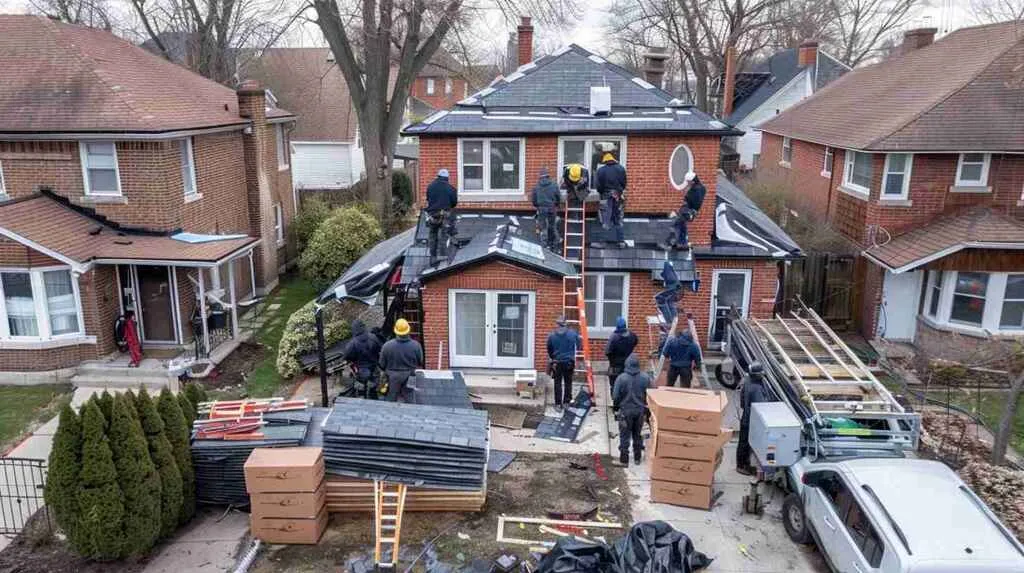
On 43rd Avenue last March, I watched a whole row of “YouTube repairs” peel off in one gust, and that’s when I really understood the difference between covering a problem and following the path a raindrop takes from ridge to gutter. When I get a storm call, I’m not just looking at the missing shingle or the obvious tear – I’m walking the entire water column backward to see where that drip in your ceiling actually started, because in Queens, especially in Ridgewood and Jackson Heights where flat-to-slope transitions are everywhere and attached homes share water paths, one bad patch upstream can funnel rain into your neighbor’s attic or slide it down three rows before it drips on your bed. One August, about 9 p.m., I was on a flat-to-slope transition roof in Ridgewood after a freak thunderstorm, and the homeowner swore the roofer who did it five years ago told her “just throw some roof cement on it if it ever leaks” – she’d done that three times, in random blobs, and created little lakes where water sat and cooked the shingles; my “temporary” repair there was actually removing her three DIY patches, drying the decking with a heat gun, slipping in emergency replacement shingles, and setting a peel-and-stick membrane band that held two full months until we could reroof that section.
So here’s the real question: do you want a band-aid, or a balance sheet that actually adds up for 30-90 days?
My step-by-step triage thought process is about checking deck softness under my feet, looking for exposed underlayment or felt paper hanging loose, noting the wind direction relative to the ridge, and then literally narrating the journey a raindrop takes from the damaged spot to the gutter – because every inch of that path is a potential entry in your waterproofing ledger, and if I miss one, the whole column quietly racks up damage until you’ve got mold, rotted rafters, and a five-figure bill instead of a manageable temporary fix that lets you plan a reroof on your schedule.
Denise’s On-Site Temporary Shingle Repair Triage in Queens, NY
- Roof-level visual scan from the eave up to the ridge: I’m checking for lifted shingles, exposed nail heads, cracks in valleys, and whether the damage is isolated or part of a bigger failure pattern running along the same row.
- Deck integrity check: I walk carefully on both sides of the damaged area feeling for soft spots or bounce – if the decking gives at all, the “temporary” repair has to include structural support, not just a surface patch.
- Water path trace from damage point to drip: I narrate the route rainwater would take from the exposed spot, under shingle tabs, along underlayment seams, and down rafters to figure out what’s actually leaking versus what just looks bad.
- Wind exposure and attachment strategy: In Queens, wind channels between row houses and funnels off Jamaica Bay, so I note prevailing storm direction and plan tarp or membrane overlap accordingly – upwind edge gets double adhesion.
- Materials decision and hold-time estimate: Based on all the above, I decide if we’re looking at a 24-hour emergency tarp, a 30-day membrane patch, or a 60-90 day emergency shingle slip, and I tell you exactly what that fix will and won’t survive.
🚨 Call for Emergency Temporary Repair NOW
- Active drip from ceiling or visible water running down a wall
- Shingles flapping or visibly lifting in current wind
- Large section of shingles blown completely off (more than 10 square feet exposed)
- Storm forecast in the next 12-24 hours and you’ve got obvious damage
- Attic or interior showing wet insulation, soaked drywall, or mold smell
📋 Can Wait for a Scheduled Visit (24-72 Hours)
- A few cracked or curled shingles visible from the ground, no active leak
- Granules washing down the gutter but roof isn’t dripping inside
- Small patch of missing shingles (under 5 square feet) and clear weather ahead
- You’re planning a full reroof soon but want to document current damage first
- Attic looks dry, no water stains, and last storm didn’t cause interior issues
DIY vs Pro: What You Can Safely Do Before I Arrive
At least once a week, I find a well-meaning neighbor’s “patch” that’s doing more damage than the original missing shingle. The weirdest one was an elderly couple in Flushing on a windy Sunday afternoon – 40 mph gusts, loose shingles flapping like playing cards – and their grandson had tried to screw a 2×4 straight through the shingles to “hold them down,” which is the worst kind of panic move; I’ll never forget handing him each rusted screw as I backed them out and explaining how every one was a straw for water. Here’s the insider tip I give everyone in Queens: if you’ve got a two-story or steep roof, stay off the roof – focus on interior protection, move furniture and electronics away from drips, set up buckets, take photos from the ground for insurance, and let me handle anything that involves climbing. The only time you should touch the roof yourself is if you have safe, dry, low-slope access from a stable ladder and you’re using an actual woven tarp with sandbags on the edges, not garbage bags and bricks. Think of it like a spreadsheet: you can safely edit the “protect belongings” and “document damage” cells, but if you start messing with the “waterproofing structure” column without the right formulas, you’ll blow up the whole account.
✅ Safe DIY Prep (Before I Get There)
- Move furniture, electronics, and rugs away from active drips
- Set up buckets/towels and poke a small relief hole in a bulging ceiling bubble
- Take photos from the sidewalk or a safe window for insurance
- Cover belongings in the attic with plastic sheeting if access is safe
- Close windows and clear the driveway for ladder setup
❌ Risky DIY That Usually Makes It Worse
- Climbing onto a wet, icy, or steep roof to adjust a tarp
- Driving screws, nails, or 2x4s through shingles to “hold them down”
- Smearing random roof cement over whole areas without drying them first
- Using duct tape or packing tape directly on shingles
- Lifting shingles to “check under” without knowing how to reseal them
📞 Before You Call Shingle Masters – Have This Info Ready
Having these details ready helps me triage faster over the phone and get to you with the right materials:
- ✓ Is water actively dripping inside right now, or is the damage visible only from outside?
- ✓ Roughly how many shingles are missing, lifted, or cracked? (A couple, a whole row, or a large section?)
- ✓ What’s the weather forecast for the next 24-48 hours? (Rain expected, clear skies, or wind warnings?)
- ✓ Is your roof one story, two stories, or steep/hard to access?
- ✓ Have you or anyone else already tried a DIY patch? (Tarp, cement, tape, screws?)
- ✓ Are you planning a full reroof soon, or is this the only work you need for now?
Costs, Timeframes, and How Long a Temporary Fix Can Hold
I always ask customers one question first: are you trying to survive tonight’s storm, or the next three months? The answer drives the scope and cost of the temporary repair, and in Queens, specific factors change how aggressive the fix needs to be – two-family homes where water can travel between units, attached row houses that share flashing and valleys, and wind off Jamaica Bay that’ll test every fastener you put down. A 24-hour emergency tarp setup to stop an active leak before a nor’easter might run $300-$600 depending on roof access and how much area we need to cover, while a proper 60-90 day temporary repair with membrane strips, emergency shingle slips, and storm-rated sealing can range $800-$1,800 for a typical Queens residential job.
Realistic hold times depend on what we’re fighting: a woven tarp with battens and plastic-cap nails will give you 30-60 days if installed with wind direction in mind, peel-and-stick membrane on small areas can last 30-90 days if the surface was dry and clean when we applied it, and emergency replacement shingles slipped and sealed will hold 30-60 days depending on your roof’s age and the next storm’s intensity. The whole idea is that a proper temporary repair is like balancing a short-term column in your roofing ledger – you’re buying time and preventing interior damage, not pretending the long-term deficit went away, and that time lets you plan a full reroof on your schedule instead of the storm’s schedule.
A proper temporary shingle repair is about buying safe time, not pretending the problem is gone – and honestly, the difference between a patch that survives three months versus one that fails in the next rain comes down to understanding how water actually travels across a Queens roof and choosing the right materials for that specific path. Call Shingle Masters in Queens, NY for a fast, free quote on storm triage, or to schedule a full inspection once the weather clears and you’re ready to plan your next move.