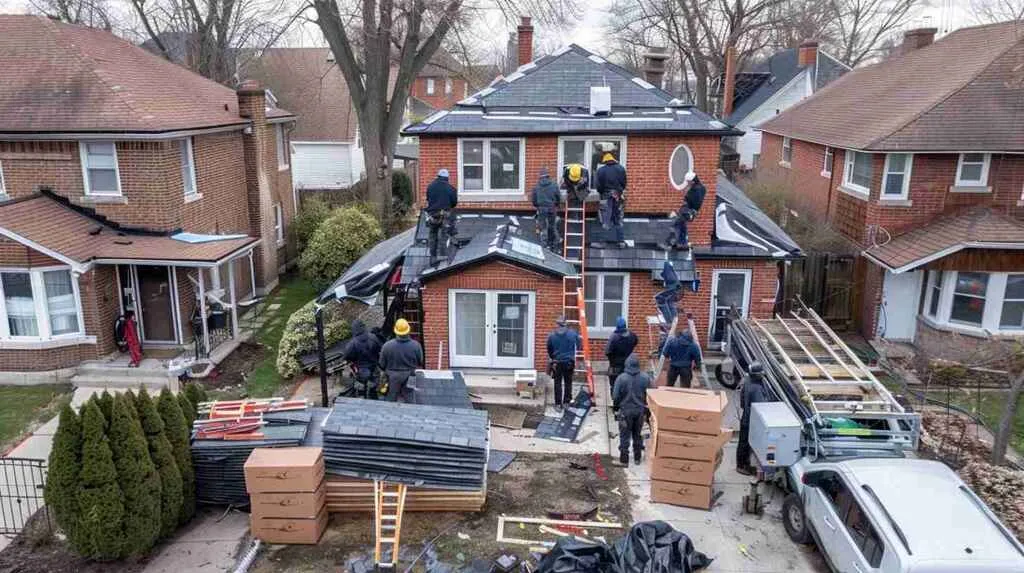
Lifting Shingles Repair Queens NY – Cause and Proper Fix | Free Estimates
Quiet mornings in Queens neighborhoods, when the wind finally drops after a storm, usually bring me a batch of worried calls about shingles that won’t lie flat anymore. Here’s what I tell everyone right away: most “mysterious” lifting shingles trace back to three boring, fixable mistakes-wrong nailing, poor sealing, or ventilation problems-not some cursed bad batch of shingles. I’ve spent 19 years climbing two-story attached homes and low-slope ranch roofs across this borough, and I can count on one hand the number of times the shingle itself was actually defective.
Why Your Shingles Are Lifting in Queens (And Why It’s Usually Fixable)
The truth is, when tabs start flapping in the wind, it’s almost never random. On a two-story attached in Corona last March, I ran into the perfect example of what I’m talking about. The owner kept calling every contractor who’d answer just to get the same shrug and a quote for full replacement. When I got up there, I could see the pattern immediately: every fourth or fifth shingle had a nail driven too high, sitting above the seal strip instead of through it. That’s the sweet spot where the next course is supposed to glue down and lock everything tight. High nails turn that seal into a lever-wind gets underneath, pries the tab up like you’re popping a bottle cap, and suddenly you’ve got shingles that look ready to fly off even though the rest of your roof is fine.
One January morning around 7 a.m., freezing rain turning to sleet in Astoria, I got called by a landlord who swore “the new shingles are defective” because they kept lifting after every nor’easter. When I climbed up, I saw the nailing pattern was all wrong-half the nails were high, above the seal strip, installed by a rushed crew the previous spring. I remember my gloves icing over as I scraped back a lifted shingle and showed the owner the nail head sitting right where the wind could pry it up like a bottle opener; that job taught me you can’t blame the material when the installation was the real villain. Wind doesn’t care if your shingles cost fifteen bucks a bundle or fifty-it’s looking for the gaps, the loose edges, the places someone cut corners or didn’t understand how the layers work together.
Think of your roof like the subway’s electrical system: one loose connection-whether it’s a high nail, a backwards starter strip, or a seal that never bonded-can shut down a whole line. Just like one bad relay can stop trains from Astoria to Jamaica, one weak edge on your roof lets wind start peeling up otherwise perfectly good shingles. That’s exactly why I approach every lifting-shingle call like I’m looking for that one bad connection, not trying to convince you the whole network needs to be ripped out and replaced.
✅ Top 3 Everyday Causes of Lifting Shingles Carmen Finds in Queens
-
✅
High or Misplaced Nailing: Nails driven above the seal strip on three-tab or architectural shingles, common on rushed jobs, let wind get underneath like a crowbar. -
✅
Failed Adhesive Bonding: Greasy vents, dirty decking, or cold-weather installation on older Queens homes keep the factory seal from ever sticking down properly. -
✅
Poor Attic Ventilation & Heat: Blocked soffits and insufficient ridge vents cause heat buildup that curls shingle edges and weakens adhesive from the inside out.
⚠
Don’t Assume a Whole New Roof Just Because Tabs Are Lifting
Localized lifting from bad nailing or failed sealing can often be repaired by carefully pulling and re-laying a few rows of shingles, not tearing off your entire roof. The catch is this: ignoring it absolutely will make things worse. Wind doesn’t take a day off, and once it finds a loose edge, it keeps working that spot until you’ve got exposed decking, leaks inside your walls, and a repair bill that’s ten times what a targeted fix would’ve cost. Calling a pro like Shingle Masters for a proper diagnosis beats guessing and lets you fix the real problem before it spreads.
Is Your Lifting Shingle an Emergency or Just Annoying?
Let me be blunt: if your shingles are lifting, wind is not the problem-it’s just the inspector pointing at the problem. Wind only exposes what’s already weak: the nail that’s too high, the starter course that’s backwards, the seal that never bonded because someone roofed in 38-degree weather. When I inspect a Corona or Jackson Heights two-story attached, I’m looking at how those narrow side yards funnel wind between buildings like a wind tunnel, and I’m asking myself whether the edge details and nailing pattern were done right for that kind of constant pressure. Most of the time, the shingles themselves are fine-it’s the installation underneath that didn’t account for how wind behaves in Queens neighborhoods.
Late on a windy October night in Bayside, I got a frantic call from a new homeowner who thought his roof was “peeling off” during a storm. By the time I arrived, the gusts were strong enough to rattle my ladder, but when I inspected, it wasn’t full failure-just an entire section of starter course installed backwards, so the first row of shingles never sealed and kept fluttering. I remember lying flat on the cold, gritty shingles, feeling the wind tug at the loosened edge while I temporarily screwed down a tarp and explaining over speakerphone that we’d be tearing back only three rows, not the whole slope, once the wind died down the next day. That job looked like a disaster at midnight but turned out to be a focused repair once I diagnosed it correctly-and that’s the difference between panic and a plan.
🚨 Urgent – Call Shingle Masters Now
- • Shingles completely missing or hanging by a thread
- • Exposed nails or visible roof decking
- • Active leak or water stains inside your home
- • Lifted shingles near ridge, valleys, or roof edges
📅 Can Wait a Few Days (But Don’t Ignore It)
- • Tabs lifting but still attached and sealed at base
- • No signs of leaks or water damage inside
- • Isolated to one small section away from edges
- • Calm weather forecast for the next several days
Do You Need Emergency Shingle Repair or a Scheduled Visit?
NO → Continue below
NO → Continue below
NO → Monitor and schedule inspection within a week
How We Properly Fix Lifting Shingles (Without Redoing Your Whole Roof)
Step-by-step: Carmen’s wind detective method
Picture me kneeling up there with my little pry bar; the first thing I’m feeling for is whether that shingle wants to spring back or lie flat. If it springs back, the adhesive never bonded or the nail is holding it wrong. If it lies flat but pops right back up when I let go, wind’s been working that edge and the seal is toast. I walk every section where tabs are lifting, documenting with my phone exactly which rows are affected and where the pattern starts, because patterns tell me whether this was an installation mistake or something like blocked ventilation causing heat curl across the whole field. Once I’ve got the diagnosis, I decide whether we’re re-bonding with roofing cement and new fasteners, pulling and re-nailing a section, or replacing the starter course that’s letting everything above it fail-and I explain all three options with photos so you’re not just trusting my word. Here’s an insider tip I give every homeowner: take clear smartphone photos of any lifting areas and your attic after storms, because those before-and-after shots help a roofer like me spot patterns fast and can be gold if you need to file an insurance claim later.
One July afternoon, heat shimmering off the blacktop in Jamaica, I was repairing lifted shingles for an elderly couple who spoke mostly Spanish, and they were worried their insurance would cancel them. As I pulled back the loose tabs, I could see soot and grease from the nearby takeout vent stuck to the underside of the shingles, keeping the adhesive from ever bonding right. I sat at their kitchen table, drew a little sketch of “clean shingle sandwich vs. dirty shingle sandwich,” and we ended up rerouting the vent and re-bonding the field instead of replacing the whole roof, saving them thousands. That job reminded me that sometimes the fix isn’t on the shingles at all-it’s addressing what’s contaminating them or cooking them from below, and that’s where experience beats guesswork every time.
Carmen’s Exact Process to Repair Lifted Shingles in Queens
I walk the entire roof with my pry bar and phone, testing every lifted tab to see if it springs back or lies flat, and photograph the pattern to determine if this is isolated to one area or spreading across multiple sections.
I carefully lift suspect shingles to check nail placement-looking for high nails above the seal strip or missing fasteners-and inspect whether factory adhesive ever bonded or if contamination (grease, dust, cold temps) prevented sealing.
I show you photos of what I found-wrong nailing, failed adhesive, backwards starter-and sketch out on cardboard or an estimate exactly what needs to be pulled, re-nailed, or re-bonded so you understand the scope before we start work.
We carefully remove only the affected rows, clean the decking, apply fresh roofing cement to bond points, and re-nail each shingle at the correct height through the seal strip, then hand-seal any exposed edges to lock everything down tight.
Before we leave, I check your attic ventilation, soffit intakes, and ridge vents to make sure heat and moisture aren’t going to curl those shingles again, and I give you a simple maintenance checklist so this doesn’t turn into a repeat problem.
✓ Quick Checks Before You Call Shingle Masters About Lifting Shingles
-
☐
Snap a few clear photos of the lifted shingles from ground level and close-up if safe -
☐
Check your attic or top floor ceiling for any new water stains or damp spots after the last rain -
☐
Note which part of the roof is affected-front, back, edges, or scattered across the whole slope -
☐
Write down when your roof was last worked on and whether you still have any paperwork or warranty info -
☐
Look for any shingles on the ground or in gutters-they’re clues about how severe the lifting is -
☐
Check the weather forecast to see if more wind or storms are coming soon so we can prioritize your repair
What Lifting Shingle Repairs Cost in Queens, NY
$250-$450 is what most Queens homeowners I see end up paying for a focused lifting shingle repair-that number goes up or down depending on whether you’ve got a single-story ranch in Bayside with easy ladder access or a narrow two-story attached in Jackson Heights where we’re working between houses, how many rows need to be carefully lifted and reset with fresh cement and nails, and whether we’re also addressing a backwards starter course or adding ventilation fixes to prevent the problem from coming back.
Typical Lifting Shingle Repair Scenarios & Price Ranges in Queens
Small Porch or Garage Overhang Repair
What’s involved: 2-4 rows of shingles lifted and re-nailed on a low-slope section, adhesive reapplied, easy ground-level access.
Price Range: $250-$400
Usually completed in a few hours; perfect for isolated wind damage that hasn’t spread.
Mid-Size Section on 2-Story Attached Home
What’s involved: One full slope side (front or back), 6-10 rows affected, proper scaffolding or ladder setup, re-nailing and hand-sealing all lifted tabs.
Price Range: $450-$750
Common in Corona, Jackson Heights, Elmhurst where narrow side yards funnel wind; typically a one-day job.
Corner Lot or High-Wind Exposure Repair
What’s involved: Multiple sections lifted across two slopes, edge/rake work, possible starter course replacement, extra fastening for future wind resistance.
Price Range: $700-$1,100
More common on exposed Bayside or Whitestone homes; may require two days depending on extent of damage.
Storm Emergency Tarp + Repair Package
What’s involved: Immediate tarping to stop active leaks during or right after storm, followed by scheduled repair once weather clears (temporary tarp, then permanent fix).
Price Range: $350-$650 (tarp) + $400-$900 (repair)
Priority response for active leaks; tarp is emergency service, full repair scheduled within 48-72 hours when safe.
Repair + Ventilation or Contamination Fix
What’s involved: Re-laying lifted shingles plus addressing root cause like blocked soffit vents, rerouting greasy exhaust vents, or adding ridge ventilation to prevent future lifting.
Price Range: $650-$1,400
Best long-term value; fixes the symptom and the cause so you’re not calling us back every storm season.
Avoiding Repeat Lifting: Ventilation, Maintenance, and Realistic Expectations
Think of your roof like a deck of cards glued together at the edges-if even a few cards don’t get enough glue or get bent, the wind suddenly has something to grab. Poor attic ventilation in older Queens homes is one of the sneakiest ways those “cards” get bent: blocked soffit vents trap heat and moisture, which bakes the underside of your shingles all summer and keeps adhesive from bonding in winter, then curls the edges upward so wind can pry under them like opening a can of paint. I’ve pulled back shingles on Jamaica rowhouses and found greasy residue from bathroom or kitchen vents coating the underside-just like that couple’s takeout vent job-and that contamination means even brand-new shingles won’t seal down right. The fix isn’t complicated, but it does require looking at your roof as a system: good airflow in, good airflow out, clean surfaces for adhesive to bond, and fasteners placed exactly where they’re supposed to go.
Here’s the part most people don’t like to hear, but need to: warranty companies can tell the difference between storm damage and sloppy work in about ten seconds. If your shingles keep lifting after every storm, that’s a pattern, and patterns point to installation problems or ventilation failures, not Acts of God. I tell every homeowner to document conditions with photos, keep roofing receipts and warranty paperwork in one folder, and schedule a simple annual inspection-walk the roof in spring and fall, check the attic after heavy rains, clear debris from valleys and gutters. Shingle Masters isn’t a one-time patch crew; we’re set up to be your long-term roofing partner, the people you call when something feels off so we can catch a loose shingle before it turns into a tarp-in-the-rain emergency at midnight. Realistic expectations mean understanding that even a perfect repair won’t last forever if the underlying causes-ventilation, maintenance, proper installation-aren’t addressed, and that’s exactly the conversation I want to have on your roof before we ever pull out a nail gun.
Why Queens Homeowners Call Carmen and Shingle Masters for Lifting Shingle Repairs
Fully Licensed & Insured in NYC
All required New York City roofing licenses, liability insurance, and workers’ comp in place so you’re protected if anything goes wrong.
19+ Years Roofing in Queens
Carmen knows every roof type from Astoria to Bayside-two-story attached, flat-roof extensions, tricky valleys-because she’s been climbing them since 2006.
Fast Response for Wind Emergencies
Typical response time under 24 hours for storm-related lifting shingle calls, with emergency tarping available same-day when weather allows safe ladder work.
Spanish & English Communication
Carmen and crew speak both languages fluently, so explanations, estimates, and on-site communication are clear no matter what’s comfortable for you.
Free Written Estimates with Photos
Every estimate includes roof photos showing exactly what we found, a clear scope of work, and line-item pricing-no vague “roof repair” mystery charges.
Lifting Shingle Repair Questions Carmen Hears All the Time in Queens
?
How fast can you repair lifting shingles after a storm in Queens?
?
Will a partial lifting shingle repair void my roof warranty?
?
How long will re-bonded and re-nailed shingles last after a lifting repair?
?
Can I DIY re-seal lifting shingles with roofing cement from the hardware store?
?
Does Shingle Masters work with homeowner insurance claims for wind damage?
Lifting shingles in Queens don’t have to mean panic or a massive replacement bill. Most of the time, they’re pointing at a fixable problem-wrong nails, bad sealing, heat and ventilation-that a pro can diagnose and repair in a day or two without tearing off your whole roof. Call Shingle Masters for a free on-roof inspection and a written estimate that shows you exactly what’s lifting, why it’s lifting, and what it’ll cost to fix it the right way-Carmen’s diagnostic approach and quick response for wind-related issues mean you’ll know what you’re dealing with before the next storm rolls through.