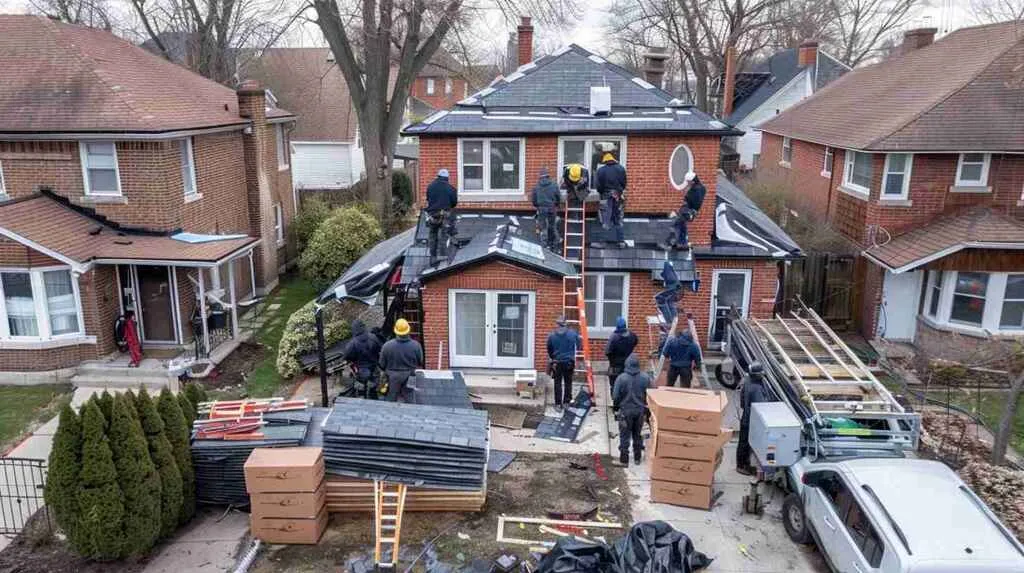
Crosshairs. The only way to repair a leaky asphalt shingle roof in Queens is to put the leak itself in sharp focus-and that means ignoring the ceiling stain at first and hunting the exact entry point on the shingles, using a photographer’s eye for shadows, lines, and layers. Once you frame the problem correctly, the fix is straightforward; miss the real entry point, and you’ll be chasing drips for months.
Find the Real Leak, Not Just the Ceiling Stain
Here’s the thing: most people call me after they’ve already spent a weekend staring at a brown spot on their bedroom ceiling, convinced that’s where the water’s coming in. It’s not. Water on an asphalt shingle roof enters at one spot-usually a nail pop, a cracked flashing edge, or a lifted tab-then travels along rafters, nails, and underlayment seams before it finally drips onto your drywall somewhere completely different. If you start your repair hunt inside the house, you’re already looking at the wrong part of the photograph.
One February evening around 6:30, right after sunset, I was on a two-family in Jackson Heights where the bedroom ceiling kept spotting after snowstorms. Three roofers had already slapped sealant all over the chimney. I waited until the homeowner turned on the attic light, then I watched where the drip lines cast shadows on the joists-like watching light trails in a photo long exposure. Turned out one single nail pop two rows up from a plumbing vent was sending meltwater under half a dozen shingles. Five minutes, one nail reset, a proper patch, and that “chimney leak” mystery was gone.
Here’s my blunt opinion: if you’re chasing ceiling stains instead of shingle details, you’re wasting time. Water doesn’t care about your interior walls-it follows gravity, friction, and the path of least resistance along the roof structure. In Queens two-families with their complex framing, shared walls, and decades of quick fixes, water can travel eight feet sideways before you ever see it inside. The real leak is *always* uphill and upstream from where you’re standing with a bucket, and the only way to find it is to get on top of the roof and start zooming in on the shingles themselves.
⚠️ Why Ceiling Stains in Queens Apartments Almost Never Point to the Exact Shingle Leak
Stop before you cut into drywall or start caulking around everything in sight:
- Water can travel 3-10 feet along rafters or nails before it shows up on your ceiling.
- Sloped roofs over attached homes in Queens often send water sideways along shared framing.
- Spraying a hose randomly on the roof can drive water under good shingles and make the problem worse.
- Smearing roofing cement over the “wet-looking” area usually traps water and leads to rot.
Instead, start your hunt on top of the roof: look directly uphill from the stain, then around penetrations (vents, chimneys, skylights) within a 6-8 foot radius.
First Visual Clues to Focus On When Hunting an Asphalt Shingle Leak
Shingles that look slightly darker or shinier than neighbors (holding moisture)
Nail heads that show light rust trails or faint “tear drop” stains
Shingle tabs lifted at the bottom edge, especially near vents or plumbing stacks
Granule loss paths that form faint lines leading toward penetrations
Flashing edges where sealant is cracked, separated, or missing entirely
Step-by-Step: How I Track a Leak on a Queens Asphalt Shingle Roof
On a typical Queens two-family roof, the first thing I do is stand at the gutter line and visually scan upward toward the ridge, row by row, looking for anything that breaks the pattern-a shingle that’s slightly off-color, a nail head catching the light wrong, a valley seam that looks too flat or too lumpy. I’m framing the whole roof like a big composition, then zooming in tight around the usual suspects: valleys, plumbing vents, chimneys, and any spot where a homeowner or satellite installer has been up there before. In neighborhoods like Jackson Heights, South Ozone Park, and Corona, you’re dealing with older framing, layers of repairs from different decades, and a lot of shared-wall construction that can send water sideways in ways a suburban ranch never would.
One humid July morning in South Ozone Park, I got called to a place where the landlord was furious because the “new roof” was leaking after only eight months. I got up there at 9 a.m. while the dew was still on the shingles and could literally see the moisture tracing a line along an improperly woven valley-no underlayment overlap where the two planes met. The guy who installed it thought more shingles meant more protection; actually, he’d built a water slide into the house. I had to carefully strip back just that valley, layer new ice & water shield, and re-shingle it correctly-sweating through my shirt while the tenant’s kid kept shouting roof questions up the ladder. Now let’s pull back a bit and walk through the exact process I use every time, so you can see how a real leak inspection works step by step.
Roof Leak Tracking Process Vic Uses Before Any Repair in Queens, NY
Start in the attic (if accessible): follow stains, shadows, and nail rust trails uphill toward the likely entry area.
Move to the roof edge: scan from gutters up, looking for disturbed shingles, mismatched colors, and patched zones.
Zoom in around penetrations: check plumbing vents, chimneys, skylights, and satellite mounts within an 8-foot circle.
Inspect valleys and transitions: look for woven shingles laid wrong, missing underlayment laps, or soft spots.
Test gently, not aggressively: lift tabs carefully by hand, never with a pry bar, and avoid forcing water uphill with a hose.
Confirm the entry point: only when you see a clear defect (nail pop, crack, gap at flashing) do you mark it for repair.
DIY Patch vs. Call a Pro: What’s Safe to Do on Your Own
Here’s my blunt opinion: if you’re chasing ceiling stains instead of shingle details, you’re wasting time-and if you’re thinking about climbing up there without understanding exactly what you’re looking for, you’re probably going to make things worse or get hurt. That said, there are a few simple repairs a careful homeowner *can* handle safely, and a bunch more that absolutely require someone who’s been doing this for years. One insider tip I always give: before you ever touch a ladder, grab a pair of binoculars and scan your roof from the sidewalk at different times of day-early morning dew and late afternoon sun will show you shingle problems you’d never spot from directly underneath.
One job that haunted me for a week was a Saturday call in Flushing during a summer thunderstorm. Rain was coming in sideways, and this elderly couple had pots and towels all over their living room. I traced the leak to an area someone had “repaired” with three different colors of shingles and about a gallon of roofing cement spread like peanut butter. The cement had actually created a dam, forcing water up under the original shingles. I spent that afternoon peeling back the mess under a blue tarp, re-weaving the shingles correctly, and explaining to them that sometimes the so-called repair is the main cause of the leak. It’s like trying to fix a blurry photograph by smearing Vaseline on the lens-you’re not solving the focus problem, you’re just covering it up and making everything worse.
DIY Shingle Repair Tasks vs. Pro-Only Work on a Queens Asphalt Roof
✓ Reasonable DIY (If You’re Steady on a Ladder)
- Replacing 1-3 damaged shingles in an easy-to-reach area away from the edge
- Resetting a single popped nail with proper sealant and a new nail placed slightly higher
- Re-securing a loose plumbing boot clamp when the rubber is still flexible
- Cleaning debris from valleys and behind chimneys without prying up shingles
✗ Definitely Call a Pro
- Any leak tied to a valley, dormer, or where two roof planes meet
- Flashing replacement around chimneys, skylights, or sidewalls
- Soft or spongy roof decking underfoot (possible rot)
- Leaks on steep slopes or three stories up where fall risk is high
- Any area someone already smeared with thick roofing cement
What a Proper Asphalt Shingle Leak Repair Looks Like
The ugly truth is, most “quick fixes” I see are just dark, sticky band-aids slapped over the real problem. A proper repair on an asphalt shingle roof in Queens means you have to work in layers-just like stacking images in a photograph-and if one layer is out of focus or misaligned, the whole picture looks wrong and water finds its way through. The correct sequence is this: strip back the damaged area until you expose clean, dry underlayment and solid deck; inspect and replace any rotted plywood or felt; lay new ice & water shield if it’s near a valley or penetration; then re-shingle from the bottom up, overlapping each row correctly so water can’t sneak backward. Every nail has to be driven at the right depth-not popped up, not sunk too deep-and every edge has to seal flat so wind can’t lift it.
In Queens, that layered approach matters even more because you’re dealing with winter freeze-thaw cycles that pry at every gap, humid summers that hold moisture in any pocket of trapped air, and wind off the East River that can test every single shingle edge during a nor’easter. If someone skips the underlayment step or just nails new shingles over old damage, you’re building a roof that *looks* fixed in the viewfinder but will leak again the first time conditions get tough. Now let’s pull back a bit and talk about when a leak needs immediate attention versus when you can take a breath and plan the repair carefully.
When a Leaking Shingle Roof in Queens Is an Emergency vs. When It Can Wait a Few Days
🚨 Call Same-Day (Emergency)
- Active dripping during a storm into living spaces or near electrical panels
- Ceiling sagging, bulging, or cracking where it’s wet
- Water reaching light fixtures or outlets
- Large sections of shingles missing after high wind
✓ Can Usually Wait 24-72 Hours
- Small, occasional drip that only shows in very heavy rain
- Stain that has stopped growing but needs source traced
- Minor shingle cracks or curls with no active leak
- Known older roof where you want a professional leak inspection and tune-up
Simple Queens Roof Check Schedule to Catch Shingle Leaks Early
🍂 Late Fall (October-November)
Clear gutters and valleys of leaves; check for shingles lifted by summer storms; inspect flashing around chimneys before winter freeze-thaw starts
❄️ Early Spring (March-April)
After snowmelt, scan for ice-dam damage, popped nails from freeze-thaw, and any shingles that look darker or cupped from trapped moisture
☀️ Mid-Summer (July)
Quick binocular check from the sidewalk for curling tabs, granule loss, and any new penetrations (satellite dishes, HVAC) that might need flashing attention
🌧️ After Any Major Storm
Walk the perimeter looking for blown-off shingles or debris impact damage; check attic for new stains or moisture within 24 hours while clues are fresh
Costs, Prep Checklist, and Quick Answers for Queens Homeowners
Think of your roof like a layered photograph-shingles, underlayment, deck, attic-if one layer is out of focus, the whole picture looks wrong. Knowing ballpark costs and having a quick checklist ready before calling saves time and keeps everyone on the same page.
💰 Typical Price Ranges to Repair a Leaky Asphalt Shingle Roof in Queens, NY
Replace 1-3 damaged shingles and reset nails in an easy area: $275-$450
Repair around a single plumbing vent boot (no decking damage): $350-$650
Strip and rebuild a small valley section (up to 6 feet): $750-$1,400
Remove bad cement patch and correctly re-shingle a 4’×6′ area: $600-$1,100
Emergency storm call during active leak with temporary tarp plus follow-up repair: $950-$1,900
Note: These are typical ranges for straightforward repairs in Queens. Actual cost depends on roof height, access, extent of hidden damage, and materials needed. No job is priced until Vic inspects the exact leak source.
📋 What to Note Before You Call Shingle Masters About a Leaky Shingle Roof in Queens
Exact rooms and spots where you’ve seen dripping or stains
Whether the leak happens in every storm or only in wind-driven rain or snowmelt
Approximate age of the roof and any past repairs or patches you know about
Photos of the ceiling stain and, if safe, of the roof area from the ground
Access details: attic entry location, building height, and backyard/driveway access for ladders
Any other work on the roof (solar, satellite dishes, HVAC) and when it was done
Your preference: quick stop-gap repair, full diagnostic, or quote for longer-term replacement
❓ Common Questions Queens Homeowners Ask About Repairing Leaky Asphalt Shingle Roofs
▸ Can you really find the exact source of my leak, not just guess?
Absolutely. Vic built his reputation on the 15-minute leak diagnostic-he follows visual clues like shadows, rust lines, and shingle patterns the way a photographer reads light. He won’t point at your ceiling stain and call it a day; he’ll trace the water path backward from inside your attic to the exact entry point on the roof surface, mark it, and show you photos before any work starts.
▸ Do you have to replace my whole roof if there’s a leak?
Not usually. Many Queens leaks can be solved with a targeted repair-a few shingles, a vent boot, a valley section-if the rest of the roof still has life left. Vic will tell you honestly if the roof is shot or if you’re better off with a focused fix now and budgeting for a full replacement in a few years. No upselling.
▸ Is it safe for me to go up and look before you come?
Only if you’re comfortable on ladders, the pitch is low, and the roof is dry. Otherwise, stay on the ground and use binoculars-morning or late afternoon light will show you shingle problems you’d miss from below. If the roof is steep, three stories up, or you see any soft spots underfoot, don’t risk it; wait for Vic to inspect safely.
▸ How fast can you get to my place in Queens if water is coming in now?
For active emergency leaks-water dripping near outlets, ceiling sagging, storm damage-Shingle Masters offers same-day or next-day response across Queens neighborhoods when possible. Vic will tarp or patch the immediate problem to stop the water, then schedule the proper repair once conditions are safe to work.
▸ What if another contractor already “fixed” this leak and it’s still leaking?
That’s actually one of the most common calls Vic gets. He’ll strip back the bad work-roofing cement globs, mismatched shingles, improper flashing-until he finds the real source the first contractor missed. Shingle Masters will document what went wrong, fix it correctly in layers, and give you a written breakdown so you understand exactly what was done.
Why Queens Homeowners Call Shingle Masters for Asphalt Shingle Leak Repairs
Licensed and fully insured in New York for residential roofing
19+ years tracking down asphalt shingle leaks across Queens neighborhoods
Fast leak response: same-day or next-day appointments available for active leaks
Detailed photo documentation of problem areas and finished repairs
Local references from homeowners in Jackson Heights, Corona, South Ozone Park, and Flushing
Once the real leak point is in focus, fixing a leaky asphalt shingle roof in Queens is straightforward when it’s layered correctly-shingles, underlayment, deck, attic, all aligned like a sharp photograph. Call Shingle Masters to have Vic come out, trace the leak with that same photographer’s eye, and give you a clear, written estimate on the spot-no guessing, no upselling, just honest roofing done right.