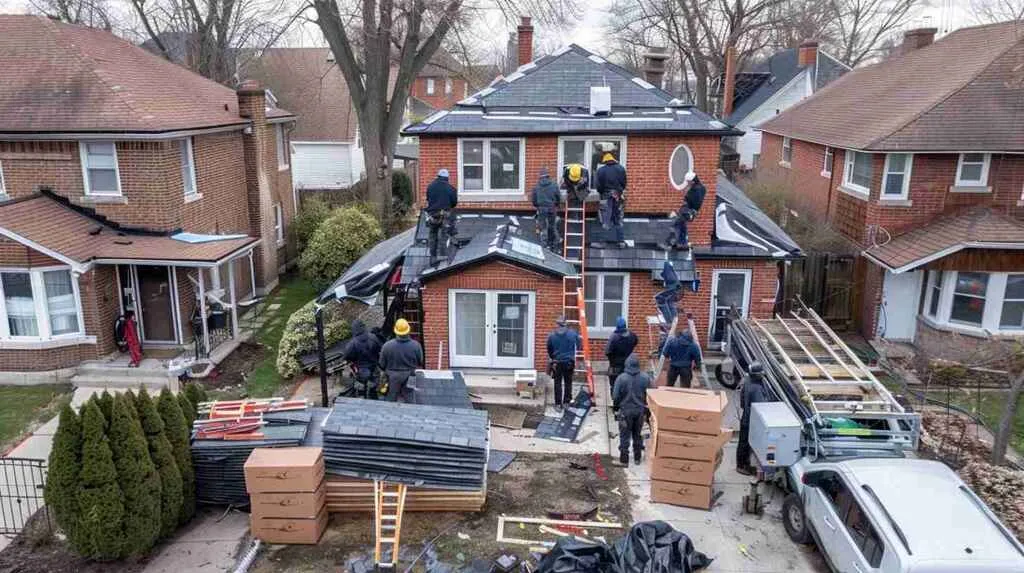
How to Patch a Roof Shingle Queens NY – Repairs That Last Years
Blueprint time: most homeowners see a cracked or missing shingle and grab a tube of caulk, completely skipping the question that actually determines whether a patch will hold or just make the leak sneakier-has water already reached the underlayment or deck? Carlos is going to walk you through a Queens-specific, engineer-level decision tree for figuring out if your shingle is worth patching, and if it is, how to do it so it rides out the next five winters instead of peeling off in the next Nor’easter.
Check If Your Shingle Is Even Patchable (Before You Touch a Tool)
On a typical Queens cape with a 5/12 pitch, the first thing I look at before patching a shingle is the nail line on the surrounding shingles. Not the cracked piece itself-the ones above and below it. If those nails are sitting too high or if the shingle tabs around the damage are already lifting, curled, or brittle, you’re not looking at a simple patch anymore. You’re looking at a water management system that’s already compromised, and slapping one new shingle into a failing field is like replacing one board on a rotten deck and calling it fixed. My blunt opinion: most people focus on the visible hole but completely ignore whether water has already been sneaking sideways under the felt or soaking into the plywood for months.
Let me be blunt: if you see daylight from your attic, you’re past “patch a shingle” territory and into “you waited too long” land. Climb into your attic during the day, turn off the lights, and look straight up at the spot where the shingle is damaged. Any pinprick of light? Any staining on the underside of the deck? Any soft, spongy feeling when you press the wood from below? That’s your line. Cross it, and a cosmetic shingle swap won’t solve anything-you need underlayment work, possibly decking replacement, and a roofer who actually understands how water migrates across a roof assembly in Queens humidity and freeze-thaw cycles.
I still remember a roof in Elmhurst where one “little” nail pop turned into a 6-foot rot line because nobody checked under the shingle. The homeowner had patched it twice with duct tape-yes, actual silver tape-thinking it would hold through “just one more storm.” By February, that tape had frozen, curled into a funnel, and channeled meltwater straight into the insulation and drywall. When I pulled up the damaged section, the deck looked like cardboard. That’s why I treat every single-shingle inspection like I’m mapping a water path: where does the rain hit, where does it flow next, and what happens if this one weak link fails?
Should You Patch This Roof Shingle Yourself or Call a Pro in Queens?
Start: Do you see damage on only 1-3 shingles in one small area?
- Yes → Next: Can you access the area safely with a stable ladder and a 4:1 ladder angle?
- Yes → Next: From the attic, do you see any daylight, staining, or soft spots under that area?
- No → DIY patch may be reasonable if you follow the full step-by-step below.
- Yes → Stop. Call a roofer like Shingle Masters; you likely have underlayment or deck damage.
- No → Call a pro. Access risk is higher than the cost savings.
- Yes → Next: From the attic, do you see any daylight, staining, or soft spots under that area?
- No → Next: Are there multiple missing, curled, or cracked shingles on that slope?
- Yes → You’re beyond patching. Plan for a repair section or replacement.
- No → Have a roofer inspect; pattern damage can signal age or installation issues.
⚠️ When NOT to Try a DIY Shingle Patch in Queens
Skip DIY patching and call a pro immediately if:
- You see daylight or active dripping from the attic below the damaged shingle.
- The roof is icy, wet, or the slope is steeper than about 7/12.
- More than one shingle in a row is torn, missing, or moving when you press down.
- You see spongy, soft decking when you step or press near the damaged spot.
- There was a recent Nor’easter or hailstorm and you suspect hidden damage.
Step-by-Step: How to Patch a Roof Shingle in Queens the Right Way
One late August evening, just before sunset, I was finishing a job in Bayside when a neighbor waved me over to “just look” at a single cracked shingle. Turned out she had mismatched shingles from a bad patch someone did two years earlier-no starter strip, nails too high, and they’d used 3-tab scraps on an architectural roof. I showed her how the wind had started to lift the whole row because of that one lazy repair, and we ended up rebuilding a 4×8 section so it would actually last more than one hurricane season. That’s the thing about Queens roofs, especially near the water or on exposed corners in Bayside and Rockaway: stronger wind uplift means nail placement and shingle type matching aren’t optional-they’re the difference between a patch that holds and one that peels off in the next big gust.
The steps below aren’t just tasks-they’re engineering checkpoints, each one asking “where is the water going to go now?” if you do it right or skip it. On a 3-tab roof, water sheets straight down the courses; on architectural shingles, it has to navigate those thicker tabs and shadow lines. Miss the nail line by an inch, and you’ve created a hinge point that catches wind and funnels rain sideways under the felt.
DIY Patch Process for a Single Damaged Asphalt Shingle
-
1
Confirm roof type and match the shingle – Identify if you have 3-tab or architectural shingles; bring a sample to a Queens supplier and match color and brand as closely as possible. -
2
Wait for a dry, mild day – Aim for 45-75°F with no rain in the forecast for 24 hours so sealant and adhesive strips can set properly. -
3
Loosen the damaged shingle – Use a flat bar to gently lift the shingle above the damaged one, then slide under the damaged shingle to pop the roofing nails free without tearing surrounding shingles. -
4
Inspect underlayment and deck – Check for torn felt/synthetic, discoloration, or soft wood; if anything is compromised, stop and schedule a professional repair. -
5
Install the new shingle – Slide the replacement shingle into the exact position of the old one, align the exposure line with surrounding shingles, and nail on the manufacturer’s nail line with four galvanized roofing nails. -
6
Seal nail heads and tabs – Dab roofing cement on exposed nail heads and a small bead under lifted tabs; press down so the shingle beds into the sealant without squeezing it out. -
7
Check water path – Run a gentle hose flow above the repair (never uphill) and watch how water sheds across the patched area, confirming it follows the same path and speed as the surrounding field.
Tools and Materials You Need on the Roof
For lifting shingles without tearing
1¼” minimum, same as originals
Tube or small can, not buckets
Same type, color, and brand
Standard framing hammer works fine
For trimming shingle edges if needed
Freezes, curls, becomes a funnel
Creates weak spots and wind lift
DIY Patch vs Calling a Queens Roofer: What Actually Lasts
When I ask homeowners, “Do you know how old this roof actually is?” the silence tells me most patches I’m about to do are really buying time, not dodging replacement forever. I’ll never forget a Saturday in early May in Flushing when a real estate investor asked me to do a “quick patch” to get through inspection on a multifamily-he wanted me to just smear roofing cement under a lifted shingle and call it good. I walked him through, step by step, how that would trap water, rot the decking, and show up as a sag in two years, right when he’d be trying to refinance. We did a proper patch with replaced decking, new felt, and matched shingles, and he called me back three years later to say the inspector actually complimented the roof. That’s the difference: a patch can either be a Band-Aid that hides rot or a real structural fix that extends your roof’s life-but only if the rest of the system is still sound.
DIY Shingle Patch vs Hiring a Queens Roofing Pro
| DIY Patch | Pro Patch (Shingle Masters) |
|---|---|
| Low upfront cost (primarily materials and your time). | Higher upfront cost but includes labor, materials, and warranty. |
| Risk of hidden underlayment/deck damage being missed. | Full inspection of surrounding shingles, underlayment, and decking. |
| Good for 1-3 isolated, simple shingle issues. | Better for storm clusters, edge/valley issues, and older roofs. |
| No labor warranty; if it leaks, you redo it. | Workmanship guarantee and documented repair for insurance or resale. |
| Depends on your ladder safety and comfort on a roof. | Done with harnesses, roof jacks, and professional safety gear. |
Typical Queens Shingle Repair Scenarios and Price Ranges
| Scenario | Description | Typical Range (Queens, NY) |
|---|---|---|
| Single missing shingle | Easy access, sound deck, quick patch on a 1-2 story cape. | $200-$350 |
| Small storm patch (3-5 shingles) | Wind damage in one corner, includes matching shingles and sealing. | $350-$550 |
| Localized deck repair | Replace a small rotten section of plywood plus shingles above. | $650-$1,000 |
| Front slope cosmetic tune-up | Multiple nail pops and cracked shingles along the street side. | $500-$850 |
| Emergency tarp + patch | Same-day visit after a Nor’easter to stop active leaking, then return for proper patch. | $450-$900 |
Queens-Specific Traps: Caulk, Tape, and Shortcuts That Leak
If you hand me a tube of caulk and say, “Can we just use this?” I already know I’m about to explain why water doesn’t care how neat your bead of sealant looks. Here’s what happens: you lay down a perfect, smooth line of caulk across a cracked shingle, it looks great for about two weeks, and then the first freeze-thaw cycle in Queens hits. The caulk shrinks, pulls away from the edges, and now you’ve got a little trough that actually guides water into the crack instead of shedding it off. Even worse, if you glob it on thick, you’ve just built a dam that traps water behind it until it finds a seam, a nail hole, or a loose tab-and then it’s straight into your underlayment. The question I ask every time: “If this bead fails in February, where does the water go next?”
And don’t even get me started on duct tape. I’ve seen that Astoria roof where the tape froze, curled, and funneled water like a gutter-same story plays out every winter across Queens. Nor’easters don’t care about your temporary fix; they test every weak point with wind-driven rain and freeze-thaw action that can split a poorly sealed patch in one storm. My pro tip: use just a thin, strategic dab of roofing cement behind the factory seal line instead of globbing it on, and always ask yourself, “If this bead fails in February, where does the water go next?” That second question should shape every repair choice you make.
Common Queens Shingle Patch Myths vs Reality
| Myth | Fact |
|---|---|
| “If I can’t see the hole from the yard, water can’t either.” | Water follows gravity and surface tension, not your sight line; tiny gaps under a shingle can channel water 2-3 feet sideways before it shows inside. |
| “A thick bead of caulk is as good as a new shingle.” | Caulk and roofing cement are supplements, not structure; they crack, shrink, and can trap water instead of shedding it. |
| “Duct tape is fine for ‘just one storm.'” | In Queens winters, tape stiffens, curls, and forms a funnel that drives meltwater straight into your roof deck and insulation. |
| “Any shingle scrap will work for a patch.” | Mismatched 3-tab on an architectural roof creates weak spots and wind-lifted edges, especially on Bayside and Rockaway exposures. |
| “Nails anywhere in the shingle are okay as long as it’s stuck down.” | High nails miss the double-layer nailing zone, making shingles easy to rip off in a Nor’easter gust. |
When a Patch Is Enough-and When to Call Shingle Masters in Queens
Here’s how I think about shingle patches: they’re like changing one tire on a car-it only works if the other three aren’t bald and cracking. If your roof is 18 years old with curling tabs everywhere except that one fresh shingle you just nailed in, you haven’t fixed anything; you’ve just made the inspection report look weirder when you try to sell.
Deciding If You Need a Pro Shingle Repair in Queens Right Now
| 🚨 Urgent: Call Shingle Masters Now | ⏰ Can Wait a Few Days (But Don’t Ignore It) |
|---|---|
| Active dripping inside during or right after rain. | A single cracked or slipped shingle you just noticed. |
| Visible sagging or soft spots on the roof surface. | A nail pop that hasn’t leaked yet. |
| Multiple shingles missing after a wind event. | Granule loss you see in gutters but no leaks yet. |
| Damage around chimneys, skylights, or valleys. | Minor edge damage on an otherwise healthy roof. |
Common Queens Shingle Patch Questions
Can I patch a roof shingle in winter in Queens?
You can, but adhesion is weaker below about 40°F, and ice makes everything more dangerous. For most winter issues, I recommend a temporary, professional-safe cover and then a full patch when temperatures allow the shingle seal strips and cement to bond properly.
How long should a proper shingle patch last?
On a roof that’s still in decent shape, a correctly done patch can last as long as the surrounding shingles-often 5-10 years or more. On a near-end-of-life roof, think of it as buying 1-3 years while you plan replacement.
Will a shingle patch hurt my home inspection or resale?
If it’s sloppy, mismatched, or clearly smeared with cement, yes, inspectors and buyers notice. A clean, code-compliant patch with matched shingles usually reads as routine maintenance, especially when it’s documented by a licensed roofer.
Do I need permits for a small shingle patch in Queens?
For isolated shingle repairs, you typically don’t. Larger sections, structural work, or full replacements may trigger DOB requirements, so it’s smart to check or let a local roofer handle the paperwork.
If you’re in Queens, NY and your shingle damage looks even a little beyond a simple surface swap-or you just want the patch to be invisible and code-tight-Shingle Masters can inspect, explain the water path on the spot, and handle a repair that will ride out many more Queens winters. Call or schedule a visit before the next Nor’easter tests your roof and turns a $300 patch into a $3,000 deck rebuild.