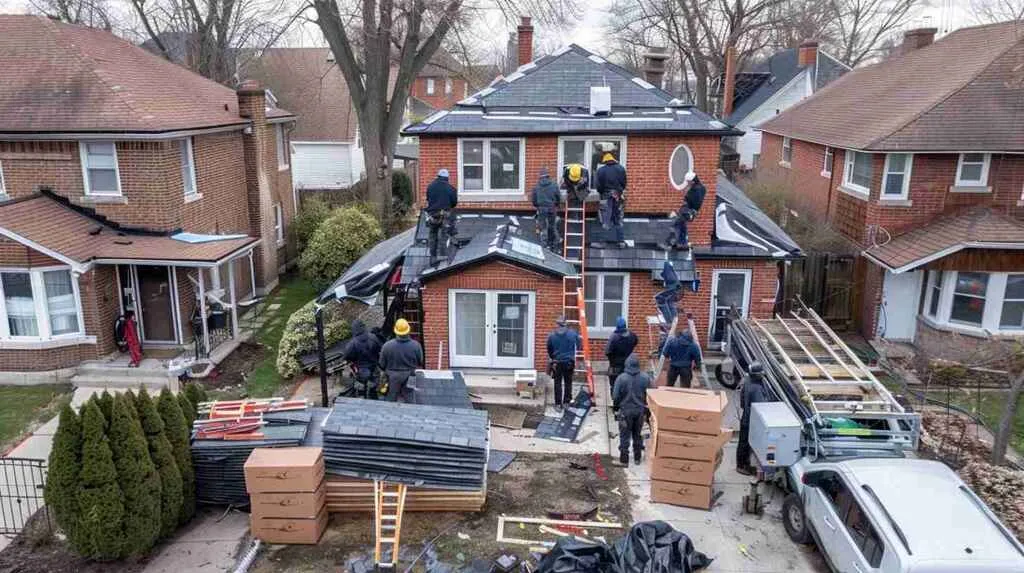
Asphalt Shingle Roof Repair Queens NYC – Fast Response Free Quote
Blueprint for smart homeowners in Queens: a focused asphalt shingle roof repair usually runs $250-$750 for minor fixes, $800-$1,500 for larger localized work, while waiting until the problem spreads can force you into a $7,500-$15,000+ full replacement. I’m Luis Ortega, and for 19 years I’ve been tracking down leak sources across Queens by mapping exactly how water moves over your shingles-following its route like city traffic through valleys, hips, and those tricky intersections where dormers meet the main roof-so we fix the actual problem, not just cover symptoms.
Asphalt Shingle Roof Repair Cost in Queens vs Full Replacement
Here’s what I tell my neighbors on the block: small asphalt shingle issues are like that squeaky brake noise on your car-annoying now, catastrophic later if you ignore it. In Queens, I see homeowners put off a $400 shingle repair because it seems minor, then six months and two rainstorms later they’re staring at wet ceiling joists and a contractor saying the word “replacement.” Your roof is a small neighborhood of shingles, and when one intersection-a valley, a chimney saddle, a vent flashing-goes bad, it backs up water traffic across the whole system. My job is finding that one bad corner and clearing it before the whole neighborhood floods.
One January night around 11 PM, I was on a two-story attached house in Woodside during freezing rain because a family had water pouring through their kitchen light fixture. Two other roofers had slapped shingles over the problem, but I found a single cracked shingle and a nail pop right where the roof met a crooked dormer. I remember using my headlamp in that icy wind, heating the shingle edges with my gloved hands just enough to slide a repair in without breaking everything, and hearing the homeowner shout up from the window, ‘The drip stopped!’ before I was even back on the ladder. That repair ran about $550-cheap insurance against the interior damage and mold remediation that would’ve hit five figures if we’d waited another week. That’s the mindset I want you to have: your roof is a system of routes, and we’re fixing the detour that’s sending water where it shouldn’t go.
Queens Asphalt Shingle Repair vs Replacement Costs
How I Track Your Leak by Following the Water’s Path
When I first step onto your roof, the question in my head isn’t ‘What’s broken?’-it’s ‘Where is the water starting its journey?’ I walk the roof like I’m reading a street map, checking every valley, hip line, ridge cap, and those tight intersections around chimneys and plumbing vents. One job that sticks with me was a Sunday morning call in Flushing right after a spring nor’easter. A quiet older couple had buckets lined up in their hallway, but the ceiling stains didn’t line up with where you’d expect a simple leak. I spent an extra hour just walking the roof, checking each shingle course along the hip and then noticed a tiny pattern: creased tabs only on the windward side, right below a badly flashed plumbing vent. I remember sitting on the ridge, drawing the ‘water path’ for them on the back of a Chinese takeout menu, showing how wind-driven rain was sneaking sideways under the lifted shingles and popping out 10 feet away in their hallway. That’s the thing about Queens nor’easters-the wind off the East River doesn’t push rain straight down; it drives water sideways under lifted tabs, especially on older two-story homes in Flushing, Bayside, and Whitestone where the windward exposure takes the brunt.
Once water slips past a weak point-a cracked shingle, a popped nail, a gap in step flashing-it doesn’t just drip straight through. It travels. On an asphalt shingle roof, water can run 5, 10, even 15 feet along the underlayment or sheathing before it finds a seam, a nail hole, or a light fixture to leak through. That’s why on Queens rowhouses and semi-detached homes, I tell people not to assume the wet ceiling spot is directly under the entry point. Water often gets in near a shared party wall, a poorly sealed vent pipe, or a dormer corner, then exits somewhere totally different-hallways, closets, near recessed lights. My whole process is about walking backward from where you see the problem, tracing the route uphill, and identifying the real starting line.
My 5-Step Leak Detection Process
-
1
Street-level visual scan – From the curb, I check roof planes, ridge lines, and any obvious wind damage or missing shingles, noting which exposures face prevailing storm winds. -
2
Interior symptom mapping – Inside, I photograph stains, measure their distance from walls and fixtures, and ask when they first appeared and what the weather was doing. -
3
Attic and crawl space inspection – With a flashlight, I trace wet trails on rafters and sheathing backward toward their source, looking for patterns that show water’s actual travel route. -
4
Roof surface investigation – On the roof, I walk every “intersection”-valleys, hips, flashing points, vents-checking for lifted tabs, exposed nails, cracked sealant, and wind-driven wear patterns. -
5
Water flow diagram and repair plan – I sketch the water’s route for you (sometimes literally on cardboard or a menu), show where it’s entering and where it’s exiting, and explain the most efficient fix.
Catch Small Asphalt Shingle Problems Before They Cascade
$9,000 is what a Queens family paid for a full shingle replacement that started as a $400 valley repair they kept putting off-don’t be that story.
Here’s a blunt truth most people don’t hear: your asphalt shingles don’t fail all at once; they fail like dominoes, one small weak spot at a time. One lifted tab becomes a “bottleneck” where water can’t flow smoothly down to the gutter, so it detours sideways under the next shingle, then the next, lifting more tabs, loosening more nails, until what was a single cracked shingle is now a 10-foot-wide soft spot in your roof deck. Last August, in the middle of that brutal heat wave, I got called to a semi-detached in Ozone Park where the owner had tried a DIY patch with silver roof cement on his asphalt shingles. By 2 PM the shingles were almost too hot to touch, and the cement had cracked like a dried riverbed. I walked him through why his ‘fix’ actually trapped water under the shingles; to prove it, I lifted one tab with a flat bar and a stream of hot, dirty water ran out over my glove. We ended up redoing a 10×12 section properly, and he told me nobody had ever explained in plain language how shingles actually shed water instead of ‘blocking’ it. That job was about $1,100, which sounds steep until you realize we prevented him from needing new plywood sheathing and a mold treatment six months down the road.
On a typical Queens block, you’ll see at least three roofs quietly telling you they’re in trouble if you know where to look. Granule piles collecting in the gutters mean your shingles are aging and losing their protective coating. Slightly curled tabs near the eaves or along the rake edge signal that adhesive is failing and wind can start peeling shingles back. Shiny nail heads poking through the surface mean someone used nails that are too short or the shingles have shifted enough to expose the fasteners-both let water sneak under. Discolored patches that look darker or streaky often mean algae or moisture is sitting under the surface layer. Here’s an insider tip I give every homeowner: after a storm, step outside with your phone and snap a quick photo of your roof from the sidewalk, focusing on those “intersections” where different roof planes meet, where the dormer ties into the main slope, where the chimney punches through. That’s where water traffic jams usually start, and catching a lifted corner or a gap in the flashing early can save you a massive headache.
⚠️ Why DIY Roof Cement on Asphalt Shingles Usually Makes Things Worse
Roof cement applied on top of shingles traps water underneath instead of letting it drain, and in Queens heat it cracks and shrinks, opening new gaps. It voids most manufacturer warranties, blocks the proper overlap that keeps shingles sealed, and when I come to fix it later, I usually have to remove the cement and replace extra shingles that got damaged in the process-turning a small repair into a bigger one.
Early Warning Signs Your Asphalt Shingles Need Repair
-
✓
Granules collecting in gutters or downspouts after rain, leaving bald spots visible on shingles -
✓
Curled or lifted shingle corners along edges, eaves, or near roof peaks -
✓
Cracked, torn, or missing individual shingles visible from the street or a window -
✓
Exposed nail heads poking through the surface or shiny spots where fasteners have backed out -
✓
Dark streaks or discolored patches on sections of the roof, especially north-facing slopes -
✓
Sagging or uneven roof lines when viewed from the street, suggesting deck or support issues below
When It’s an Emergency and When It Can Wait a Day
From my point of view, the only thing worse than a leak is a ‘mystery leak’ that’s already had a few bad repairs thrown at it. In Queens, especially in multi-family attached homes across Woodside, Elmhurst, and Jackson Heights, the line between “annoying drip” and “structural emergency” can be thin because of how shared walls and hidden party-wall flashings funnel water. A slow seep that stays slow for weeks can suddenly become a ceiling collapse if the plywood sheathing gets saturated or if a support beam starts rotting where it meets a damp party wall. That said, not every leak is a midnight panic-some can safely wait 24 to 48 hours if you’ve got a bucket in place and no electrical hazard. The key is knowing which is which, and honestly, when you’re not sure, just call. Even at night or during a storm, there’s usually a way to stabilize things quickly with a tarp or an emergency patch, then come back in daylight for a clean, proper repair that actually fixes the water’s route instead of just covering the symptom.
🚨 Emergency – Call Right Away
- Water actively dripping through a light fixture, outlet, or ceiling fan
- Ceiling visibly sagging, bulging, or soft to the touch
- Large section of shingles torn off or flapping in wind
- Water running down an interior shared wall in an attached home
📅 Can Usually Wait 24-72 Hours
- Small ceiling stain that isn’t growing or dripping
- Attic leak with bucket in place, no signs of rot yet
- Missing or cracked shingles spotted during dry weather
- Flashing gap or lifted tab identified from the ground
Quick Safety Checklist Before You Call
- Place buckets or towels under any active drips to protect floors and furniture.
- Turn off the circuit breaker if water is dripping near or through a light fixture, outlet, or ceiling fan.
- Take photos of ceiling stains, wet spots, and visible roof damage from the ground-helpful for insurance and diagnosis.
- Note the wind direction during the storm and where the leak appeared-helps me trace the water’s entry point faster.
- Have your homeowner’s insurance info handy if the damage looks significant; don’t climb on the roof yourself.
Straight Answers About Asphalt Shingle Roof Repair in Queens
Think of your roof like Roosevelt Avenue at rush hour-if you block one lane at the wrong intersection, everything gets chaotic fast. That’s exactly what happens when a valley gets clogged with granules, when step flashing at a chimney starts to separate, or when an older section of shingles meets a newer patch and the transition isn’t sealed right. My whole approach is to keep “water traffic” moving smoothly down to your gutters, not just slap a patch over the visible hole and hope for the best. When homeowners call me, they usually want to know how fast I can get there, whether a repair will actually hold, and how to decide if it’s time to replace the whole roof or just fix the problem area-and those are fair questions that deserve real answers, not a sales pitch.
Why Queens Homeowners Trust Shingle Masters
Early asphalt shingle roof repair keeps your Queens home dry, protects your interior from expensive water damage, and prevents those four-figure replacement bills that nobody wants to face. Whether it’s a small leak that just started, a windstorm repair, or a mystery drip that’s been driving you crazy, the smartest move is getting someone who knows how to actually trace where the water is coming from-not just throw a patch on top and call it done. Call Shingle Masters today for a fast, honest assessment and a free quote from Luis-let’s map your leak and fix it right the first time.