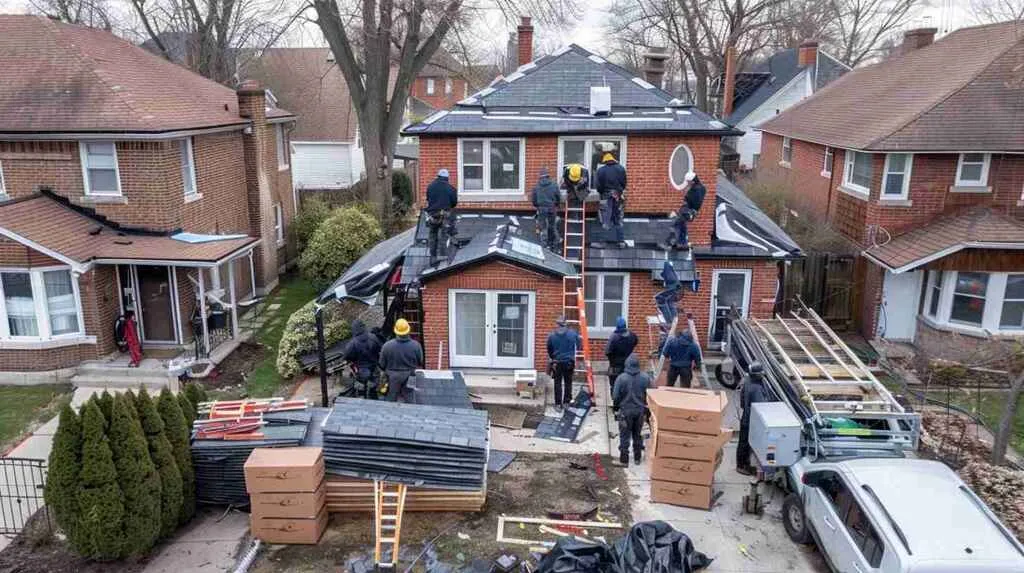
Best Way to Shingle a Roof Queens NY – What Professionals Do | Free Quotes
Frame this idea first: the best way to shingle a roof in Queens, NY has less to do with the brand name on the wrapper and more to do with how that roof’s going to handle wind screaming off the bay, nor’easters, and those freeze-thaw cycles that make old decking rot in hidden spots. Before I unroll a single shingle, I take what I call the “wide shot”-a full look at the entire roof system, inside and out, from attic ventilation down to the way water’s been tracking along the eaves.
How Pros in Queens Decide the Best Way to Shingle Your Roof
On a typical Jackson Heights two-family, the first thing I do is pull out my phone and start snapping photos from every angle-wide shots of each slope, medium shots of the ridge and valleys, close-ups of any curled or cracked shingles. One August afternoon in Woodhaven, it was 93 degrees and the shingles were so hot they felt like soft vinyl when you stepped on them. The homeowner wanted us to “just lay new shingles right over the old ones” to save money. I showed him, on a picture I took from the ridge, how the old curled shingles would telegraph through and break the new ones in two summers. We stripped, re-decked a rotten section we found by the chimney, and that extra day of work stopped what would’ve been a guaranteed call-back during the next nor’easter. That’s the thing-I almost never recommend shingling over old, curled roofs in Queens because you’re hiding rot and failure, not fixing it.
Before I ever touch a bundle of shingles, I’m changing angles like I’m setting up a shoot. I’ll check the attic for moisture stains and blocked ventilation, then get on the roof and press on the decking around chimneys, skylights, and valleys to feel for softness. In Jackson Heights and Corona, a lot of those older colonials and two-families have original 1×6 skip sheathing or plywood that’s been patched three times-you need to know what you’re nailing into. I’m looking at existing shingle condition, flashing transitions, gutter and edge details, and any signs of past patch jobs that were done wrong.
Here’s what you should expect from a real inspection before any shingle work starts in Queens: a pro should spend at least 30 to 60 minutes on an average-sized roof, and they should be able to show you photos of problem spots and explain, in plain language, what needs fixing and why. That first decision-strip or patch, repair decking or not-makes all the difference in whether your new shingles actually last through Queens’ climate or start failing in three years.
✓ What a Proper Pre-Shingle Inspection in Queens Should Include
-
✓
Attic moisture and ventilation check – looking for blocked soffits, missing ridge vents, or bathroom fans dumping steam into the attic -
✓
Decking softness and rot assessment – pressing on plywood near chimneys, valleys, and skylights to catch hidden decay -
✓
Existing shingle condition review – curling, bald spots where granules are gone, cracked or missing tabs -
✓
Flashing and chimney area inspection – old step flashing, cracked chimney cricket, rusted counter-flashing -
✓
Gutter and edge condition – checking for fascia rot, drip edge damage, and whether gutters are pulling the wood away -
✓
Signs of past patch jobs – mismatched shingles, tar blobs, or poorly sealed penetrations that will cause problems later
Queens Roof Conditions at a Glance
Nailing, Layout, and Weatherproofing: The Close-Up Shot
Let me be blunt: if your shingles aren’t nailed right, nothing else matters. I’ll never forget a February job in Bayside on a split-level where the right side of the roof was always icing up. It was 7:30 in the morning, still dark, and I was standing in their attic with my headlamp on, watching my breath. Everyone else had told them “just add more shingles and ice shield.” I found two bathroom fans dumping steam right into the attic and insulation stuffed tight against the soffits. We fixed the ventilation, then re-shingled with a proper ice & water detail. That roof stopped icing not because of the shingles themselves, but because we treated the roof as a whole system. Once I’ve got that wide-shot understanding of ventilation and deck condition, I zoom into the medium shot-layout and underlayment-and then the close-up: exact nail placement, gun pressure, and how each shingle overlaps.
In Queens, wind patterns matter more than most people think. If you’re near the Rockaways, Bayside, or anywhere close to the bridges, you’re getting southwest-to-northeast gusts that can grab a poorly nailed ridge cap and peel back entire rows. That’s why pros adjust nail placement, add extra ice & water shield in valleys and along eaves, and make sure starter courses are rock-solid with the right overhang. Here’s an insider tip: on steeper or more exposed Queens roofs, use six nails per shingle instead of the standard four, and always check your nail gun pressure on hot days-overdriven nails slice through the shingle mat and create leak points the first time it rains hard.
Reading Your Roof Like a Storyboard: Lines, Leaks, and Layout
I still remember a roof in Astoria where the first clue was a single crooked starter shingle. We did a Saturday emergency in Corona after a thunderstorm where half the ridge cap had blown off. The client was a young couple who’d just bought the house, totally panicked, water dripping in their nursery. When I got on the roof, I took a wide-angle shot and circled every spot where the previous installer had high-nailed the ridge and skipped nails altogether on the leeward side. I showed them on the photo while the clouds were still rolling by, explained wind uplift in simple terms, and we re-did the entire ridge with proper nail placement and starter-problem solved in one afternoon. That’s what I mean by reading a roof like a storyboard: every crooked line, every wavy course, every spot where nails are popping tells you a story about what’s going to fail next. The medium shot shows you the overall layout; the close-up on nail lines and starter courses shows you whether someone cared about the details or just wanted to finish fast.
One crooked shingle can tell you the whole story.
Why a Crooked Starter Shingle Can Ruin an Entire Queens Roof
- A crooked starter shifts every course above it, exposing nail heads and shortening the shingle’s lifespan by years.
- Misaligned starters create weak edges where Queens wind can grab and peel entire rows back during storms.
- Wavy lines often signal rushed or untrained installers who didn’t snap chalk lines or check their work as they went.
- On cut-up roofs with dormers, hips, and valleys, small layout errors multiply around transitions, causing leaks that are expensive to track down later.
Do You Need a Repair or Full Re-Shingle in Queens?
When I walk a job with a homeowner, my first question is simple: “Where have you seen stains or bubbling paint inside?” Interior clues plus what I find on the roof tell me whether we’re talking about a targeted repair or a full re-shingle. In Jackson Heights, those two-family homes often have leaks near the shared wall or around the bathroom stack vents-sometimes a flashing fix and a few replacement shingles are enough. In Bayside, where split-levels have multiple roof planes and valleys, a small leak in one valley can mean the whole section needs attention because water’s been tracking sideways under the shingles for months.
Here’s the honest guidance: if your roof is under 12 years old and the leak is limited to one spot-like a cracked pipe boot or damaged flashing around a chimney-a repair with matching shingles can buy you years. But if you’re seeing curling, bald spots where granules are gone, or you’ve had more than two repairs in the last three years, a full re-shingle with proper ventilation and deck inspection is smarter long-term. You’re not just replacing the top layer; you’re treating the roof as a system so it actually handles Queens’ wind, rain, and freeze-thaw without calling you back every winter.
Should You Repair or Fully Re-Shingle Your Queens Roof?
💲 Typical Queens Asphalt Roof Pricing Scenarios (Rough Ranges)
| Scenario | Estimated Range |
|---|---|
| Small leak repair around a vent or pipe boot on a one-family | $350-$750 |
| Partial re-shingle of one slope on a Queens two-family | $2,000-$4,000 |
| Full tear-off and re-shingle on a typical Jackson Heights two-family | $8,500-$14,000 |
| Full re-shingle with upgraded ventilation and ice & water on a larger Bayside split | $12,000-$20,000+ |
Note: Actual pricing depends on layers, access, materials, and decking condition-these are ballpark ranges, not quotes.
Before You Call a Queens Roofer for Shingle Work
Think of your roof like a camera: if the lens is fogged (bad ventilation), it doesn’t matter how expensive the body (shingle) is. Before you call for a quote, take a few minutes to gather some information. Snap wide photos of each side of your roof from the street or yard-no need to climb up, just get a clear shot of each slope. If you can safely see any missing, curled, or cracked shingles from a window or ladder, take close-ups of those too. Inside, note any ceiling stains, peeling paint, or water marks, and write down roughly where they are in relation to the rooms. If you know how old your current roof is, even a rough guess helps. And jot down any past repairs or patches you remember having done.
Having this info ready helps a pro like me frame the “wide shot” faster and give you a more accurate, Queens-specific recommendation instead of generic guesses. I can look at your photos, compare them to what I see in person, and show you exactly what’s failing and why-whether it’s a simple flashing fix or time for a full system re-shingle. That way, you’re getting a real assessment, not a sales pitch.
📋
What to Gather Before Calling Shingle Masters for a Shingle Quote in Queens
- Take wide photos of each side of your roof from the street or yard-no need to get on a ladder, just clear shots of each slope.
- Snap close-up photos of missing, curled, or cracked shingles if you can safely see them from a window or low ladder.
- Note any ceiling stains or peeling paint inside and write down which rooms they’re in and roughly where on the ceiling.
- Check how old your current roof is, even a rough guess like “installed when we bought the house in 2010” helps a lot.
- List any past roof repairs or patches you remember having done and roughly when they happened.
- Write down your address and whether you have easy access for a dump truck-driveway, alley, or street parking situation.
Common Queens Shingle Roofing Questions
Can you just add a new layer of shingles over my old roof?
Technically yes, but I almost never recommend it in Queens. Two layers of shingles add weight that older framing wasn’t designed for, and more importantly, you’re hiding problems. Any curled or damaged shingles underneath will telegraph through the new layer within a couple of summers-especially on hot Queens days when shingles get soft. Plus, if there’s any rotten decking or bad flashing underneath, you won’t find it until you have a bigger leak. A proper tear-off lets me see exactly what I’m working with and fix it right the first time.
How long does a typical re-shingle take on a two-family in Queens?
Usually 1-3 days depending on how many layers we’re stripping and whether we find decking that needs replacing. A straightforward tear-off and re-shingle on an average Jackson Heights two-family with good deck condition can be done in a day and a half. If we’re replacing sections of plywood near chimneys or doing extra flashing work around dormers, it might stretch to three days. Weather and access matter too-if we can’t get a dumpster close or it’s raining, things take longer.
Do I need to move out while you re-shingle?
No, you can stay home. You’ll hear some noise-nail guns, footsteps overhead, debris sliding down into the dumpster-but it’s not unbearable. Some people work from home during the job without issues; others prefer to be out for the day. Just expect vibrations when we’re stripping the old shingles and keep windows closed on that side of the house to avoid dust.
Which shingle brand is “best” for Queens?
Honestly, installation quality and ventilation matter way more than brand. That said, architectural asphalt shingles from manufacturers like Owens Corning, GAF, or CertainTeed are standard in Queens and all work fine when installed correctly. What kills roofs here isn’t the shingle-it’s high nails, no ice & water shield, blocked ventilation, and rushed layout. I’d rather install a mid-grade shingle the right way than a premium one with sloppy nailing.
Do you handle permits and clean-up?
Yes. Any reputable Queens roofer should pull the necessary permits if your local code requires them, and we always include full debris removal and a magnetic nail sweep in the price. I don’t leave your yard until every nail and shingle scrap is gone and your driveway and walkways are clean. If a permit’s needed, I handle the filing and make sure the work passes inspection-you don’t have to deal with the paperwork.
Why Queens Homeowners Call Shingle Masters
The best way to shingle a roof in Queens is a system approach-inspection, deck repair, layout, nailing, and ventilation-handled by someone who understands local weather patterns and the weird roof shapes common in Jackson Heights, Bayside, and Corona. If you’re seeing leaks, curling shingles, or you just want to know what’s really going on up there before it gets worse, call Shingle Masters for a free, photo-documented roof inspection and a detailed shingle quote anywhere in Queens.