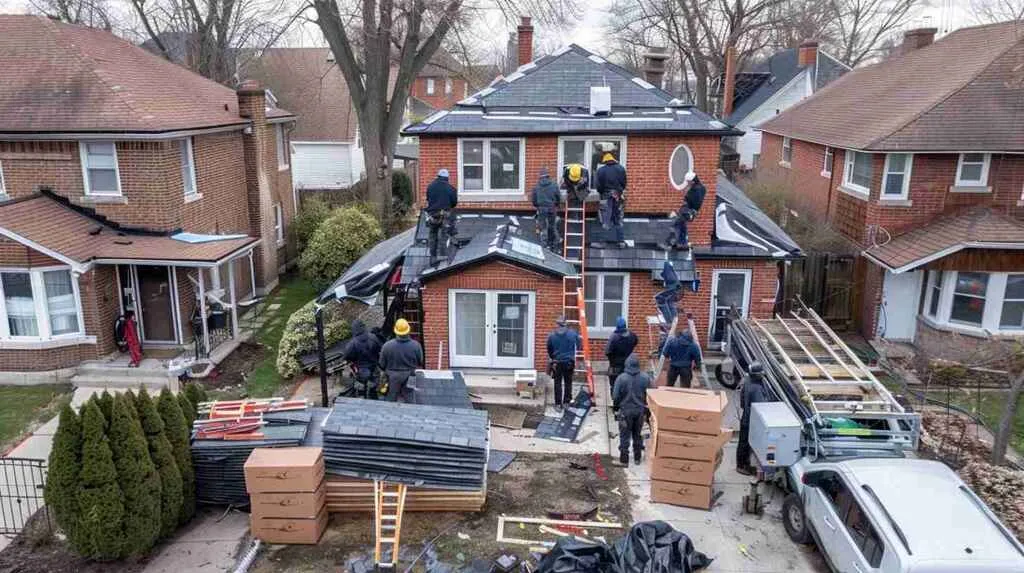
Best Time to Shingle a Roof Queens NY – Season and Temperature | Call Today
Timing is everything on a roof, but not in the way most people think. The best time to shingle a roof in Queens isn’t a specific month or season you circle on a calendar-it’s a temperature range on the roof surface, and getting it right can add 10 years to your shingles without touching the materials or warranty. I’ve been doing this for 19 years, and I’ll tell you straight: more roofs fail early because someone rushed the install in bad conditions than because of cheap shingles.
Best Time to Shingle a Roof in Queens: It’s About Temperature, Not the Calendar
On a 68-degree afternoon in Woodside last May, I watched shingles practically glue themselves down the right way-tabs sealing within two hours, zero lifting in the wind, my guys walking at a steady pace because the material behaved exactly how it’s supposed to. The air was mild, the roof deck was around 72°F, and every single piece we put down felt like installing hardware in the perfect environment. I came up doing IT work at a bank in Midtown before I walked away to shingle roofs full-time, and I treat these install windows like planning a critical system upgrade: right version, right conditions, right timing. The difference is that on a roof in Queens, you can’t just reboot if you get it wrong-you’re stuck with brittle shingles, failed seals, and callback repairs.
One March morning in Astoria, around 7:30 a.m., I let a landlord talk me into starting a full shingle replacement at 35°F because he “needed it done before the new tenants moved in.” By noon, I watched the crew struggle to get the shingles to lie flat; the bundles felt like cold tortillas that want to crack instead of bend. Two weeks later, after a mild warm spell, we were back there heat-gunning curled edges and hand-sealing tabs that never bonded right because the day we installed was just too cold. That roof was compromise from the start, and it showed in how the shingles aged-cupping earlier, losing granules faster, giving us maybe 15 years instead of the 25 the manufacturer promised. Since then, I pull out that story anytime someone tries to rush a roof in early spring in Queens.
The simple rule I follow is this: if the roof surface stays between roughly 45°F and 85°F for the chunk of time we’re working-say, 9 a.m. to 3 p.m.-shingles are flexible enough to nail flat, adhesive strips activate reliably, and the finished roof has a real shot at living the full lifespan on the package. Drop below 40°F and shingles go stiff and stubborn; climb over 90°F on the surface and they turn soft and stretchy, scuffing under boots and tools. That 40-degree sweet spot can translate to 10 extra years of weatherproofing, zero exaggeration, just by respecting what the material needs to set right.
| Roof Surface Temp Range | Shingle / Adhesive Behavior | Carlos’s Verdict in Queens |
|---|---|---|
| Below 40°F | Shingles stiff, prone to cracking; sealant tabs stay dormant and may never fully bond without hand-sealing | Avoid unless emergency; expect extra labor and possible long-term issues |
| 40°F-45°F | Shingles still tight and reluctant to lie flat; adhesives slow to activate | Borderline; only for must-fix leaks with added hand-sealing and follow-up inspection |
| 45°F-70°F | Shingles flexible and easy to nail; sealant activates reliably through midday sun | Ideal range for most Queens roofs, especially mid-spring and mid-fall |
| 70°F-85°F | Shingles very workable but softer; crews must avoid scuffing and over-driving nails | Still good, prefer morning/late afternoon, limit foot traffic and watch technique |
| Over 85°F | Shingles can stretch and scuff; sealant gets very tacky, mistakes harder to fix | Shift work to early morning or evening only; not an all-day install window |
Queens Seasons: When the Weather Usually Cooperates (and When It Doesn’t)
Here’s the part most people don’t like to hear: your roof doesn’t care what your vacation schedule is; it cares about temperature and moisture. I get calls from homeowners who want the job done in July because they’re off work, or November because that’s when the buyer’s inspector flagged it, and I have to explain that Queens weather behaves like a moody dependency chain-change one thing upstream and the whole install window shifts. Spring in Queens swings wildly; you can see 40°F one morning and 75°F three days later, with wind gusts off the water that knock surface temps down even when the air feels mild. Summers are humid and hot, which sounds fine until you realize a black or dark brown roof in Jamaica or Astoria can hit 140°F or higher on the surface even when it’s “only” 88°F in the shade. Fall, especially late September through October, is my favorite because you get steady, moderate temps, lower humidity, and fewer surprise storms-basically the Goldilocks zone for shingle work in this borough. Winter is mostly a no-go for full replacements unless we catch a freak sunny stretch and treat it like an emergency maintenance window, not a routine job.
Is your move-in date or vacation week really worth risking 10 years of roof life for?
One August afternoon in Jamaica, around 3 p.m., I was on a dark brown shingle roof that my infrared thermometer read at 158°F, even though the air temperature was “only” 92°F. The homeowner asked why my guys were moving slow, and I showed her how the shingles were so soft they’d stretch and scuff if we weren’t careful-like stepping on warm asphalt. That job taught me to push hot-weather installs into early mornings and evenings; we ended up shifting the crew’s hours from 6 a.m. to noon, and the second half of that project went twice as clean. Air temperature and roof surface temperature are not the same thing, especially in a borough with as much concrete and waterfront wind as Queens, and I schedule around surface temps because that’s what the shingles actually experience.
Queens, NY Roofing Timing Cheat Sheet by Season
Spring (Mar-May)
Late March is hit-or-miss; mid-April to late May is Carlos’s favorite window when surface temps usually hit 45°F-75°F by late morning.
Summer (Jun-Aug)
Usable most days, but installs often run 6 a.m.-noon because dark roofs can spike over 140°F even when the air is in the 80s.
Fall (Sep-Nov)
Late September through October is the other prime window; November can work on calm, sunny days with careful timing.
Winter (Dec-Feb)
Usually outside Carlos’s comfort range for full replacements; mainly emergency patches and very controlled short install windows.
| Myth | Fact |
|---|---|
| “Roofing is a summer-only job in Queens.” | We shingle safely from mid-April through late October; summer is fine, but we shift hours to dodge extreme roof surface temps. |
| “If the air is above 40°F, it’s warm enough for shingles.” | What matters is roof surface temperature; a 45°F air temp with wind can leave your shingles acting like it’s in the 30s. |
| “A dry day means it’s automatically okay to install.” | Dry is step one; we also need steady temps, not dropping fast toward freezing by sunset. |
| “Cloudy days are bad for roofing.” | Cloud cover can actually keep the roof surface in the sweet spot and prevent overheating in midsummer. |
| “All shingles handle cold the same way.” | Different brands and lines have different flexibility, but none of them love being bent and nailed in near-freezing conditions. |
How I Decide If a Specific Day Is Right for Your Roof in Queens
If you called me today and said, “Carlos, can you shingle my roof next Tuesday?” this is the first question I’d ask: what’s the forecasted high and low? Then I’d check wind speed, sun versus cloud cover, and whether overnight temps stay above 40°F or drop toward freezing. I’m not looking at the calendar date-I’m looking at the conditions that translate into actual roof surface temperature during the hours we’d be working. A 55°F air temp in April with full sun and no wind might put your roof deck at 65°F by 10 a.m., which is perfect. That same 55°F air temp in November with overcast skies and 15 mph gusts off the water? Your roof might stay in the low 40s all day, and we’d be fighting stiff shingles and slow-setting adhesive. My insider tip here is simple: grab a cheap infrared thermometer from any hardware store for about twenty bucks, point it at your roof deck or a shingle bundle sitting outside, and see the number yourself. Or just go up there mid-morning on a dry day and touch the materials with your hand-if they feel cold and rigid, they’re going to act cold and rigid under a nail gun.
One job in Forest Hills Gardens, late October, I almost called off because a surprise cold front was blowing in, but the couple had a baby due in two weeks and were desperate to stop a leak over the nursery. I watched the temperature like a hawk all day-roof deck, shingle bundles, even the metal flashing-with a cheap but trusty laser thermometer. We finished just before sunset when the surface temp dipped under my comfort range, and I came back three days later to inspect the seals. That experience is why I tell people there’s a “should” season for roofing-and then there’s the “we have no choice” season, and we treat those two very differently. The “should” season in Queens is when I can count on the roof staying in that 45°F-75°F window for six or seven hours straight, giving shingles time to settle and bond naturally. The “no choice” season is when we’re managing every hour like a maintenance window on a critical server-tight timeline, extra hand-checking, follow-up inspections, and zero assumptions that the material will behave on its own.
Is Next Tuesday a Good Day to Shingle Your Queens Roof?
Q1: Is the forecasted high between 50°F and 80°F with no steady rain?
✅ Yes → Go to Q2
❌ No → Probably not ideal for a full replacement; consider rescheduling or limiting to temporary repairs.
Q2: Are overnight lows staying at or above 40°F (no hard freeze right after install)?
✅ Yes → Go to Q3
❌ No → We may need to shorten the work window and add hand-sealing; not a textbook day.
Q3: Is wind under 20 mph and no heavy gusts expected?
✅ Yes → Good candidate day for shingling in Queens.
❌ No → Wind can lift shingles before they seal and make the roof unsafe; best to shift dates.
⚠️ Urgent Situations (Call ASAP)
Active leak during a storm or drip spots on ceilings; missing shingles after wind event; interior bubbling paint under an older roof; soft or spongy spots you can feel from above; you’ve already had temporary patches fail.
📅 Can Wait for the Right Weather Window
No active leaks but shingles are curling or granules are filling the gutters; roof is 18-25 years old but still watertight; you’re planning a sale in 6-12 months; you just want to move from 3-tab to architectural shingles for looks and value.
Practical Guidelines: Months, Times of Day, and What You Should Do Before You Call
Think of your roof like a giant frying pan over Queens; the air might be 50°F, but that top layer can be acting like it’s 80°F or 30°F depending on sun and wind. In Corona, Astoria, Jamaica, and Forest Hills, I’ve seen the exact same air temperature produce wildly different roof conditions based on whether the house has shade trees, sits near the water with constant breeze, or bakes in full sun next to a hot parking lot. My practical windows for most Queens roofs are mid-April through early June and late September through October, with work timed to roughly 9 a.m. to 3 p.m. in the cooler months when the sun has warmed the surface but temps haven’t dropped yet. In summer, I flip that to 6 a.m. to 11 a.m., getting the install done before the roof turns into a griddle. Before you call Shingle Masters or any roofer, use the checklist below so we can skip the guesswork and give you a real answer about timing on the first conversation.
✓ Quick Check Before You Call Shingle Masters About Shingling Your Roof in Queens
- ✅ Look at your 3-5 day Queens forecast and jot down the expected highs, lows, and any rain or high wind days.
- ✅ Take 3-4 photos of the roof from the ground (front, back, and any problem areas) so we can see color and pitch relative to the sun.
- ✅ Note if you have shade trees, neighboring taller buildings, or open sun-this changes how hot or cold your shingles run.
- ✅ Check your attic or top floor ceilings for any fresh stains, damp insulation, or musty smells.
- ✅ Write down the approximate age of your current roof and any past repairs you know about.
- ✅ Think about your flexibility: can you shift by a week or adjust start times so we can hit the best weather window?
Why Queens Homeowners Trust Shingle Masters with Timing-Sensitive Shingle Work
Licensed & Insured
Fully licensed in New York City and insured for roofing on 1-3 family homes and small multi-unit buildings.
19+ Years on Queens Roofs
From Corona and Astoria to Jamaica and Forest Hills, we’ve worked through every weather pattern this borough throws at shingles.
Temperature-First Planning
We schedule around roof surface temps, not just calendar days, to protect your manufacturer warranty and roof lifespan.
Clear Communication
We’ll walk you through the forecast, the plan for your specific roof, and what happens if the weather shifts last minute.
Common Questions About the Best Time to Shingle a Roof in Queens, NY
I hear the same timing questions over and over from homeowners in Queens, and the answers below are tailored for this borough’s actual weather patterns, not generic advice you’d get from a national website. Here’s what people really want to know:
What months are generally the best for a full shingle replacement in Queens?
For most homes in Queens, I like mid-April through early June and late September through the end of October. In those windows, we can usually catch days where the roof surface sits between about 45°F and 75°F for a solid block of time, which is perfect for shingle flexibility and sealant activation. Outside those months I’ll still do roofs, but we treat the job like a carefully scheduled system update: shorter windows, more hand-checking, and sometimes extra sealing.
Can you shingle a roof in Queens in winter if it’s sunny and dry?
We can, but I treat it as the “we have no choice” season, not the ideal one. If the surface is under 40°F or dropping fast toward freezing, shingles get stiff and the self-seal strips may not bond for weeks, if at all, without extra work. In winter I focus on emergency leak control, partial sections, and days when a sunny exposure lets the roof hit at least the mid-40s for a chunk of the day.
Is light rain in the forecast a deal-breaker for shingle installation?
Light rain later at night isn’t always a problem if we’re buttoned up and the shingles had hours to bond in decent temps. What I won’t do is start a tear-off with a real chance of rain or storms hitting while the deck is open-especially with Queens’ wind gusts. We’d rather move your date than gamble on moisture under fresh shingles.
How hot is too hot to shingle a roof in Queens?
Once I’m seeing 150°F+ roof surface temps on dark shingles, like I did in Jamaica one August, we switch to an early-morning schedule or break the job into cooler chunks. At that point shingles can scuff, stretch, and get tacky, and nail guns can over-drive fasteners if the crew isn’t careful. The air might “only” be in the 90s, but on the roof it feels like walking on a hot server rack-workable with the right plan, but not all day long.
How far in advance should I book to hit the best weather window in Queens?
For peak spring and fall weeks, 3-6 weeks’ notice is smart, especially if you want a specific week. That said, I always leave some flex in the schedule because weather in Queens is like software dependencies-change one thing and the whole chain moves. If you call Shingle Masters, we’ll look at your roof’s urgency, the forecast, and your flexibility to carve out the safest, most efficient timing.
The truth is that Queens roofs need temperature-smart planning, not just an open date on the calendar. If you’re ready to get your shingle replacement done right-in the window that actually protects your investment and warranty-call Shingle Masters today so we can look at your specific roof, line it up with the upcoming forecast, and schedule the work when conditions are safest and the shingles will last longest.