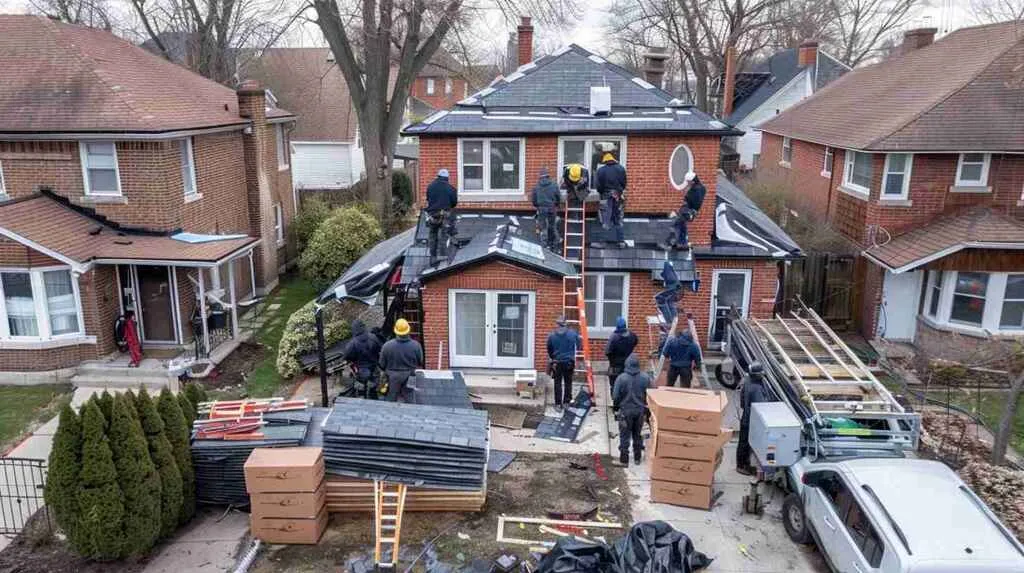
Best Shingle Roof Service Queens NY – What Actually Matters | Free Quotes
Numbers first: A proper shingle roof replacement in Queens runs $8,500 to $18,000 for most attached or semidetached homes, depending on how many square feet you’re covering, how many old layers need to come off, and what condition your roof deck is in when we open things up. What actually makes one quote worth $12,000 and another worth $17,000 isn’t the shingle brand or color-it’s whether the crew is building a complete roof system with proper underlayment, code-compliant flashing, real ventilation, and fixing any deck damage they find, or just nailing new shingles over a mess.
Numbers First: What a Queens Shingle Roof Really Costs & Why
On a typical block in Jackson Heights, I can point to three roofs that cost about the same, but only one was actually worth the money. One January morning, about 7:15 a.m., I was standing on a frosty porch in Astoria with a landlord who swore he needed a full roof replacement because his top-floor tenant kept complaining about “leaks everywhere.” I pulled a shingle back, in the dark, with my headlamp on, and found the real issue: a 10-foot strip of bare plywood where some handyman had never installed underlayment. That job turned into a teaching moment about why the best shingle roof service isn’t the one that just slaps on new shingles, but the one that fixes the system underneath. Here’s my honest take: if a shingle roofing quote in Queens sounds too clean and simple, something important is being left out-the deck work, the ventilation upgrade, the ice-and-water barrier around chimneys, or the step flashing at sidewalls.
Three houses, three similar-priced roofs, wildly different value under the shingles. One got ice-and-water shield in all the valleys, synthetic underlayment across the whole deck, new metal step flashing at the chimney, and hand-sealed ridge vents; the second got standard felt paper and reused most of the old flashing; the third was just 30-year architectural shingles nailed over one existing layer with no tear-off at all. All three looked fine from the street for about six months, then the storms came. Price should tell you how long the system will last, not just what color shingles you picked.
Typical Queens Shingle Roof Scenarios & What They Actually Cost
| Scenario | Home Type / Roof Style | Layers Removed | Key Factors | Estimated Price Range |
|---|---|---|---|---|
| Simple reroof, good deck | Attached row house, simple gable, 1,200 sq ft | 1 layer, no issues | Clean tear-off, minimal flashing, standard underlayment, architectural shingles | $8,500 – $11,500 |
| Two layers, some deck repair | Semidetached colonial, 1,800 sq ft, hip roof | 2 layers, soft spots around chimney | Tear-off both layers, replace ~10 sheets plywood, ice-and-water shield, new chimney flashing | $12,000 – $15,500 |
| Full system upgrade | Detached Tudor, 2,400 sq ft, multiple valleys | 1 or 2 layers, moderate rot | Complete tear-off, deck repair, synthetic underlayment, metal valleys, ridge vent system, code-compliant flashing all penetrations | $15,000 – $21,000 |
| Pre-sale quick fix | Attached brick Cape, 1,400 sq ft, flat front porch | Layover (zero removal) | New shingles over old, minimal flashing work, passes curb appeal but hides problems-not recommended | $6,500 – $8,500 |
| Complex roof, heavy rot | Large colonial, 3,000+ sq ft, dormers, multiple chimneys | 3 layers, extensive rot | Full structural tear-off, replace 30+ sheets deck, all new flashing and vents, premium shingles, permit and inspection fees | $18,000 – $28,000+ |
These are ballpark ranges assuming asphalt architectural shingles and proper system work. Wood rot, extra layers, complex flashing details (skylights, multiple chimneys, steep pitch), and permit requirements all add cost.
Here’s Why One Quote Is Cheaper: Layers, Deck, and Shortcuts
I still remember a Saturday in Elmhurst when a homeowner asked me, “Why does one guy want to rip everything off and another guy says he’ll just go over it?” One summer afternoon in 2021, it was 96 degrees in Jamaica and I was on a roof with a homeowner who insisted on the absolute cheapest 3-tab shingle because he was planning to sell the house. An hour into the tear-off, we uncovered three layers of brittle shingles and an old, soft roof deck you could push a finger into. I stopped the job, called him up, and we stood together in the heat while I poked the wood with my screwdriver; by the end of that demo he’d completely changed his tune about “cheap and fast” versus “done right so the inspector doesn’t kill my sale.” Here’s the deal: Queens blocks-especially in Elmhurst, Jamaica, Flushing-often have roofs with multiple layers stacked over decades, and those old layers hide deck damage that only shows up when you pull everything back. Tear-off plus deck repair is non-negotiable if you care about passing a Queens home inspection or not getting hammered with repair credits when a buyer’s inspector finds spongy plywood during their walkthrough.
Multiple layers, soft or spongy decking, and skipping wood replacement let contractors give you a lower bid today, but they’re building in failure for later. Think of your roof like a sandwich-if the bread looks good but the stuff in the middle is a mess, you’re not getting a good lunch, you’re just hiding the problem. Same with roofs: if you layer over without fixing the deck, you’re trapping heat and moisture against rotting wood, voiding most shingle warranties, and setting yourself up for a surprise $8,000 repair credit negotiation when you try to sell. A proper quote will call out tear-off, include a deck repair allowance (usually per-sheet pricing), and list code-compliant underlayment and flashing materials by name-not just “standard materials included.”
⚠
The Real Cost of Shingle Layovers in Queens
- Layovers trap heat and moisture between old and new shingles, accelerating rot in the deck underneath and shortening the life of your new shingles by years.
- You’re hiding deck damage from yourself and future inspectors-that soft plywood doesn’t get better on its own, and when it finally fails it’ll take your new shingles with it.
- Most manufacturer warranties require a proper tear-off and clean deck; laying over old shingles often voids your 25- or 30-year coverage down to nothing.
- Home inspections and buyer walk-throughs in Queens almost always flag layovers as a concern, leading to surprise $4,000-$8,000 repair credits that eat your sale price or kill the deal entirely.
If a quote doesn’t mention tearing off old layers and checking the deck, toss it out.
Systems, Not Surfaces: Underlayment, Flashing, and Ventilation
Here’s my honest take: if a shingle roofing quote in Queens sounds too clean and simple, something important is being left out. Think of your roof like a sandwich-if the bread looks good but the stuff in the middle is a mess, you’re not getting a good lunch, you’re just hiding the problem. Underlayment is the waterproof barrier between your deck and your shingles; flashing is the metal or membrane that seals every seam, valley, chimney, and sidewall; and ventilation is what keeps your attic cool in summer and dry in winter so your deck doesn’t rot from the inside. These three things are the filling that actually keeps water out and makes your shingles last their rated lifespan. One January morning, about 7:15 a.m., I was standing on a frosty porch in Astoria with a landlord who swore he needed a full roof replacement because his top-floor tenant kept complaining about “leaks everywhere.” I pulled a shingle back, in the dark, with my headlamp on, and found the real issue: a 10-foot strip of bare plywood where some handyman had never installed underlayment. That’s why I always tell people: on an estimate, always ask exactly where the contractor is putting ice-and-water shield, what underlayment brand and weight they’re using, and how they’re handling chimneys and sidewalls-if they can’t answer those three questions on the spot, they’re guessing.
The one that sticks with me happened in 2019 in Flushing, during one of those sideways-rain nor’easters at about 10 p.m. A previous contractor had “finished” a roof but never flashed the chimney correctly, and water was pouring into this older couple’s living room. I tarped the chimney in the wind, soaked to the bone, and the next day I walked them through what proper step flashing looks like using a cardboard mock-up on their kitchen table. That’s when I decided Shingle Masters had to be the place in Queens that tells people exactly what went wrong and how we’ll prevent it next time, not just send an invoice. Your roof is a system like car brakes or a home Wi‑Fi network-one weak link, whether it’s a chimney, a valley, or a bathroom vent, cancels out even the fanciest premium shingles. Look for quotes that clearly mention these components by name, with material specs and installation details, not just a lump sum labeled “roofing work.”
What a Real “Best Shingle Roof Service” in Queens Includes in Every System
Remove all old shingles and underlayment so you can see and fix deck damage before it’s covered forever.
Replace any soft, rotten, or water-damaged plywood with new ½” or ⅝” CDX, charged per sheet so there’s no mystery cost later.
Self-adhering membrane at eaves (first 3-6 feet), valleys, chimneys, sidewalls, and any low-slope or complex flashing areas to stop ice dams and wind-driven rain.
Synthetic (Titanium, RhinoRoof, or equivalent) or heavy felt (#30 minimum) installed with proper overlap and fastening-not the thin stuff that tears in the wind.
New metal step flashing at chimneys and sidewalls, counterflashing sealed into masonry, drip edge at eaves and rakes, valley metal or woven shingles-no shortcuts, no reusing 30-year-old bent aluminum.
Balanced intake (soffit vents) and exhaust (ridge vent or box vents) to keep attic temps down and moisture out, meeting 1:300 code ratio and preventing premature shingle failure.
Each shingle gets the right number of nails in the right spots (usually 4-6 per shingle), not rapid-fire staples or under-driven nails that blow off in the first big storm.
How We Actually Run a Shingle Roof Job in Queens, Step by Step
Blunt truth: 80% of the shingle roof problems I see in Queens were built in on day one by rushed installs, not caused by storms. A crew that tears through a roof in four hours and disappears before you get home from work isn’t saving you time-they’re skipping steps. When I show up for an estimate, I’m usually on your sidewalk with a coffee in hand, sketching a crude roof map on a scrap of cardboard or the back of an old shingle wrapper so you can see exactly where the problem areas are and what we’re going to do about them. My process isn’t complicated, but it’s deliberate: inspection (on the roof and in the attic if you’ll let me), system design (what underlayment, flashing, and vents your roof actually needs), written scope that lists every material and step, protected tear-off with tarps and dumpster, deck fixes as we go with photos sent to your phone, system install (underlayment, flashing, vents, then shingles), and a final walk-through with cleanup so thorough you won’t find a single nail in your driveway.
Let me ask you the first question I always ask on an estimate: when was the last time someone actually got up there and looked under your shingles, not just at them? Most homeowners can’t answer that, because most roofers never show them. At Shingle Masters, every job includes photos of your deck condition, old flashing, and system upgrades before we cover them back up, so you’re not just trusting me when I say we did it right-you’re seeing it with your own eyes. That transparency, the fact that you walk away with a mini roof map and a folder of before-and-after pics, is what makes us different and why people in Queens call us specifically when they want the best shingle roof service, not just the fastest quote.
Our Queens Shingle Roof Process: First Call to Final Nail
You call, we schedule an estimate usually within 24 hours. I show up with a ladder, a camera, and a notepad-no high-pressure sales pitch, just a real look at your roof and attic if you’ll let me in.
I walk the entire roof, check every valley, chimney, vent, and sidewall, snap photos of problem areas and deck condition, and look in your attic for ventilation issues, moisture stains, or sagging. You get copies of these photos with the estimate.
You get a multi-page written estimate that breaks out tear-off, deck repair allowance (per sheet), underlayment type and brand, ice-and-water shield locations, flashing details, shingle choice, ventilation upgrades, and labor-no lump-sum mystery pricing.
We don’t show up unannounced. Tear-off day is scheduled in advance; dumpster arrives, tarps protect landscaping and AC units, and we strip the roof down to bare deck in sections so nothing is left open overnight if weather turns.
As we find soft or damaged plywood, we snap photos and text them to you before we replace the sheets. You see exactly what was wrong and what we fixed-no surprise charges, just documented repairs at the per-sheet price in your contract.
Ice-and-water shield goes down first at eaves, valleys, and penetrations; underlayment covers the whole deck; all flashing is installed or replaced; vents are added or upgraded; then shingles are hand-nailed per manufacturer spec, one row at a time, with proper overlap and alignment.
Before we leave, I walk you around the house, show you the finished roof from the ground, run a magnetic roller over your driveway and lawn to pick up nails, and hand you a folder (or email link) with before-and-after photos of deck, flashing, and system work. You see proof of what you paid for.
Why Queens Homeowners Call Shingle Masters
- Licensed & Insured in NYC – We carry full liability and workers’ comp, and our license is current and verifiable with the city.
- 17+ Years Doing Shingle Roofs in Queens – We know the blocks, the building styles, the inspection requirements, and the weather patterns that matter here.
- Same- or Next-Day Estimates on Most Jobs – Call us in the morning, we’re usually out by afternoon or the next day at the latest, no week-long wait.
- Written Scope That Lists System Components – Every estimate breaks out underlayment brand, ice-and-water shield locations, flashing details, vent type, and nail specs-you know exactly what you’re getting.
- Photo Documentation Before/After – You get a folder of pictures showing deck condition, old flashing problems, and the new system install, so you’re never guessing whether the work was done right.
Is It Time to Call? Quick Self-Check and Common Questions
Think of your roof like a sandwich-if the bread looks good but the stuff in the middle is a mess, you’re not getting a good lunch, you’re just hiding the problem. Same logic applies to deciding whether you need a roofer out today or can wait a week: some situations (active leaks, missing shingles after a storm, soft spots you can feel from inside the attic) are urgent, while others (granules in the gutters, shingles that look worn but aren’t leaking yet, planning ahead before you list the house) give you time to get multiple quotes and compare systems, not just prices.
Top Questions Queens Homeowners Ask About Shingle Roofs
How much should I really expect to pay for a full shingle roof replacement in Queens?
For an average attached or semidetached home in Queens (1,200-1,800 square feet of roof), plan on $8,500 to $15,500 if you’re doing a proper tear-off, deck inspection and repairs, quality underlayment, new flashing, and architectural shingles. Larger homes, complex layouts with multiple chimneys or dormers, or heavy deck rot can push the number to $18,000-$25,000. The range is wide because the system work-what’s under the shingles-varies dramatically from house to house. A quote that’s way below this range is almost certainly skipping tear-off, reusing flashing, or ignoring deck damage.
How long will a new shingle roof actually last in Queens weather?
A properly installed shingle roof with a complete system-tear-off, deck repair, ice-and-water shield, quality underlayment, code flashing, and good ventilation-will last 20 to 30 years in Queens, depending on shingle quality and maintenance. If you skip the system work and just layer over old shingles or reuse bad flashing, expect 10 to 15 years at best before you’re dealing with leaks and deck rot. Queens gets hot summers, freeze-thaw cycles in winter, and occasional nor’easters-your roof system has to handle all of it, and shortcuts show up fast.
Can I just put new shingles over my old ones to save money?
You can, but it’s a bad idea in almost every situation. Layovers hide deck damage, trap heat and moisture, void most manufacturer warranties, and often fail home inspections or trigger repair credits during a sale. NYC code allows up to two layers in some cases, but best practice-and what any reputable contractor will recommend-is a full tear-off so you can see and fix problems before covering them forever. The money you “save” on a layover today will cost you double when the hidden deck rot forces an emergency tear-off three years later.
Do I need a permit for a shingle roof replacement in Queens, and who handles inspections?
It depends. In many cases, a simple shingle-for-shingle replacement on a one- or two-family home in Queens doesn’t require a permit if you’re not changing the roof structure or adding significant weight. But if you’re doing major deck repairs, altering ventilation, or the building department flags your job for any reason, you’ll need a permit and a final inspection. A good contractor will tell you upfront whether your job needs a permit and will handle the paperwork if it does. Don’t skip this-unpermitted work can come back to haunt you during a sale or insurance claim.
I have two very different quotes-one is $9,000 and one is $15,000. How do I know which is actually the better deal?
Read the scope line by line. The $9,000 quote probably says “layover” or “install over existing,” skips deck repair, uses basic felt underlayment, and reuses old flashing. The $15,000 quote should spell out complete tear-off, deck inspection and repair allowance, ice-and-water shield at critical zones, synthetic or heavy underlayment, new flashing at all penetrations, and proper ventilation. Ask both contractors these specific questions: Are you tearing off all old layers? What underlayment are you using and where does ice-and-water shield go? Are you replacing or reusing flashing? How are you handling deck repairs? The answers will tell you whether the higher price is buying you a real roof system or just padding someone’s profit.
✓ Before You Call Shingle Masters: Quick Self-Check
Have these things ready or checked when you call for a quote-it’ll speed up the estimate and help us give you an accurate price on the first visit:
- Note any leak locations inside the house (which room, which corner, when it leaks) so we know where to focus on the roof
- Snap a few attic photos if it’s safe to go up there-look for water stains, daylight through boards, or sagging decking
- Count visible roof vents from the outside (those box vents or mushroom caps on the roof) so we can assess ventilation
- Check for shingle curling or granules in gutters-snap a picture if you see bare spots or curled edges
- Find any old roof paperwork-previous contract, warranty card, or permit if you have it-so we know what was done last time
- Rough roof size or number of squares if you know it (don’t worry if you don’t-we’ll measure on site)
- Ask neighbors if they’ve had roof work done recently and whether they were happy-Queens blocks talk, and word-of-mouth matters here
If you’re in Queens and you want a shingle roof quote that explains the whole system in plain language-with sketches on cardboard if that’s what it takes-call Shingle Masters and ask for Diego to come out, walk your roof, and give you a clear, line-by-line estimate that shows exactly what you’re paying for and why. You’ll get same- or next-day service, photos of what’s actually happening under your shingles, and a crew that treats your roof like a system, not just a surface to cover.
Ready for a Real Queens Shingle Roof Quote?
Call Shingle Masters today for a same- or next-day estimate with photos, system details, and straight answers-no runaround, no mystery pricing.
Licensed & insured in NYC | 17+ years in Queens | Photo documentation included