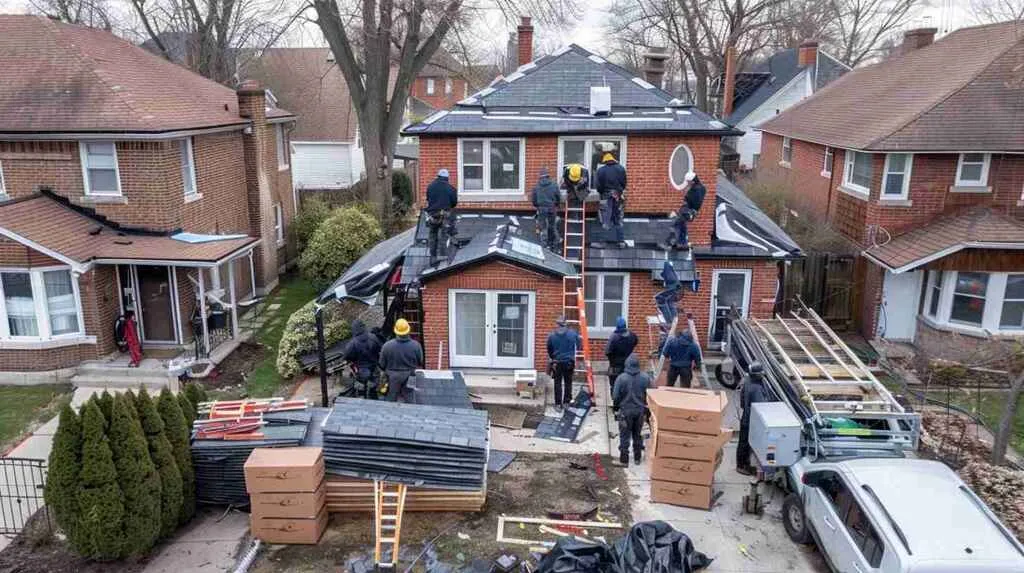
Roof Ridge Shingle Installation Queens NY – Done Properly | Free Estimates
Edge-to-edge, that top line on your roof is everything. Here’s the blunt truth: most “new roofs” in Queens fail first at the ridge because of bad installation, not bad shingles. Tiny mistakes at the peak-nails too high, caps spaced wrong, shortcuts on overlap-turn into leaks and blown-off pieces within a couple of seasons. From a camera angle standpoint, that ridge is the money shot: what you see from the sidewalk tells you whether the crew cared about details or just wanted off the roof before lunch.
From the Sidewalk: Why Queens Roof Ridges Fail First
From the sidewalk on 37th Avenue, you can tell in three seconds if a ridge was installed right or not. Most times when I climb up to inspect a “brand new roof” that’s already leaking, the problem isn’t the field shingles down the slope-it’s the ridge caps along the peak. Lazy nailing, wrong overlap, or using regular 3-tabs where you need purpose-made caps. In my honest opinion, the ridge tells me more about a roofer’s skill than the other 90 percent of the roof. If they rushed that top line, they rushed everything else you can’t see. I use camera-angle language because it helps: wide shot from the curb shows you if the line looks straight; close-up on the nail line shows you if it’ll survive a windy night.
One July afternoon in Forest Hills, about 3:30 pm with sun beating off the slate sidewalks, I was re-doing a botched ridge over a hip roof for a retired MTA conductor. The previous crew had staggered the ridge caps like crooked teeth-some overhangs two inches, some barely a half. I stood on the peak, sweat in my eyes, and realized the whole center line was off by almost an inch over 40 feet. Ripped the entire ridge, snapped a new chalk line, and reinstalled every ridge shingle so that when he walked across the street and looked back, he said, “Now it looks like one straight track.” That visual straightness from the street isn’t just cosmetic-it means structurally, the whole ridge is aligned, nailed right, and ready to handle Queens weather. Whether you’re in Forest Hills, Astoria, or Bayside, that top line is your roof’s spine.
Myth vs. Fact: Roof Ridge Shingles in Queens
| Myth | Fact |
|---|---|
| “If the shingles are new, the ridge can’t be the problem.” | Most ridge failures I see in Queens are under 5 years old and caused by bad nail placement or overlap. |
| “Any shingle is fine for the ridge.” | Regular 3-tabs used on ridges in Queens wind zones often fail; purpose-made caps or properly cut architectural shingles hold better. |
| “If it looks straight from the street, it’s installed right.” | A ridge can look straight but still be off the chalk line, under-nailed, or nailed too high, leading to leaks and blow-offs. |
| “Ridge vent gaps you can see are good for airflow.” | Visible gaps between caps usually mean water entry, not ventilation. |
| “Ridge issues are minor compared to the rest of the roof.” | Your ridge is the most exposed line on the roof; when it fails, water tracks into the house fast. |
Zoomed In: What a Proper Ridge Shingle Installation Looks Like
Here’s my honest take: the ridge is where lazy roofers leave their fingerprints. When I zoom in tight on a ridge-close-up camera angle at shingle level-I’m looking at three things: nail line, overlap, and how the caps handle wind. Ideal installation means every nail hits the manufacturer’s spec line, each cap overlaps the previous piece by the exact amount (usually 5 to 6 inches of reveal), and the whole ridge aligns to a chalk line snapped dead-center down the peak. In Queens, we get wind off the bay-especially in Bayside and Howard Beach-plus salt air that corrodes smooth-shank nails faster. I also adjust for the weird roof shapes around here: hip roofs, cross-gables, even turrets on older Jackson Heights homes. Each transition at a ridge intersection needs extra cementing and attention because those spots are where wind gets under the caps first.
There was a windy November evening in Bayside where I got an emergency call around 6 pm-sun already down, temperature dropping. A couple had just bought a flip house and the “brand new roof” was losing ridge shingles in 30 mph gusts. I found out the installer used regular 3-tabs on the ridge and face-nailed them high with smooth shank nails. I was up there under a headlamp, cutting proper ridge caps from architectural shingles, hitting the manufacturer’s nail line exactly, and cementing the last three pieces because the wind was so fierce. The neighbors watched from their porch like it was a night shoot on a film set. That’s what a proper ridge installation looks like in real conditions: matching the shingle type to the exposure, using ring-shank nails in the right spot, and not leaving until every cap is locked down tight enough to survive gusty Queens nights.
Nail Line, Overlap, and Wind in Queens
Marc’s Ridge Shingle Installation Process
Step-by-step, here’s how I walk homeowners through the work using different camera angles:
- Snap the spine: Inspect existing ridge, remove old caps, repair any damaged decking, then snap a dead-straight chalk line along the peak.
- Set the stage: Confirm ridge vent placement or install new vent, making sure the slot is the correct width and evenly cut the full length.
- Cut the caps: Either use manufacturer ridge caps or cut them from matching architectural shingles, all uniform in size and shape for a consistent look from the street.
- Hit the nail line: Install each cap shingle with nails exactly on the manufacturer’s nail line, staggering seams, and keeping a consistent reveal along the entire ridge.
- Seal the close-up: Pay extra attention to hips, ridge intersections, and end caps, using roofing cement where needed to lock down pieces against Queens wind.
- Final wide shot: Step back to the sidewalk, visually confirm the ridge looks like a single clean line, and double-check for any high nails or uneven reveals.
Queens Pricing: What a Straight, Tight Ridge Really Costs
From about $450 on a simple Queens ridge, up to $2,000+ on complex roofs with multiple hips and turrets, the final price depends on ridge length, access difficulty, how many intersections you’ve got, and whether we’re fixing structural damage underneath. Think of it like an overhead shot: more ridges, more peaks, more labor. A one-story ranch in Middle Village with a single 25-foot ridge line is a quick tear-off and reinstall. A cross-gable colonial in Forest Hills with three intersecting ridges and tight ladder access? That’s a full-day job with specialty cutting and detailing. I don’t give exact quotes over the phone because every roof is different, but these ranges give you a realistic starting point.
Is It Time to Fix Your Ridge or Wait?
When I step into your yard, the first thing I’m going to ask you is, “How long do you plan to stay in this house?” Here’s the insider guideline: if you’re planning to stay 10+ years, insist on full, detailed ridge work with proper venting and quality caps-don’t let anyone rush that top line or talk you into cheaper materials. If you’re selling within a year or two, at least make sure the ridge is tight and clean so it passes both the home inspection and the curb-view test from the street. Flippers often cut corners on ridges because buyers look at kitchens and paint, not nail lines. I adjust my recommendations based on your timeline, but I won’t install something that’ll fail in three winters just to save a few bucks. From a camera angle standpoint: wide shot for resale curb appeal, close-up nail-line precision for long-term performance.
The strangest one was a Sunday morning in Jackson Heights, drizzle in the air, working for a landlord who kept parroting YouTube tips at me. He wanted to “save material” by spacing ridge shingles six inches apart “for ventilation.” I had to walk him up to the top, point at the exposed ridge vent, and show him how water was literally channeling into the cut because of those gaps. I pulled one of his DIY pieces off, squeezed out the soaked decking underneath, and said, “That’s not ventilation, that’s a leak audition.” We redid the full ridge line tight and proper, and I made him promise he’d stop taking roof advice from comment sections. That’s the warning here: internet shortcuts and half-installed ridges look fine until the first rainstorm, then you’ve got brown stains tracking down your second-floor walls.
Now, let’s change the angle on this. If you’re standing in your yard right now, walk across the street and look at your ridge. Does it look like a clean, straight line or does it dip, wave, or have missing pieces? Then go into your attic on a sunny day-can you see daylight along the peak, or are there brown water stains on the rafters near the center? If you’re seeing active leaks, missing caps, or clear gaps between shingles, don’t wait. Ridge problems don’t stay small in Queens weather.
Call Now
- You see missing or flipped ridge caps after a windy night.
- There are brown stains on second-floor ceilings near interior walls.
- You can see daylight or feel drafts along the peak in the attic.
- Ridge shingles are cracked, curling, or soft to the touch when viewed up close.
- Pieces of ridge shingle or nails are showing up in your gutters or yard.
Can Probably Wait a Bit
- Ridge looks straight and tight from the sidewalk with no gaps.
- Only cosmetic color mismatch, but shingles are still lying flat.
- Minor granule loss with no exposed mat showing.
- You’re planning a full roof replacement soon and there are no active leaks yet.
What to Expect When Shingle Masters Works Your Ridge
Think of the ridge like the spine in a hardcover book-if that breaks, the pages don’t matter much. When you call Shingle Masters for a ridge job in Queens, here’s the step-by-step: I’ll schedule a free inspection, usually within 24 to 48 hours. I take photos from multiple angles-wide shot from the street, mid-range from the ladder, and close-ups of the nail line and any damage. Then I walk you through those images like storyboards so you can see exactly what I’m seeing: where the old installation failed, what needs repair underneath, and how the new ridge will be built. On service day, we tear off the old caps, check and repair the decking if needed, snap a fresh chalk line, and install new ridge shingles to manufacturer specs. You’ll get before-and-after photos, full cleanup of debris and nails, and a final walk-around where we confirm the ridge looks clean and straight from every camera angle-curb view, overhead perspective, close detail.
My personal opinion: I refuse to rush ridge work, even if it means staying late under a headlamp like that Bayside November job. Queens weather-wind, rain, snow load in winter-is tough on roofs, and the ridge takes the worst of it. If I cut corners up there to save 20 minutes, you’ll pay for it with a callback in six months when water starts tracking into your house. I’d rather do it once, do it right, and know that ridge will still be tight in five years. That’s why I take the time to hit every nail line, cement every intersection, and double-check the whole run before I pack up. Ready to get your ridge inspected? Call Shingle Masters for a free estimate in Queens-I’ll take photos from every angle before and after the work, so you can see the difference a properly installed ridge makes.
Why Queens Homeowners Trust Shingle Masters
19+ years on Queens roofs, from Astoria walk-ups to Bayside colonials, with a specialty in tricky ridges.
Fully licensed and insured in New York City, documentation available on request.
Every ridge is installed to manufacturer specs, with photos taken at each stage so you can see the work up close.
Free, no-pressure ridge inspections and written estimates, usually scheduled within 24-48 hours in Queens.
Common Questions About Ridge Shingle Installation in Queens
Can you just fix my ridge without replacing the whole roof?
Yes, in many Queens homes ridge-only repairs or replacements are totally possible if the field shingles down the slope are still in good shape. I’ll inspect the whole roof to confirm there’s no widespread damage, then focus just on the ridge caps, venting, and any decking repair needed at the peak. But if I find the underlayment is shot, shingles are past their lifespan, or there’s structural rot spreading from the ridge down, I’ll recommend a full replacement instead-I won’t patch a ridge on a roof that’s going to fail everywhere else in two years.
How long does a proper ridge installation take?
Typically a half day to a full day depending on ridge length, pitch, and complexity. A simple 30-foot ridge on a ranch might be done in four hours including setup, removal, installation, and cleanup. A cross-gable with multiple hips and intersections can take a full workday. Weather in Queens sometimes slows us down-I won’t install ridge shingles in rain or high wind because the adhesive won’t seal properly.
Will you show me what you found up there?
Absolutely. I always take photos from multiple angles-street-level wide shot, mid-range from the ladder, and close-ups of the ridge nail line and any problem areas. Then I walk you through them like storyboards so you can see exactly what failed, what I repaired, and how the new installation looks. Most people have never been on their own roof, so those images help you understand what you’re paying for and why it matters.
Do ridge vents make sense for my Queens home?
Ridge vents are a smart addition if you’ve got adequate soffit or eave venting to create proper airflow from bottom to top. In Queens, especially older homes in Astoria or Jackson Heights, a lot of roofs have blocked soffits or no intake vents at all-adding a ridge vent in that case does almost nothing. I’ll evaluate your existing ventilation setup before recommending changes. When it works right, ridge vents reduce attic heat, prevent ice dams in winter, and extend shingle life across the whole roof.
A straight, tight ridge installed properly can add years of life to your roof and stop leaks before they turn into ceiling stains and mold. Call Shingle Masters today for a free ridge inspection and estimate in Queens-Marc will walk you through photos from every angle before and after the work, so you know exactly what’s happening on top of your house.