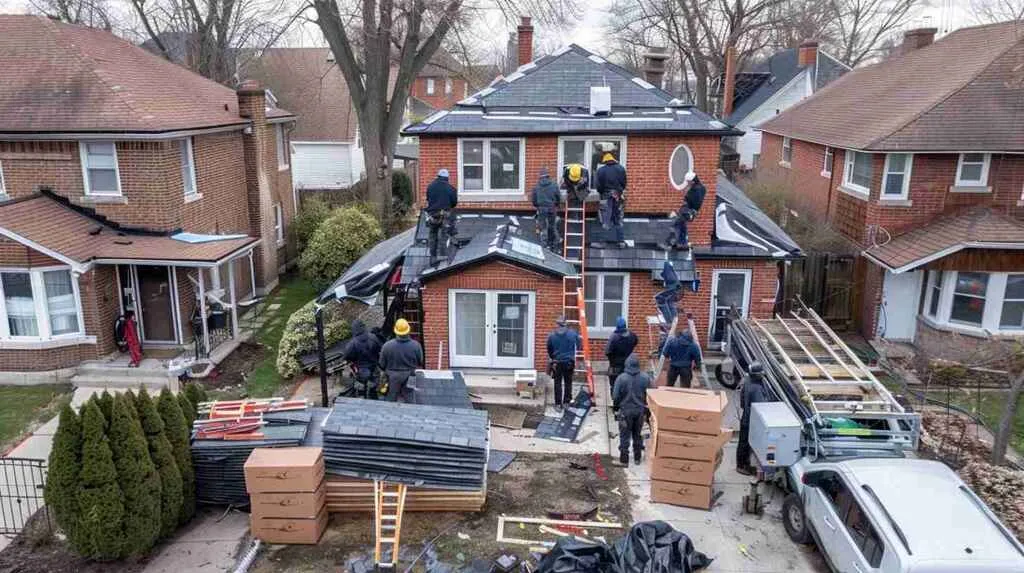
Installing a Skylight on Shingle Roof Queens NY – Full Process | Call Today
Blueprint first: the most important part of installing a skylight on a shingle roof in Queens isn’t the skylight itself-it’s exactly how you cut and re-weave the shingles and flashing so rain has no excuses to sneak into your house. I’m Ramon Ortega, and after 19 years on Queens roofs, I’ve learned that every successful skylight install comes down to one simple question at every single step: “What will the water try to do here?” If you can answer that from the inside out, you’ll get natural light without the mold farm.
How I Plan a Leak‑Free Skylight on a Queens Shingle Roof
On a typical Queens cape with an asphalt shingle roof, the first thing I do is flip my tape measure open and find the rafters from inside before I even think about touching the shingles. Most of these houses were built between the 1930s and 1960s, and the framing spacing can be all over the place-16 inches on center, 24 inches, sometimes a weird hybrid where somebody added a dormer and changed the rhythm halfway across. I map the structure, note where the plumbing vents and electrical runs are, and then I mentally trace the water path from the ridge down to the gutter to see where the skylight can fit with the roof, not against it. Here’s my personal opinion: picking the right skylight brand is secondary to how carefully the shingles and flashing are cut and overlapped to control that water path.
I still remember one icy February morning around 7:30 a.m. in Astoria-20 degrees, wind screaming off the East River, and gray clouds piling up fast. A homeowner insisted we open the roof for a skylight before a forecasted snow squall because “the contractor’s already framed the opening.” I climbed up, took one look, and realized the framer had cut right through a rafter. We had maybe three hours before the first flakes hit, so I had to redesign the flashing layout on the fly, sister the damaged rafter from below, and shift the skylight opening eight inches to land cleanly between two intact rafters. We got it watertight and trimmed with about 20 minutes to spare, tarp off, skylight sealed. That job taught me a hard lesson: the roof is not where you improvise. Every cut has to respect the water’s path and the structure holding that path in place, or you’re just gambling with drywall and insulation.
Pre-Cut Planning for Installing a Skylight on a Shingle Roof in Queens, NY
- Locate rafters from the attic or ceiling – Use a stud finder or measure 16/24″ on center from a known wall plate; mark exact bay boundaries with chalk on the floor joists before you measure anything on the roof.
- Map every obstruction – Note plumbing vents, electrical runs, HVAC ducts, and existing roof penetrations (satellite dishes, exhaust fans) within a 4-foot radius of your proposed skylight location.
- Trace the water path on paper – Draw the roof slope from ridge to eave and mark where your skylight will interrupt that flow; identify uphill and downhill edges to plan flashing overlap direction.
- Check shingle age and condition – Older asphalt shingles (15+ years) in neighborhoods like Jackson Heights or Woodside can be brittle; test a few to see if they’ll lift without cracking before you commit to re-weaving.
- Confirm pitch and orientation – Measure roof slope with a digital level or angle finder; pitches below 3:12 need extra ice & water shield, and south-facing skylights in Queens get intense afternoon sun that affects HVAC sizing.
Queens Skylight Planning Basics
4:12 to 8:12 on most Queens capes and colonials
2×2 ft, 2×4 ft, or 4×4 ft fixed/venting units
45-90 minutes on site measuring and mapping
Vents, trusses, older knob-and-tube wiring, chimney proximity
Step‑By‑Step: Cutting, Flashing, and Re‑Weaving Shingles Around Your Skylight
Exact Cut and Flash Sequence I Use on Queens Asphalt Roofs
Let me be blunt: the fastest way to turn a beautiful skylight into a mold farm is to treat the roof like drywall and just “cut a hole where it looks good.” On an asphalt shingle roof in Queens, the sequence goes like this-and it’s non-negotiable. First, I snap chalk lines on the roof deck from the measurements we took inside, marking the exact opening plus an extra two inches on all sides to give me room to work the flashing. Then I carefully remove shingles in a stair-step pattern, starting about 12 inches uphill from the top of the skylight and extending 8 inches past each side, preserving the nailing pattern on the shingles I’m keeping. In neighborhoods like Forest Hills or Kew Gardens where you often find older three-tab shingles that have been baking in the sun for 20+ years, those tabs can snap like potato chips if you’re too aggressive lifting them, so I use a flat bar and a heat gun on cool mornings to soften the sealant before I pry.
One humid August evening in Richmond Hill, a family called me at 6 p.m. because water was dripping from their brand-new skylight onto their dining table during a thunderstorm. I climbed up between lightning breaks, peeled back the shingles under a tarp, and found the installer had used indoor latex caulk instead of proper step flashing-no underlayment, no ice and water shield, nothing. Water was running down the skylight curb, hitting that caulk bead, and just rolling right under it into the roof deck. I worked with a headlamp, tore out the caulk mess, installed a proper ice & water shield apron at the bottom, laid step flashing up each side in an alternating shingle-metal-shingle-metal pattern so every piece of metal overlaps the one below it by at least four inches, and finished with a continuous head flashing at the top that tucks under the shingles and laps over the skylight’s factory flange. By 10 p.m. we climbed down, the rain had stopped, and they handed me a still-warm plate of roti. That’s the difference: proper flashing is drawing the water path in metal so the rain has only one choice-keep moving downhill and off the roof.
Full Roof-Side Install Sequence for a Skylight on an Asphalt Shingle Roof
- Snap layout lines on the roof deck from your interior measurements, adding 2 inches on all sides for flashing work room.
- Remove shingles in a stair-step pattern starting 12 inches uphill and 8 inches beyond each side; save undamaged shingles if possible.
- Cut roof sheathing (OSB or plywood) with a circular saw set to exact depth; wear a dust mask and check for wiring before cutting.
- Install ice & water shield around the entire opening perimeter, lapping at least 6 inches onto undisturbed shingles on all four sides.
- Set the skylight curb or unit into the opening, shimming level and square; secure with galvanized or stainless screws into solid framing.
- Install step flashing and shingles in alternating layers up each side-one piece of L-shaped metal, one shingle course, repeat-so metal always overlaps downhill.
- Finish with head flashing and final seal checks; tuck continuous metal under upper shingles, lap over skylight flange, and hand-test every overlap by pouring water to confirm the path runs off, not in.
What the Water Does at Each Layer
Think of your roof like the 7 train at rush hour-if you block the water’s path with bad flashing, everything backs up and starts looking for the nearest way out, usually into your living room. At the top edge of the skylight, rain is trying to sneak under the shingles and run down the curb; that’s why the head flashing has to slide under at least two courses of shingles and extend at least 4 inches past each side of the opening. On the side edges, water wants to follow gravity and the roof slope, so each piece of step flashing acts like a tiny gutter, catching the flow and handing it off to the piece below. At the bottom, the kickout or apron flashing is the last checkpoint-it has to extend far enough down the roof to hand the water back to the shingle drainage plane without letting it pool against the skylight curb. Here’s an insider tip I’ve learned from years on Queens roofs: always overbuild your uphill flashing by running your ice & water shield an extra 12 inches higher than code minimum, because wind-driven rain and heavy snow off the East River and Jamaica Bay don’t care about minimum specs-they’ll find any gap you leave them.
!
DIY Mistakes When Installing a Skylight on a Shingle Roof
- Cutting through rafters or trusses – Weakens the roof structure and can cause sagging or complete failure; always sister or reframe before opening.
- Relying on caulk instead of metal flashing – Caulk dries out, cracks in winter, and peels in summer; it’s a temporary band-aid, not a waterproof seal.
- Skipping ice & water shield in Queens winters – Freeze-thaw cycles will find nail holes and seams; underlayment alone won’t stop ice dams and melt.
- Nailing flashing in the water path – Every nail is a potential leak point; nails go in the uphill overlap, never in the exposed drainage surface.
Choosing Skylight Size and Location for Queens Sun and Structure
Lining Up Light With Your Rooms Without Hurting the Roof
I still remember a homeowner in Woodside who pointed to a Pinterest photo and said, “Just put it right there,” while I was staring at a plumbing vent and a bundle of electrical running through that exact spot. That conversation happens on about half my estimates. One Saturday in late spring, I was in Bayside meeting with a retired architect who had sketched out exactly where he wanted his skylight, lined up perfectly with the stairwell below so you’d see this dramatic shaft of morning light coming down. On paper it was beautiful-on the actual roof, his perfect spot landed right on a truss joint and would have required cutting and re-engineering half the attic framing. We spent an hour in his kitchen with blue painter’s tape on the ceiling and a sun-angle app on my phone, moving that tape around until we shifted the skylight two feet to the left. Same light effect in the stairwell, but now it sat cleanly inside a single rafter bay with zero structural surgery. That job reminded me that even smart people need someone who understands how shingles, structure, and sunlight all talk to each other. Before I mark anything on your roof, I literally map where the water runs and where the framing sits, because moving a skylight 18 inches one way or the other can be the difference between a one-day install and a week-long structural nightmare.
How Queens Sun Angles and Roof Layout Affect Placement
When I walk into your house for a skylight estimate, the first question I’m going to ask you is not “What size?” but “What time of day do you actually use this room?” If it’s a home office and you’re in there 9 to 5, an east-facing skylight on a Queens roof will flood you with morning sun and then go soft by noon-great for natural light without the afternoon heat. South-facing units get the most total sun year-round, which is amazing in winter but can turn your attic into a sauna by July if you don’t spec a venting or solar-shade option. West exposure gives you that golden-hour glow but also the harshest late-afternoon heat, especially if you’re near an open lot or facing the water where there’s no shade from neighboring buildings. Here’s an insider tip: avoid placing your skylight too close to roof valleys or chimneys, because those spots already handle heavy water traffic during storms, and adding a skylight there just multiplies the flashing complexity and leak risk. If your ideal spot is within three feet of a valley or within two feet of a chimney cricket, I’m going to suggest nudging it over to calmer water.
Deciding Where to Place Your Skylight on a Queens Shingle Roof
START: Do you know exactly where you want the skylight?
YES → Is that spot free of rafters/trusses that would need cutting?
YES → Are there vents, wiring, or ducts within 2 feet?
NO → Does the sun timing match when you use the room?
✓ Ideal, safe bay for skylight – Schedule install
YES (timing wrong) → Adjust orientation or consider venting option
YES (obstructions) → Shift location 1-2 feet to clear obstacles
NO (structural conflict) → Move skylight to adjacent rafter bay or add framing support
NO (unsure of location) → Walk attic with tape measure, mark rafter bays, then decide from inside which bay gets best light at your preferred time of day
→ Result: Adjust location 1-2 feet to protect structure and water path, then proceed to install
Costs, Timing, and When to Call Shingle Masters in Queens
In Queens, most straightforward skylight installs on an asphalt shingle roof run between four and eight hours on site, depending on roof pitch, how many shingle layers you’ve got, and whether I can park the truck within 50 feet of your house or I’m hauling everything down a shared driveway in Rego Park. Complexity goes up fast if we need to re-frame a rafter bay, work around a truss system in a ranch, or chase a hidden leak that’s been dripping into your insulation for months before you called. Emergency leak repairs during storm season-say, a nor’easter rips your existing skylight flashing loose at 2 a.m.-those get priority scheduling and obviously cost more because we’re working under tarps in the rain. For planned installs, the sweet spot is late spring or early fall when the weather’s stable, the shingles are pliable, and you’re not competing with every other homeowner in Forest Hills trying to get their roof done before winter.
Typical Skylight Installation Scenarios on Queens Shingle Roofs
*Ranges include skylight unit, flashing materials, labor, and any minor deck repairs. Does not include permits, extensive framing changes, or full roof replacement.
Call a Queens Skylight Roofer Immediately If:
- You have active water dripping from skylight or ceiling around it during or after rain
- Roof deck feels soft or spongy when you walk near the skylight
- You see visible rot, mold, or dark water stains spreading on ceiling drywall or attic framing
It Can Wait (But Don’t Ignore) If:
- Minor condensation on skylight glass in winter (may just need better attic ventilation)
- Hairline drywall cracks around skylight shaft with no moisture or discoloration
- You’re considering adding a new skylight and planning a full roof replacement within the next 12 months
Why Queens Homeowners Call Shingle Masters for Skylights
Fully Licensed & Insured in NYC
Years on Queens Roofs
Response for Emergency Leaks
Serving Jackson Heights, Forest Hills, Astoria, Bayside, Richmond Hill
Before You Cut: Quick Checks and Answers About Skylights on Shingle Roofs
Here’s an unsexy truth: 80% of a successful skylight install on a shingle roof is hidden under the shingles where nobody but your roofer and the rain will ever see it. The skylight itself-the glass, the frame, the fancy low-E coating-that’s the easy part. What keeps you dry is how carefully the ice & water shield wraps the opening, how each piece of step flashing overlaps the one below it by exactly the right amount, and whether the person on your roof asked “What will the water try to do here?” before making every single cut. Before anyone starts cutting into your Queens roof, verify a few things so you’re not gambling with your attic insulation and drywall.
What to Verify Before You Call Shingle Masters for a Skylight Install
- □ Know which room and what time of day you want more natural light (morning office vs evening bedroom makes a big difference)
- □ Take a few photos of your roof from the street and backyard showing pitch, shingle condition, and nearby features
- □ Note any history of past leaks, ice dams, or previous roof repairs in that area
- □ Check the approximate age of your shingles (under 10 years, 10-20 years, or 20+ years)
- □ Confirm you have safe attic access so we can measure rafter spacing and check for obstacles from below
- □ List any nearby roof features: vents, chimneys, satellite dishes, solar panels, or previous skylight locations
Common Queens Skylight and Shingle Roof Questions
▸
Will a skylight always make my shingle roof more likely to leak?
No-if the flashing is done right. A skylight is just another roof penetration, like a vent pipe or chimney, and those don’t leak when they’re flashed correctly. The difference is how much care goes into the step flashing, ice & water shield, and shingle overlap. A properly installed skylight on a Queens shingle roof, with metal step flashing alternated with each shingle course and sealed with self-adhering underlayment, will stay dry for 20+ years. The leaks happen when someone shortcuts the flashing or relies on caulk instead of metal to control the water path.
▸
Can you install a skylight in winter in Queens?
Yes, but it’s harder and more expensive. Ice & water shield needs temperatures above 40°F to seal properly, and shingles are brittle when it’s cold, so lifting them without cracking takes extra care and a heat gun. If you have an emergency leak around an existing skylight in January, we’ll do a temporary tarp-and-patch to get you through the cold snap and schedule the permanent fix when it warms up. For planned new skylights, late April through October is ideal-shingles are flexible, sealants cure fast, and you’re not racing a nor’easter.
▸
How long does a proper skylight install take on my type of roof?
For a straightforward fixed skylight between existing rafters on a one-story Queens cape with standard-pitch asphalt shingles, figure 4-6 hours from layout to final cleanup. If we need to sister a rafter, work around a truss, or you’ve got a steep second-story colonial that requires scaffolding, add another 2-4 hours. Emergency leak repairs are faster on the temporary side (1-2 hours to tarp and stop active dripping) but the permanent re-flash takes a full day once weather permits. I always schedule a half-day minimum because rushing flashing is how leaks happen.
▸
Do I need to replace my whole roof to add a skylight?
Not usually. If your shingles are in decent shape-say, less than 15 years old with no curling or missing tabs-we can cut out the section we need, install the skylight with fresh flashing and ice & water shield, and re-weave new shingles to blend in. The catch is shingle color matching; if your roof is 20+ years old, the sun has faded the originals and new shingles will look noticeably different for the first year or two. If your roof is already near the end of its life (20+ years, visible wear), it’s smarter to do the full re-roof and skylight install at the same time so the flashing integrates perfectly and everything has the same warranty.
▸
What warranties do you offer on skylight and flashing work?
Shingle Masters backs our skylight installation workmanship with a 10-year labor warranty covering all flashing, underlayment, and shingle integration. The skylight unit itself carries the manufacturer’s warranty-typically 10 years on glass seal and 2-5 years on operating mechanisms for venting models. If a leak develops because of our flashing work, we come back and fix it at no charge. If the skylight unit fails (condensation between panes, broken hardware), we coordinate the manufacturer warranty claim and handle the replacement install. Always keep your signed contract and material receipts in case you need service down the road.
When every cut, every nail, and every flashing overlap is decided by asking “What will the water try to do here?”, skylights on shingle roofs in Queens stay dry and bright for years. You get the natural light you’ve been missing without the mold, stains, or middle-of-the-night panic when it rains. Call Shingle Masters today to have Ramon’s crew walk your roof, map the water path from ridge to gutter, and schedule a precise skylight installation or leak repair that respects both your house and the weather.