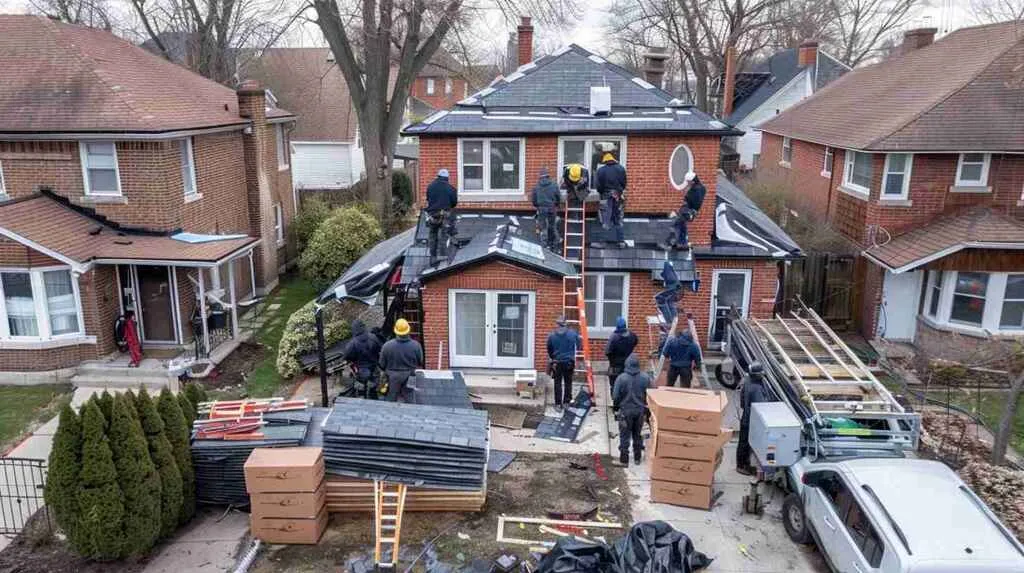
Install Roof Vent on Shingle Roof Queens NY – Watertight Method
Flow is what separates a roof vent that works from one that leaks all over your ceiling. Cutting the hole in a shingle roof is the easy part-getting the water to flow around the vent instead of through your attic is what actually matters, and that’s all about shingle order and flashing. Here in Queens, where we get freeze-thaw cycles all winter, wind-driven rain off the bay, and summer heat that can peel shingles back, a sloppy vent install will show itself fast, and I’m going to walk you through the watertight method I use-plus when it’s smarter to just call us at Shingle Masters and skip the anxiety.
Why a Roof Vent on Shingle Roofing in Queens Lives or Dies on Water Flow
First thing I tell people standing in their driveway, staring up at the roof vent they want, is this: water doesn’t care what you meant to do-only what you actually built. One February morning in Jackson Heights, it was 27°F and windy, and a homeowner called me because every time the snow melted, water showed up around his new bathroom vent. I got up there and saw a plastic roof vent just dropped on top of the shingles-no cutout sized right, no under-shingle flashing, nails through the top edge, and exposed sealant already cracking from the cold. I had to peel back frozen shingles with my heat gun, recut the vent opening so it matched the vent throat, re-lap the vent flashing properly, and then re-shingle it-he couldn’t believe one “little vent” could cause that much ceiling damage. Here’s the blunt part: if your plan is to compensate for bad shingle work with more caulk, you’re building a ticking leak, not a roof vent.
Every nail you drive, every cut you make, every shingle you lift is a water-flow decision. In Queens, we deal with wind-driven rain that can push moisture up under tabs, freeze-thaw cycles that open tiny gaps into major leak paths, and UV exposure that cracks caulk lines in a single summer. Small mistakes-nailing too low on a flange, overlapping shingles in the wrong direction, smearing sealant where it can trap water instead of shedding it-compound fast. The vent has to be woven into the roof’s shingle and flashing layers so water is directed around it at every point; caulk is backup insurance, not the primary seal, and if you can’t visualize where water will go when a shingle above the vent cracks or a nail backs out, you’re not ready to cut that hole.
Myth vs. Fact: Roof Vent Installs on Queens Shingle Roofs
| Myth | Fact |
|---|---|
| “Cut the hole, slap a vent over it, and caulk the edges-done.” | The vent has to be woven into shingle and flashing layers so water is directed around it-caulk is backup, not the primary seal. |
| “If it doesn’t leak right away, the install is fine.” | In Queens, freeze-thaw and summer UV will open up a sloppy vent install in a season or two, turning tiny gaps into major leaks. |
| “Any spot near the ridge is good enough for a vent opening.” | Vent openings should align with rafter bays and attic layout to avoid cutting structural members and to maximize airflow. |
| “More caulk and more nails always mean more watertight.” | Wrong nail placement and heavy caulk beads can actually trap water, crack, and funnel it under your shingles. |
Plan the Vent: Location, Attic Path, and Queens Roof Conditions
On a Tuesday last August in South Ozone Park, I showed a homeowner my tape measure and said, “We’re not guessing on location; we’re tying this vent to your actual rafter layout and attic space.” The vent opening needs to align with a rafter bay-usually 16 or 24 inches on center-so you’re not cutting through structural framing, and it has to make sense with your attic’s geometry and existing airflow patterns. A summer afternoon in Astoria, about 95°F with the roof surface somewhere near frying-pan level, I got called by a landlord who couldn’t keep his top-floor tenants cool, even with new AC units. He had zero intake vents and two tiny box vents jammed near the ridge, installed years ago by someone who clearly eyeballed everything. I added proper intake at the eaves and installed three new low-profile vents on the shingle roof, laid out by actual square footage and rafter bays, and the difference in attic temperature that same evening was over 20 degrees-he texted me a photo of the tenants baking cookies without the AC cranked. In Queens housing stock-attached homes in Jackson Heights, narrow lots in Astoria, walk-ups with shared attic spaces-you’re often working with limited roof access, low slopes, and older framing, so careful layout isn’t optional.
You’d be surprised how many times I ask customers, “Where does your attic actually pull air in, not just out?” and they look at me like that’s a trick question. Ventilation is a system: cool air enters low (through soffit vents or gable openings), warms up, rises, and exits high (through roof vents or ridge caps). If you just add exhaust without balanced intake, you’re not moving air-you’re just creating negative pressure that can pull conditioned air from your living space or suck moisture up through ceiling penetrations. The general rule of thumb is about one square foot of net free vent area for every 150 square feet of attic, split roughly 50/50 between intake and exhaust, but the real test is whether your attic feels like an oven in July or stays within 10-15 degrees of outside air. Plan your vent location to keep water paths simple: avoid hips, valleys, and within 18 inches of a ridge or sidewall where water flow gets complicated, and when you can, site exhaust vents on the leeward side to minimize wind-driven rain intrusion-here in Queens that often means thinking about prevailing winds off the East River and bay.
Should You DIY or Call Shingle Masters?
START: Do you have safe, easy attic access to mark the opening from below?
→ No: Call a pro. Guessing from above is how you cut trusses.
→ Yes: Are you comfortable working on a sloped roof with safety gear?
→ No: Call a pro. Falls hurt more than install fees.
→ Yes: Have you ever layered shingles or installed flashing before?
→ No: Call a pro. Water flow is not intuitive.
→ Yes: Has your roof ever had a leak, or is it older than 15 years?
→ Yes: Call a pro. Older decking and multiple shingle layers complicate cuts.
→ No: Proceed carefully-and if you feel uncertain at any step, stop and call.
Quick Facts: Planning a Vent Install on a Queens Shingle Roof
- Attic Coverage: Typical 8×8 box vent handles roughly 150-250 sq ft of attic when paired with proper intake.
- Placement Zone: Aim to place exhaust vents within the upper 1/3 of the roof slope but below the ridge cap shingles.
- Wind Protection: In Queens, wind-driven rain off the East River and bay means you want vents on the leeward side when possible.
- Temperature Drop: Balancing intake (soffits) and exhaust (roof vents) often drops attic temps 15-25°F in a single heat wave.
Step-by-Step: How I Install a Roof Vent on an Asphalt Shingle Roof
If you handed me just one tool for a vent install, I’d take my hook blade-because a clean, controlled cut is the difference between a vent opening and a future crack. I start in the attic: I measure from a reference point-chimney, gable end, something visible from the roof-then drill a small locator hole up through the sheathing, right at the center of where I want the vent. That hole becomes my alignment point on the roof so I’m never cutting blindly near rafters or nails. Once in Flushing, a DIY’er had tried installing his own roof vent on a Sunday and called me in a panic Monday morning because it “whistled” and leaked whenever it rained. When I opened things up, his cutout was shaped like a lopsided triangle, he’d sliced straight through a truss web, and he’d layered three beads of caulk where nails and proper shingle lapping should’ve been. I had to sister the damaged framing from inside the attic, cut a clean rectangular opening between proper rafters, then reinstall the vent with the flashing under the field shingles instead of smeared on top like cake frosting. The insider tip here: drill that locator hole from the attic and use it to align the vent on the roof so you never cut blindly near rafters.
Once I’ve marked the outline on the roof-usually with chalk or a pencil line matching the vent throat-I carefully lift the shingles above and to the sides of the cut zone, not ripping them but just raising the tabs enough to see the nails. I pull or cut those nails with my flat bar, then use the hook blade to score through the shingles and cut the decking along my layout lines-clean, square cuts that match the vent base exactly. The flashing and shingle order is where most people mess up, so here’s the explicit water-flow experiment: if a shingle above the vent cracks or a nail backs out, where does the water go? It needs to hit the vent flange and be directed down and out, not under the shingle layers. That means the upper portion of the vent flange slides under the shingles above the opening, the lower portion sits on top of the shingles below, and the side edges get tucked under the field shingles on either side-like weaving the vent into the roof’s fabric. I line up the vent throat with the cutout, then nail the flange high on the sides and top edge, in spots that will be covered by the shingles I’m about to re-lay-never nailing where water can run directly into the fastener hole. Every nail I place, I ask myself: if this shingle tab lifts, will water find this hole?
Sealing comes last, not first. I lift the shingle tabs that now cover the upper vent flange and apply a small dab of roofing cement under each tab to hold it flat against the flange-just enough to glue it down, not so much that it oozes out or traps water in a pocket. I never smear caulk on the exposed top of the flashing where UV and thermal cycling will crack it open in six months. The tabs get pressed down, the vent gets a final check to make sure it’s seated square and the screen or louvers aren’t blocked, and I’m done. The watertight method relies on gravity, overlapping layers, and proper fastener placement; the caulk-heavy shortcut that a lot of folks try-just globbing sealant around the vent base and hoping-fails because thermal expansion cracks the bead, water finds the gap, and you’re calling me in February wondering why your ceiling has a brown stain. If you can visualize the path water takes when a shingle fails, you’ll nail every vent you touch; if you can’t, it’s smarter to hand the job off.
Watertight Roof Vent Install Sequence
- Mark from attic: Measure to your chosen rafter bay, drill a small locator hole up through the sheathing at the center point.
- Lay out on roof: Find the locator hole, snap or draw the vent outline matching the throat size, keeping edges parallel to rafters.
- Lift shingles: Carefully raise tabs above and beside the cut zone; pull or cut nails with a flat bar without tearing the shingles.
- Cut opening: Use a hook blade or reciprocating saw to cut through shingles and decking along layout lines-clean, square cuts only.
- Position vent: Slide the upper flange under the shingles above, lay the lower flange over the shingles below, tuck side edges under field shingles.
- Nail flange: Drive roofing nails high on the sides and top edge, in spots that will be covered when you re-lay shingles-never where water runs directly.
- Seal tabs: Lift upper shingle tabs, apply small dabs of roofing cement under each tab to glue it to the flange, press flat-no exposed caulk beads.
- Inspect and test: Check that vent sits square, screen is clear, and you can trace the water path if any single shingle or nail fails.
⚠️ What NOT to Cut or Nail
- Never cut through trusses or rafters. Your vent opening must fit between framing members-cutting a structural web can collapse your roof.
- Stay away from hips and valleys. Water flow gets complicated near those intersections; a vent there will leak no matter how careful you are.
- Don’t nail where water runs. If a nail will be exposed to direct flow or sits in a channel where water collects, it will leak-period.
- Avoid cutting within 18 inches of a ridge or sidewall. You need room above the vent for proper shingle overlap and flashing integration.
Queens-Specific Leak Risks and When to Call Shingle Masters
First thing I tell people standing in their driveway, staring up at the roof vent they want, is this: water doesn’t care what you meant to do-only what you actually built. One February morning in Jackson Heights, it was 27°F and windy, and every cycle of snow melt turned a bad vent install into a ceiling stain-that’s the reality of Queens winters. Freeze-thaw is brutal: water gets into a tiny gap during the day, freezes at night and expands, then melts again and pushes deeper. Older Queens roofs-especially those with two or even three layers of shingles from decades of patch jobs-make vent installs trickier because you’re cutting through multiple brittle, misaligned layers, and the decking underneath might be soft or uneven. Wind-driven rain off the bay can push moisture up under shingle tabs that would stay dry in calmer climates, and summer UV exposure in Queens can crack cheap plastic vents or caulk lines in a single season, turning a marginal install into an active leak by fall.
If you can’t clearly visualize where water will go if any single shingle fails, it’s time to call. I mean that literally: picture a shingle above your vent cracking, or a nail backing out from thermal cycling-can you trace the path water will take, and are you confident it flows around the vent and down the roof instead of under the flashing and into your attic? If the answer is “I think so” or “probably,” you’re not ready to cut that hole. At Shingle Masters, we get calls all the time from folks who tried a weekend install and ended up with a whistle, a drip, or a ceiling stain, and honestly, fixing a bad vent install usually costs more than doing it right the first time because we have to repair the sheathing, reframe around damaged cuts, and sometimes replace a whole section of shingles. If your roof has ever leaked, if it’s older than 15 years, if you’re not comfortable on a ladder, or if the attic layout is confusing, just call us-we’ll get it done watertight, code-compliant, and with a clear explanation of what we did and why.
Why Queens Homeowners Trust Shingle Masters
| Credential: | Fully licensed and insured in New York City |
| Experience: | 19+ years installing and troubleshooting vents on Queens roofs |
| Specialty: | Specialized in leak-trace and correction around vents and penetrations |
| Response: | Typical response within 24 hours for active vent leaks (weather permitting) |
Costs, Maintenance, and Simple Checks Before You Call
$350 is about what one straightforward vent install can cost in Queens when the roof is simple, access is good, and there are no surprises-but that number buys you a watertight system that balances airflow, drops your attic temperature 20 degrees in summer, and doesn’t call you back with a leak in February. Think of your roof vents like the plumbing for air: cheap, sloppy work shows up fast, and proper maintenance checks are almost free if you know what to look for.
Before You Call: Quick Attic and Roof Checks
- Look in your attic on a sunny day-can you see daylight through the vent opening or around the flange?
- Check the ceiling below the vent for water stains, especially after heavy rain or snow melt.
- Note whether your attic feels unusually hot in summer or damp and musty in winter-both suggest airflow problems.
- From the ground or a safe window, look at the vent cap-is it cracked, missing, or visibly rusted?
- If you can safely access the roof, gently press around the vent flange-does the deck feel soft or spongy?
- Write down roughly when the vent was installed and whether you’ve had any prior leaks in that area.
Roof Vent and Shingle Check Schedule for Queens Homes
| Interval | What to Check |
|---|---|
| Every spring | Look for damaged shingles, lifted vent flanges, and new ceiling stains after winter. |
| Mid-summer heat wave | Check attic temperature and humidity; confirm vents are moving hot air out. |
| Every fall | Inspect shingles for curling and confirm vent screens are clear of debris. |
| After any major wind or nor’easter | Walk the attic if safe and look for fresh water trails around vents and penetrations. |
| Every 5-7 years | Have a pro review overall ventilation balance and vent condition as part of a roof health check. |
Common Questions About Installing Roof Vents on Shingle Roofs in Queens
Can I install a roof vent myself, or should I always hire a pro?
If you have solid carpentry skills, safe roof access, and can clearly visualize water flow at every step, a single vent on a simple roof is doable. But if your roof is steep, old, or has multiple shingle layers-or if you’ve never layered flashing before-you’re better off calling us. Most DIY vent leaks I fix come from folks who underestimated how precise the shingle and flashing order has to be.
What’s the best time of year to install a roof vent in Queens?
Late spring through early fall is ideal-shingles are pliable, sealant cures properly, and you’re not fighting ice or summer heat exhaustion. I’ve done emergency vent installs in February and August, but given a choice, May or September gives you the best working conditions and the lowest chance of weather interruptions.
How do I know if I have enough roof vents, or too many?
Walk into your attic on a hot summer afternoon-if it feels like an oven and there’s almost no air movement, you probably need more exhaust or intake. If you have tons of vents but the attic is still hot, your intake is likely blocked or insufficient. The real test is balance: you want roughly equal net free area for intake and exhaust, and the attic temp should stay within 10-15 degrees of outside air when the system’s working right.
Will adding a roof vent void my shingle warranty?
It depends on the manufacturer and how the install is done. Most shingle warranties allow penetrations as long as they’re installed per manufacturer specs and don’t compromise the roof system. If you’re worried, ask your roofer to follow the shingle maker’s flashing guidelines and document the install-we do that automatically on every job.
What’s the difference between a box vent, a turbine vent, and a ridge vent?
Box vents are static-they rely on natural convection and wind to pull air out. Turbine vents spin with the wind and move more air but can get noisy or seize up in winter. Ridge vents run the length of the peak and provide continuous exhaust but require proper intake to work well. For most Queens homes, a few well-placed box vents paired with soffit intake is the simplest, most reliable setup, and that’s what I install most often.
If you can’t clearly picture where the water will go at every step-from shingle overlap to flange placement to nail holes-it’s smarter to have me and the Shingle Masters crew handle the vent install, and we’ll make sure your attic breathes right and your ceiling stays dry. Call us anytime for a quick roof and ventilation check anywhere in Queens; we’re licensed, insured, and we’ve been keeping water where it belongs-outside-for nearly two decades.