Install a New Shingle Roof Queens NY – What the Full Process Is
Rhythm is everything. At the curb in Queens, before I even unload a ladder, I’m already checking three things with my eyes: where the roofline sags or dips, patches of missing shingles, and any dark staining around the soffits that tells me water’s been getting in. After 19 years working from Astoria to Flushing, I treat this first scan as the “intro” to the song that’s about to become your new roof-if you rush this first beat, the rest of the track never sits right.
Track 1: Inspection and Tear-Off – How a New Shingle Roof Really Starts in Queens
Here’s my honest take: most problems with “new” shingle roofs start before the first nail ever hits the deck. The real work begins with what you can see from the sidewalk and what you discover once you’re up there walking the roof. I’m looking for soft spots under my boots, loose decking that flexes like a drumhead that’s tuned too loose, and any areas where previous DIY patches tried to hide bigger issues. This is the intro and first verse of the whole job-you don’t skip this part and expect the chorus to land clean.
One August afternoon in Woodside, I started a tear-off at 7:00 a.m. because the forecast said “light breeze.” By 10:30 it felt like we were working on the surface of the sun, and the homeowner, an older Irish guy, came out with frozen towels for my crew. We found that the previous installer had skipped underlayment on the north side entirely, which is exactly where his bedroom ceiling kept staining. That job taught me that rushing the “boring” layers under the shingles is exactly how you buy yourself leaks five years later. The underlayment and what’s under those shingles is where most failures start, not the shingles themselves.
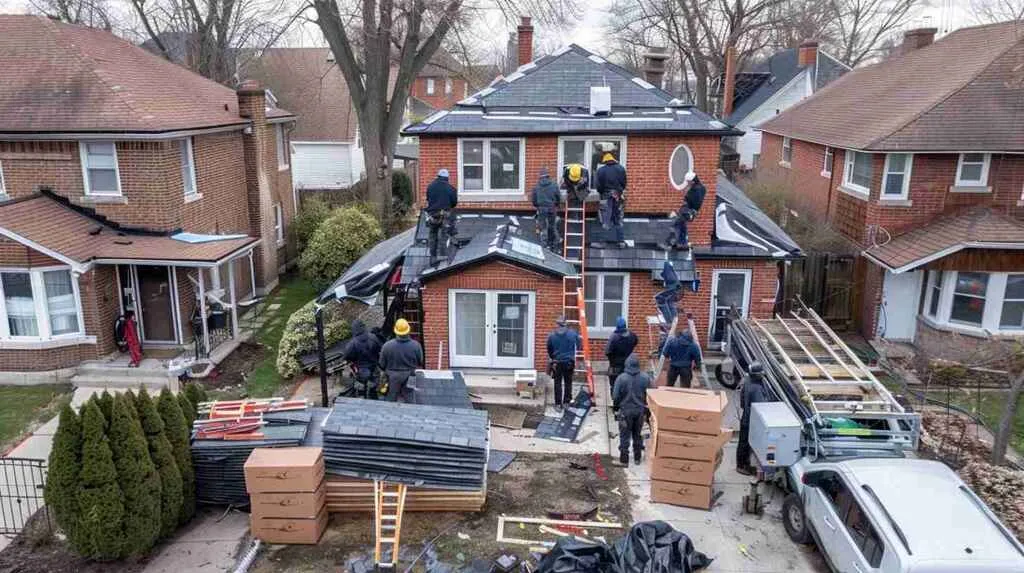
A clean tear-off means stripping everything down to bare decking, running a magnet sweep around the house and sidewalk for stray nails, and protecting your landscaping and your neighbors’ cars with tarps and plywood chutes. In Queens, that also means navigating tight driveways, coordinating where the dump container can legally park on the block, and staging the work so the house is never fully exposed overnight. Once the roof is bare and swept clean, we’re ready to move into the chorus-the layers that actually keep water out.
Queens Shingle Roof Inspection and Tear-Off Sequence
Checking roofline for sagging, missing shingles, patched areas, and stained soffits before the ladder comes off the truck.
Safe ladder setup, walking the roof to feel for soft spots and loose decking, noting chimney and skylight problem areas.
Covering landscaping and siding with tarps, setting up plywood chute if needed for tight Queens driveways, placing dump container where allowed by the city.
Removing all old shingles, nails, and flashing down to bare decking, working in sections so the house is never fully exposed to weather.
Sweeping the deck, running a magnet around the house and sidewalk, noting any rotten or spongy sections that need repair before we go further.
⚠️ Why “Just Go Over the Old Shingles” Is a Bad Beat to Play
- Hidden rotten decking: Soft spots and water damage you can’t see from above until it’s too late.
- Extra weight on older Queens framing: Many homes here have rafters and framing that weren’t built for double layers.
- Trapping heat and moisture: Old shingles lock in humidity and heat that will shorten the life of your new layer by years.
Track 2: Decking, Underlayment, and Flashing – The Rhythm Section Under Your Shingles
Why Queens Roof Decks Can’t Be Ignored
Once the old shingles are off, the real story of your roof shows up. I’ll never forget a December job in Flushing where the homeowner insisted he wanted to “keep the old shingles and just add a new layer” to save money. When I walked the roof at 8:00 a.m. in that cold, I felt the decking bounce under my boots like a drumhead that’s too loose. I cut a test hole and my knife basically sank into rotten OSB. I brought him up on the ladder so he could see the mush himself-that’s when he changed his mind about a full replacement real fast. Different Queens neighborhoods-whether it’s Flushing, Astoria, or Jackson Heights-have a mix of older framing, layered roofs, and DIY repairs from decades past, which means decking problems are common and you can’t just assume the structure under those shingles is solid. Winters here, plus humidity and unvented attics, hit patched roofs harder than people think.
If your roofer can’t clearly tell you what’s happening under the shingles, that’s the wrong rhythm section for your house.
Building a Waterproof Base Layer
The underlayment and flashing work is the rhythm section that carries the whole song. Ice-and-water shield goes along the eaves and valleys where water likes to pool and push back under shingles. Synthetic underlayment covers the rest of the deck, overlapped and nailed to manufacturer specs so it sheds water even if a shingle ever lifts. Metal drip edge protects the fascia, and fresh step and counter flashing at chimneys and sidewalls keeps water from sneaking behind the shingle field. You don’t rush these beats-they’re what keep your house dry when wind-driven rain hits from the side, which happens constantly in Queens. Building codes and shingle manufacturers both require this stuff for a reason, and if your crew is skipping any of it to save time, you’re buying a roof that’s already off-tempo.
| Component | What It Does | Queens-Specific Note | What I Usually Recommend |
|---|---|---|---|
| Ice-and-Water Shield | Self-sealing membrane that sticks to deck and seals around nails; used at eaves, valleys, and chimneys | Required by code in freeze-thaw areas; Queens gets both, so it’s non-negotiable | Minimum 3 feet up from eaves, full coverage in valleys, around all penetrations |
| Synthetic Underlayment | Waterproof felt-replacement layer covering the entire deck; sheds water and protects during install | Lasts longer than old felt paper; critical during Queens’ unpredictable rain windows | 30-pound-equivalent synthetic, overlapped per spec and cap-nailed to prevent tearing |
| Drip Edge (Eaves & Rakes) | Metal trim that directs water away from fascia and into gutters | Prevents wood rot on tight Queens overhangs where gutters can’t catch everything | Aluminum or galvanized steel, installed under underlayment at eaves, over at rakes |
| Step & Counter Flashing | Individual metal pieces woven with shingles at walls and chimneys; counterflashing is cut into masonry joints | Older Queens homes often have painted-over flashing that’s failed; needs full replacement, not patching | New copper or coated steel step flashing at sidewalls; properly cut and sealed counterflashing at chimneys |
Critical Waterproofing Details Your Roofer Should Never Skip
- ✅ Ice-and-water shield at eaves and valleys, minimum 3 feet up from edge
- ✅ Synthetic underlayment overlapped and nailed per spec across entire deck
- ✅ Drip edge installed at eaves and rakes before and after underlayment as code requires
- ✅ Fresh step flashing at sidewalls and dormers, woven with each shingle course
- ✅ Proper chimney counterflashing cut into mortar joints, not just caulked on top
Track 3: Shingle Layout, Ventilation, and Weather Timing – Keeping the Chorus Tight
Laying Shingles the Right Way, Not the Fast Way
The actual shingle install is what most people picture when they think “new roof,” but by the time we get here, all the hard work is already done underneath. Shingles go on in a specific sequence: starter course along the eaves to seal the first row, then field shingles working up the slope with proper stagger so the seams never line up vertically. Each shingle gets nailed in the nail line-not too high, not too low-so wind can’t lift them and so the tabs above lock them down. Color and style were chosen weeks before this day; this part is about precision and rhythm, not looks. Here’s an insider tip: ask your roofer to show you a sample of their nailing pattern and starter strip on the first few rows before they continue up the roof. If they’re sloppy or defensive about that request, you know the rest of the “track” isn’t going to be nailed right either.
Ventilation and Queens Weather Windows
There was a Saturday in Jackson Heights when an anxious first-time homebuyer had me there by 6:45 a.m. because rain was predicted by late afternoon. Mid-tear-off, we discovered an unvented attic and bath fans dumping steam straight into the roof cavity-no vents, no baffles, nothing. I had to stop everything, sketch a quick diagram on a pizza box, and walk her through why proper ventilation is part of “how to install a new shingle roof,” not some optional upgrade. We reworked the scope on the spot, added ridge and intake vents, and finished just as the first drops hit the tarp. Ridge vents let hot air escape at the peak, intake vents (soffit or smart intake if soffits are blocked) pull fresh air in low, and baffles keep insulation from blocking the airflow path. Without this system, your attic cooks in summer and traps moisture in winter, which rots the deck from below and shortens shingle life by years.
I still remember a roof in Corona where the whole job went sideways because nobody respected the weather window. Queens weather moves fast-storms roll in off the water with almost no warning, humidity sits heavy in summer, and winter days are short and cold. A good crew stages the work so only the area they can fully dry-in that day is exposed, which means coordinating tear-off, underlayment, and shingles in sections rather than stripping the whole roof and hoping for the best. This is the big chorus where all the earlier beats-solid decking, proper underlayment, correct flashing-finally pay off, because when the shingles are on and the ridge is capped, water just rolls off the way it’s supposed to.
Shingle Installation and Ventilation Setup on a Queens Home
Installing factory or hand-cut starter shingles along eaves and rakes to seal the first course and prevent wind blow-off.
Laying the first few courses, confirming correct exposure, nailing pattern in the nail line, and proper alignment with chalk lines.
Using woven or California-cut valleys per manufacturer spec, installing hip shingles to cover ridge angles cleanly.
Opening a 1-2 inch slot along the ridge where code and roof design allow, keeping proper offsets from hips and dormers.
Installing ridge vent material, then covering it with ridge cap shingles nailed in straight lines for a clean finish.
Sealing flashing edges with roofing cement, sealing pipe boots, checking for any exposed nails or loose tabs.
Queens Roof Install Timing: When to Treat It as Urgent
🚨 Urgent: Call a roofer now
- Active leaks during rain-water staining ceiling or walls
- Shingles missing down to black underlayment or bare wood deck
- Decking visibly sagging or bouncing when you walk on it
📅 Can wait a few weeks to schedule
- Curling shingles that aren’t actively leaking yet
- Minor granule loss in high-traffic valleys or near gutters
- Planned upgrade for age or appearance within the next season
Track 4: Cleanup, Final Walkthrough, and What You Should Check Before You Pay
After the shingles and ridge are on, a good Queens crew treats cleanup and the final walkthrough as the “outro”-you don’t leave the stage with equipment scattered everywhere and nails in the flower beds. Look for a clean yard and gutters, photos of critical areas like valleys and flashing, all warranty paperwork in your hands, and a clear walk-through explanation of where vents, flashings, and new details are located. If your contractor can walk you through the whole process like a song-intro, verse, chorus, bridge, outro-they probably installed it with the right rhythm too.
✔️ Questions to Ask and Things to Confirm Before You Hire a Queens Roofer
- They explain tear-off vs. layover clearly and recommend full tear-off for most older Queens roofs
- They show you exactly how they’ll handle rotten decking if they discover it during tear-off
- They specify brands and types of underlayment, ice-and-water shield, and shingles in writing on the estimate
- They include ventilation work-ridge vent and intake vents-in the scope if your attic needs it
- They describe their daily cleanup plan, magnet sweep, and protection for landscaping and neighbors’ property
- They carry NYC license and insurance and can provide proof on request before starting work
Why Call Shingle Masters for Your Queens Shingle Roof
Licensed and insured to work anywhere in Queens, NY
19+ years installing shingle roofs in neighborhoods from Astoria to Flushing
Responsive scheduling with most full replacements completed in 1-2 days of on-roof time
Written workmanship warranty plus registered manufacturer shingle warranty where available
Quick Reference: Costs, Myths, and Common Queens Questions
This is the “bridge” of the song where we hit money talk, myths, and FAQs all in one place. Exact numbers depend on your roof size, complexity, and what surprises we find under the old shingles, but these ranges and clarifications will prepare you before you call.
Typical New Shingle Roof Price Scenarios in Queens, NY
| Scenario | Roof Description | Estimated Range | Notes |
|---|---|---|---|
| Small rowhouse | Simple gable, 1 layer tear-off, no major complexity | $8,000-$11,000 | Assumes minimal deck repair |
| Medium detached home | Hips and valleys, 1-2 layers tear-off, standard pitch | $12,000-$18,000 | Most common Queens scenario |
| Larger multi-family | 2-family or complex roof with dormers, skylights | $18,000-$28,000 | Price scales with square footage |
| Heavy deck repair needed | Rotten decking found during tear-off, new ventilation install | Add 10-25% | Depends on extent of damage |
These are ballpark ranges only; Shingle Masters provides written, site-specific estimates after inspection.
| ❌ Myth | ✓ Fact |
|---|---|
| You can always just add a new layer of shingles over the old ones. | Hidden rotten decking, extra weight on older framing, and trapped moisture all shorten roof life. Full tear-off is almost always the right call in Queens. |
| Underlayment brand doesn’t matter-it’s all the same black paper. | Synthetic underlayment lasts longer, resists tearing during install, and performs better in Queens humidity. Cheap felt can fail before the shingles do. |
| Ventilation is optional if your attic seems “okay.” | Trapped heat and moisture rot your deck from below, void warranties, and cut shingle life in half. Proper intake and exhaust vents are part of the install, not an upsell. |
| Roofing is only a summer job-you can’t install in winter. | You can install shingles in winter as long as it’s above freezing and dry. Shingles seal down when temps warm up in spring. We just work shorter daylight hours. |
| Any handyman can install shingles if they follow YouTube videos. | Local code, manufacturer specs, Queens weather patterns, and proper sequencing require experience. DIY and unlicensed work often fails within 3-5 years. |
Homeowner Questions About Installing a New Shingle Roof in Queens, NY
▸ How long does it usually take to install a new shingle roof on a Queens home?
Most full replacements take 1-2 days of actual on-roof time once we start, assuming no major surprises with decking or weather. We schedule with buffer days around the forecast so we’re never rushing to beat rain, and if the roof is complex-dormers, multiple valleys, tight access-it might stretch to 3 days. The key is focused, uninterrupted work rather than bouncing between jobs.
▸ Do you stay on the job until it’s done or bounce between houses?
We stay until your roof is completely dry-in-shingles, ridge, and all flashings sealed-before moving to the next job. The only exception is multi-day projects where we’ll tarp overnight if we can’t finish by dark, but we sequence the work so exposed areas are minimized. You’re never left with a half-done roof and a crew that doesn’t come back for a week.
▸ Can you install a new shingle roof in winter in Queens?
Yes, as long as the temperature is above freezing and the deck is dry. Shingles need warmth to seal down properly, but they’ll bond once spring temps arrive if installed correctly. Winter installs just mean shorter daylight hours, careful material handling in the cold, and watching the forecast closely. We’ve done plenty of December and January roofs without issues-it’s about technique and timing.
▸ What warranties do I get on a new shingle roof?
You get two: a material warranty from the shingle manufacturer (typically 25-50 years depending on the product, and you have to register it), and a workmanship warranty from us covering installation for a set period in writing. The workmanship warranty is what protects you if flashing leaks or nails back out-things that aren’t the shingle’s fault. Make sure both are spelled out clearly before you sign anything.
A solid shingle roof in Queens is all about hitting every beat in order-inspection, tear-off, decking, underlayment, shingles, ventilation, and cleanup-and not skipping any “verses” to save time or money. Shingle Masters does exactly that, start to finish, treating every job like a track we’re recording for keeps. Call us to walk your own roof “track list” from intro to outro, and we’ll give you a clear, written plan for installing a new shingle roof on your Queens home the right way.