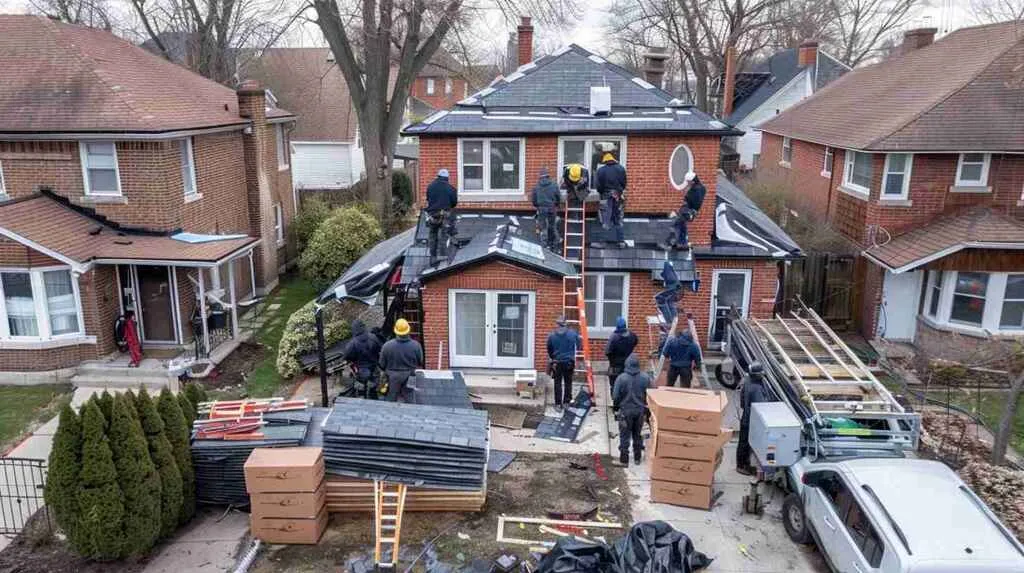
How to Install Asphalt Shingle Roof Queens NY – Full Guide | Free Estimates
Blueprint time. Most DIYers in Queens blow right past the prep phase-deck inspection, full tear-off, and underlayment-because they’re eager to see those shingles go down and the roof “look done.” This guide walks you beat-by-beat from bare wood to finished asphalt shingle roof, the same way I count in the band before the first note. I’m Carlos “Lofty” Mendez, and I’ve spent 19 years on Queens roofs, and I’m telling you: if you skip the setup, the whole song falls apart when the next nor’easter rolls in.
Prep Before the First Shingle: Deck, Tear-Off, and Underlayment
The first thing I tell people on a Queens rowhouse roof is to forget the shingles for a minute and look at the wood underneath. The deck-your plywood or OSB sheathing-is the rhythm section of the whole roof. If it’s soft, wavy, or rotted in spots, no amount of premium shingles will save you from leaks and nail pops. One February morning in Forest Hills, about 7:00 a.m., we were tearing off a 3-layer mess of old shingles and I could hear the ice cracking under our boots. The homeowner kept asking if we really needed underlayment because “the last guy didn’t bother.” That same afternoon, a surprise sleet shower rolled in, and we watched the synthetic underlayment shed water perfectly while the exposed old section soaked like a sponge-that was my live demo on why you never skip the “boring” layers. Here’s my honest take from 19 years on Queens roofs: I never skip underlayment, and I never recommend going over bad old shingles. It’s a professional standard, not a suggestion. If the deck bounces when you walk on it, or you see daylight through cracks, stop and fix that first.
Now, once that’s steady, you’re rolling out your underlayment-either #15 or #30 felt or, better yet, synthetic, which doesn’t wrinkle or tear in Queens freeze-thaw cycles. Along the eaves and in every valley, you’re also installing ice and water shield, a self-adhesive membrane that seals around nail penetrations and stops water that backs up under shingles during winter ice dams or wind-driven sleet off Flushing Bay. Think of underlayment as the steady tempo that holds the whole song together: if the rhythm’s off, the melody (your shingles) never sounds right. Valleys get double attention-continuous ice and water at least 24 inches wide, centered on the valley crease, because that’s where two roof planes dump all their runoff into one tight channel.
Warning: Skipping Tear-Off and Underlayment in Queens Weather
In Queens, NY, layering new shingles over soft, rotted, or uneven decking and old roofing is a fast track to leaks, code violations, and expensive callbacks. Here’s why you can’t cut corners:
- More than two layers violates most local codes and adds dangerous weight to rafters designed for one roof, not three. Inspectors will flag it, and your home insurance might balk at a claim.
- Hidden soft spots under old shingles lead to nail pops and shingle blow-offs. You can’t see rot or plywood delamination until you strip it down, and once high winds hit, those weak zones become entry points for water.
- Underlayment and ice & water at eaves and valleys are your only defense during Queens sleet storms and nor’easters. Skip them and you’re gambling that capillary action and wind-driven rain won’t find every nail hole and seam.
✅
Pre-Shingle Prep Checklist on a Queens Asphalt Roof
Solid deck with no bounce or soft spots – walk every square foot and mark any areas that flex or feel spongy underfoot
All old shingles and flashings removed from the work area down to bare sheathing, no layering over mystery conditions
Nails and debris cleaned off with magnets and brooms so nothing punctures your new underlayment or becomes a safety hazard
Drip edge metal ready and measured for both eaves and rakes, cut to length and staged near the work zone
Underlayment rolls and ice & water shield staged near eaves and valleys, with enough overlap material to account for wind and complex hips
Laying the Lines: Starter Course, Drip Edge, and First Shingle Rows
I remember standing on a Bayside cape at 9 a.m., chalk line in one hand, coffee in the other, explaining to the owner why my lines mattered more than the shingle brand. Snapping horizontal and vertical chalk lines before you lay a single shingle is how you control the whole roof’s look and performance-especially on Queens capes and colonials with short runs and front-facing slopes visible from the street. Those lines become your visual and physical guides: horizontal for each course, vertical to keep shingle edges from wandering left or right as you work up the slope. Starter shingles-either a dedicated starter strip or full shingles installed upside-down with the tabs cut off-sit along the eaves first, adhesive strip facing down so the first full course above it seals tight. Drip edge goes on before underlayment at the eaves and after underlayment at the rakes, creating a clean metal edge that directs water into gutters and away from fascia boards. On tight Queens lot lines, staging and measuring this stuff on the ground before you climb saves time and keeps the whole crew in sync.
I once did a job in Corona for a retired barber who wanted to “help” to keep costs down. He started nailing shingles wherever he felt like, and by noon I noticed half a bundle with overdriven nails and crooked courses wandering uphill. I stopped the whole crew, stripped that slope back, and used his mistakes to walk him-and my apprentices-through why straight lines, proper nail placement, and starter rows matter more than any fancy shingle color. Next beat in the song: each shingle gets four to six nails in the nail zone (usually marked by a line or about 1 inch above the cutouts), driven flush but not overdriven-break the seal strip and you’ve got a shingle that’ll blow off in the first big wind event off Jamaica Bay. Proper overhang is 1/4 to 3/8 inch past the drip edge, enough to direct water but not so much that wind can catch and peel. Starter shingles and drip edge are the rhythm section of your roof-get them wrong and the whole song is off.
If your lines are off, nothing else on that roof will ever look or perform right.
Installing Drip Edge, Starter, and First Shingle Course in Queens, NY
| Setup Detail | Correct in Queens, NY | Common DIY Mistake & What Happens |
|---|---|---|
| Drip edge placement | Eave drip edge under underlayment; rake drip edge over underlayment to shed water correctly | Installing all drip edge on top of underlayment lets wind-driven rain wick back under the membrane and rot fascia |
| Starter strip orientation | Adhesive strip facing down toward the eave so first course seals to it when sun activates the adhesive | Putting starter strip upside-down means no seal; first row lifts in the first windstorm and you’re patching before winter |
| Overhang distance | 1/4 to 3/8 inch past drip edge-enough to direct water, not enough to catch wind | Too little overhang drips water behind gutters; too much gives wind a grip to peel shingles back during Queens storms |
| Nail placement and depth | Four to six nails in the nail zone, driven flush-head level with shingle surface, not breaking it | Overdriven nails tear the seal strip and create dimples that collect water; underdriven nails let shingles flap and tear loose |
Working the Field: Courses, Valleys, and Penetrations
Here’s my honest take: if you don’t respect gravity and water, your roof will make you pay for it in the next storm. One August evening in Jackson Heights, we were racing sunset to dry-in a small asphalt shingle roof before a thunderstorm the weather app swore would “probably” miss us. I made the call to delay installing ridge vents until the next morning and focused the entire crew on getting every valley and penetration flashed and shingled tight. Sure enough, the storm slammed us at 8:30 p.m., and the only dry ceiling on the block belonged to the house where we’d prioritized watertight details over “finishing everything in one day.” Shingles are the melody, but flashing is the bass line keeping leaks away-step flashing at sidewalls, tight valley work, and careful sealing around chimneys, vents, and skylights. Valleys see the most water because two roof planes dump their runoff into one narrow channel, so you’re using either a closed-cut or woven method over continuous ice and water shield. Step flashing at dormers and sidewalls means overlapping metal pieces behind each shingle course, creating a shingle-metal-shingle sandwich that redirects water downslope.
Think of your roof like a band playing outside in the rain; every vent, pipe, and chimney is a soloist that needs its own microphone cover-that’s your flashing. Plumbing vents get rubber boots or lead sleeves that slide over the pipe and sit under the shingles above, over the shingles below. Chimneys need counter-flashing embedded in mortar joints and step flashing running up the sides, with every piece lapped and sealed so water can’t sneak behind. Skylights and roof windows come with their own flashing kits-follow the manufacturer’s instructions exactly, because generic “close enough” flashing is where most leaks start after the first heavy rain. Here’s an insider tip: pre-bend your step flashing pieces on the ground to the right angle before you climb, and always check the manufacturer’s valley and flashing diagrams-every brand has slight differences in overlap and nailing patterns, and winging it on a Jackson Heights dormer will cost you a callback when the ceiling stains. Shingle and flash every penetration completely before pushing higher up the field; that way gravity and your sequencing work together instead of against each other.
❌
Key Leak-Risk Spots on a Queens Asphalt Shingle Roof
Open valleys where two roof slopes meet-these channels see double the water volume and need continuous ice & water shield and careful shingle cutting
Plumbing vents sticking through the field-rubber boots crack after a few years in Queens sun and freeze cycles, letting water run straight down the pipe chase
Chimneys that need both step flashing up the sides and counter-flashing tucked into mortar joints-miss one step and water wicks behind the bricks into the attic
Skylights with complex flashing kits-generic “universal” flashings never fit right, and every seam becomes a leak path during wind-driven rain
Roof-to-sidewall transitions on dormers common in Jackson Heights and Flushing-step flashing here must overlap like fish scales or water runs behind siding and rots wall cavities
Queens Flashing Details That Save You During a Thunderstorm
▼
Closed-cut valley method with continuous ice & water: Run a 24-inch-wide strip of ice and water shield centered in the valley crease before any shingles go down. Then shingle one slope completely across the valley, letting each course run 12 inches past the valley centerline. On the opposite slope, snap a chalk line 2 inches off center toward the first slope, cut each shingle end at an angle, and embed the cut edge in a bead of roofing cement. This method sheds water fast and looks cleaner than weaving.
Weaving vs closed-cut choice: Weaving alternates shingles from each slope across the valley-it’s faster but creates a thick seam that can trap debris and ice. Closed-cut takes more time but performs better in Queens freeze-thaw and heavy rain because water has one smooth path down the valley with no bumps to catch leaves or snow melt.
Step flashing size and overlap at brick sidewalls: Each step flashing piece should be at least 4 inches tall and 4 inches wide, bent 90 degrees. Install one piece behind each shingle course so the vertical leg runs up the wall and the horizontal leg sits on top of the shingle below. Overlap each piece by at least 3 inches vertically so water running down the wall can’t sneak between flashings. At brick walls, tuck the top edge into the mortar joint or install counter-flashing to cover the step flashing edge.
Sealing nail heads away from exposed water paths: Never put a nail where water will run directly over it for years. If you must nail through flashing in a high-flow zone (like valley center or just above a chimney), dab a small bead of roofing cement over the nail head. On step flashing, nail into the deck above the shingle that covers each piece, so the nail itself is protected by the shingle above-never nail through the flashing into the wall.
Why to shingle and flash every penetration before pushing higher: If you shingle past a vent or chimney and then come back to flash it later, you’ll have to lift or cut shingles to slip flashing underneath, breaking seals and creating future weak spots. Work each penetration completely as you reach it-base flashing, counter-flashing, caulk-then continue shingling upslope. Gravity and your sequencing stay in sync that way, and every layer overlaps the one below like it’s supposed to.
DIY or Call a Pro in Queens? Making the Right Roofing Call
Think of it like choosing whether to play a backyard gig or headline a festival: simple, low-slope, one-story roofs with easy ladder access and no tricky valleys might be a decent DIY project if you’re comfortable on a ladder, have the right tools (roofing nailer, chalk line, utility knives, safety harness), and can commit a full weekend-or two-to doing the prep and installation right. But steep pitches, complex cut-ups with dormers and multiple valleys, anything over two stories, or roofs on Queens rowhouses and multi-families with shared walls and tight driveways should be handed to a pro like Shingle Masters. Now, once that’s steady: most neighborhoods in Queens-Astoria, Forest Hills, Jackson Heights, Bayside-have strict permit requirements for structural work, and your homeowner’s insurance or condo association will want to see proof of liability coverage before a crew touches a shared roof. A licensed contractor pulls the permit, handles inspections, carries commercial insurance, and knows how to stage materials and protect neighbors’ driveways and landscaping when a dumpster barely fits between houses. If the job feels like a solo or a small combo you can handle, go for it-but if it’s a full orchestra with timing, safety, and code complexity, hand the baton to someone who’s done this song a few hundred times.
DIY Install
- Time commitment: Plan for 2-4 full days on a simple ranch, longer if weather or mistakes interrupt the schedule
- Learning curve: Every mistake costs materials and time; you’ll learn on your own roof, for better or worse
- Fall risk: Roofing is one of the most dangerous trades-harnesses, boots with grip, and someone spotting you are non-negotiable
- Warranty limitations: Most shingle manufacturers void material warranties if a non-certified installer does the work, leaving you self-insured
Hire Shingle Masters (Pro)
- Crew speed: Typical Queens house done in 1-3 days with a full crew, staging, and no learning-curve delays
- Local code knowledge: Permits, inspections, and compliance with Queens building codes handled as part of the job
- Manufacturer warranties: Certified installers unlock extended material and workmanship warranties, protecting your investment for decades
- Handling tricky dormers/valleys: Experience with Queens colonial and cape architecture means complex flashing and steep pitches are routine, not experimental
🚨 Urgent – Call Now
- • Active interior leaks during or right after rain-water is finding a path through deck or flashing and damaging ceilings and walls
- • Shingles blown off in a storm-exposed underlayment or bare deck won’t last through the next weather event
- • Soft or spongy roof areas when you walk the deck-this is structural rot that’ll only get worse and more expensive
- • Visible sagging or dipping in the roofline-sign of rafter or decking failure that needs immediate attention before collapse risk
📅 Can Wait a Bit – Plan a Visit
- • Cosmetic shingle curling at the edges-looks worn but not actively leaking; good candidate for next-season replacement
- • Minor granule loss in gutters after a storm-normal aging, but worth tracking to plan a replacement before it accelerates
- • Planning a full replacement next season-schedule an inspection now to budget accurately and lock in a spring or fall slot
- • Updating ventilation on an otherwise dry roof-ridge vents and soffit improvements improve attic climate but aren’t emergency work
Queens Roof Rhythm: Aftercare, Questions, and Local Help
Once your asphalt shingle roof is installed-every course straight, every valley tight, every penetration flashed-the song doesn’t end; you just switch from playing to tuning. Inspections after big storms and a yearly checkup keep the rhythm steady and catch small problems-lifted shingles, clogged gutters, worn flashing-before they turn into leaks and rot. Around Astoria, Forest Hills, Jackson Heights, and Bayside, we see everything from nor’easters that test every seal to summer thunderstorms that drop three inches in an hour, so treating your roof like an instrument that needs occasional maintenance keeps it performing for 20 to 30 years instead of limping along for 10. If your roof ever sounds out of tune-new stains on a ceiling, shingles in the yard after a windstorm, or just a gut feeling that something’s off-call Shingle Masters and treat me like the bandleader you trust to listen, diagnose, and get every note back in place.
Common Queens Asphalt Shingle Installation Questions
How long does it take to install an asphalt shingle roof on a typical Queens house?
+
A typical one-story ranch or cape in Queens-say 1,200 to 1,800 square feet-takes a full crew about 1 to 2 days if the weather cooperates and the tear-off goes smoothly. Two-story colonials or homes with complex dormers, multiple valleys, and chimneys can stretch to 3 or 4 days because the prep and flashing work takes longer. Rain delays, permit inspections, or discovering rotted decking during tear-off can add time, so always build a little buffer into your schedule if you’re planning around a big event or selling a house.
Can you install shingles in winter in Queens, NY?
+
Yes, but with conditions: most asphalt shingles need temps above 40-45°F for the adhesive strips to seal properly, and ice or snow on the deck makes it dangerous and impossible to get a good bond. If you have an emergency-active leak, storm damage, exposed deck-we can do winter installs by hand-sealing each shingle with roofing cement and staging materials in a warm space before carrying them up. For planned replacements, spring and fall are way better windows in Queens because the shingles seal fast, crews work safely, and you’re not gambling on a January warm spell.
What shingle warranties can I get if Shingle Masters installs my roof?
+
When a certified contractor like Shingle Masters installs your roof, you unlock the manufacturer’s full warranty-typically 25 to 50 years on materials, depending on the shingle line you choose (architectural, designer, impact-resistant). Many brands also offer an extended workmanship warranty of 10 to 25 years when installed by a certified crew, covering installation defects that a DIY or unlicensed installer wouldn’t be covered for. We register every job with the manufacturer so your warranty is active and transferable if you sell the house, which is a big selling point in the Queens real estate market.
How do I prep my driveway, yard, and neighbors before roof installation in tight Queens blocks?
+
Move cars off the driveway and street in front of your house so the dumpster and material delivery truck have access-tight Queens driveways mean we sometimes stage materials on tarps in the front yard. Clear grills, patio furniture, and anything breakable away from the house perimeter because debris and the occasional shingle scrap will fall. Give your immediate neighbors a heads-up a day or two before; roofing is loud, starts early (usually 7:30 or 8:00 a.m.), and a dumpster or lift might block part of the sidewalk for a day. Most Queens folks appreciate the courtesy call, and it keeps neighborhood relations smooth when the compressor fires up at dawn.
Post-Install Asphalt Shingle Roof Care in Queens
Ready to Install Your Asphalt Shingle Roof the Right Way?
If any of these steps-from tear-off to flashing to final nailing-feel like too much to handle safely, it’s smarter to hand the song to a seasoned band. Call Shingle Masters in Queens, NY for a free estimate on asphalt shingle installation or replacement so we can walk your roof like a set list and make sure every beat is tight before the next storm rolls in.