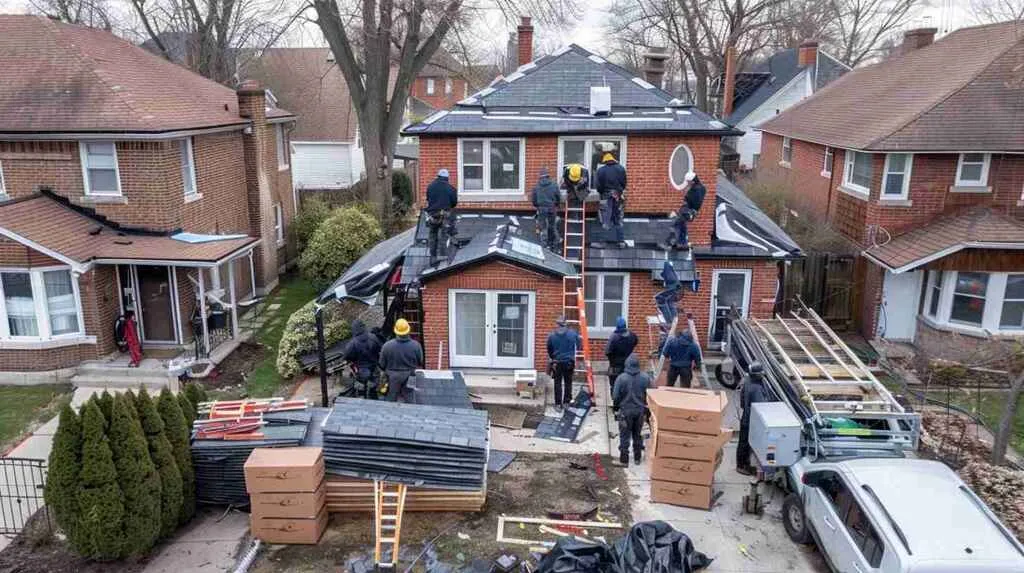
Can You Shingle Over Existing Roof Queens NY – What Rules Say | Free Quotes
Underneath every shingle you can see from the street sits the layer that actually decides whether your roof will last – the deck, the structure, and the condition of what’s already there. You can shingle over an existing roof in Queens, and New York State code typically allows it, but the moment that hidden layer is wet, sagging, or damaged, you’re building a time bomb that’ll blow up way faster than you saved money. Queens makes this tricky because our older housing stock, coastal winds in Breezy Point and the Rockaways, and ice damming on north slopes stack the deck against layovers in ways you won’t read about in generic roofing advice.
If you’re asking my honest opinion, “Can you shingle over an existing roof?” is the wrong first question. What you should be asking is whether the hidden layer – your deck and structure – is healthy enough to carry the extra weight and whether it makes sense for your specific house in Queens. New York State residential code does allow up to two layers in many cases, but what really decides the job here is deck condition, whether the existing roof is flat and sound, and how much load your rafters can handle. I’ve seen too many quotes in Jackson Heights and Elmhurst that price a layover without ever mentioning a moisture meter or deck inspection, and that’s where the whole thing falls apart.
Myth vs. Fact: Shingling Over Existing Roofs in Queens
| Myth | Fact |
|---|---|
| A layover is always cheaper and faster than a tear-off | It’s cheaper upfront, but if you have to tear off two layers later because of hidden damage, you’ll pay 30-40% more than doing it right the first time |
| If the shingles look okay from the ground, the deck must be fine | Shingles can look perfect while plywood underneath is spongy, wet, or sagging – that’s why I use a moisture meter every single time |
| Code says two layers are fine, so any roofer should do it | Code sets a maximum, not a recommendation; in Queens’ older homes with steep slopes and wind exposure, one layer is often the safe limit |
| An inspection will catch problems before you shingle over | Most standard inspections don’t include moisture testing or pulling back shingles to check the deck – you have to ask for that specifically |
⚡ Quick Facts About Shingling Over in Queens
Max layers allowed: New York State residential code typically permits up to 2 layers of asphalt shingles, but local inspectors and structural limits often override that
Weight per square: A second layer of architectural shingles adds roughly 250-350 lbs per 100 sq ft, which older Queens rafters weren’t designed to carry
Lifespan reduction: A layover roof in Queens typically lasts 12-18 years vs. 20-25 for a full tear-off, due to trapped heat and hidden moisture
Resale impact: Many home inspectors in Queens flag double-layer roofs as a concern, and some buyers’ lenders or insurance carriers require a tear-off before closing
The One Scenario That Turns a Layover Into a Time Bomb
On a typical two-story in Queens with a 1,200-square-foot roof, the first thing I’m looking at isn’t the shingles – it’s the lines of the deck underneath. The time-bomb scenario happens when you’ve got wet or rotted plywood hiding beneath those old shingles, and then you seal it all under a brand-new layer that traps moisture and weight on top of a structure that’s already failing. In Queens, this gets even riskier because we deal with snow loads every winter, ice damming on north-facing slopes in neighborhoods like Bayside and Forest Hills, and coastal winds that rip at two-families and attached homes in the Rockaways. When you add 300 pounds of extra shingle per square to a deck that’s already spongy, sagging, or moisture-damaged, you’re not just shortening the life of your roof – you’re setting up a collapse or a catastrophic leak that’ll cost you double to fix later.
One August afternoon, around 4:30, I was on a two-family in Jackson Heights where the owner wanted to shingle over his old roof to “save a couple grand.” I pulled out my moisture meter, stuck it through his brittle old three-tab, and it screamed red – the whole north slope was wet from ice damming two winters prior. He went quiet when I showed him the reading and then the black, spongy plywood we uncovered after we stripped it; that was the day I promised myself never to skip deck inspection just because a customer waved cash at me. That’s why deck inspection is non-negotiable before any layover – what you see from the sidewalk (intact shingles, no obvious sag) is the visible layer, but what I check with a moisture meter and by walking the roof is the hidden layer, and that hidden part is what decides whether your house is safe or heading for disaster.
If my moisture meter goes red, the layover conversation is over. No exceptions, no matter what any quote says.
⚠️ When a Second Shingle Layer Becomes Dangerous in Queens
Don’t even think about a layover if you see any of these red flags:
- Soft or spongy decking when you walk the roof or press on it from the attic
- Visible sagging in the ridgeline, rafters, or sections of the roof plane
- Active leaks or stains from prior ice dams, especially on north slopes common in Queens homes
- More than one existing layer already in place – state code won’t allow a third, and most Queens structures can’t handle it
- High wind or snow exposure in areas like Bayside, Breezy Point, Rockaways, or anywhere near the water where loads are higher
Hidden Deck Problems That Make Layovers a Bad Idea
Flat, dry plywood with no deflection when walked on
Single existing layer less than 15 years old with no curling or cracking
No history of leaks or ceiling stains in the attic or top floor
Moisture meter shows elevated readings in the deck or insulation
Rafters visibly sagging or undersized for the load in older Queens homes
Attic shows mold, dark stains, or musty smell indicating trapped moisture
Queens Rules, Loads, and Real-World Limits on Second Layers
I still remember a cold March morning in Elmhurst when a homeowner showed me three quotes for a layover and not one of them mentioned checking the roof deck. One winter morning in 2019, it was maybe 27 degrees and windy off the bay in Breezy Point, and I was called to check a roof that had just been “re-shingled” over the old one by a guy from Long Island. Every time the wind gusted, I could hear the top layer crackle like chips in a bag – no proper nailing, over an uneven, wavy first layer. The homeowner kept saying, “But he said the code allowed it,” and I had to stand there on that icy slope explaining that even if New York State allows up to two layers, Queens’ weight load and his sagging rafters definitely did not. What code allows in theory and what makes sense in practice aren’t the same thing, especially in neighborhoods like Breezy Point, Rockaways, Rego Park, and Elmhurst where homes were framed in the 1940s and 50s with smaller lumber than we’d use today.
There’s also the local knowledge you won’t find in the code book: buyers, inspectors, and appraisers in Queens react differently to double-layer roofs than they do in other markets. I’ve had deals held up because a home inspector flagged a second layer as a concern, and the buyer’s lender required a full tear-off before they’d close. Some co-ops and HOAs in Forest Hills and Kew Gardens explicitly prohibit layovers in their rules, and certain insurance carriers will either raise your premium or refuse coverage if they know you’ve got two layers up there. So even if the visible layer – those fresh shingles – looks great, what buyers and inspectors see when they dig into the hidden layer (structure, weight, compliance) can kill a sale or cost you thousands at closing.
Code vs. Practical Limits on Shingle Layers in Queens
| Situation in Queens | What Code Typically Allows | What I Recommend | Why |
|---|---|---|---|
| Single-family, 10-year-old roof, no leaks | Up to 2 layers permitted | Layover OK if deck checks out | Deck is likely still sound, weight manageable, and resale impact minimal |
| Two-family in Jackson Heights, 20+ years old | Up to 2 layers permitted | Full tear-off strongly recommended | Older framing, higher risk of hidden deck rot, and resale concerns in Queens market |
| Coastal exposure (Rockaways, Breezy Point) | Up to 2 layers permitted | Full tear-off required | Wind loads, salt air corrosion, and structural stress make layovers unsafe long-term |
| Already has 2 layers or any moisture/sag | No additional layers allowed | Strip to deck, no exceptions | Code violation and structural danger; inspectors will fail it and insurance may refuse coverage |
Pros & Cons: Second Shingle Layer on a Queens Home
✅ Pros of Second Layer
- Saves $2,000-$4,000 in labor and disposal costs upfront
- Faster job completion – typically 1-2 days vs. 3-4 for tear-off
- Less debris and disruption to your yard and landscaping
- Adds minor extra insulation value during winter months
- Can work well on newer, sound roofs with no structural issues
❌ Cons of Second Layer
- Hides deck damage, rot, and leaks that will get worse over time
- Reduces roof lifespan by 30-40% due to trapped heat and moisture
- Makes future tear-offs much more expensive (double the waste)
- Can hurt resale value and trigger inspection red flags in Queens
- Voids most manufacturer warranties and complicates insurance claims
Should You Layer or Tear Off? A Simple Decision Guide for Queens Homeowners
The first thing I ask a customer who wants a layover is simple: “Are you planning to sell this place in the next five to seven years?” Your time horizon matters more than your budget, because if you’re going to list the house, a clean, documented tear-off with photos of the bare deck can actually be a selling point during inspections in Queens. Buyers and their inspectors love seeing proof that the structure was checked and that nothing’s hiding under those shingles, and that peace of mind can close a deal faster than trying to explain away a double layer that raises questions. If you’ve had any leak history – even a small one – or if you’re in a high-wind, high-snow area like Bayside or the Rockaways, the resale impact alone should push you toward a full tear-off, because the next owner’s lender or insurance company might require it anyway.
Here’s the blunt truth: a second roof layer is like stacking another mattress on a broken bed frame – maybe you sleep fine for a bit, but you’re not fixing the real problem. I’ve seen layovers work out on relatively young, sound first layers where the deck is dry, the structure is solid, and the homeowner plans to stay put for a decade or more. But in most Queens houses – especially the older two-families, attached homes, and anything built before 1980 – a tear-off is the smarter long-term move. You’re not just buying new shingles; you’re buying the chance to inspect, repair, and document the hidden layer that decides whether your roof lasts 15 years or 25.
🛠️ Should You Shingle Over Your Existing Roof in Queens?
START HERE → Is your existing roof leaking or soft anywhere?
✗ YES → Full tear-off required – do not layer over active damage
✓ NO → Continue to next question ↓
Has the deck been inspected with a moisture meter recently?
✗ NO → Schedule inspection before deciding – hidden moisture = layover disaster
✓ YES, and it’s dry → Continue to next question ↓
How old is your existing shingle layer?
✗ 15+ years or unknown → Full tear-off strongly recommended – old shingles won’t hold new nails well
⚠ 10-15 years → Layover possible but check for curling, cracking, and resale plans ↓
✓ Under 10 years → Continue to next question ↓
Are you planning to sell or refinance in the next 5-7 years?
✗ YES → Full tear-off recommended – inspectors flag double layers, hurts resale in Queens
✓ NO → Continue to final question ↓
How many shingle layers are already on the roof?
✗ 2 or more → Full tear-off required by code – no exceptions
✓ Only 1 layer → Layover may be safe with professional inspection and flat, sound substrate
💰 Typical Queens Roofing Costs: Layover vs. Tear-Off
These are rough ballpark ranges for Queens, NY only – every roof is different and actual quotes depend on pitch, access, and condition.
| Scenario | Description | Approx. Price Range in Queens |
|---|---|---|
| Small layover | 800 sq ft single-family, one existing layer, sound dry deck, basic architectural shingles | $4,500 – $6,500 |
| Standard tear-off | 1,200 sq ft full tear-off to plywood, inspect and re-nail deck, mid-grade shingles | $8,000 – $11,000 |
| Tear-off + deck repair | 1,200 sq ft tear-off, replace 20-30% of plywood due to rot or sag, quality shingles | $10,500 – $14,000 |
| Two-family double tear-off | 1,800 sq ft two-family, remove two existing layers, inspect deck, premium shingles | $13,000 – $18,000 |
| Emergency leak repair + roof | 1,000 sq ft emergency tear-off after active leak, deck repair, ice and water shield, fast turnaround | $9,500 – $13,500 |
What to Check Before You Call a Roofer in Queens
Think about your roof like a pot of rice on the stove: from the top it can look perfect, but if the bottom layer is burnt, the whole thing is ruined. That’s the visible vs. hidden layer problem in roofing – what you see from the sidewalk (intact shingles, no obvious holes) tells you almost nothing about what I need to see with a moisture meter and a close walk on the deck. Before you call for quotes, there are a few practical, safe things you can check from the ground or your attic that’ll give you a head start. Stand across the street and look at the ridgeline and roof planes – do they look flat and straight, or do you see any dips, waves, or sags? Go up into your attic on a sunny day and look at the underside of the roof deck: do you see any daylight poking through, dark stains on the wood, or a musty smell? Check your ceilings on the top floor for any water rings, peeling paint, or soft spots. None of these things will tell you for sure whether a layover is safe, but they’ll help you ask the right questions when the roofer shows up.
In 2021, right after a crazy summer thunderstorm, I got an emergency call at 9 p.m. from a retired music teacher in Forest Hills who had water dripping through her recessed lights. I climbed up with a headlamp and found a mess: a second layer of architectural shingles slapped over an ancient cedar shake roof from the 1960s. Every shingle nail was basically hanging in air because the old shakes had rotted away; I remember her face when I explained that we’d have to tear everything down to bare rafters – and that whoever did the last job had broken every rule in the book. That’s the kind of disaster you avoid by calling a licensed local pro like Shingle Masters early, before anyone touches your roof, so you get an honest moisture-meter deck check and a straight answer about whether layover or tear-off makes sense for your house.
✓ Queens Homeowner Checklist Before Asking About a Shingle Layover
- Count the layers if you can see them at the eaves or rake edge – if there’s already two, you’re getting a tear-off no matter what
- Know the age of your current roof if possible – anything over 15 years is a strong candidate for full replacement
- Check for sagging from the street: stand back and look at the ridgeline and roof planes for dips, waves, or unevenness
- Look for ceiling stains inside on the top floor or in the attic – any water marks mean hidden damage below the shingles
- Inspect your attic on a sunny day for daylight peeking through, dark wood stains, or musty smells that signal moisture
- Note ice dam history if you’ve had icicles or ice buildup on north-facing slopes in past winters
- Take photos of any problem spots, curled shingles, or missing granules so the roofer knows what to focus on
❓ Common Questions About Shingling Over Existing Roofs in Queens
Is it legal to have two layers of shingles in Queens?
Yes, New York State residential code typically allows up to two layers of asphalt shingles, but that’s a maximum limit, not a recommendation. Local inspectors, structural conditions, and your specific house age and design often override that allowance, so always verify with a licensed roofer and get a deck inspection first.
Will a second layer hurt my home inspection or resale?
In Queens, yes – many home inspectors flag double-layer roofs as a concern because they hide deck condition, and buyers’ lenders or insurance carriers sometimes require a full tear-off before closing. If you’re planning to sell in the next 5-7 years, a clean tear-off with photos of the deck can actually be a selling point.
Can I just fix the bad spots and then lay over the rest?
No – if there are “bad spots,” that means hidden damage in the deck or structure, and covering them with new shingles will only trap moisture and make the problem worse. If any part of the roof is compromised, you need a full tear-off to inspect and repair the deck properly.
How much shorter will a layover last compared to a full tear-off?
In Queens’ climate, a layover typically lasts 12-18 years vs. 20-25 for a full tear-off, because the trapped heat between layers accelerates shingle aging and any hidden moisture shortens lifespan even more. You’re trading upfront savings for a roof that won’t last as long.
Do manufacturers honor warranties on second-layer installations?
Most major shingle manufacturers void or significantly limit their warranties if you install over an existing layer, because they can’t guarantee performance when the deck and substrate aren’t inspected. Always read the fine print before deciding on a layover.
Why Queens Homeowners Work With Shingle Masters
✓ Fully Licensed & Insured in NYC
We carry all required NYC contractor licenses, liability insurance, and workers’ comp so you’re protected on every job.
✓ 19+ Years in Queens Specifically
I’ve worked on roofs in every Queens neighborhood from Jackson Heights to Breezy Point – I know the houses, the weather, and the code.
✓ Moisture Meter Deck Inspections
Before I recommend a layover, I check your deck with a professional moisture meter and document everything with photos – no guessing.
✓ Local Queens References
We have customers in Forest Hills, Elmhurst, Rego Park, Bayside, and the Rockaways who’ll tell you about the work we did on their homes.
A quick inspection of the hidden layer – your deck and structure – is the only honest way to decide whether a layover makes sense or whether you’re just covering up a problem that’ll cost you double later. Don’t trust a quote that never mentions a moisture meter or deck check, and don’t let anyone shingle over your roof without showing you the numbers, the code requirements, and the real condition of what’s underneath. Call Shingle Masters in Queens for a moisture-meter deck check and a straight, no-pressure quote – we’ll tell you exactly what we see, what it’ll cost, and why one option makes more sense than the other for your specific house and your plans.