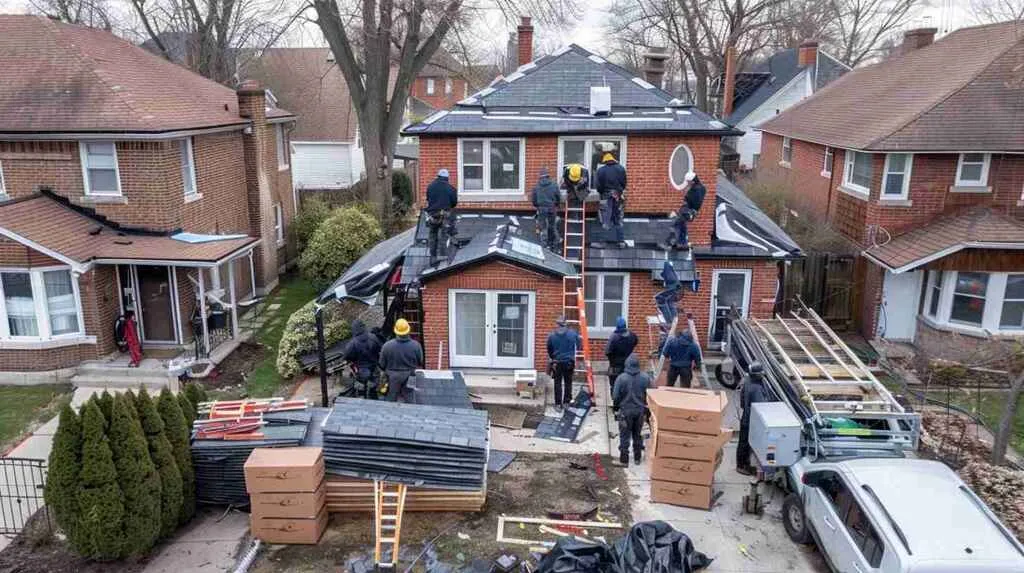
Asphalt Roof Installation Queens NYC – Expert Crew, Free Estimate
Blueprint’s clear: in Queens, a proper asphalt roof installation almost always costs less than three years of “quick patch jobs” that circle back with new leaks every spring. I’ve seen too many two-families in Astoria and Corona where homeowners spent $1,200 here, $900 there, then another $1,500 on an emergency call during a nor’easter-all because the original crew never addressed the real problem underneath those shingles. This article walks you through exactly what a correct asphalt roof installation looks like in Queens, layer by layer, so you know what you’re paying for and why it actually saves you money and sleepless nights.
Why Proper Asphalt Roof Installation Beats Years of Patch Jobs in Queens
Not gonna lie: I get frustrated when contractors tell homeowners “we’ll just patch it” without explaining that their $800 Band-Aid is covering a system failure that’ll come back in six months. A full asphalt roof installation on a typical Queens two-family runs anywhere from $8,500 to $18,000 depending on size, pitch, and what we find under the old shingles. Compare that to the homeowner who calls me after four separate $1,000-$1,800 patch jobs over three years, totaling close to $6,000, and still has an active leak over the dining room. They didn’t save money-they just delayed the inevitable and added stress.
One August evening in Flushing, right before a thunderstorm, I was on a two-family house where another crew had “finished” an asphalt roof installation that still leaked over the kid’s bedroom. The forecast said we had 45 minutes before heavy rain, so I crawled around with a headlamp and a hose, testing each penetration until I found a tiny, unsealed nail hole right at the ridge. We patched it, the storm hit, and I sat in the attic with the homeowners for half an hour listening to the rain-bone dry. That night taught me something permanent: a job isn’t done until it passes a water test, because one missed detail in the system will fail the whole roof when it matters most. That’s why system-level thinking isn’t optional-it’s how you avoid throwing money at symptoms instead of fixing the problem.
If you think of your roof like a layered subway signal system, every piece has to talk to the next-otherwise the whole thing fails when the storm hits. Your asphalt shingles are just the visible skin; underneath, you’ve got ice-and-water barrier at the edges, synthetic underlayment across the field, proper flashing around every chimney and vent, correctly spaced fasteners through solid decking, and ventilation pulling moisture out of the attic. Miss one piece-say, skip the ice barrier or use roofing nails that are too short-and the entire circuit shorts out under stress. A proper installation designs the whole path to be fail-safe: wind can’t get under the edges, water can’t track sideways into the house, and the deck stays dry season after season. That’s why doing it once, correctly, ends up cheaper than years of chasing leaks.
Patch Jobs vs. Full Install: What Queens Homeowners Actually Spend
Costs assume typical Queens access, no major structural issues. Prices rise if multiple layers need removal or if extensive decking repair is required.
How Our Queens Asphalt Roof Install Process Actually Works
From First Visit to Final Water Test
On a typical two-family in Maspeth, the first thing I look at isn’t the shingles-it’s the edges and the attic. I want to see how the previous crew handled the drip edge, whether there’s any ice-and-water barrier, and what the decking looks like from below. Then I climb up and check the field: are shingles curling uniformly or in patches? Are there soft spots when I walk the roof? How’s the flashing around the chimney and soil stack? In Queens, you’re dealing with a lot of older row houses and two-families with rear extensions that have different roof planes, sometimes at low slopes that need extra underlayment. Buildings in Astoria, Jackson Heights, and Corona often have tight side access, so we plan material delivery and dumpster placement a week ahead to avoid blocking driveways or getting a ticket. The install itself follows a strict sequence: protect the property and landscaping, tear off to bare decking in sections so we’re never leaving it open overnight, inspect and repair any rotten boards, roll out synthetic underlayment with proper overlap, install ice-and-water barrier along eaves and valleys, rebuild all flashing with new metal, lay shingles from bottom to top with the manufacturer’s exact nailing pattern, cap the ridge with a vent system for airflow, and then-this is non-negotiable-run a hose test on every penetration and seam before we call it done.
One winter morning in Astoria, about 6:30 a.m., we were tearing off an old three-layer asphalt roof in 25-degree weather for an older Greek landlord who kept bringing us hot coffee. Halfway through, we uncovered a rotten section of decking the size of a pool table right over his tenant’s kitchen. He wanted to “just cover it with new shingles” to save money, but I laid a shingle, a rotten board, and a solid board side by side, bounced on them in front of him, and made him feel the difference. Soft, punky wood can’t hold a nail, can’t support your weight if you need to get back up there in five years, and it’ll keep rotting under the new roof because moisture’s already in the system. He agreed to the repair-cost him an extra $1,800 that day-but three months later he called me back to say his heating bill had dropped and the ceiling finally stopped cracking. Turns out the rotten deck was letting warm air leak into the attic and cold air drop into the apartment below. That’s why substrate prep isn’t a suggestion, it’s the foundation of the whole job.
Step-by-Step: What to Expect During Your Queens Asphalt Roof Installation
We come out to your Queens home, measure the roof, check attic ventilation and decking condition from below, photograph problem areas, and give you a written breakdown on the spot-no waiting three days for a callback.
Once you approve, we lock in your install date, order materials, and handle any NYC Department of Buildings permits if your building or scope requires them (most residential asphalt re-roofs don’t, but we verify).
Shingles, underlayment, and decking materials arrive the day before. We lay tarps over landscaping, move patio furniture, and set up plywood pathways if we’re working over a garden in tight Queens side yards.
We strip all old shingles and underlayment down to the wood deck, working in sections so your house is never left exposed overnight. All debris goes straight into the dumpster-no piles sitting on your driveway for a week.
We walk the bare deck and mark any soft, rotten, or sagging boards. You approve the repair scope before we cut anything. New plywood or OSB goes in, fastened to the rafters with the right spacing for your shingle type.
Synthetic underlayment rolls out over the entire roof with proper overlap and fastening. Ice-and-water shield goes along all eaves, in valleys, and around penetrations. Metal drip edge gets installed at rakes and eaves so water can’t wick back under the shingles.
Shingles go down from eaves to ridge, nailed according to manufacturer spec (usually six nails per shingle, placed in the adhesive strip zone). All chimneys, vents, skylights, and walls get new step flashing and counterflashing, sealed and integrated into the shingle courses.
We install ridge vent for continuous attic airflow, cap it with ridge shingles, then run a hose test on every roof penetration while someone checks the attic. Magnets sweep the yard for nails, tarps come up, and we haul away the dumpster. Your roof is done and warranted.
Why Queens Homeowners Trust Shingle Masters for Asphalt Installations
-
✓
Fully licensed and insured in NYC – NYS Home Improvement License, general liability, and workers’ comp so you’re never exposed if someone gets hurt on your property. -
✓
19 years working Queens neighborhoods – We know Astoria row houses, Corona two-families, Maspeth brick colonials, and Jackson Heights garden apartments inside and out. -
✓
Free estimate within 48 hours – Call or text, we schedule a visit, measure and inspect, give you a written quote before we leave your driveway. -
✓
10-year workmanship warranty – Plus manufacturer warranties on shingles (20-50 years depending on product). If our install fails, we come back and make it right, no argument. -
✓
Bilingual crew (English & Spanish) – Carla and the team speak both fluently, so there’s never confusion about scope, timeline, or what we find under your old roof.
Common Asphalt Roof Failures in Queens (And How We Design Around Them)
Here’s my honest opinion: most “mysterious leaks” in Queens are just bad asphalt installations that finally gave up. The shingles themselves can last 25 years if everything under them is done right, but one missed step turns the whole roof into a slow-motion failure. I’ve pulled back brand-new architectural shingles that looked perfect from the street and found no ice-and-water barrier at the eaves, step flashing that wasn’t lapped into the siding, or nails driven at a 45-degree angle that pulled out in the first windstorm. In Jackson Heights, I once did an asphalt roof installation on a narrow row house while the owner live-streamed the whole day to her family in Colombia. Around noon, a delivery truck slammed into the scaffolding and shook the whole setup, and we had to stop and re-secure everything while her relatives watched and commented in Spanish. That job taught me to over-plan material staging and access on tight Queens streets-and to explain to customers how much of asphalt roofing here is logistics, not just shingles and nails. You can have the best shingles in the world, but if your crew rushes the flashing because they’re double-booked or skips the drip edge to save 20 minutes, the roof will leak, and it’ll happen in exactly the spot they cut the corner.
If your roof was a signal circuit, would you trust it to stay green through a Queens nor’easter?
Here’s a diagnostic trick you can use right now: go into your attic on a sunny day and turn off all the lights. Look up at the underside of your roof deck. See any pinpricks of light? Those are nail holes that missed the rafter or poked through the shingles. See any water stains on the rafters or deck? Trace them upward toward the roof surface and think about what’s directly above: a vent pipe, a chimney, a roof-wall intersection, a valley? Most leaks don’t happen in the middle of a big flat shingle field-they happen where two different materials meet, and one of them wasn’t sealed or lapped correctly. When you call me, tell me where the ceiling stain is and what’s on the roof above it, and I can usually narrow it down to two or three likely failure points before I even climb the ladder. That’s the “circuit tracing” mindset: you’re following the path water wants to take and finding the weakest link. Shingle Masters designs every installation to eliminate those weak points. We use redundant sealing at every transition-mechanical fastening plus adhesive, metal flashing plus ice barrier, overlapped joints that shed water even if the sealant eventually dries out. Your roof has to survive 20 years of freeze-thaw, summer sun baking the shingles to 160 degrees, ice dams pushing water uphill under the tabs, and wind-driven rain coming sideways at 40 mph during a nor’easter. If one part of the system fails, the next layer catches it. That’s fail-safe design.
Typical Weak Points We See Every Week in Queens Asphalt Roof Installations
First winter, ice dam pushes melt under the shingles and into the house because there’s no waterproof membrane. We see this on 60% of the “budget” jobs we’re called to fix.
We run a 3-foot-wide ice-and-water shield along every eave and into valleys, bonded directly to the deck, so even if an ice dam forms, water can’t get under the shingles and into your ceiling.
Crew slaps a long piece of flashing along the wall and calls it done. Water runs down the wall, hits the flashing, and goes sideways under the shingles because there’s no overlap at each course.
Each piece of step flashing tucks under one shingle and over the one below it, lapped into the wall siding. Water flows over the flashing like a waterfall, never getting behind it.
Nails above the adhesive strip don’t lock the shingles down. First windstorm, tabs lift and let water in. Angled nails pull out over time because they’re levering against the deck grain.
We follow manufacturer nailing diagrams exactly: nails go through the top of the cutout tabs and the adhesive strip, driven straight and flush. Shingles stay put for decades.
Tar dries out in two summers. Crack appears, water drips down the pipe into your bathroom wall. This is the #1 source of “random” leaks we diagnose in Queens.
Metal or EPDM boot slides over the pipe, base goes under the upslope shingles and over the downslope ones. Even if the rubber eventually cracks, the metal base still sheds water away from the penetration.
⚠️ Dangers of Stacking New Shingles Over Old or Rotten Decking in Queens
Some crews will offer to “save you money” by laying new asphalt shingles directly over one or two old layers without tearing off. This is almost always a bad idea in Queens, and here’s why: NYC building code limits you to two layers maximum, and inspectors can make you tear it all off if they catch three layers during a sale or renovation. More important, you can’t inspect the decking if you don’t pull the old shingles, so any rot, sagging, or water damage stays hidden and keeps getting worse under your “new” roof. The extra weight-sometimes 800+ pounds on an older row house-can stress rafters that were built in the 1920s and never designed for multiple shingle layers. And if you ever need to file an insurance claim for wind or hail damage, many carriers won’t pay out if they find out your roof was improperly layered or the deck was compromised before the storm. Bottom line: a proper tear-off adds maybe $1,500-$2,500 to the job but gives you a roof you can actually trust and resell without problems. Stacking shingles is just kicking the problem down the road and making it more expensive to fix later.
Is It Time for a New Asphalt Roof or Just a Repair?
When I walk into your house and you point at a ceiling stain, the first question I’m going to ask you is, “How old is this roof, and who installed it?” Because if it’s a 10-year-old asphalt roof that was done correctly and this is the first leak, there’s a good chance we can fix it with a targeted repair-new flashing around that chimney, replace a few cracked shingles, reseal a vent boot-and you’ll get another decade out of it. But if it’s a 22-year-old roof with three different patch jobs already, curling shingles in multiple areas, soft spots when you walk on it, and visible granule loss in the gutters, you’re not buying peace of mind with another patch-you’re just postponing the inevitable replacement and probably making the deck damage worse in the meantime. The decision tree below walks you through the key questions so you know which side of the line you’re on before you call.
Decision Tree: Repair or Replace Your Queens Asphalt Roof?
START HERE → How old is your asphalt roof?
Under 12 years old?
Is this the first leak, or have you patched before?
First leak: ✓ Likely a targeted repair will solve it-call for inspection.
You’ve patched 2+ times: ⚠️ System issue-move toward replacement territory.
12-18 years old?
Do you see curling, bald spots (granule loss), or soft/spongy areas when you walk the roof?
Yes to any of those: 🔴 Full replacement is the smart move-you’re at end of life.
No, shingles still look decent: ✓ Repair may buy you 3-5 more years, but start budgeting for replacement.
Over 18 years old, or you see sagging, multiple leaks, or rotten wood in the attic?
🔴 You’re in full replacement territory. Patching now is just delaying the inevitable and risking more interior damage, higher repair costs, and stress every time it rains. Time for a proper asphalt roof installation from Shingle Masters.
When to Call Shingle Masters Right Away vs. When It Can Wait a Week
🚨 Call Immediately (Same-Day or Next-Day Visit)
- Active dripping inside your house during or right after rain
- Large section of shingles missing after windstorm (10+ shingles gone)
- Visible sagging or soft, spongy spots on the roof deck
- Water pooling in the attic or running down a wall
- You smell mold or see black stains spreading on the ceiling
- Tree branch or debris punched through the roof
- Flashing pulled loose and you can see exposed decking or underlayment
- Ice dam causing backup into living spaces mid-winter
✅ Can Schedule Within a Week (Not Urgent)
- Old ceiling stain that hasn’t grown in months or years
- One or two curled or cracked shingles in a small area
- Shingles look worn but no active leaks
- Moss or algae buildup in a shaded corner (cosmetic, not structural)
- Granules in gutters but roof is under 15 years old
- You’re planning a home sale in 6-12 months and want a pre-listing inspection
- General maintenance check after a big storm (no visible damage, just peace of mind)
- Vent boot or flashing looks loose but no water intrusion yet
When in doubt, call and describe what you see. We’ll tell you honestly whether it’s urgent or can wait, and we don’t charge for phone advice.
Quick Answers About Asphalt Roof Installation in Queens, NY
Truth is, asphalt shingles themselves rarely fail first; it’s the shortcuts underneath them that come back to haunt you. This FAQ section covers the practical questions we get every week: what it costs for a typical Queens home, how long the install takes, whether you need permits, how loud it’ll be for your tenants, and exactly what our free estimate includes.
What does asphalt roof installation cost for a typical Queens home?
For a typical Queens two-family (1,200-1,600 square feet of roof), expect to pay $9,500 to $16,000 for a full asphalt roof installation with tear-off, decking inspection and minor repairs, synthetic underlayment, ice-and-water barrier, architectural shingles, new flashing, ridge vent, and cleanup. Larger homes, steep pitches, multiple dormers, or extensive rotten decking can push it higher. If you’re replacing a simple ranch or Cape (800-1,000 sq ft), budget closer to $7,000-$10,000. We give exact, written quotes after measuring your roof-no surprises.
How long does an asphalt roof installation take in Queens?
Most residential asphalt roof installations in Queens take 3 to 5 working days from tear-off to final cleanup. A simple one-story ranch might be done in 2 days if weather cooperates. A two-family with multiple roof planes, chimneys, and skylights can stretch to a full week, especially if we find significant decking issues. We never leave your roof open overnight-if rain is forecast, we tarp securely at the end of each day. Timeline also depends on permit approval (if required) and material delivery, which we coordinate in advance.
Do I need a permit for asphalt roof replacement in Queens, NYC?
For most one- and two-family homes in Queens, a straightforward asphalt shingle replacement (tear-off and re-roof with no structural changes) does not require a Department of Buildings permit. However, if your building is three or more units, if you’re changing the roof structure (adding skylights, raising pitch, altering framing), or if it’s in a historic district, you’ll need a permit and possibly an architect’s sign-off. We verify your building type and scope during the estimate and handle any required paperwork if needed. Better safe than sorry-unpermitted work can cause problems during a home sale or insurance claim.
How loud is the installation, and do tenants need to leave?
Asphalt roof installation is loud-tear-off involves pry bars scraping shingles off the deck, and shingle installation means pneumatic nail guns firing every few seconds. Tenants don’t need to leave the building, but it’s not a peaceful work-from-home day. We start around 7:30-8:00 a.m. (respecting Queens noise ordinances) and usually wrap the noisy work by 4:00 p.m. If you have infants, elderly residents, or pets that spook easily, warn them in advance or plan a day trip. The noise lasts 2-3 days for most homes. We’re as considerate as possible, but there’s no silent way to tear off old shingles and nail down new ones.
What does your free estimate include?
When Carla or one of our senior crew members comes out for a free estimate in Queens, we:
- Measure the roof and calculate exact square footage
- Climb up and inspect shingle condition, flashing, vents, and visible deck issues
- Check your attic (if accessible) for ventilation, moisture, and deck condition from below
- Photograph problem areas and show you exactly what we see
- Provide a written, itemized quote covering tear-off, materials, labor, permits (if needed), and disposal
- Explain shingle options (3-tab vs architectural vs impact-resistant) and warranties
- Answer all your questions on the spot-no high-pressure sales, no callback gimmicks
The whole visit takes 30-45 minutes, and you’ll have a clear quote in hand before we leave. No obligation, and the estimate is valid for 60 days.
What warranty do I get on the installation and the shingles?
Shingle Masters provides a 10-year workmanship warranty on every asphalt roof installation we do in Queens. That covers our installation-flashing, underlayment, nailing, sealing, everything. If a leak develops because of something we did (or didn’t do), we come back and fix it at no charge, period. The shingles themselves carry a manufacturer’s warranty that ranges from 20 to 50 years depending on which product you choose (basic 3-tab is usually 20-25 years, architectural shingles are 30-40 years, premium impact-resistant can be 50 years). The manufacturer warranty covers defects in the shingle material-cracking, excessive granule loss, or delamination that isn’t caused by storm damage or installation error. We register your warranty with the manufacturer after the job is done and give you all the paperwork.
Asphalt Shingle Options for Queens Homes: What We Install and Why
| Shingle Type | Approx. Lifespan (years) | Wind Rating | Appearance | Best For in Queens |
|---|---|---|---|---|
| Basic 3-Tab Asphalt | 20-25 years | 60 mph (standard) | Flat, uniform look; less dimensional | Budget-conscious landlords, rental properties, simple one-story homes where curb appeal isn’t the priority |
| Architectural (Laminated) | 30-40 years | 110-130 mph | Dimensional, shadow lines; looks like wood shake or slate | Most owner-occupied two-families, row houses, and homes where resale value matters; our most popular choice in Astoria and Maspeth |
| Impact-Resistant (Class 4) | 30-50 years | 130+ mph | Similar to architectural, thicker and tougher | Homes near trees (hail/branch protection), areas prone to wind damage, or if you want premium insurance discounts and maximum longevity |
| Designer/Premium Architectural | 40-50 years | 130 mph+ | High-definition color blends, luxury curb appeal | High-end single-family homes, historic Queens properties, homeowners investing long-term in a forever home; best warranties and aesthetics |
All shingles listed meet NYC fire and wind code. We walk you through samples and pricing during your estimate so you can choose what fits your budget and goals.
Your asphalt roof in Queens isn’t just a layer of shingles-it’s a connected system where edges, underlayment, flashing, fasteners, and ventilation all have to work together like a circuit that stays green through every nor’easter, ice storm, and summer scorcher. When one piece fails, the whole roof shorts out, and you end up with water in the ceiling, rotten decking, and a repair bill that keeps growing. That’s why doing it right the first time, with a crew that treats your roof like the fail-safe system it needs to be, saves you money, stress, and sleepless nights every time the weather turns bad.
If you’re tired of patching, wondering whether it’s time for a full install, or just want someone to climb up and tell you the truth about what’s going on up there, call Shingle Masters for a free estimate. Carla will walk your roof, check your attic, and explain everything layer by layer-like tracing a circuit diagram-so you know exactly what you’re dealing with and what it’ll take to fix it for good. No pressure, no runaround, just a clear plan and a fair price. Let’s get your Queens home a roof you can trust.