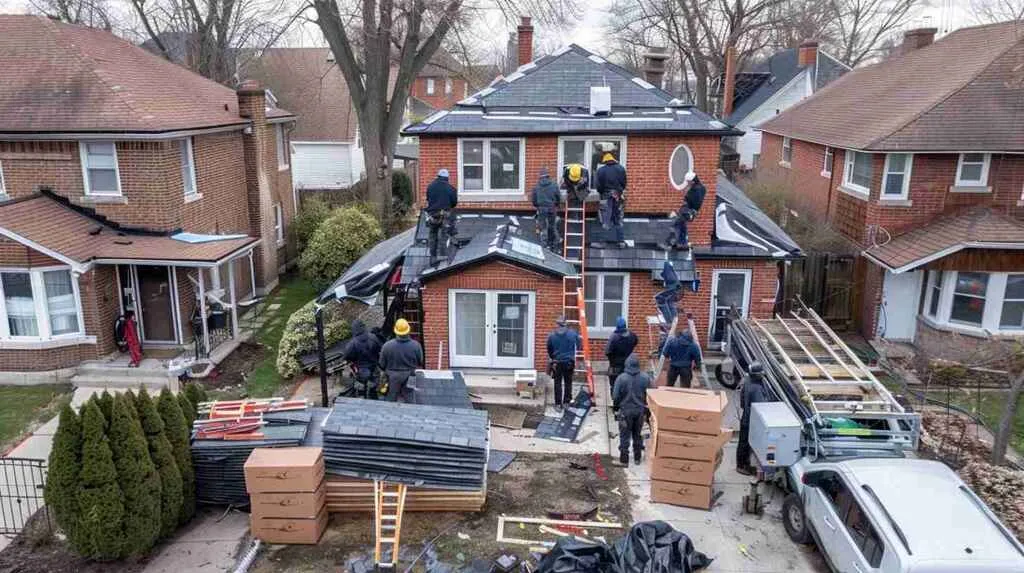
Protect Shingles When Working on a Roof Queens NY – Pro Methods
Blueprint first: if you don’t plan a traffic map before your first step on the roof, you’re already damaging shingles-even if you never see the dent from the ground. My name is Victor Cho, and after 19 years as a Queens-based shingle specialist, I treat every roof like a controlled lab experiment, adjusting for variables like weather, pitch, and how many feet touch the surface before anyone climbs the ladder.
Map Your Roof Traffic Before Your First Step
That 20-degree February morning in Forest Hills taught me more than most textbooks ever could. We were called to trace a leak on a 3-year-old architectural shingle roof, and when I got up there, I saw another contractor’s footprints permanently imprinted in the brittle, cold shingles-looked like dinosaur tracks. The homeowner was furious, and I had to explain that at that temperature, bare boots on asphalt act like knives on ice. We set up roof jacks, used foam-padded planks, and rerouted all traffic over the ridge so we didn’t add to the damage while we fixed the leak. That job drilled into me a simple truth: weather dictates how you protect shingles way more than most contractors admit. Here’s my opinion, and I won’t sugarcoat it-temperature is the single most important variable, and most DIYers ignore it completely, then wonder why their ten-minute “inspection” leaves permanent scars.
Before anyone steps foot on a Queens cape or two-family, you need a simple sketch-call it your roof traffic map. Start by marking your access point, usually the ridge near the ladder. Draw your primary ridge route in pencil, then circle the no-step zones: valleys, vents, any area that looks soft or previously damaged. If you’re fixing a chimney, mark one small work zone and stick to it. The key is this: nobody starts walking until everyone on the roof understands the traffic pattern, where tools get staged, and where feet are allowed to land.
Planning a Roof Traffic Map Before You Walk on Shingles
Why Random Footsteps Destroy Shingles
Unplanned walking compresses granules into the mat, cracks brittle cold shingles, and leaves heat-softened shingles permanently bruised-even if the damage is invisible from the street. Worse, most manufacturers void warranties if they find “traffic damage,” which includes any footprint pattern that suggests careless movement. Every random step is a stress point, and on older Queens roofs those stress points add up fast, creating weak spots that leak years earlier than they should.
Control Your Variables: Temperature, Pitch, and Footwear
When I walk a customer through this, I usually start with one question: where do you think your roof is strongest underfoot? The answer changes completely with temperature and pitch, and I learned that the hard way on a humid August afternoon in Jamaica, Queens. We were working on a two-family, and the landlord insisted his nephew could “help” to save a buck. Kid walked straight up the valley in sneakers, kicked granules loose, and slid half a step-no fall, but he left two bright scars in the shingles the size of my palm. We stopped everything, I made them climb down, and I sketched a quick roof traffic plan on a pizza box lid, mapping where we could and couldn’t step. That moment is when I started treating every roof like a controlled lab experiment: nobody moves till we all know the safe paths. Here in Queens you’ve got steep capes in Bayside, flatter roofs on attached homes in Jackson Heights, and older two-families in Jamaica, and each layout changes where you can safely step and where one wrong twist will ruin the shingle mat.
Think of your roof as having three main variables: temperature, pitch, and what’s on your feet. Cold shingles (below 40°F) are brittle and crack under point loads; hot shingles (above 85°F, especially in afternoon sun) are soft and bruise easily; mild temps (50-75°F) give you the safest window. Pitch matters because steep slopes concentrate your weight on smaller contact patches, and any slide tears granules. Footwear is the last control-soft-soled, clean shoes spread weight, while hard boots or sneakers with gravel stuck in them act like little hammers. Valleys and any area with visible sagging or prior damage are always off-limits, no exceptions. My recommendation for Queens summers: if the shingles are in afternoon sun and you can smell the asphalt warming, stay off the roof or use padded crawl boards-walking at that temperature is high-risk for permanent scarring.
| Temperature (Queens NY) | Roof Pitch | Risk Level for Shingles | Recommended Approach |
|---|---|---|---|
| Below 40°F | Any pitch | High – brittle shingles crack | Avoid walking; if urgent, use padded planks over roof jacks |
| 50-75°F | Low-moderate (4/12 or less) | Low – safest window | DIY walk possible with soft-soled shoes and planned path |
| 50-75°F | Steep (7/12+) | Moderate – slide risk | Pro preferred; DIY only with fall protection and traffic map |
| Above 85°F | Low-moderate | High – shingles bruise easily | Walk only in morning before sun exposure; use crawl boards |
| Above 85°F | Steep | Very High – bruising + slide | Do not walk; call Shingle Masters with proper gear |
| Wet (any temp) | Any pitch | High – slip hazard + soft mat | Wait until roof is fully dry; damp shingles scar and slip |
Best and Worst Footwear for Asphalt Shingle Roofs
✅ Recommended Footwear
- Soft rubber-soled boots that spread weight and grip without scraping
- Clean tread – no embedded gravel or sharp debris stuck in soles
- Roofing-specific boots with wide, flat contact patches
- Indoor-only sneakers that have never touched gravel or oil (emergency only)
❌ Footwear to Avoid
- Hard-soled work boots that concentrate weight on small heel areas
- Worn-out tread that won’t grip and causes sliding or twisting
- Sneakers with gravel stuck in them – acts like sandpaper on granules
- Any shoes covered in oil or solvents that can stain or degrade shingles
Build Padded Paths and Work Zones, Not Footprints
I’ll be blunt: most shingle damage doesn’t come from storms-it comes from people. That stormy Saturday night emergency in Astoria proved it. A TV satellite installer had stomped through a brand-new shingle roof we’d put on three weeks earlier, and it was dark, the shingles were still damp and soft, and I could literally see his tread pattern-same boot, same angle-punched into the mat around his bracket. I had to go up with headlamps and a padded crawl board, working slowly, because any twisting step would bruise the softened shingles further. That job convinced me to start writing “roof traffic instructions” on every invoice, and I tell homeowners the same thing: nobody walks on this roof without a plan, not even you. Here’s an insider tip from 19 years of delicate work-pre-stage your tools and materials so you make one trip up, one trip down, using the same padded path. Every added person or extra tool run exponentially increases traffic damage unless they share the same protected walkway and everyone sticks to the script.
Setting up padded paths is simpler than most people think, and it’s the difference between a clean job and a scarred roof. Foam-backed plywood planks spread your weight like snowshoes spread weight on powder. Roof jacks with 2×10 planks create a stable platform you can walk, kneel, or set tools on without touching bare shingles. Even a thick moving blanket folded triple can protect a small work zone for light tasks. The key is to designate one primary path from ladder to work zone and one compact staging area for tools-don’t wander, don’t shortcut across open sections, and don’t let a second person create a second path just because they’re impatient. Each additional route doubles the damage footprint, and on an older Queens roof that can mean replacing squares of shingles you never intended to touch.
Simple Materials You Can Use to Protect Shingles Underfoot
| Option | Pros | Cons |
|---|---|---|
| DIY Padded Walkways |
• Lower immediate cost • You control timing • Good learning experience for very low-pitch, mild-weather scenarios |
• Risk of improper setup causing more damage than you prevent • No insurance coverage if you fall or damage shingles • Time spent sourcing materials and building pads • Steep or hot roofs still too dangerous for most homeowners |
| Calling Shingle Masters |
• Crew already has commercial-grade pads, jacks, and crawl boards • Licensed and insured for fall protection and shingle damage • Pre-planned traffic map on every job, no guesswork • Faster completion, zero risk to you personally |
• Upfront service cost (but often cheaper than fixing DIY damage) • You have to schedule around crew availability |
Before You Step Out: Queens-Specific Safety and Damage Checks
Ten seconds of checking from the ladder can save you thousands in shingle replacement. Before you commit any weight to the roof, scan for soft spots, prior footprint damage, and loose granules sitting in valleys or gutters-all signs that the deck or shingles are already compromised. Here in Queens, attached homes and tight lot lines in places like Astoria or Elmhurst make falls and collateral damage more likely; one slip doesn’t just hurt you, it can land you in a neighbor’s yard or through their skylight. Treat this like your pre-experiment checklist before you touch the sample-if conditions don’t pass, you don’t proceed.
✓ Quick Checks Before You Walk or Call a Roofer in Queens
Should You Walk This Roof or Call Shingle Masters?
→ NO – Stay on the ground, inspect with binoculars or drone, call Shingle Masters for assessment.
→ YES – Continue to next question.
→ YES – Call Shingle Masters – steep pitch requires fall protection and experience; DIY is high-risk.
→ NO – Continue to next question.
→ YES – Call Shingle Masters – extreme temps make shingles fragile; pros use padded gear to prevent damage.
→ NO – Continue to next question.
→ YES – Call Shingle Masters – walking on already-compromised shingles will worsen the problem; inspection first.
→ NO – Continue to next question.
→ NO – Call Shingle Masters – discomfort on heights increases accident risk; leave it to insured pros.
→ YES – Proceed with caution: Use a padded plank or foam board, plan a traffic map, limit work to one small zone, and take photos before and after. If in any doubt during the work, stop and call Shingle Masters.
Queens Roofing FAQs: Protecting Shingles While You Work
Think of your shingles like the skin on a drum-step in the wrong spot, and the tension changes everywhere. Scale that up to a full roof, and you see why every footprint is part of a system-wide stress pattern, especially on older Queens roofs where 15 or 20 years of sun and freeze-thaw have already weakened the mat. Smart shingle protection isn’t just about avoiding obvious soft spots; it’s about reducing total load and twist across the whole surface so the roof ages evenly and doesn’t develop premature leak paths where traffic concentrated the damage.
Common Questions Queens Homeowners Ask About Walking on Shingle Roofs
Can walking on my roof really void the shingle warranty?
Yes, and it happens more often than most people realize. Manufacturer warranties explicitly exclude “traffic damage,” which includes footprint bruising, granule loss from improper walking, and stress cracks from concentrated weight. If you file a claim and the inspector finds tread patterns or compression marks that match careless foot traffic rather than storm damage, your warranty claim gets denied. That’s why pros like Shingle Masters document every roof access and use padded walkways-it protects the warranty and your investment.
Is it ever safe to pressure-wash shingles if I’m careful where I stand?
Not gonna lie-pressure washing asphalt shingles is almost always a bad idea, and adding your body weight to the equation makes it worse. High-pressure water strips granules, forces water under the mat, and voids warranties. If you’re standing on the shingles while you spray, you’re compressing the mat and pushing water into areas it should never reach. For moss or algae, use a gentle chemical treatment from the ground or hire a pro who knows how to clean without destroying the roof. Walking plus pressure washing is a recipe for replacing shingles within two years.
What’s the safest time of day in Queens to go on a shingle roof?
Early morning, hands down, especially in spring and fall when temps are mild overnight. You want the shingles cool but not frozen, which usually means 55-70°F ambient temperature and no direct sun heating the slope you’ll walk on. In summer, that window is narrow-maybe 6 to 9 a.m. before the sun hits. Afternoon sun in July can push shingle surface temps above 140°F, and that’s when every step leaves a permanent bruise. Winter mornings are tricky because even 40°F air can leave shingles brittle; if there’s frost, don’t walk at all.
How do I tell if past workers already damaged my shingles by walking?
Look for three telltale signs from the ground or a ladder: crushed or missing granules in a footprint or tread pattern, shiny spots where the mat has been compressed and reflects light differently, and small cracks or divots that follow a path across the roof. In Queens, satellite installers, HVAC techs, and chimney cleaners are common culprits. If you see these patterns and you didn’t authorize roof work, take photos and document it-you may have a damage claim against the contractor’s insurance. If the damage is fresh, a pro like Shingle Masters can sometimes prevent further deterioration with targeted sealant or strategic replacement.
What should I ask any contractor who wants to go on my roof?
Start with: “What’s your plan to protect my shingles while you work?” A good contractor will describe their traffic map, show you the pads or planks they’ll use, and confirm they’re insured for roof damage. Ask if they’ll take before-and-after photos, and make sure they know your shingle type and age-some crews treat every roof the same, which is a red flag. If the answer is vague or they say “we’re careful,” that’s not a plan-it’s a gamble. Here in Queens, Shingle Masters writes the protection plan on the work order so there’s no ambiguity.
How does Shingle Masters protect shingles differently than other crews?
We treat shingle protection like a controlled experiment with documented variables. Every job starts with a traffic map sketched before anyone climbs the ladder, noting temperature, pitch, and no-step zones. We carry commercial-grade foam pads, padded crawl boards, and roof jacks sized for the specific slope. Our crews are trained to share one primary path and one work zone-no wandering, no shortcuts. And because I spent years doing delicate specialty work on designer shingles and older roofs, we understand that every footprint has consequences. We’re licensed, insured, and we’ve been protecting Queens roofs for 19 years-call it nerdy, but it works.
Why Queens Homeowners Call Shingle Masters First
Protecting shingles is about planning, padding, and limiting footsteps-not just being careful. If you’d rather stay safely on the ground and let a pro handle the roof with the right gear and traffic plan, call Shingle Masters for a shingle-safe inspection or repair plan tailored to your specific roof and Queens neighborhood. We’ll map it, pad it, and protect your investment without leaving a single careless footprint behind.