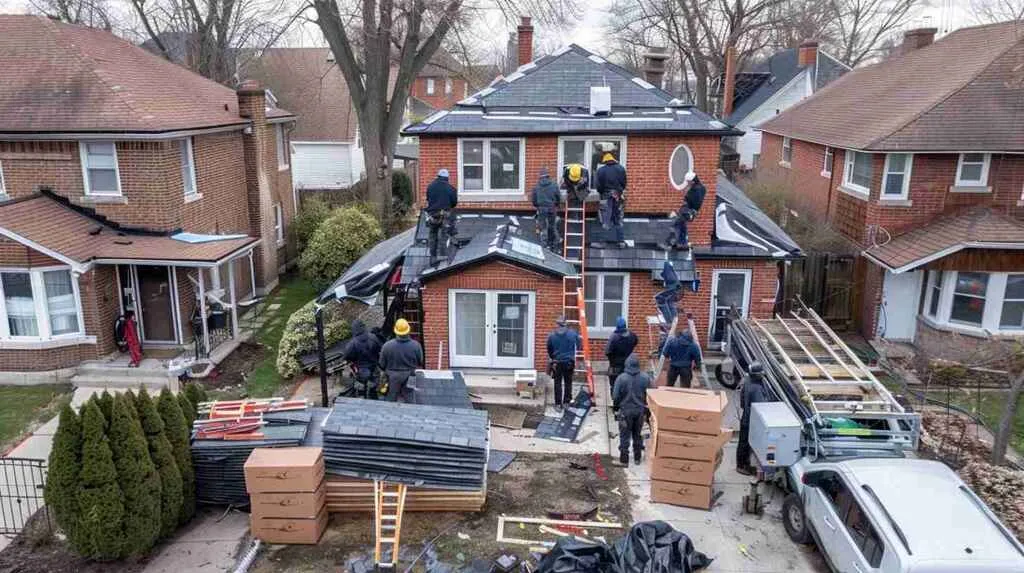
Attach Things to a Shingle Roof Queens NY – No-Leak Methods | Free Quotes
Blueprint truth: the only leak‑proof way to attach anything to a shingle roof in Queens is to treat every screw, bracket, or bolt like it’s a miniature roofing job-with flashing, structure, and sealant planned around how water will actually move across your specific roof pitch. You can’t just drive hardware through asphalt shingles and hope caulk does the heavy lifting, because the next nor’easter or summer downpour is going to find that weak spot, ride the shingle course sideways, and leak straight into your bedroom or living room. I’m going to walk you through how this works in real Queens homes-from satellite dishes and security cameras to rooftop movie screens-and show you when a quick call for a free quote from a specialist saves you thousands down the line.
Leak‑Proof Attachments: The Simple Rule I Use on Every Queens Shingle Roof
On my clipboard I’ve got a simple rule I show every homeowner in Queens before I even pull a drill out: every piece of hardware is a miniature roofing job with its own water plan, and if you don’t have that plan, you don’t have an installation-you’ve just invited water to follow that screw shaft straight down into your wood. One December evening around 8 p.m., in the middle of freezing rain in Maspeth, I got a call from a guy who’d let his cousin bolt a metal reindeer sleigh into his shingle roof. Every bolt went straight through the shingles and into an unsealed hole-no sealant, no flashing, nothing. I spent two hours on that slick roof with a headlamp, uninstalling the sleigh, pulling wet sheathing, and installing proper saddle flashing and sealant just to stop water from pouring into his kids’ bedroom. That night cemented my rule: nothing gets attached to a shingle roof without a water plan first. Water’s a sneaky, stubborn character that will follow the easiest path you accidentally give it-along threads, under shingle tabs, through tiny gaps-and once it’s in your decking or ceiling, it doesn’t just leave.
Here’s what a “mini roofing job” actually means when I’m mounting hardware on your Queens roof: I locate the framing-rafters or trusses-because screwing into just plywood or OSB is a guaranteed wobble and water path; I pre‑drill pilot holes to the exact diameter the lag screw needs; I carefully lift the shingles above the bracket location and slide custom‑cut metal flashing under them so water hits metal first and gets redirected down the slope; I use roofing‑grade sealant (not generic house caulk) around every fastener; and then I think about how Queens wind‑driven rain actually moves-sideways in nor’easters, heavy and vertical in summer thunderstorms, freeze‑thaw cycles that widen every tiny crack. In our mixed weather, sloppy hardware installations that look fine in August turn into ceiling stains by February.
✅ Leak‑Proof vs. ❌ Leak‑Risk Attachment Habits
Why Random Screws in Shingles Always Leak in Queens Weather
Even one unflashed screw gives water a direct path into your home. In driving rain-especially the sideways kind we get when nor’easters roll through-water rides the shingle courses horizontally, finds that screw shaft, and follows it straight down into the wood sheathing. Freeze‑thaw cycles that hit Queens every winter widen those tiny gaps around the metal, and what starts as a pinhole in September becomes rotten decking and brown ceiling stains by February. The screw itself becomes a capillary tube for moisture.
Step‑By‑Step: How I Attach Things to a Shingle Roof Without Creating Leaks
When I walk up to a house and you tell me, “I just want to add one little thing,” this is the first question I ask you: where does water want to go once it hits that hardware? Because the whole process is like walking the path water would take, and I’m constantly staying one step ahead, blocking or redirecting it before it becomes a problem. One summer morning at 6:30 a.m. in Jackson Heights, I met an architect who wanted to mount a permanent projector screen to the roof for rooftop movie nights. She’d already had one contractor tell her to “just lag it to the rafters.” I ended up designing a custom non‑penetrating ballast frame that sat over the shingles, and we only penetrated at the ridgeline with a fully flashed bracket system. A thunderstorm hit that afternoon while I was still there, and we watched from her window-screen solid, no leaks, and the attic stayed bone dry. That job taught me that design comes first, holes come last, and that’s especially true in Queens where rooftop usage-movie nights, small gardens, lounge decks-often requires smarter, custom solutions instead of generic mounting kits.
Let me walk you through the generalized, professional sequence I follow whether I’m installing a satellite dish, security camera, projector bracket, or solar rail on your Queens shingle roof: I locate the rafters from inside the attic or by measuring from the eaves; I mark the hardware layout on the roof deck and sketch it on a scrap of cardboard so you can see the cross‑section; I carefully lift the shingles above the planned bracket location without tearing the seal strips; I slide custom‑sized metal flashing under those lifted shingles so it overlaps the lower courses; I pre‑drill pilot holes through the flashing, shingles, and sheathing into the rafter; I drive appropriately sized lag screws or structural fasteners, tightening them to snug-not crushing-spec; I apply roofing‑grade sealant at the fastener heads and around any exposed penetration edges; I lay the shingles back down, press them into the factory seal strips, and confirm proper overlap; then I water‑test with a controlled hose spray that mimics wind‑driven rain. Each action is decided based on where water will try to travel-down the slope, sideways along courses, or into any gap I leave open.
Here’s an insider tip I give everyone: whenever possible, I use ridge or upper‑slope locations for hardware because there’s less roof above them for water to travel through, which means fewer opportunities for leaks even if something shifts over time. Water is looking for the easiest path down and sideways along the shingle courses, and the higher up I can place a mount-or the fewer penetrations I make in the main field-the less risk I’m introducing. On some Jackson Heights and Forest Hills jobs, I’ve mounted cameras to existing soffit junction boxes or used fascia brackets instead of ever touching the shingle field, and those installs have stayed dry for years with zero maintenance.
Jules’s No‑Leak Attachment Process for Shingle Roofs
-
1
Inspect attic or top floor to find rafter layout and check for existing moisture stains. -
2
Mark rafter positions on the roof deck and sketch a quick cross‑section on cardboard for the homeowner. -
3
Dry‑fit the hardware or base plate to plan hole locations that land directly over framing. -
4
Carefully lift shingles above the hardware location and slide in custom‑sized metal flashing, overlapping downhill shingles. -
5
Pre‑drill pilot holes through flashing and shingles into rafters, following manufacturer spacing. -
6
Drive appropriately sized lag screws or structural fasteners, tightening to snug-not crushing-the shingles and flashing. -
7
Apply roofing‑grade sealant at fastener heads and around any exposed penetrations. -
8
Lay shingles back down, ensure proper overlap, and press to seat into existing seal strips. -
9
Water‑test with a controlled hose spray that mimics Queens wind‑driven rain patterns. -
10
Re‑inspect attic or ceiling below for 10-15 minutes to confirm no active seepage.
DIY vs. Calling a Pro in Queens: Where the Line Really Is
Let me be blunt: if you’re just driving screws through shingles, you’re not “installing”-you’re gambling with your roof and your ceiling. A Sunday last fall in Forest Hills, I got called to a townhouse where a DIY’er had screwed a security camera base through the shingles and then tried to “waterproof” it with duct tape and house caulk. The first nor’easter of the season drove water right along the shingle courses and straight into his bedroom ceiling. I removed his installation, opened up the roof deck around the holes, installed a proper camera mount tied into a metal flashing plate under the shingles, and then repatched the interior. He told me, “If I knew there was such a thing as leak‑proof mounting, I never would’ve tried it myself.” That’s the line: light, non‑penetrating décor like gutter clips or weighted bases are usually fine for a homeowner; anything that requires screws through shingles, supports live load, or carries power should always be hired out. And here’s an insider tip I give everyone before they even think about the roof: look for alternate mounting points first-brick, fascia, soffits, existing junction boxes-because if you can avoid putting a new hole in the shingle field, you’ve just eliminated 90% of the leak risk.
When to Call a Queens Shingle‑Roof Specialist Like Jules
🚨 Urgent Situations
- Fresh brown stains or bubbling paint under where something is mounted.
- You see wet wood or smell mildew in the attic after rain.
- Hardware is visibly loose, wobbling, or pulling shingles up.
- A nor’easter or thunderstorm just hit and water is actively dripping.
📅 Can‑Wait Situations
- You’re planning to add a dish, camera, or projector in the next month.
- Old, unused mounts are still in place but not leaking yet.
- You want a second opinion on a contractor’s proposed mounting method.
- You’re scheduling a roof replacement and want hardware planned in.
Costs, Timing, and What to Expect From a Leak‑Proof Mount in Queens
$250 spent now on a properly flashed, structurally sound attachment is cheaper than ripping out wet sheathing, replacing ruined insulation, and repainting ceilings after the next big storm-I’ve seen homeowners spend $3,000+ fixing damage from a single sloppy screw that could’ve been done right for a few hundred bucks. Most single mounts take under half a day once I’m on-site, though in Queens traffic and neighborhood access-getting to a tight Maspeth driveway versus a Forest Hills cul‑de‑sac-can shift timing slightly, but the actual process stays methodical and careful no matter where you are. And here’s my personal opinion that I’ll say to your face: any contractor who tells you “we’ll just lag it in” without mentioning flashing, water path, or attic inspection is waving a red flag, and you should walk away.
Typical Price Ranges for Leak‑Proof Attachments in Queens, NY
Non-binding estimates based on typical Queens residential jobs.
| Scenario | What’s Included | Typical Range |
|---|---|---|
| New satellite dish on pitched shingle roof | Site visit, rafter layout, 2-4 flashed brackets, sealing, water test | $350-$650 |
| Single security camera mount with flashing | Remove old hardware if present, install flashed plate, seal, patch shingles | $250-$450 |
| Non‑penetrating projector frame + flashed brackets | Custom design, ballast frame, ridge brackets with full flashing | $900-$1,800 |
| Repair of 2-4 bad DIY holes | Remove hardware, open deck, replace compromised wood, install proper flashing and shingles | $400-$900 |
| Hardware planning during full roof replacement | Coordinate mounts with new shingles, integrate flashing and blocking | $150-$400 add‑on |
Why Queens Homeowners Call Shingle Masters for Roof Attachments
Licensed and insured in New York for roofing and structural attachments.
19 years of continuous shingle roofing work in Queens.
Specialized in leak‑proof mounting for dishes, solar, cameras, and custom hardware.
Written workmanship warranty on both the mount and the waterproofing around it.
Before You Call: Quick Roof & Hardware Check for Queens Homeowners
Here’s the part most people never think about until their ceiling is brown and sagging: a fast self‑check indoors and from the sidewalk helps me prioritize whether this is a same‑day emergency or something we can schedule for next week. When you call, I’m going to ask you about ceiling stains, wobbling hardware, and how old your roof is, because those three things tell me if water’s already been invited in or if we’re catching it early. Think of it like this: water is constantly looking for any invitation you’ve accidentally given it around old mounts-a lifted shingle, a cracked sealant bead, a loose screw-and a quick look now can save you thousands later.
Self‑Check for Shingle Roof Attachments in Queens, NY
- Look at ceilings directly under the hardware after a recent rain-any new stains, bubbles, or hairline cracks?
- Check from the sidewalk with binoculars or phone zoom: are any shingles lifted, curled, or missing around the mount?
- Gently push on the mounted item from a window or safe ladder-does it wobble or creak?
- Note how old the roof is (or best guess); over 15 years makes sloppy mounts more dangerous.
- Take clear photos of the hardware from outside and, if possible, from the attic.
- Write down when the item was installed and whether it’s ever been checked since.
- Gather any paperwork from your satellite, solar, or alarm company about their mounting instructions.
Common Questions About Attaching Things to Shingle Roofs in Queens
Can I ever safely attach something to shingles without hitting rafters?
For anything structural or long‑term, you always want to fasten into framing-rafters or trusses. Only very light, temporary items with wide load‑spreading bases should even be considered otherwise, and even then it’s risky because you’re relying on the sheathing alone. Plywood or OSB sheathing isn’t designed to carry point loads or resist pull‑out forces over time, especially when freeze‑thaw cycles or wind vibration start working on the fasteners.
Isn’t heavy caulk enough to keep water out around screws?
Caulk is a backup seal, not the main defense-flashing and proper shingle overlap do 90% of the waterproofing work. Caulk dries out, cracks, and fails first in Queens’ temperature swings, especially during freeze‑thaw cycles. If you’re relying on caulk alone to keep water out, you’re already behind; the real protection comes from designing the mount so water never even reaches the fastener in the first place.
Do you need to remove shingles to fix my cousin’s old mount?
Usually a small area of shingles is carefully lifted or temporarily removed so I can slide in new flashing, inspect the wood decking for moisture damage, and replace any compromised material. Then the shingles are re‑integrated with proper overlap and seal, so it looks clean and functions like the rest of your roof. The goal is to leave no evidence except a leak‑proof, solid mount.
Will my warranty or insurance be affected by roof attachments?
Some shingle manufacturers’ warranties and homeowners insurance policies require mounts to be properly flashed and installed by qualified professionals. Sloppy DIY holes or improperly installed hardware can give them a reason to deny water‑damage claims, especially if the adjuster sees evidence of non‑professional penetrations. Always worth checking your policy and keeping installation receipts.
Can you work around existing satellite or solar contracts?
Yes, I coordinate with providers all the time. Sometimes I’ll leave their equipment in place but rebuild the mounts and waterproofing underneath, keeping your service active while stopping the leaks. Other times we schedule a temporary disconnect, do the work properly, and have them reconnect the same day. Communication with your provider up front makes it smooth.
If water can find even one sloppy screw on your Queens shingle roof, it will-following threads, riding shingle edges, and turning a “quick install” into a ceiling stain or rotten deck over the course of a single season. But a planned, flashed mount with proper structure and sealant turns that weak spot back into a strong, functional part of the roof that’ll last as long as the shingles themselves. Call Shingle Masters and ask for Jules to sketch out a no‑leak hardware plan and free quote for your Queens shingle roof before the next nor’easter or thunderstorm rolls in-because the best time to fix a leak is before it starts.