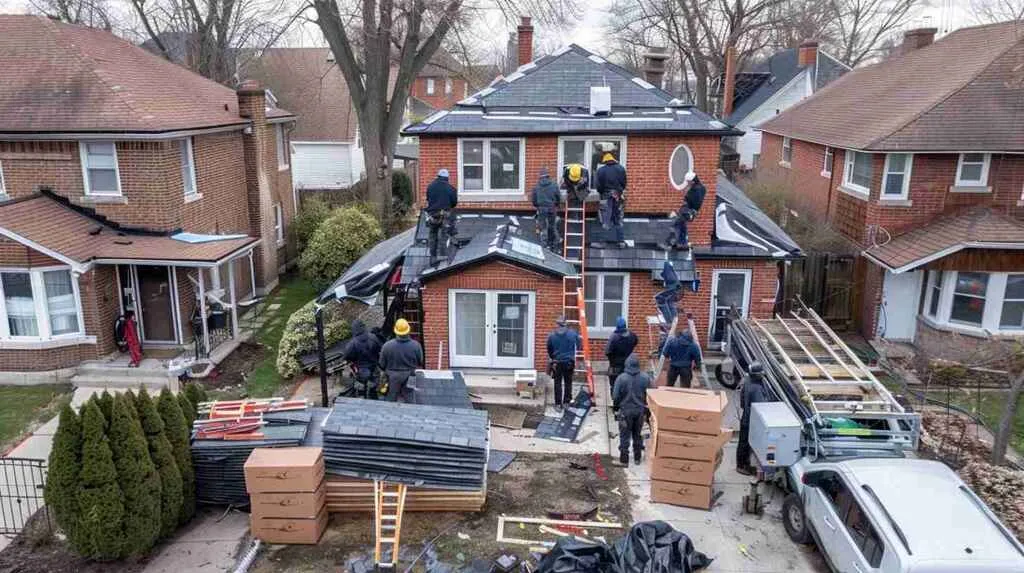
Capsized-that’s the word that runs through my head when I see a Queens roof stripped bare after a storm. Except shingles don’t just capsize on their own; after 19 years on roofs here, I can tell you they fall off because someone rushed a nail line, skipped a step, or ignored a slow rot until the wind finished the job.
I’m Carlos, and back when I walked off a fishing boat in Montauk, I thought I was done with rough seas. Turns out, Queens rooftops in a Nor’easter feel a lot like riding 8-foot swells-and just like a boat, your roof depends on every plank, every seal, and every nail to stay watertight.
Why Shingles Don’t “Just Fall Off” in Queens, NY
Shingles almost never just fall off. I know that sounds like I’m being stubborn, but it’s true: there’s always a specific, traceable mistake or condition behind those bare patches, and most of the time it traces back to human error. I think of the roof like a hull and the shingles like overlapping scales-when one lifts, the wave (or the wind) finds the weak spot and starts peeling things back. In my opinion, most shingle loss I see in Queens is preventable if the installer pays attention and the homeowner doesn’t wait for a crisis to call.
One January morning right after a nasty wind advisory, I was on a two-family in Jackson Heights at 7:30 a.m., coffee freezing in my hand, looking at a line of shingles peeled back like someone unzipped the roof. The owner swore the shingles were “brand new,” but I could see from the nail pattern that whoever installed them nailed too high-above the seal strip-so the wind got under them like a wave under a loose plank. That kind of mistake shows up all over Queens after storms, especially on blocks where the wind tunnels between buildings and grabs any loose edge it can find.
| Myth | Fact |
|---|---|
| “The shingles were cheap, that’s why they blew off.” | Most blow-offs I see in Queens trace back to bad nailing, missing starter, or skipped underlayment, not just shingle brand. |
| “They were brand new, so it must be a fluke.” | New shingles fail fast when they’re nailed too high, under-driven, or installed in cold weather without proper sealing time. |
| “A little wind like that shouldn’t cause damage.” | Queens wind tunnels between buildings can turn a “little wind” into a focused gust that rips at any weak spot. |
| “If one shingle fell off, it’s no big deal.” | One missing shingle is like one missing plank on a boat deck: water finds it, and nearby shingles are usually already stressed. |
Top Causes of Shingles Falling Off Roofs in Queens
Here’s the blunt version: shingles fall off because someone rushed, skipped a step, or ignored a warning sign. The core causes I see again and again are bad installation-especially wrong nail height or spacing-foot traffic damage from satellite dish installers or DIYers, age and brittleness when shingles turn stiff instead of flexible, direct storm impact from branches or flying debris, and poor attic ventilation that bakes the shingles from below until they curl and crack. All of these get worse in Queens because blocks along Woodhaven, Astoria, and Jackson Heights channel the wind hard between buildings, turning a normal breeze into a focused blast that finds any weak spot and amplifies it.
In late August, during one of those sticky 90-degree afternoons in Ozone Park, I answered an emergency call from an older couple who’d just had a satellite dish removed. Right where the dish used to be, their shingles were literally sliding off the roof in the heat. Turned out the handyman who removed the dish just yanked the lag bolts, never sealed the holes, and cracked a few shingles walking around in cheap, hard-soled boots. A week of sun baked the damage until the first light breeze finished the job. That story proves that whoever walks on the roof last can start the failure even if the original install was decent.
Think of wind like ocean swell hitting a hull-every shingle that lifts is like a scale popping up, and each loose edge lets the “wave” dig in deeper. When you’ve got small openings in the top deck, water finds its way below (into your attic and ceilings) the same way it does on a boat, and if you ignore it, you’re not just fixing shingles later-you’re replacing soaked insulation, rotted plywood, and stained drywall.
Most Common Reasons Shingles Fall Off in Queens, NY
- ✅ Incorrect nailing height (above the seal strip)
- ✅ Too few nails per shingle or uneven spacing
- ✅ Missing starter strip along the eaves
- ✅ Sloppy work around satellite dishes, vents, or skylights
- ⚠️ Aged, brittle shingles that snap instead of flex
- ⚠️ Storm damage from branches or flying debris
- ⚠️ Poor attic ventilation baking shingles from underneath
- ⚠️ Ice dams or backed-up gutters lifting shingle edges
Is It an Emergency or Can It Wait a Week?
Think of your roof like the deck of a ship in a storm-if you’ve got missing shingles near valleys, chimneys, or any larger bare patches, you’re taking on water and that’s urgent. One tab missing on a steep, well-flashed slope might wait a short time, but the longer you wait, the more the surrounding shingles get stressed by wind and moisture. Here’s an insider tip I use: if you can see exposed black felt or bare wood from the sidewalk, treat it like a leak waiting to happen and get someone up there fast, because every rainstorm is going to push water straight through that open spot.
How I Diagnose Why Your Shingles Fell Off
If I’m standing on your sidewalk and I ask, “Who walked on this roof last?” I’m not making small talk. I’m reading the pattern of missing shingles, the nail placement, and the wind direction like a captain reads currents-because the sequence of events tells me whether this was an install mistake, impact damage, or long-term neglect. I’ll never forget a rainy Tuesday at dusk in Astoria, trying to tarp a roof where a big maple branch had come down. The branch didn’t just punch a hole-it skimmed across the roof and caught a row of older, brittle shingles, snapping them clean off along the edge like snapping dry crackers. The landlord had ignored granule loss and curling for years, so when that limb hit, those shingles didn’t bend at all; they just broke and slid right into the gutter, leaving the plywood wide open to the rain while we scrambled to cover it.
On-site, I follow a straightforward process: I walk the perimeter first, spotting missing shingles and lifted edges from the ground; check the direction of damage versus how the wind usually hits your block; get on the roof if it’s safe to inspect nail lines, seal strips, starter courses, and flashing details; lift a few shingles carefully to check underlayment condition and whether the deck feels soft; then look in the attic or top floor ceiling for water stains, damp insulation, or daylight. It’s like checking a boat hull from the waterline to the keel-you need the full picture to know what’s actually failing.
How a Shingle Masters Inspection Works
- Walk the perimeter from the sidewalk and yard, spotting missing shingles, lifted edges, and impact points.
- Check the direction of damage versus prevailing Queens wind patterns on your block.
- Get on the roof (if safe) to inspect nail placement, seal strips, starter courses, and flashing details.
- Lift a few shingles carefully to check for underlayment condition and deck softness.
- Look in the attic or top floor ceiling for water stains, damp insulation, or daylight.
- Explain the exact cause in plain English, show photos, and outline repair versus replacement options.
DIY Patching and Walking on Damaged Shingles
Climbing on a roof chasing a few fallen shingles with a tube of caulk is how a lot of my emergency calls start. Stepping on hot, softened, or brittle shingles can crack more of them, and nailing into the wrong spot just gives the wind a new edge to grab. If you’re not used to moving on a slope and reading the shingle pattern, stay on the ground and call a pro.
What It Might Cost to Fix Missing Shingles in Queens
$275. That’s the starting point for a small patch job-2 to 5 missing shingles after a mild storm, site visit, safety setup, and basic sealing included. Waiting turns that into a leak, which turns into soaked insulation, stained drywall, and mold remediation, so fixing it fast is always cheaper than waiting. The ranges below are typical for Queens, but final price depends on roof access, pitch, how much hidden damage the missing shingles exposed, and whether we’re doing a quick patch or correcting a deeper install mistake.
Common Questions About Shingles Falling Off Roofs in Queens, NY
Can I wait until spring to fix missing shingles?
If you’ve got exposed underlayment or wood, waiting through a Queens winter is asking for leaks, rot, and interior damage. Even a temporary repair now is cheaper than replacing drywall and insulation later.
Will insurance cover shingles that blew off?
Often, yes, if it’s storm-related and you maintain the roof reasonably. If the adjuster sees obvious install mistakes or long-term neglect, they may push back. I can document what I see so you have clear photos and notes.
Do I have to replace the whole roof if a few shingles fell off?
Not always. Localized storm damage on an otherwise healthy roof is usually repairable. When I see widespread granule loss, curling, and repeated blow-offs, that’s when I tell you straight that a full replacement is the smarter move.
How fast can Shingle Masters get to my house in Queens?
For active leaks or wide-open spots, we aim for same-day or next-day tarp and stabilization, with permanent repairs scheduled as soon as weather and materials allow.
Falling shingles are a sign of a specific, fixable problem-not random bad luck or “cheap materials.” Whether it’s a bad nail line from a rushed install, storm impact on old brittle shingles, or damage from a handyman who didn’t seal his holes, there’s always a traceable cause, and once you know what it is, you can fix it before water starts dripping into your living room. Call Shingle Masters in Queens, NY for a fast inspection and a clear, no-nonsense quote-we’ll explain exactly what happened, show you the proof, and get your roof sealed up tight again.