What Is a Shingle Roof Queens NY – Clear Answer from Roofers | Free Quotes
Blueprint: Most Queens “shingle roofs” people point to from the sidewalk are actually complete waterproofing systems with 5-7 layers working together, not just the visible shingles-and that’s why some roofs sail through nor’easters while others spring leaks after the first big gust. In Queens, with our sideways rain and wind that seems to come from three directions at once, a shingle roof only works if every layer, from the wood deck to the ridge cap, stays “in tune” like a band playing the same song, and I’m going to walk you through exactly what that means so you can decide what your own roof really needs.
What a Shingle Roof Really Is on a Queens House
Think of your shingle roof like a band: the shingles might be the lead singer, but without the underlayment, nails, and flashing playing backup, the whole song falls apart in the first storm. That’s the piece most folks miss when they ask me what a shingle roof is-they’re picturing the visible layer you can see from the street, but what keeps your house dry in Queens is actually a choreographed system of six or seven layers overlapping and shedding water in a very specific order. When the wind drives rain sideways up from the East River or a nor’easter hammers your eaves, it’s not just the shingles doing the work; it’s the rhythm section underneath keeping everything locked down and watertight.
On a typical block in Queens, if you stand across the street and really look, you’ll see at least three different types of shingle roofs without even moving your feet. One August afternoon in Jamaica, I was standing on a faded old three-tab roof for a retired bus driver who swore he just needed “a few patches,” and the shingles were curling like potato chips, granules washed off so badly I could draw lines with my finger in the bare asphalt. That’s when I first said to a customer, “Your roof isn’t broken in one place-it’s tired everywhere,” and he nodded and told me, “Alright, drummer boy, give me a new one.” That job taught me that patching isolated spots on a tired system is just paying to delay the inevitable-you’re better off understanding what a shingle roof really is as a whole, because every layer has a job, and when one part wears out, the others can’t cover for it for long. In my head, I see shingles as the melody, underlayment as the rhythm section keeping the beat, flashing as the bass line holding tricky joints together, and the ridge cap as the final chorus tying the whole song together at the peak.
✅ Hidden Layers of a Queens Shingle Roof System
Types of Shingle Roofs You’ll See Around Queens (and How They Perform)
On a typical block in Queens, if you stand across the street and really look, you’ll see at least three different types of shingle roofs without even moving your feet-maybe a classic flat three-tab roof on a Jamaica bungalow, a chunky architectural shingle job on an Astoria two-family, and possibly a higher-end impact-resistant or designer blend on a newer Ridgewood townhouse near the park. The differences aren’t just cosmetic: three-tab shingles are thinner, lighter, and cheaper, but they catch wind like a sail if not installed right; architectural (or “dimensional”) shingles are heavier, thicker, and have better wind ratings, which matters when you’re a few blocks from open water or on an exposed corner lot; and the upgraded impact-rated or algae-resistant blends you see in nicer blocks closer to Forest Hills or Bayside cost more up front but can shrug off hail and last longer in our freeze-thaw cycles. Knowing which one makes sense depends on how exposed your house is, how long you plan to stay, and whether you care more about curb appeal or pure storm survival.
One November morning, right after a nasty nor’easter, I got a call from a young couple in Astoria whose baby’s nursery ceiling had just started dripping at 5 a.m., and when I got there the wind was still gusting hard enough to make my ladder vibrate. The problem was obvious: a cheap architectural shingle job where the installer had skipped proper starter strips along the eaves, so the wind caught the bottom edge and peeled sections back like you’d open a book. The top layer looked fancy-thick, textured, nice color-but what you didn’t see underneath decided whether that nursery stayed dry, and in this case it didn’t. That’s why I always circle back to the band metaphor: a fancy lead singer doesn’t save a sloppy rhythm section, and a premium shingle brand won’t keep your ceiling dry if the starter strips, nailing pattern, and underlayment aren’t dialed in for Queens weather.
| Shingle Type | Typical Lifespan in Queens | Wind & Storm Performance | Approx. Look | Best For |
|---|---|---|---|---|
| Three-Tab Shingles | 15-20 years (often less on exposed roofs) | Fair; prone to wind lift if not sealed well; lightweight means easier blow-off in Queens gusts | Flat, uniform tabs; basic, clean lines | Budget-conscious homeowners, rental properties, temporary fixes before full upgrade |
| Architectural (Dimensional) Shingles | 22-30 years with proper install and ventilation | Good to excellent; heavier, better wind ratings (often 110+ mph), more sealed layers | Textured, layered, shadow lines; mimics wood shake or slate | Most Queens single- and two-family homes; best balance of cost, looks, and storm resistance |
| Upgraded Architectural / Impact-Rated | 28-35+ years; some come with 50-year warranties (read the fine print) | Excellent; rated for high wind and hail impact; algae-resistant coatings for humid Queens summers | Premium texture, designer colors, deep shadow lines; high curb appeal | Long-term homeowners near water or in exposed areas; those prioritizing max storm defense and resale value |
How a Proper Shingle Roof Is Built to Handle Queens Weather
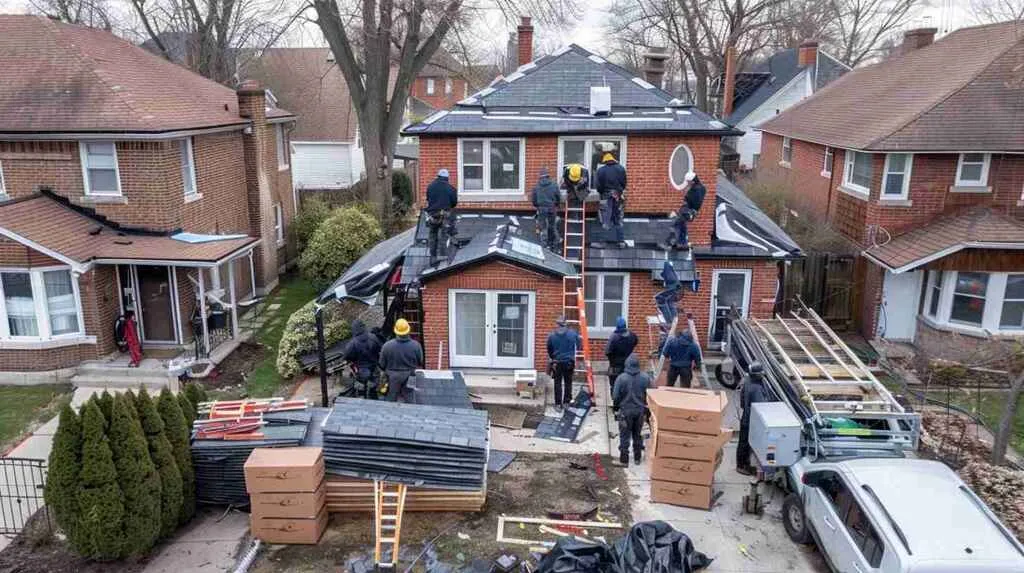
Let me say this straight: if you think a shingle roof is just “the outer layer,” you’re getting shortchanged before anyone even climbs a ladder. A real shingle roof installation starts with inspecting and fixing the bare wood deck-checking for soft spots, rot, or gaps-then rolling out underlayment that overlaps and sheds water even if shingles lift, then adding ice-and-water barrier strips at the eaves, valleys, and around chimneys where ice dams and wind-driven rain love to sneak in. After that comes the starter strip, nailed along every edge so the first course of field shingles has something to seal against, and only then do the field shingles go down in a staggered pattern with nails placed at the exact height the manufacturer specifies (not wherever feels convenient). Flashing gets woven or stepped into the shingle courses at every wall, chimney, and valley so water can’t backdoor its way under the system, and finally ridge caps go on with special nails and sealant to lock the peak down against updrafts. Here’s an insider tip you can use to test any roofer: ask them, “Where exactly are you putting your starter strips and ice shield on my roof?” If they fumble or give a vague answer, they’re not thinking in systems-they’re just thinking about how fast they can get shingles on and leave.
One winter evening in Flushing, right before dark, I was checking a shingle roof for a restaurant owner who’d had constant leaks over his kitchen, and snow piles were melting, refreezing, and then leaking in these weird little lines along his interior wall. I found that whoever installed his roof had mixed two different brands and colors of shingles, overlapped them wrong in the valley, and then tried to “fix” it with a mound of roof cement that looked like someone frosted a cake with a trowel. Water was backing up behind that cement blob and finding every tiny gap, because in Queens, snow melt and refreeze patterns turn your valleys into mini rivers that have to flow smoothly or they’ll flood upstream. I had to strip that whole valley down to the deck and rebuild it with proper metal flashing and shingles woven in the right sequence, and I remember telling him, “A shingle roof is like your dinner rush-if you don’t plan the flow, everything backs up and ends up in the wrong place.” He still calls that “the night the drummer taught me roofing hydraulics,” and honestly, that’s exactly what a valley is: controlled hydraulics that only work if the rhythm section plays together.
🔧 Step-by-Step: How We Build a Shingle Roof That Stays in Tune in Queens
Walk every square foot of the existing roof, mark soft spots, check for rot or gaps in the wood deck, and replace any damaged sheathing before a single shingle goes down-because nailing into mush doesn’t hold in Queens wind.
Roll out synthetic or felt underlayment across the whole deck, overlapping seams, then add 3-6 feet of rubberized ice-and-water shield at eaves, in valleys, and around chimneys-those are the spots where wind-driven rain and ice dams attack first in our weather.
Nail a continuous starter strip along all eaves and rake edges, oriented so the adhesive strip seals the bottom edge of the first field shingle-skip this step and you’re inviting peel-back every time a nor’easter rolls through Queens.
Lay field shingles course by course, offsetting each row per manufacturer specs, nailing at the exact height marked on the shingle (usually about an inch below the seal strip), and making sure every shingle seals down flat so wind can’t catch an edge.
Install or replace all metal flashing-step flashing along walls, counter-flashing on chimneys, valley metal in open valleys-and weave shingles into those pieces so water flows over each joint without sneaking under; this is tightening the rhythm section so everything plays on beat.
Cap the ridge and hips with specially cut shingles nailed through both slopes, verify that attic vents aren’t blocked (proper airflow extends shingle life by years), walk the roof one last time to check every nail and seal, and hand you a roof ready for whatever Queens weather brings next.
Queens-Specific Shingle Roof Shortcuts to Watch Out For
- Skipping starter strips along eaves and rakes – saves the installer 20 minutes and costs you shingles every windstorm; the first edge is where peel-back starts.
- Nailing too high (above the seal strip) or using too few nails per shingle – both let wind get under the shingle and lift it; proper nailing is in the adhesive zone, usually 4-6 nails depending on shingle type and Queens wind exposure.
- Relying on roof cement blobs in valleys and around chimneys – cement cracks in our freeze-thaw cycles and traps water instead of shedding it; proper metal flashing is the only real fix.
- Not tying into existing flashing on attached rowhouses – in Queens, your roof often meets your neighbor’s wall; if the installer doesn’t step-flash or counter-flash that joint correctly, you’ll get leaks along the shared wall within a year.
Do You Need Repair or a Full New Shingle Roof in Queens?
The blunt truth is, a cheap shingle roof in Queens isn’t really cheap when you add up emergency buckets, ruined drywall, and three pointless patch jobs. When I walk a roof to decide between targeted repair and full replacement, I’m looking at age (anything past 18-20 years is on borrowed time in our weather), granule loss (if I can see shiny black asphalt on more than a quarter of the shingles, the protective layer is gone), curling or cupping along the edges (means the shingles are cooked and brittle), soft spots in the deck underneath (you can feel them when you walk), and whether you’ve had repeat leaks in different rooms over the past few years. That retired bus driver in Jamaica taught me a line I use all the time now: “Your roof isn’t broken in one place-it’s tired everywhere,” and that’s exactly what happens to Queens homes in the 20-30-year range. If your shingles are past their teens and you’re calling me for the third leak in two years, patching is just delaying a conversation you’re going to have anyway, probably on a rainy Saturday when it’s harder to schedule and more expensive to fix.
Here’s the question I usually ask folks before I explain anything else: are you more worried about looks, lifespan, or surviving our sideways Queens rain? Because the answer shapes everything-if you care most about curb appeal, we might talk about architectural shingles with deep shadow lines and a color that matches your brick; if you want maximum years before the next roof, we’re looking at upgraded impact-rated shingles with good warranties and attic ventilation upgrades; and if storm survival is priority one (maybe you’re on an exposed corner near the water or you’ve had shingles blow off twice), then proper underlayment, starter strips, and flashing details matter more than shingle brand. I can walk you through all of it on-site and show you exactly what I’m seeing, and the decision tool below will help you get a sense of where you stand before you even pick up the phone.
So, be honest with yourself for a second: is your roof really just unlucky, or is it simply worn out?
🔀 Simple Flow to Decide: Shingle Repair or Replacement in Queens
• YES: Plan for full replacement – the system is tired everywhere, and patching won’t buy you much time in Queens weather.
• NO, but I’ve had leaks in multiple rooms over the past 2-3 years: Schedule inspection to be sure – age + repeat leaks usually mean hidden problems under the surface.
• YES, and the rest of the roof looks good: Call for repair quote – targeted fixes make sense when the overall system is still healthy.
• NO, I’m seeing problems in many spots or leaks keep moving around: Schedule inspection to be sure – multiple leak points usually mean underlayment or flashing failure, not just shingle damage.
⏰ When to Call a Queens Roofer About Your Shingle Roof
- Active leak during or right after rain
- Ceiling sagging or bulging from water weight
- Shingles missing after a windstorm or nor’easter
- Exposed wood deck or shiny metal flashing showing from the street
- Water dripping near electrical fixtures or outlets
- A few curled or cupped shingles on one slope
- Minor granule loss in gutters but shingles still look intact
- Small indoor stains that haven’t grown in months
- Planning ahead because your roof is 18+ years old and you want to budget for replacement before the next big storm season
What to Do Before You Call for Shingle Roof Quotes in Queens
A few minutes of prep before you call helps me tune the “song” of your roof faster when I show up-and honestly, you don’t need to risk climbing on the roof yourself. From the sidewalk or from inside your house, you can gather everything I need to give you a solid first impression: try to remember the last time your roof was replaced or patched (even a rough “maybe 2005?” helps), walk around your block and look up for visible issues like missing shingles, shiny spots where granules wore off, or any sagging lines along the ridge or eaves. Then walk through every room upstairs and mark any ceiling stains, peeling paint, or spots where the drywall looks soft, especially near outside walls and around chimneys. Snap three or four clear photos on your phone-one from each side of the house if you can see the roof from the street, and close-ups of any indoor damage-and think about what matters most to you: do you care about looks, getting the longest possible lifespan, or making sure your roof survives the next Queens nor’easter without drama? If you’ve had leaks before, jot down where and roughly when, because that history tells me a lot about the “rhythm” of your roof problems and where water is sneaking in. With that little bit of homework done, our on-site visit is faster, clearer, and I can show you exactly what you’re dealing with instead of spending half the time hunting for clues.
✅ Quick Prep List for Queens Homeowners Before Shingle Roof Quotes
🏆 Why Queens Homeowners Call Shingle Masters and Luis
❓ Queens Shingle Roof Questions Luis Answers All the Time
What is a shingle roof in simple terms, and is it right for my Queens home?
How long does a new shingle roof usually last in Queens weather, realistically?
Can you just patch the spot that’s leaking over my bedroom or kitchen?
Do you work on attached row houses and buildings with limited alley access in Queens?
A shingle roof in Queens is a full system-deck, underlayment, starter strips, field shingles, flashing, ridge caps-that has to be installed like a tuned band if you want it to survive real nor’easters, sideways rain, and our wild temperature swings. Standing on the sidewalk and guessing can only tell you so much; you need someone who knows how water flows, how wind attacks corners and eaves, and how every piece of the roof works together or falls apart together. Call Shingle Masters and let Luis come out, walk your roof with you, explain what’s actually happening up there (probably with a Sharpie and a scrap shingle), and give you a clear, honest, free written quote for shingle roof repair or replacement in Queens-no pressure, no jargon, just real answers from a local roofer who’s spent 17 years keeping Queens homes dry.