What Is a Good Roof Shingle Queens NY – Roofers Break It Down | Free Quotes
Blueprinted in Queens means one thing: a “good” shingle is anything that survives 60+ mph wind off the bay and bakes on a 130°F August afternoon without curling or losing granules like confetti. I’m Carlos, and after 19 years of putting shingles on houses from Jackson Heights to Breezy Point, I’ll break down exactly what that means in brands, ratings, and choices you can actually use when you’re standing in a roofing aisle or talking to a contractor on your stoop.
What “Good” Roof Shingle Really Means in Queens, NY
On a block off Roosevelt Avenue, I once showed a homeowner the shingles I’d just pulled off his South Ozone Park roof-one August afternoon around 3 p.m., when they were practically soft as chocolate left in a car. He kept asking why his “30-year bargain shingles” only lasted 11 years. I flipped one over on his picnic table, and you could see how the adhesive strip barely stuck and the granules were shedding like dandruff. That day I learned to always ask what a homeowner means by “good”-cheap today, or still on the roof when your kid finishes college? My honest take? If a shingle can’t handle wind, it’s not good for Queens, period. I don’t care about shiny marketing names; if the shingle can’t survive our bay gusts, summer heat, and nor’easters, it’s junk, and I’d rather lose a sale than install something I know will curl early.
Think of your roof like one of my mom’s multi-layer cakes-if the bottom tier is weak, it doesn’t matter how fancy the frosting looks. A good shingle is really a good system: solid plywood deck (that’s your bread), quality underlayment (like mayo that keeps moisture out), the shingle itself (your meat and cheese), and proper ventilation (the wrapper that keeps it from getting soggy). In Queens, where you’ve got salt air near the water, 130°F summer roof temps inland, and those March nor’easters that blow rain sideways, you need each layer doing its job. That means a higher wind rating than the bare minimum, algae resistance so you don’t get black streaks on your expensive new roof in two years, and an install that accounts for your specific block’s quirks-whether you’re facing the bay in Whitestone or tucked into a shaded courtyard in Elmhurst.
Queens Roofing Reality Check
| Myth | Fact |
|---|---|
| “A 30-year shingle will always last 30 years.” | In Queens weather, that label assumes perfect install and mild conditions; expect less if you cut corners. |
| “All shingles with the same warranty are basically the same.” | Adhesive strength, granule quality, and wind rating can differ a lot even with similar warranties. |
| “Thicker is always better.” | Thickness helps, but bonding strip quality and how it’s nailed matter just as much for wind. |
| “If my neighbor’s shingles survived the last storm, mine must be fine too.” | Roof pitch, orientation to wind, and tiny install details can make one house hold and the next one lose shingles. |
The 4 Specs I Circle on a Shingle Package (Queens Edition)
Here’s what I circle on every shingle package before we even talk color: the wind rating and the algae resistance. Then I add impact resistance and whether the manufacturer has certified installers actually working in Queens-because smoother warranty claims matter if something fails early. I reference different Queens micro-climates all the time: if you’re in Bayside or Whitestone facing the bay, you’re dealing with Breezy Point-style gusts that’ll test every seal; if you’re in Jackson Heights or a tight Elmhurst block with tall buildings and shade, you’re fighting humidity and algae more than wind. One size does not fit all.
A few winters back, after one of those wet March nor’easters, I got a call at 6:30 a.m. from an older couple in Bayside who had water dripping right onto their dining room table. They’d paid a friend-of-a-friend to re-shingle their roof with a high-end brand, but he skipped the starter strip and used three-tabs in a high-wind spot by the bay. Standing there in my soaked hoodie, I used a frost-covered scrap of shingle to show them how wind gets under the edge when you pick the wrong style for the location. That’s why I care about wind rating so much-if it’s only rated to 110 mph, it’s a non-starter near the water, and three-tabs just don’t cut it on exposed corners and ridges.
| Spec | Minimum for Queens | Why It Matters Here | Carlos’s Note |
|---|---|---|---|
| Wind Rating | 130 mph | Resists bay and bridge gusts, especially on corners and ridges | “If it’s only rated to 110 mph, it’s a non-starter near the water.” |
| Algae Resistance | AR (algae-resistant) with at least 10-year streak-free guarantee | Humid summers and shade from tight blocks cause black streaks and granule loss | “Think of it like ordering mayo on your sandwich – once it’s on, you can’t scrape the stains back off.” |
| Impact Rating | Class 3 preferred, Class 2 acceptable inland | Helps against wind-driven debris and ice pellets | “I’d rather your shingle take the bruise than your plywood.” |
| Manufacturer Support | Manufacturer-certified installer available locally | Smoother warranty claims if something fails early | “If nobody in Queens is certified for that brand, that’s a red flag.” |
Using 3-Tab Shingles in High-Wind Queens Spots
Be really careful with 3-tab shingles on exposed Bayside, Whitestone, and Rockaway-facing roofs. Here’s why they often fail:
- 3-tabs have fewer contact points and less mass, so wind can more easily get under the edges.
- Skipping starter strips on eaves and rakes makes it almost guaranteed they’ll lift in nor’easters.
- Architectural shingles with proper starter and ridge systems are strongly preferred on windward sides.
Matching Shingle Type to Your House and How Long You’ll Stay
Picture me kneeling on your driveway, shingle in hand, asking you one simple question: how long do you really plan to stay in this house? That answer changes everything, like picking between a quick deli sandwich and a sit-down meal. Budget 3-tab shingles are cheaper today but usually need replacement sooner in Queens weather; mid-range architectural shingles balance cost and longevity; premium cool-roof or designer options make sense if you’re staying 20+ years and want the top floor comfortable. Here’s my insider tip: if you’re selling in 7-10 years, don’t over-spend on a 40-year system. A solid mid-range architectural shingle will impress buyers and survive long enough without wasting money you’ll never recoup.
There was a job in Astoria, late fall just before sunset, where a young architect wanted a very specific dark gray shingle to match her renderings. On site, I noticed her building trapped heat like a toaster-no attic ventilation, black membrane underlayment, and full southern exposure. I told her, “Look, if we do that charcoal shingle, you’ll be cooking the roof from the inside out; let’s look at a cool-roof rated shingle instead.” We ended up mixing a lighter, reflective shingle with black metal accents so her design worked without turning her top floor into a sauna. That’s what I mean by matching shingle type to your house-appearance is just one layer of the sandwich, and if the meat’s too hot, the whole thing falls apart.
$1,500. That’s roughly what you’ll save going with the cheapest shingles over good ones on a typical Queens home-and it’s also about what you’ll pay to fix one leak or replace a section that fails early.
Budget 3-Tab Sandwich
- ✔ Thinner single-layer shingle, lower wind rating.
- ✔ Best for short-term holds or garages/sheds.
- ✔ Saves money upfront but usually needs replacement sooner in Queens.
- ✔ Looks flatter and more basic from the street.
Architectural Combo Sandwich
- ✔ Laminated, multi-layer shingle with better wind resistance.
- ✔ Ideal for primary homes expecting 20+ years of service.
- ✔ Handles Queens storms and sun much better when installed right.
- ✔ Gives a thicker, more dimensional look that boosts curb appeal.
Shingle Choice Based on How Long You’ll Stay
Is your roof in a high-wind or full-sun spot?
Selling within 5-10 years?
How We Install Shingles to Survive Queens Storms
A lot of folks call me after a storm and say, “Carlos, why did half my roof fly away while my neighbor’s looks untouched?” The answer is always in the layers-just like a multi-layer cake. The underlayment, starter strips, nail placement, and ventilation all decide who loses shingles. I’ve seen expensive brand-name shingles blow off because the installer skipped starter strips or nailed too high, and I’ve seen budget shingles last 20 years because every detail was done right. Missing starter strips and wrong nailing are the two classic failure points, especially in high-wind spots near the bay.
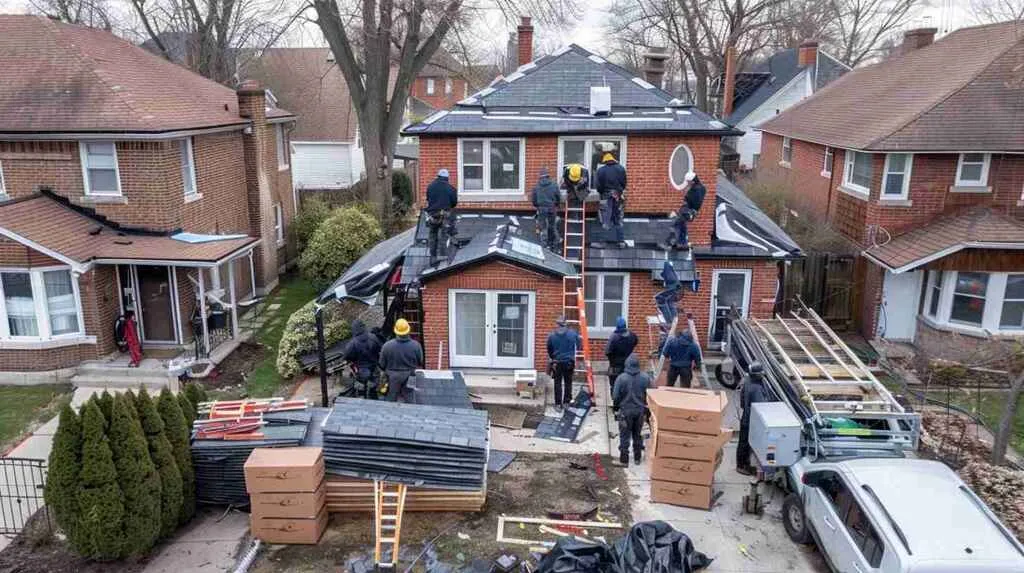
Here’s how Shingle Masters handles a typical Queens re-roof from inspection to final walk-through. We start by checking your roof and attic-looking for soft spots, past leaks, and whether you’ve got enough ventilation-because what’s under the shingles matters as much as the shingles themselves. Then we tear off all the old layers and re-nail or replace damaged plywood so the “bread” of the sandwich is solid. Next comes synthetic underlayment across the whole deck and ice & water shield in valleys, around chimneys, and along eaves-that’s your moisture barrier. We lay starter strips at every eave and rake, install shingles with the manufacturer’s exact nailing pattern (not “close enough”), and upgrade all flashing around walls, skylights, and vents. Finally, we add or correct ridge and soffit vents so your attic breathes, clean up every scrap, and walk you through what we did and how your warranty works.
Step-by-Step Queens Shingle Installation by Shingle Masters
Inspect decking, existing shingles, and attic ventilation; look for soft spots, past leaks, and mold.
Remove all old layers, re-nail or replace damaged plywood so the “bread” of the sandwich is solid.
Install synthetic underlayment across the deck and ice & water shield in valleys, around chimneys, and along eaves.
Lay starter strips at eaves/rakes, install shingles with manufacturer-specified nailing pattern, and upgrade flashing around walls, skylights, and vents.
Add or correct ridge/soffit vents, clean up all debris, then walk the homeowner through what was done and review the warranty.
Why Queens Homeowners Hire Shingle Masters
- ✓ Licensed & Insured in NYC for roofing.
- ✓ 19+ years of hands-on Queens roofing experience.
- ✓ Familiar with DOB permit requirements and local building codes.
- ✓ Emergency tarping available after major storms.
- ✓ Certified installer for major shingle manufacturers used in Queens.
Quick Answers: Good Shingles and Free Quotes in Queens
I want you to feel confident asking about specs-not just colors. If you’re wondering about wind ratings, whether architectural shingles are worth it for your block, or how long a re-roof takes, these answers will help. And yes, Shingle Masters offers free, no-pressure quotes for Queens roofs-I’ll walk your roof, show you options, and help you stack the right “shingle sandwich” for your situation.
What wind rating should I ask for on shingles in Queens?
Ask for shingles with a 130 mph wind rating, especially if you’re near the bay, bridges, or open exposures; 110 mph is the bare minimum only for well-sheltered blocks.
Are architectural shingles really worth it over 3-tab for my Queens home?
In most Queens neighborhoods, yes-architectural shingles handle wind better, look nicer, and usually last longer, making the extra upfront cost pay off.
Can you mix cool-roof shingles with darker trim and still make it look good?
Yes, we often pair lighter, reflective shingles with dark metal or fascia accents to keep the design sharp without cooking the top floor, especially on Astoria and Long Island City walk-ups.
How long does a shingle roof replacement usually take in Queens?
Most single-family homes take 1-2 days of active work, depending on layers to remove and wood repairs; larger multi-family jobs can take several days.
Do you really give free roof shingle quotes in Queens?
Yes, Shingle Masters offers free, no-pressure inspections and written quotes anywhere in Queens, with clear line items for materials, labor, and any needed wood replacement.
What to Note Before Calling Shingle Masters for a Quote
- ✅ Rough age of your current roof (even a guess helps).
- ✅ Any known leaks, stains, or soft spots inside the house.
- ✅ Whether you see missing, curled, or cracked shingles from the street.
- ✅ If the top floor or attic gets uncomfortably hot in summer.
- ✅ How long you realistically plan to stay in the home, so Carlos can match the right shingle “sandwich” to your plans.
In Queens, a good roof shingle is about wind ratings, algae resistance, impact protection, and how it’s installed-not just the name on the wrapper. The right shingle depends on your specific block, how long you’re staying, and whether you’re near the water or tucked into a shaded courtyard. Call Shingle Masters for a free, no-pressure quote, and I’ll walk your roof, answer every question, and help you build the right shingle sandwich-one that survives bay gusts, August heat, and nor’easters without falling apart.