Steps to Shingle a Roof Queens NY – Every Stage in Order | Free Estimates
Blueprint: safety setup, tear-off, deck inspection-those are the first three physical moves on any Queens roof, before a single new shingle or nail hits the deck. What follows is the full shingle sequence, laid out like a song arrangement from intro to final chorus, specific to the way roofs behave in our nor’easters, summer squalls, and salt air off the East River.
The First Three Moves on a Queens Roof: Safety, Tear-Off, Deck Check
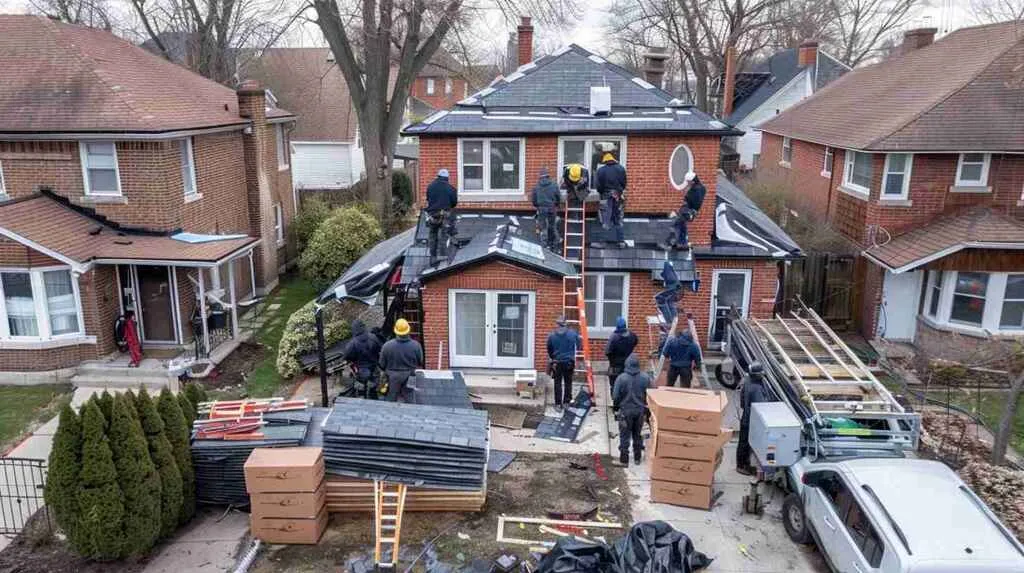
On 37th Avenue last fall, I started a roof by rigging harness lines to the chimney, tying off the ladder, positioning a debris chute aimed at the driveway dumpster, and doing a quick walk-around to spot power lines and loose gutters-because in Jackson Heights, every block has a surprise. That safety setup is the intro to the song, the foundation that holds the whole arrangement together. Then came the tear-off: we stripped old shingles, felt, and exposed roofing nails down to bare deck on the first working section, bagged everything in a designated drop zone to keep the sidewalk clear for foot traffic, swept and blew the deck clean so every seam and knot was visible, and finally probed with a flat bar and hammer to find soft or delaminated spots before any new material went down. One July afternoon in 2021, in the middle of that brutal heatwave, I was on a two-family in Corona where the previous roofer had skipped underlayment on the north side “to save the owner a few bucks.” The first summer storm hit, wind pushed rain up under the shingles, and water started showing up in the tenant’s closet-I had to peel back a 6-month-old roof and re-do the entire slope, step by step, while the owner watched from the sidewalk and finally understood why the order of operations actually matters.
The truth is, I won’t install new shingles over questionable decking or skipped steps, even if a homeowner asks, because it’s wasted money in Queens’ climate. Our mix of heat, nor’easters, and high humidity eats through shortcuts within a few seasons, and layering new shingles over old hides rot and previous leak paths that only get worse once they’re buried. Skipping full tear-off and deck inspection isn’t saving time-it’s guaranteeing early failure and interior leaks, and honestly, no amount of money you save today is worth a ceiling collapse next winter.
Initial On-Roof Sequence Before Any New Materials Go Down
- Set roof safety: Harness lines anchored, ladder tied off, debris chute positioned, and a quick walk-around to spot power lines and loose gutters.
- Strip old shingles and roofing down to bare wood on the first working section, including old felt and exposed roofing nails.
- Bag and stage debris in a designated drop zone on the driveway or yard to keep sidewalks clear for Queens foot traffic.
- Sweep and blow the deck clean so every seam and knot in the wood is visible from ridge to eave.
- Probe the deck with a flat bar and hammer to find soft or delaminated spots that need replacement before any underlayment goes on.
⚠️ Skipping Full Tear-Off and Deck Inspection in Queens
Layering new shingles over old, or skipping a thorough deck inspection, hides rot and previous leak paths. In Queens’ mix of heat, nor’easters, and high humidity, this shortcut almost always leads to early failure and interior leaks within a few seasons-you’re not actually re-roofing, you’re just hiding the problem under a fresh layer that’ll fail twice as fast.
Underlayment, Flashing, and Starter Courses: Locking In the Intro
I’ll be blunt: if you don’t strip down to clean wood, you’re not really re-roofing. Once you’ve got a clean deck, the underlayment and flashing become the “intro” to the song-the rhythm section that locks everything else in place. I’ll never forget a Saturday morning in November, 7 a.m., clear and cold in Bayside-a retired electrician had tried to re-shingle his own small cape “just on the back side,” and he called me because his ridge line looked like a crooked zipper and his bathroom fan was venting straight into the attic. I walked him through each stage-from starter course to ridge cap-standing in his driveway with a coffee in one hand and a bundle wrapper in the other, then my crew and I redid it properly while he followed along like it was a live class. That intro stage-underlayment, flashing, starter-has to be in order, or the verse and chorus (the shingle courses) never line up right, especially in neighborhoods like Bayside, Jackson Heights, Rockaway, and Elmhurst where salt air, tree cover, and exposure off the water all affect how wind-driven rain hits the roof.
The specific order is this: repair any deck damage first, install drip edge on eaves and rakes, roll out synthetic or felt underlayment from eave to ridge (overlapping each course by at least six inches), apply ice and water shield in valleys and around penetrations like chimneys and skylights, then install the starter strip-a continuous first course that seals the eave edge and sets alignment for every shingle above it. That sequence resists Queens wind-driven rain because each layer sheds water down and out, with no gaps or reverse laps where moisture can sneak back up under the shingles during a squall or prolonged storm.
| Stage (Order) | Material/Layer | Primary Job | Queens-Specific Note |
|---|---|---|---|
| 1. Deck Repair | Replace soft/damaged plywood or boards | Provide solid nailing surface and prevent future sag | Critical in older Queens homes where decades of heat and humidity have delaminated original sheathing |
| 2. Drip Edge | Metal L-flashing on eaves and rakes | Direct water into gutters, protect fascia | Must overhang into gutter or water backs up during heavy nor’easter downpours |
| 3. Ice & Water Shield | Self-adhering rubberized membrane | Seal valleys, penetrations, vulnerable low-slope areas | Essential on north-facing slopes and around chimneys where snow sits longer in Queens winters |
| 4. Underlayment | Synthetic or felt paper, eave to ridge | Secondary water barrier across entire deck | Overlap each course generously-wind off the East River can lift edges if you skimp on fasteners |
| 5. Starter Strip | Continuous shingle or starter-specific product | Seal eave edge, set alignment for first full course | If this isn’t straight and properly nailed, every course above it will drift and look crooked from the sidewalk |
✅ Key Components That Must Go In Before the First Full Shingle Course:
-
✅
Deck repairs replaced where wood is soft or delaminated -
✅
Drip edge installed on eaves and rakes -
✅
Ice & water shield in valleys and around penetrations -
✅
Full synthetic or felt underlayment installed, eave to ridge -
✅
Starter strip properly aligned and sealed at eaves and rakes
Laying Shingles Like a Staircase: Courses, Pattern, and Ridge
Picture a staircase: each shingle course is a step, and you can’t skip the middle ones. One windy March afternoon in 2016 in Rockaway, we were mid-job on a shingle tear-off when a sudden squall rolled in off the water-the homeowner was at work, and we had half the roof bare deck, but I’d insisted on staging our underlayment and nails ahead of time, so in 20 minutes flat we had the entire exposed section dried in and watertight, following the same sequence I always preach. That pre-planning-snapping horizontal and vertical control lines, knowing your shingle offset pattern, nailing each piece in the designated zone with the correct count (increasing on steeper or high-wind slopes), weaving or step-flashing all sidewalls, chimneys, and skylights as you reach them, capping hips with cut shingles or dedicated hip pieces lapped away from prevailing winds, and finishing the ridge last with ridge cap shingles-is like building a song from verse to chorus to bridge, each section supporting the next and the whole structure falling apart if you play a step out of tune.
Shingling out of order is the fastest way to ruin a new roof in Queens.
What can go wrong visually and functionally if the pattern or nailing is off? A crooked ridge line visible from the street, exposed nail lines that lift during wind and leak during rain, and shingles that peel back in strips because they weren’t staggered or secured properly. That retired electrician in Bayside learned this the hard way-his DIY back slope had vertical seams lining up like a zipper, and the first big wind popped three shingles loose and let water in around the bathroom vent he’d mis-flashed. Pro layout matters in Queens wind because the East River and open bay exposure create gusts that test every single nail and seal, and if your shingle rhythm is even slightly off, the roof broadcasts it to the whole neighborhood within a season.
Shingle Installation Sequence from First Course to Ridge
- Snap horizontal and vertical control lines so courses run straight from one end of the roof to the other.
- Install the first full shingle course directly above the starter, following manufacturer’s exposure line.
- Stagger subsequent courses according to the shingle pattern (e.g., 6-inch offset) to avoid vertical seams lining up.
- Nail each shingle in the designated nail zone with the correct number of nails, increasing nail count on steeper or high-wind slopes.
- Weave or step-flash all sidewalls, chimneys, and skylights as you reach them, maintaining the shingle rhythm around every detail.
- Cap hips with cut shingles or dedicated hip and ridge pieces, lapping them away from prevailing winds.
- Finish the ridge last with ridge cap shingles, ensuring straight alignment and proper overhang on both sides.
| Myth | Fact |
|---|---|
| You can eyeball shingle courses and they’ll come out straight enough. | Snapping chalk lines is mandatory-even a quarter-inch drift compounds over 30 feet and creates a crooked ridge visible from the sidewalk. |
| More nails are always better for securing shingles. | Over-nailing causes dimples and punctures that lead to leaks; follow manufacturer specs (usually 4-6 nails per shingle, placed in the nail zone). |
| Ridge caps are just decorative and any shingle piece works. | Ridge caps are a critical weather seal-dedicated ridge pieces or properly cut three-tab sections must overlap correctly and nail through both roof planes to resist wind uplift. |
| Shingle pattern offset doesn’t really matter as long as there’s some variety. | Consistent offset (usually 5-6 inches) prevents vertical seams from lining up, which creates channels where wind can lift and water can penetrate in Queens’ squalls. |
Ventilation, Final Checks, and When to Call a Pro in Queens
The first question I ask a homeowner is, “When did you last see your attic from the inside?” If this roof were a song, this next stage would be the chorus-the part you absolutely can’t mess up. Attic inspection and ventilation balance (intake vents at the soffits, exhaust at the ridge or gable ends) determine whether your new shingle roof breathes properly or cooks itself from the inside out. A great roof without proper ventilation is like a great song played through a blown speaker-all the effort wasted because the underlying system can’t support it. In Queens we see ice dams on north slopes when attic heat melts snow unevenly, hot top-floor apartments in summer when ridge vents are blocked or missing, and bathroom fans venting straight into the attic space instead of outside, creating condensation that rots the deck from below even when the shingles look perfect from the street.
A final professional walkthrough covers every potential leak point-valleys, chimneys, skylights, pipe boots, sidewall step-flashing-checks that gutters are clear and properly pitched, and includes full site cleanup so your yard and driveway look like we were never there except for the new roof overhead. If you want the whole sequence handled correctly-from safety setup through ventilation and final inspection-call Shingle Masters for a free, no-pressure estimate where I’ll walk your roof like a step-by-step playlist, explaining each stage before a single shingle goes down, so you know exactly what you’re getting and why it matters in our Queens climate.
🚨 Urgent Situations (Call Right Away)
- Active leaks during rain-water visible inside
- Sagging deck visible from the attic
- Shingles missing in a wide patch after wind
- Daylight visible at chimneys or skylights
📅 Can-Wait Situations (Schedule a Free Estimate)
- Small granule loss on older shingles
- A few lifted shingles after a windstorm
- Aging roof with no active leaks yet
- Minor gutter and flashing touch-ups
Frequently Asked Questions: Queens Shingle Roofing
How long does a full shingle replacement typically take in Queens?
Most single-family homes take 2-3 days from tear-off to final cleanup, depending on roof size, complexity, and weather. Two-family or multi-gable roofs can run 4-5 days. We stage materials ahead of time and work efficiently to minimize disruption, but we never rush critical steps like deck inspection, flashing, or ventilation just to hit a faster timeline.
Is a second layer of shingles ever okay in Queens?
No. Building code technically allows it in some cases, but in Queens’ climate-heat, humidity, nor’easters, salt air-layering new shingles over old hides deck damage, traps moisture, voids most manufacturer warranties, and almost always leads to early failure. Full tear-off and deck inspection is the only way to get a roof that’ll actually last.
What brands or types of shingles work best in Queens wind conditions?
Architectural (dimensional) shingles rated for high wind-ideally 110-130 mph-perform best here. Brands like GAF Timberline HDZ, Owens Corning Duration, and CertainTeed Landmark are solid choices. The key isn’t just the shingle itself; it’s proper nailing, starter strip installation, and ridge cap technique. A mid-grade shingle installed correctly will outlast a premium product slapped on by someone who skips steps.
How do free estimates work with Shingle Masters?
I come to your house, walk the roof with you (if you’re comfortable on a ladder) or from the ground and attic, take measurements, check deck condition and ventilation, and give you a written breakdown of what needs to happen and why-step by step, like a song arrangement. No pressure, no upselling, just honest assessment. If you decide to move forward, we schedule the work; if not, you keep the written estimate and at least you know what you’re dealing with.
What prep should a homeowner do before the crew arrives?
Clear the driveway or yard for material delivery and the dumpster, move any patio furniture or grills away from the house perimeter, cover items in the attic if it’s dusty, and let neighbors know we’ll be working (debris and noise are temporary but real). Inside, take down wall hangings or fragile items in top-floor rooms-roof work creates vibration. We handle everything else, including tarps and site protection.
Local Costs and What A Full Shingle Job Includes in Queens
$8,000-that’s a ballpark example for a typical Queens single-family roof, around 1,500-1,800 square feet, one or two layers to remove, minimal deck repair, and standard ventilation. Actual pricing depends on roof size, complexity (hips, valleys, dormers), how many layers we’re tearing off, deck repairs discovered during tear-off, and ventilation upgrades needed to meet current code or fix existing problems. This range is just to frame expectations before you call for a precise free estimate, because every roof tells a different story once you peel back the shingles.
| Scenario | Approx. Roof Size (sq. ft.) | Complexity | Typical Price Range (Queens, NY) |
|---|---|---|---|
| Small single-family, simple gable | 1,200-1,500 | Low (straight runs, minimal penetrations) | $6,500-$8,500 |
| Medium two-family, moderate complexity | 1,800-2,400 | Medium (valleys, dormers, multiple chimneys) | $9,000-$13,000 |
| Large multi-gable or hip roof | 2,500-3,200 | High (steep pitch, many hips/valleys, skylights) | $13,500-$18,000 |
| Roof needing significant deck repair and ventilation upgrades | Varies | High (plywood replacement, ridge vent install, fan rerouting) | Add $1,500-$4,000 to base price |
Why Queens Homeowners Trust Shingle Masters
- Licensed and insured in New York State, with full liability and workers’ comp coverage
- 19+ years shingling roofs in Queens neighborhoods-Jackson Heights, Bayside, Rockaway, Elmhurst, Corona, and beyond
- Rapid response for active leaks, often same or next day, because a small leak becomes a big problem fast in our climate
- Written estimates and clear step-by-step scope before work starts-no surprises, no hidden charges, just the full song arrangement on paper
Knowing the exact shingle sequence-from safety setup and tear-off through deck inspection, underlayment, flashing, shingle courses, and ventilation-helps homeowners in Queens avoid costly mistakes and spot cut corners before they turn into leaks and deck damage. Call Shingle Masters for a free, no-pressure estimate where I’ll walk your roof like a step-by-step playlist, explaining each stage before a single shingle goes down, so you know exactly what your home needs and why it matters in our wind, rain, and salt-air conditions.