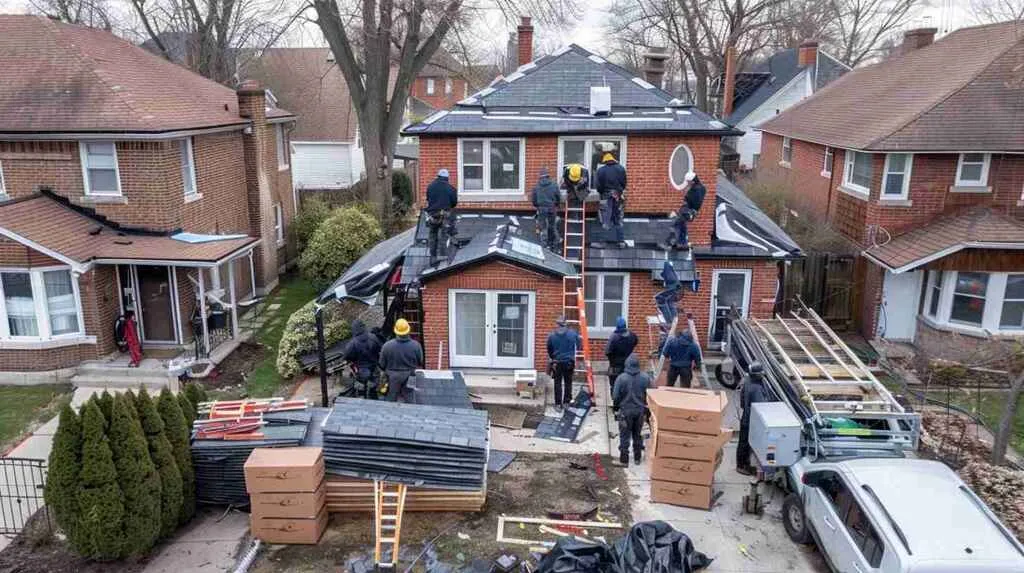
Shingle Roof System Queens NY – All Components Working Together
Seams fail before shingles do. Most “roof problems” I’m called to fix in Queens aren’t caused by the visible shingles being worn out-they’re caused by the invisible pieces underneath and around them failing to work together as a system, like a coat with perfect fabric but broken stitches letting rain through every gap.
Seams, Layers, and the Real Workhorses of Your Shingle Roof System
On a cold roof in Maspeth last January, I had to show a homeowner that his “fine” 7-year-old shingles were hiding a disaster. Standing in the humid heat right after a thunderstorm rolled off Flushing Bay, I peeled back one row and found the underlayment buckled and the starter strip nailed wrong, so water had been sneaking in sideways for years. I remember the look on his face when I showed him that the “roof” that was failing him wasn’t the part he could see, but all the components underneath that were never installed as a system. Here’s my honest opinion: most homeowners in Queens obsess over shingle age and color while completely ignoring the parts that actually stop water-and that’s why they end up calling me when their ceiling starts dripping.
Your shingle roof system is like a layered outfit tailored for Queens weather-each piece has a job, and they all have to fit together and breathe as one coordinated system, not just new shingles nailed down over whatever’s already there. The underlayment is your base layer that sheds water if a shingle lifts, the ice and water shield at eaves and valleys is the windproof shell where storms hit hardest, the flashing at chimneys and walls is the sealed seam that keeps water from sneaking in sideways, and the ventilation is the breathing room that keeps your attic from turning into a sauna in summer or an icebox in winter.
✓ Key Hidden Components in a Queens Shingle Roof System
- Underlayment (felt or synthetic): Your waterproof base layer that covers the whole roof deck-think of it as the slip under the dress that keeps you dry even if the outer fabric gets soaked.
- Ice and water shield: A rubberized membrane at eaves, valleys, and around chimneys that seals to itself-this is your storm coat’s sealed collar where wind-driven rain wants to push through.
- Drip edge and starter strip: Metal edging and a special first row of shingles at the eaves that guide water into gutters instead of behind the fascia-like a properly hemmed cuff that doesn’t let water run up your sleeve.
- Flashing (step, counter, valley): Metal or rubberized strips woven into shingle courses wherever the roof meets a wall, chimney, or valley-these are the critical seams where different roof planes come together.
- Ridge vent and soffit vents: Openings at the peak and eaves that let hot, humid air escape while pulling fresh air in-without these, your roof system can’t breathe and moisture gets trapped under the shingles.
| Myth | Fact |
|---|---|
| If my shingles look okay from the street, the roof is fine. | The underlayment, flashing, and ventilation hidden under those shingles are usually what fail first-visible shingles can look perfect while water’s been running down your walls for months. |
| A 20-year-old roof needs replacing just because of its age. | Age matters less than how the system was installed and maintained-I’ve seen 15-year Queens roofs leak like sieves and 25-year roofs that are still tight because every layer was done right the first time. |
| A crew that finishes my roof in one day is really efficient. | Speed on a roof usually means skipped details-proper system work respects the time it takes to seal every valley, tie in every flashing, and check every seam, especially on Queens roofs with dormers and chimneys. |
| Ventilation is optional or just helps in summer heat. | Without balanced soffit and ridge vents, your shingle roof system traps moisture year-round-that causes shingles to curl in summer, ice dams in winter, and mold in your attic every season in Queens’ humid climate. |
From Eaves to Ridge: How Each Layer Fits Like a Tailored Outfit
Picture the way your grandmother layered clothes for winter-tank top, shirt, sweater, coat, scarf; that’s how I think about a proper shingle roof system, starting from the eaves and working up to the ridge with each piece fitted to the one below it. In Jackson Heights, where brick rowhouses are attached and every roof shares a party wall, you’re layering around chimneys and parapets with step flashing woven into each shingle course like a zipper sewn into a jacket. Out in Bayside, where detached Capes and colonials have wide eaves and open soffits, the underlayment rolls out like a fitted sheet over the whole deck, then the ice shield goes down at the eaves like an extra storm flap, and the drip edge caps it all like a clean hem that won’t fray.
During that freak April hailstorm a few years back, I was finishing up a reroof in Bayside when the sky went from blue to greenish in about ten minutes. We hustled to tarp the open section, and the only thing that saved the living room ceiling from disaster was that we’d already installed the new ice and water shield and tied it properly into the drip edge. Standing there, soaked and covered in granules, I remember thinking: this is exactly why I obsess over transitions-valleys, eaves, walls-because when the weather turns on you, those details decide whether the house stays dry or not. Water doesn’t leak through the middle of a shingle field; it runs along seams and pushes in at edges like a loose thread pulling apart a garment, so every transition point where one roof plane meets another or where the roof meets a vertical surface has to be sealed and layered in the right order.
Let me be blunt: if your roof crew treats shingles like stickers, you’re paying for a future leak-because Queens weather doesn’t care what your shingles look like. Nor’easters blow rain sideways off the Sound, freeze-thaw cycles in February crack any gap that isn’t flexible, and summer humidity off the East River will rot your deck from below if your system can’t breathe. Each layer in your shingle roof system is there to handle one of those specific threats: the underlayment sheds water that gets under lifted shingles during high winds, the ice shield stays flexible when temperatures swing from 10°F to 50°F in a week, the step flashing directs water down and away from brick walls instead of behind the siding, and the ridge vent exhausts the hot, wet attic air that would otherwise condense on your roof deck and grow mold.
| Roof Component | Clothing Analogy | Job in the System |
|---|---|---|
| Roof Deck | Your body-the structure everything else protects | Provides the solid surface that holds nails and supports all the layers above |
| Underlayment | Base layer / slip-keeps you dry even if the outer layer gets wet | Sheds water that gets past shingles and protects the deck from moisture |
| Ice & Water Shield | Storm coat collar-sealed tight where wind hits hardest | Seals vulnerable areas (eaves, valleys, chimneys) against wind-driven rain and ice dams |
| Drip Edge & Starter | Hemmed cuff-guides water away instead of letting it run up your sleeve | Directs water into gutters and prevents backflow under the eaves |
| Flashing | Sewn seams-where different pieces of fabric meet and must stay watertight | Seals transitions at walls, chimneys, and valleys so water flows over, not behind |
| Shingles & Ridge Vent | Outer coat with breathing vents-looks good, sheds rain, and lets moisture escape | Deflects weather and UV while allowing attic air to exhaust at the peak |
📋 Ideal Sequence of Installing a Shingle Roof System in Queens
- Tear-off and deck inspection: Remove old shingles and underlayment, check every sheet of plywood or OSB for rot or soft spots, replace damaged sections, and mark chimney/wall locations.
- Ice and water shield at vulnerable zones: Apply rubberized membrane at eaves (minimum 3 feet up from edge), in all valleys, and around chimneys and skylights-seal before anything else goes down.
- Underlayment across the entire deck: Roll out synthetic or felt underlayment from eaves to ridge with proper overlap (usually 6 inches), securing it flat so shingles lie smooth.
- Drip edge, starter strip, and step flashing prep: Install metal drip edge along eaves and rakes, nail down starter strip shingles with sealant exposed, and cut and stage step flashing pieces for walls and chimneys.
- Shingle courses with woven flashing: Lay shingles row by row from eaves to ridge, weaving in step flashing at every wall intersection and valley flashing as you go-each seam checked before the next row covers it.
- Ridge cap and ventilation finish: Install ridge vent along the peak if it wasn’t already cut in, then cover with ridge cap shingles, and verify soffit vents are clear so air flows from eaves to ridge.
Ventilation, Matching Materials, and What Your Attic Would Complain About
I always ask my customers one simple question: if your attic could talk, what would it complain about first? Late one windy November evening in Astoria, I got an emergency call from a couple with a newborn because shingles were flapping like playing cards on their dormer roof. When I climbed up under the streetlight glow, I found that whoever did the job had mixed three different brands of shingles and skipped the proper ridge vent entirely. The gusts off the East River were basically turning their roof into a sail, and the attic was sweating from trapped humidity-classic case of components that didn’t match and couldn’t work together. Mixing shingle brands means different weights, adhesive strips that don’t line up, and warranties that are void the moment you blend them; skipping ventilation means your attic becomes a pressure cooker in summer and a condensation factory in winter, rotting the deck from the inside while the shingles curl from trapped heat.
Here’s an insider tip: from the sidewalk or your attic hatch, you can spot ventilation and mismatch trouble before it turns into a ceiling stain. Walk around your Queens block on a cold morning and look for frost patterns on your roof that are different from your neighbors’-uneven frost lines mean uneven attic temperatures, which usually means blocked soffit vents or a missing ridge vent. Climb into your attic on a humid summer afternoon and sniff-if it smells musty or you see moisture beads on the underside of the roof deck, your system can’t breathe. Check if all your shingles look the same color and texture up close; if you see three different shades or thicknesses, someone cobbled together leftover bundles, and that roof is wearing a mismatched outfit that won’t hold up in Queens weather. A coat that can’t breathe will make you sweat and eventually fall apart at the seams, and the same goes for a shingle roof system with poor ventilation or mismatched materials.
⚠️ Danger of Mixing Shingle Brands and Skipping Proper Ventilation
- Voided warranties: Every shingle manufacturer’s warranty requires their complete system-mix brands and you’ve got zero coverage when something fails.
- Misaligned sealant strips: Different shingles have adhesive strips in different places, so they won’t seal to each other in high winds, turning your roof into a flapping mess during Queens storms.
- Premature shingle failure: Without ridge and soffit vents, trapped attic heat (up to 160°F in summer) bakes shingles from below, causing them to curl, crack, and lose granules years early.
- Moisture and mold growth: No ventilation means humid summer air and winter condensation get trapped under the roof deck, rotting the plywood and growing mold that spreads into your living space.
🚨 Call Shingle Masters Now
- Active leak with ceiling stains spreading or dripping water
- Shingles visibly flapping, missing, or blown off after a storm
- Ice dams forming at eaves with water backing up under shingles
- Attic condensation so heavy you see water beads or wet insulation
- Sagging roofline or soft spots when you walk on the roof
📅 Can Schedule an Inspection
- Shingles starting to curl or lose granules but no leaks yet
- Visible rust or lifting on metal flashing around chimneys
- Attic feels warmer or more humid than it should, but no water damage
- You’re planning to sell or refinance and want a roof condition report
- It’s been 3+ years since your last roof inspection and your system is 15+ years old
Queens-Smart Shingle Roof System Options and What They Cost
In Queens, you’re not just choosing a shingle color-you’re choosing a full system tuned to your block’s wind exposure, tree shade, and building style, whether that’s an attached brick rowhouse in Elmhurst with shared party walls and steep gables or a detached colonial in Bayside with wide eaves and multiple dormers. Prices vary by roof pitch (steeper costs more for safety and time), how many layers need to be torn off (one or two old roofs), and which system upgrades your house actually needs-ice shield in valleys, extra ventilation if your attic’s a sweatbox, or chimney flashing rebuilt because the old mortar’s crumbling. No two Queens roofs cost the same, even on the same block, because the system details matter more than square footage.
Skipping proper underlayment and ventilation to save $800 now will cost you $4,200 in premature shingle replacement and deck repairs within five years.
| Home Type / Situation | Approx. Roof Size | System Details Included | Estimated Price Range |
|---|---|---|---|
| Small Attached Rowhouse (Jackson Heights, Woodside) |
800-1,200 sq ft | Tear-off, synthetic underlayment, architectural shingles, step flashing at party walls, ridge vent | $6,500-$9,200 |
| Semi-Detached Two-Family (Ridgewood, Middle Village) |
1,400-1,800 sq ft | Tear-off, ice shield at eaves/valleys, synthetic underlayment, architectural shingles, chimney reflashing, ridge & soffit vents | $10,500-$14,800 |
| Detached Cape or Ranch (Bayside, Whitestone) |
1,800-2,400 sq ft | Full tear-off, ice shield, synthetic underlayment, dimensional shingles, valley flashing, chimney/skylight flashing, ridge vent system | $13,200-$18,500 |
| Large Bayside Colonial (Multiple dormers, steep pitch) |
2,600-3,200 sq ft | Tear-off, premium ice shield, synthetic underlayment, designer shingles, complex valley/dormer flashing, full ventilation upgrade, extra safety rigging | $19,500-$28,000 |
| Emergency Storm Damage Repair (Partial system rebuild) |
Varies (section) | Tarp service, deck repair, match existing shingles, rebuild affected underlayment/flashing, tie into existing system | $2,800-$7,500+ |
🏆 Why Queens Homeowners Trust Shingle Masters for System Installations
- ✓ Licensed and insured for all NYC residential roofing work with full general liability and workers’ comp coverage
- ✓ 19+ years working exclusively on Queens roofs-from Jackson Heights to Bayside, we know every building style and weather pattern
- ✓ Typical response time: emergency calls within 4 hours, inspection quotes within 48 hours, full system installs scheduled within 2 weeks
- ✓ Warranty on system installs: 10-year labor warranty on workmanship plus full manufacturer warranty on all materials when installed as a complete system
- ✓ DOB permit experience: we handle all NYC Department of Buildings paperwork and inspections so you don’t have to navigate the system yourself
- ✓ Local references available: we’ll connect you with neighbors on your block who’ve had us install their shingle roof systems
Before You Call: Simple Checks and Straight Answers About Shingle Roof Systems
Here’s the part nobody tells you when they quote you a “new roof in a day” deal: good system work still respects the time it takes to seal every valley, tie in every flashing, and check every seam-usually two to four days for a typical Queens house depending on size, complexity, and weather. Crews that rush through in six hours are skipping the details that make a shingle roof system actually work as one coordinated outfit. I can’t stand when homeowners are sold speed instead of quality, because three years later they’re calling me to fix leaks at chimneys and eaves where someone never took the time to do the stitching right the first time. My philosophy: I’d rather spend an extra afternoon making sure every transition is sealed than get a callback in two winters when an ice dam pushes water into your bedroom.
You don’t need to memorize roofing jargon or climb a ladder to spot trouble-just observe a few key things from inside your attic and outside on the sidewalk, then ask the right questions when you get quotes. The checklist and FAQs below give you the insider view I use to diagnose whether a Queens shingle roof system is tight or starting to fail, and what honest answers should sound like when you’re vetting contractors.
✅ Quick Shingle Roof System Check for Queens Homeowners
- Ceiling stains or discoloration – Even small brown rings in corners or along walls mean water’s been getting past the system somewhere
- Attic smell and feel – Musty odors or humid, sticky air on a dry day signal ventilation failure and trapped moisture
- Visible shingle curling, cracking, or missing granules – Walk your sidewalk and look at your roof from the street; if edges curl up or you see bald spots, the system’s aging fast
- Flashing rust or separation – Check around chimneys and where the roof meets walls; rusty metal or gaps between flashing and shingles mean water’s getting in
- Ventilation openings at ridge and soffits – Stand back and look for ridge vent along the peak and screened openings under the eaves; if you don’t see them, your system can’t breathe
- Gutter overflow at eaves – During rain, if water pours over the gutter edge instead of into it, your drip edge or gutter pitch is wrong and water’s likely running behind the fascia
- Age of current roof – If you don’t know when it was installed, check your home inspection report or ask neighbors on the block; most Queens shingle systems last 18-25 years if installed right
❓ Common Questions About Shingle Roof Systems in Queens, NY
How long does a properly installed shingle roof system last in Queens?
A complete shingle roof system installed with quality underlayment, proper flashing, and balanced ventilation should last 20 to 25 years in Queens weather-sometimes longer if you keep gutters clean and trim overhanging branches. The shingles themselves are rated for 25 or 30 years, but the system usually needs attention around year 18 to 22 when underlayment starts to break down and flashing develops rust or separation. If your roof’s failing earlier than that, it’s usually because key system components were skipped or installed wrong the first time.
Do I really need a full tear-off or can I just overlay new shingles?
In Queens, I almost always recommend full tear-off rather than overlay, because you can’t fix or inspect the underlayment, flashing, and deck if you just nail new shingles over the old ones. NYC building code allows up to two layers, but overlays add weight, trap heat, void most shingle warranties, and hide problems-like rotted deck sections or failed ice shield-that will keep leaking right through your “new” roof. The only time overlay makes sense is if you have one layer of relatively flat, undamaged shingles and the deck, flashing, and ventilation were all perfect when checked from below, which is rare after 15+ Queens winters.
How long does a typical shingle roof system installation take?
For a typical Queens single-family or two-family house (1,200 to 2,000 square feet of roof), expect two to four full work days from tear-off to final cleanup, assuming decent weather and no major surprises like rotted deck sections. Smaller attached rowhouses might finish in a day and a half; larger colonials with steep pitch, dormers, and multiple chimneys can take four to five days. Anyone promising to tear off and install a complete shingle roof system in six hours is either bringing a huge crew that will rush every detail, or they’re skipping critical steps-proper system work doesn’t happen at lightning speed because seams, flashing, and ventilation take time to do right.
What kind of noise and disruption should I expect during installation?
It’s loud-tear-off sounds like constant hammering and scraping, and the shingle nailers fire rapid bursts that echo through your attic and walls, so if you work from home or have young kids, plan to be out during the day or expect interruptions. We usually start around 7:30 or 8:00 a.m. (respecting Queens noise ordinances) and work until 5:00 or 6:00 p.m., and you’ll have a dumpster in your driveway or on the street with a permit. The mess is mostly contained to the roof and yard directly below, but expect some granules and dust around the perimeter, and we tarp any open sections overnight if we can’t finish in one day.
How do I know if I’m getting a true ‘system’ quote or just shingles?
A real shingle roof system quote will list every component by name-type of underlayment (synthetic or felt), ice and water shield at eaves and valleys, drip edge, step flashing at walls, valley flashing material, ridge vent model, and the specific shingle brand and style. If the quote just says “new roof” or “architectural shingles installed” without breaking down those layers, ask what underlayment they’re using, whether ice shield is included, and how they’ll handle your chimney and wall flashing. Good contractors in Queens won’t mind explaining every line item because they’re proud to show you the full system; shady ones will dodge details and just quote you a low number based on shingles alone.
📆 Simple Maintenance Schedule to Keep Your Shingle Roof System Tight
Twice a Year (Spring & Fall)
Walk around your house and visually inspect from the ground-look for lifted, cracked, or missing shingles, and check that gutters are clear at eaves so water flows freely. Trim any tree branches hanging over the roof to prevent moss growth and reduce debris buildup.
After Major Storms (Nor’easters, Hail, High Winds)
Do a quick visual check for obvious damage like blown-off shingles, dented flashing, or new leaks inside; if you see anything, call for an inspection before the next rain. Check your attic for new water stains or daylight visible through the deck, which means the system was breached.
Every 3-5 Years
Have a professional inspect your flashing around chimneys, skylights, and walls to catch rust or separation early, and verify that soffit and ridge vents are still open and functioning. Clean any moss or algae off shingles with a gentle roof cleaner (never a pressure washer) to prevent granule damage.
At 15+ Years Old
Schedule a full system inspection from the attic to the ridge to assess remaining lifespan-by this point, underlayment may be breaking down even if shingles look okay, and it’s time to start planning financially for a replacement rather than waiting for an emergency leak to force your hand.
You don’t have to memorize every component or become a roofing expert-that’s my job. What matters is that your roof is treated as a full system, not just a pile of shingles slapped over whatever’s already there, because every seam, every layer, and every vent has to work together to keep Queens weather outside where it belongs. Call Shingle Masters at (347) 801-0230 for a Queens-specific shingle roof system inspection or replacement quote that checks every seam, layer, and vent-we’ll walk you through exactly what your house needs and why, with the same care I’d give my own roof in Jackson Heights.