Shingle Roof Manufacturers Queens NY – Quality Over Origin | Free Estimates
Blueprint is simple: a shingle that survives 15 Queens summers and 15 Queens winters proves more than any “Made in ___” label ever will. My name’s Luis Navarro, and for 19 years I’ve been the guy in Queens who actually reads the data sheets on shingle bundles before they go on your roof-comparing asphalt formulations and wind ratings the way I used to compare chord charts and recording levels back when I was a jazz bassist in Santiago.
Queens Weather Beats Up Your Roof – Not the Flag on the Shingle Bundle
Think of a shingle factory the way I think of a recording studio: same song, completely different result depending on the gear and engineer. You can have a world-class track recorded in a Thailand facility with cutting-edge QA, or you can have a sloppy mix from a big-name U.S. studio that rushes the compression. I’ve installed Thai-manufactured shingles in Jackson Heights that outperform cheap domestic bundles, and I’ve ripped off “Made in USA” shingles in Bayside that curled after three summers. Queens doesn’t care about your shingle’s passport-it cares whether the granule adhesion holds through a 95-degree heatwave and whether the fiberglass mat flexes during a February freeze.
One August afternoon, it was about 95 degrees in Jackson Heights, and I was on a two-family house where the owner had bought discount shingles that were supposedly “from the same Thailand factory as big brands.” I laid a few bundles out, and the granules started shedding just from sliding my hand across them. I called the importer on speakerphone right there on the roof, walked him through the lot numbers, and made him admit the batch failed their own impact test. We tore those off and switched to a different manufacturer that still uses Thai capacity but under strict U.S. QA, and that roof still looks tight seven years later. The lesson? Factory standards and testing protocols mattered way more than the country code on the shipping manifest.
| Myth about Shingles | What Actually Matters on a Queens Roof |
|---|---|
| “Imported shingles, especially from Thailand, are always low quality.” | Some Thai factories produce private-label lines for top U.S. brands under strict QA, with impact and wind testing equal to or better than budget domestic lines. |
| “A ‘Made in USA’ stamp guarantees your roof will last 30 years.” | Granule adhesion, asphalt mix, fiberglass mat quality, and correct installation in Queens’ freeze-thaw cycles determine lifespan-not just where it was stamped. |
| “Best roof shingle Thailand factories” means finding the cheapest import bundle online. | The real “best” are specific factory lines with documented test data, consistent lot codes, and a track record on local roofs. |
| “All shingles handle Queens summers the same way.” | Cheaper blends can glaze, crack, or shed granules after a few 95°F heat waves; higher-grade lines, imported or domestic, stay flexible and in tune with temperature swings. |
How I Judge a Shingle Line (Whether It’s from Ohio or Thailand)
One winter morning just after a freezing rain, I met an older couple in Bayside who were convinced they needed “American-only” shingles because their neighbor’s roof-installed the same year with imported shingles-was already curling. I pulled out my moisture meter, checked their attic, and showed them photos from a job I’d done in 2015 using shingles manufactured in Thailand for a top U.S. brand that had zero curling. Turned out the neighbor’s issue was no intake ventilation, not where the shingles came from. We re-roofed with the same Thai-manufactured line, fixed the airflow, and two seasons later they called me just to say their winter heating bills had dropped. When I’m standing in an Elmhurst or Bayside driveway evaluating a shingle line, I’m checking five things before origin even enters my mind: wind rating (110 mph minimum for most Queens exposures), impact class (especially near trees or the water), granule adhesion test results, asphalt flexibility across temperature swings, and the actual warranty language-what voids it, what doesn’t, and whether there’s U.S.-based support when something goes wrong.
Queens housing stock throws curveballs that generic shingle marketing doesn’t account for. You’ve got older two-family buildings in Elmhurst with cut-up roof lines and narrow side yards where every bundle has to be hand-carried up a ladder. You’ve got Jackson Heights roofs with barely any attic ventilation because nobody thought about airflow in 1948. You’ve got Bayside homes sitting closer to the water with sustained wind exposure during nor’easters. And everywhere, you’ve got freeze-thaw cycles that crack weak asphalt and pry up poorly sealed tabs. A shingle line that works great in suburban Ohio might fail here if the installer doesn’t account for Queens-specific conditions-and conversely, a Thai-manufactured line designed for hot, humid climates can excel here if it’s been tested for cold flexibility and installed with proper ventilation and ice-and-water barrier.
Key Specs I Read Before I Trust a Bundle
| Shingle Type | Typical Wind Rating | Impact/Granule Durability | Warranty Reality in Queens | Where I’d Use It |
|---|---|---|---|---|
| Generic discount import (unbranded, online only) | 60-70 mph (often not clearly stated) | High granule loss after a few hot summers; prone to early curling | Warranty hard to claim, overseas support, lots of fine print outs | I avoid these on all Queens roofs-especially near the water or open exposures. |
| Vetted Thai-manufactured line for a major U.S. brand | 110-130 mph when installed to spec | Tested granule adhesion and flexible asphalt that handles freeze-thaw cycles | Backed by U.S.-based warranty, easy documentation and claim path | Solid choice for most one- and two-family homes in Elmhurst, Jackson Heights, Corona, and Bayside. |
| Premium architectural domestic line | 130 mph+ with enhanced nailing pattern | Very strong granule lock and thicker mats for impact resistance | Stronger non-prorated period if installed by certified contractor | Best for high-exposure corners, bigger Bayside homes, and long-term “do it once” projects. |
Real Queens Roofs, Real Test Results
My Step-by-Step Process to Vet a Shingle Line for a Queens Roof
- Pull the technical data sheet and check wind rating, impact class, and temperature flexibility.
- Look up the manufacturing plant code to see if it’s a Thai facility, U.S. plant, or mixed production.
- Call my supplier or the manufacturer to confirm current QA standards and any recent batch issues.
- Cross-check lot codes on actual bundles delivered to your Queens address.
- Match shingle line to your specific house: slope, exposure, and ventilation potential.
- Document everything on your quote so you know exactly what’s going on your roof.
Sorting Hype from Reality on “Best Roof Shingle Thailand Factories”
Forget the blog lists for a second-what’s actually stamped on your shingle wrapper matters more than any “best roof shingle Thailand factories” headline.
I still remember a Tuesday roof inspection in Corona where a homeowner pulled up a blog about “best roof shingle Thailand factories” on his phone and asked me if his contractor had used the “right” Thai factory. There was a messy job in Woodside where a contractor before me had mixed three different shingle brands on one steep roof, including a batch labeled from a Thailand plant that didn’t match the advertised color blend. In the middle of a cloudy April afternoon, I laid sample boards on the driveway and took the owner through the color lot codes versus the factory locations. That led to a warranty claim that actually paid out, because I’d kept every wrapper and photo-documented the mismatch. Since then, any time someone mentions “best roof shingle Thailand factories” to save money, I tell them that Woodside story and show them exactly which import lines I trust-and which lot codes make me walk away. Here’s my insider tip: pay close attention to the plant code and production date on every bundle wrapper. Certain Thai facilities have strong QA for specific U.S. brands, but if the lot codes are inconsistent or the production dates span multiple months, that’s a red flag that you’re getting mixed inventory-and mixed inventory means unpredictable performance and color mismatches that show up from the street.
What Online Hype Says
- “All Thailand factories are cheap but ‘good enough.'”
- “If the color looks right in photos, you’re fine.”
- “Any 30-year label means 30 years on your roof.”
- “You can mix different imported brands to save a few bucks.”
What I Actually Check
- Which specific Thailand plant and which U.S. brand or QA program oversees it.
- Color lot codes against sample boards in Queens daylight.
- Full warranty document, including exclusions for ventilation and installation.
- Compatibility of thickness, sealant line, and color across every bundle on your job.
⚠️ Risks of Chasing the “Cheapest Thailand Shingles” Without a Local Pro
Common pitfalls I see around Queens when people chase cheap imported shingles:
- Bundles from mixed factories with inconsistent color and thickness.
- No clear U.S.-based warranty support if the shingles curl or shed granules.
- Installers forced to improvise because the shingles don’t match the advertised spec.
- Roofs that look off-key from the street because of color lot mismatches.
If a deal sounds too good compared to established Thai-made lines from major brands, I start asking hard questions.
What I’d Recommend for Your Queens Roof, Standing in Your Driveway
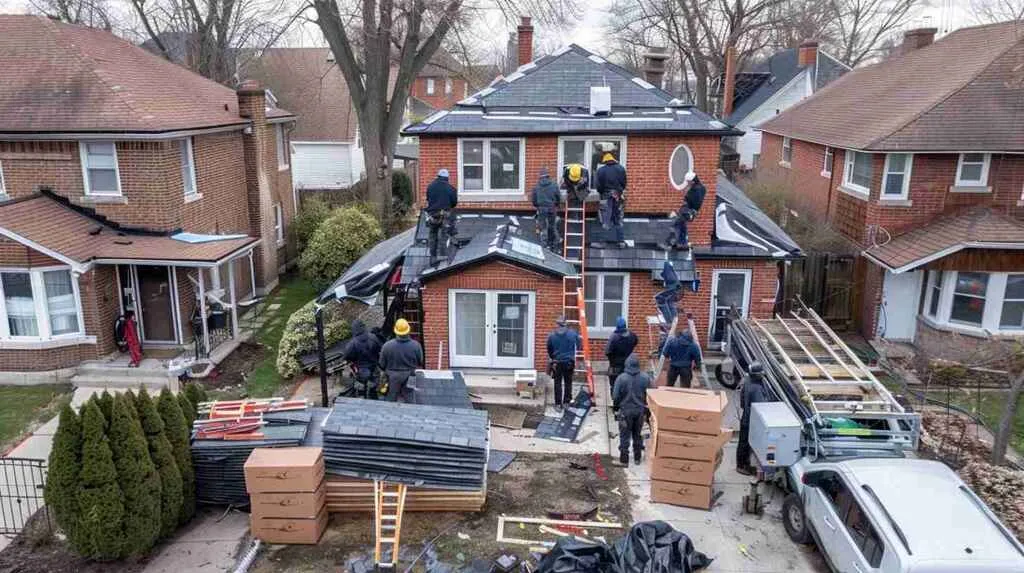
If I were standing in your driveway right now, I’d ask you one simple question: what do you want this roof to survive? A couple wet seasons while you prep to sell? Or fifteen Queens winters with ice dams, wind-driven rain, and the occasional branch drop from that oak tree leaning over from next door? Here’s my blunt take: your shingles don’t care what flag is on the shipping crate-they care how they were cooked and tested. I’d rather install a Thai-manufactured architectural line from a recognized U.S. brand with documented wind and impact ratings than a flimsy budget domestic shingle that barely meets code. For most Queens homes-your standard one- or two-family in Elmhurst, Jackson Heights, or Corona-a vetted Thai-made line offers excellent performance at a fair price, especially when paired with proper ventilation and ice-and-water barrier at the eaves and valleys. For higher-exposure homes in Bayside or steeper, more complex roofs in Woodside, I’ll often recommend a premium domestic or top-tier Thai line with stronger warranties and enhanced nailing specs, because the upfront cost difference is minor compared to the peace of mind and longevity.
Match the Roof to the House, Not the Passport Stamp
The sneakiest problem I keep seeing isn’t bad shingles-it’s good shingles installed wrong on a Queens-style house. Think of it like recording a great track but mixing it badly: the raw material is solid, but the final result sounds off. A Thai-manufactured shingle with excellent test data can still fail if your attic has no intake vents, if the starter course is nailed too high, or if the contractor skips ice-and-water barrier because “it’s not in the contract.” That’s why I treat every Queens roof like a full studio session: I’m checking airflow, measuring deck flatness, confirming underlayment quality, and making sure every shingle line-whether it came from a plant in Ohio or Thailand-gets installed to manufacturer spec and local best practices. When those details sync up, the roof stays in tune through heat waves, nor’easters, and everything in between.
| Queens Roof Scenario | Typical Size | Recommended Shingle Type | Estimated Price Range |
|---|---|---|---|
| Small single-family in Corona with basic ventilation fix | 1,200-1,600 sq ft | Vetted Thai-manufactured architectural line from a major U.S. brand | $8,500-$11,500 |
| Two-family in Elmhurst or Jackson Heights, moderate complexity | 1,600-2,200 sq ft | Mix of mid- to high-end architectural (Thai or U.S. plant, depending on spec and color) | $11,000-$16,000 |
| Larger Bayside home with higher wind exposure | 2,200-3,000 sq ft | Premium architectural domestic line or top-tier Thai-manufactured with enhanced nailing pattern | $16,000-$24,000 |
| Steep, cut-up Woodside roof with tear-off and full ventilation upgrade | 1,800-2,400 sq ft | Upper-tier architectural line with robust warranty, origin chosen by spec not stamp | $18,000-$26,000 |
Call ASAP (Don’t Wait)
- Shingles-imported or domestic-are curling, cracking, or shedding granules after just a few seasons.
- You see bare fiberglass mat or exposed nails on ridges and around chimneys.
- Water stains are showing up on top-floor ceilings after wind-driven rain.
- Your last contractor mixed brands or you’re not sure where your shingles came from.
Can Schedule an Estimate Soon
- Your roof is 15-20+ years old and you want a plan before problems start.
- You’re comparing Thai-manufactured lines vs domestic options for a future re-roof.
- You’re planning to sell and want the roof to pass a buyer’s inspection.
- You just want a straight, data-backed opinion on your current shingles.
Common Questions Queens Homeowners Ask About Shingle Manufacturers and Thailand Factories
Are shingles from Thailand actually good enough for Queens weather?
Yes-some are. I’ve got roofs in Queens using Thai-manufactured shingles for major U.S. brands that are holding up beautifully after 7-10 winters. The key is choosing the right line with documented testing and pairing it with proper ventilation and installation.
Will using imported shingles void my warranty?
No, not if you’re using an official line from a recognized brand sold through proper channels. Warranties get voided for bad installation, poor ventilation, or mixing products-not just because the plant is in Thailand instead of the States.
How do you know which factory my shingles came from?
The plant code is printed on the bundle wrapper, and I cross-check it against manufacturer data. That’s how I spot which Thai, U.S., or other plants were involved and whether there have been any known issues with that line.
Can I mix leftover shingles from different manufacturers to save money?
I strongly recommend against it. Thickness, sealant lines, and color blends can clash, and it can complicate warranty claims. In Queens’ tough weather, a roof needs to be one coherent track, not a patchwork playlist.
Do you offer free estimates in Queens, NY?
Yes. Shingle Masters offers free, detailed estimates across Queens-Elmhurst, Jackson Heights, Corona, Bayside, Woodside, and beyond. I’ll walk you through which shingle lines I trust, including the Thai-made ones with solid test data.
Whether your next roof uses shingles made in Thailand, Ohio, or anywhere else, what matters is that every component-from the asphalt blend to the nailing pattern-stays in tune through Queens weather. Shingle Masters focuses on roofs that perform, not roofs that just check a marketing box. Call us for a free, line-by-line estimate and shingle review on your own roof-I’ll bring my notepad, my lot-code decoder ring, and my obsession with getting the details right.