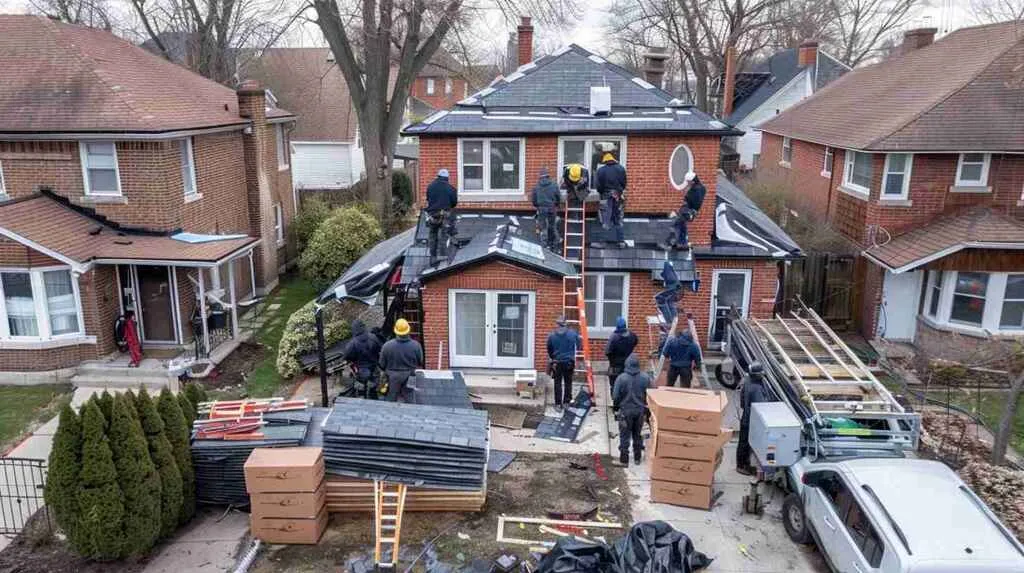
Queens NY Shingle Roofing – Serious Work, Seriously Good Team | Free Quotes
Sidewalk cafés stay dry when roofs work right, and so does your bedroom. In Queens, a solid shingle roof replacement on a typical rowhouse or two-family home runs between $8,000 and $16,000-figure $350 to $550 per square, depending on pitch, detailing around chimneys and valleys, and whether we’re tearing off two layers or one-and that includes proper ice-and-water shield at the eaves, new flashing, ridge venting, and cleanup you’d actually trust your neighbors to see. Compare that to the $4,500 “we’ll-be-done-by-lunch” quote that skips the starter course, reuses bent flashing, and leaves you with ceiling stains by Halloween, and you’ll understand why cheap shingle work is the most expensive roofing you’ll ever buy.
What a Solid Queens Shingle Roof Should Really Cost
Here’s my honest opinion: if your roofer can’t show you where every dollar goes on your shingle job, they’re probably guessing-and guessing on roofs gets expensive fast. Think of your shingle roof budget like paying for a well-run subway line instead of a bunch of freelance cabs during rush hour-you’re investing in predictable, smooth flow instead of chaos when storms hit. A proper Queens shingle roof isn’t just about throwing bundles up a ladder; it’s about careful detail work at every edge, valley, and penetration where water wants to sneak in, and that takes time, experience, and materials that don’t fall apart in five years. And honestly, if someone’s quoting you half of what the next three crews quoted, they’re either leaving out critical steps or they’re treating your roof like a weekend hobby, not serious infrastructure.
Queens NY Shingle Roof Pricing Scenarios
These are ballpark ranges for Queens, NY homes, assuming licensed/insured work with proper underlayment, flashing, and complete cleanup. These prices are for pitched asphalt shingle roofs only, not flat or membrane systems.
| Scenario | Home Type & Roof Size | Scope of Work | Estimated Price Range (Queens, NY) | What Can Go Wrong If You Pay Less |
|---|---|---|---|---|
| Basic Replacement | Single-family, 1,200 sq ft roof, simple gable | Full tear-off (one layer), architectural shingles, new starter course, ridge vent, flashing | $8,000-$11,500 | No ice shield = edge leaks; reused flashing = chimney drips; high nails = wind lift |
| Complex Two-Family | Attached rowhouse, 1,800 sq ft, multiple valleys, skylight | Tear-off, valley metal, skylight flashing kit, ice-and-water shield at all eaves and valleys | $12,000-$16,000 | Skipped valley metal = pooling and rot; no skylight kit = guaranteed interior stains |
| Storm Damage Repair | Any home, 300-500 sq ft section damaged | Remove damaged shingles, check decking, replace section with exact color match, re-seal edges | $1,800-$3,500 | Mismatched shingles age differently; rushed patch job leaves gaps for next storm |
| Preventive Re-Roof | Cape, 1,500 sq ft, shingles 18 years old, no leaks yet | Full replacement before failure, upgrade to impact-resistant shingles, proper venting added | $10,500-$14,000 | Wait too long = plywood replacement adds $2,000-$4,000; cheap shingles fail in 10 years |
| Flat-to-Pitched Conversion | Queens rowhouse addition, 400 sq ft flat section | Build new pitched frame over flat, shingle it to match main roof, tie in flashing | $6,500-$9,500 | Poor framing = sagging in 3 years; bad tie-in flashing = leaks at the seam every rain |
One August afternoon, right after a brutal thunderstorm, I got a call from an older couple in Flushing who swore their “brand-new” shingle roof was leaking worse than their old one. I got there at 6 p.m., the sky was still that weird yellow-gray, and by the time I climbed up, steam was literally rising off the shingles. Turned out the previous contractor had overlapped the starter course backwards along the eaves, so water was basically being invited under the shingles. I remember kneeling there, sweat dripping into my eyes, thinking: “This is what happens when someone treats roofing like a weekend hobby instead of serious work.” We stripped that entire bottom edge and rebuilt it right before dark. Now, follow this with me for a second: water on a shingle roof moves like foot traffic at a busy Queens bodega line-everyone’s polite and orderly if the path is clear, but if someone’s blocking the door with a backwards cardboard box, chaos erupts and people (water) squeeze through gaps they shouldn’t even see.
How We Build a Leak-Resistant Shingle Roof in Queens Weather
On a typical block in Queens-say, off 37th Avenue in Jackson Heights-you’ll see at least three shingle roofs that are quietly failing and nobody knows it yet. Most rowhouses and two-families in that neighborhood have shingles that look fine from the sidewalk, but up close the edges are lifting, valleys are pooling water like little canals, and the flashing around pipes is so cracked it might as well be decorative. Think of your shingle roof like a busy Queens intersection-every edge, valley, and pipe is a crosswalk where things either flow smoothly or chaos happens. When pedestrians (water) hit a bad crosswalk, they jaywalk, cut through alleys, and end up where they don’t belong-your ceiling, your walls, your insulation-and that’s exactly what happens when details get skipped.
Step-by-Step Queens Shingle Roof Replacement Process
- Full Inspection & Attic Check: We measure the roof, photograph every problem area, check attic ventilation and decking moisture, and walk you through what we find with sketches and photos before any work starts.
- Tear-Off & Deck Repair: We strip old shingles down to the plywood, inspect every sheet for soft spots or rot, replace damaged sections, and sweep the deck clean so the new roof sits on solid ground.
- Ice-and-Water Shield at Critical Zones: We apply rubberized membrane along all eaves (at least 3 feet up), in every valley, and around chimneys and pipes-this is your insurance against ice dams and wind-driven rain.
- Underlayment, Drip Edge, and Starter Course: Synthetic underlayment goes down across the whole roof, metal drip edge protects the fascia, and a proper starter course-installed the right direction-seals the bottom edge against wind uplift.
- Shingle Installation with Correct Nailing: We work from eaves to ridge, nailing each shingle in the factory-marked zone (not too high, not too low), staggering seams, and hand-sealing any exposed edges on steep pitches or windy exposures.
- Ridge Vent, Flashing, and Final Cleanup: Continuous ridge vent goes in for balanced airflow, all flashing gets replaced or resealed, and we magnet-sweep the yard twice, bag every scrap, and leave your property cleaner than we found it.
One December morning in Ridgewood, it was 28 degrees and windy enough to knock your hat off when I inspected a three-family home where the landlord thought ice dams were “just part of winter.” The shingles themselves were in decent shape, but the attic looked like a sauna-no ventilation, insulation stuffed right up against the soffits. I spent half an hour breathing little clouds of steam while explaining to the owner that his roof was basically the 7 train at rush hour: too many people (heat) trying to squeeze through one exit (ridge). Now, follow this with me for a second: when heat gets trapped under shingles, it melts snow from below, the melt refreezes at the cold eaves, and you get ice dams, leaks, and shortened shingle life-all because the “subway schedule” of heat and airflow is broken. Once we fixed the venting and re-worked the ridge shingles, the next winter he called just to say, “No more icicles, no more leaks-guess you were right.” Here’s a practical insider tip you can check yourself: on a cold day, peek in your attic, and if you see frost on the underside of the roof deck or feel sauna-like heat with no visible soffit or ridge vents, that’s a red flag for ice dams and a roof that’s aging twice as fast as it should.
⚠️ Cheap Shingle Install Shortcuts That Cause Leaks in Queens
- Backwards or Missing Starter Course: Water flows straight under the first row of shingles, soaking fascia and eaves; you’ll see stains and rot within a year.
- No Ice-and-Water Shield at Eaves or Valleys: Ice dams force melt under shingles in winter; heavy rain pools in valleys and leaks through nail holes in summer.
- Reusing Old, Bent Flashing: Gaps around chimneys and pipes let water in with every storm; you’ll hear dripping inside walls before you see ceiling stains.
- Nailing Shingles Too High (Above the Seal Strip): Wind catches the loose bottom edge, shingles flap and crack, and you get that annoying slapping noise every time a gust hits.
Shingle Noise, Wind, and That “What Did the Roof Say to the Shingle” Problem
I know it sounds like a dad joke, but when homeowners ask me “what did the roof say to the shingle,” I tell them: if your roof is actually talking-flapping, banging, whistling-it’s saying “help, I was installed wrong.” One of my strangest jobs was in Astoria, a two-story house where the owner ran a small podcast studio in the attic and needed absolute quiet. He called on a windy spring afternoon, complaining that every gust made the shingles sound like “the roof was telling bad jokes.” When I got up there, I found they’d used the right shingles but nailed them too high, so the bottom edges were lifting and slapping in the wind. We re-nailed and replaced a few damaged courses, and I still remember testing it by just standing there listening with him-no more slap, just the normal hum of Queens traffic in the distance. Wind over a properly installed shingle roof moves like smooth traffic on Queens Boulevard at 3 a.m.-steady, predictable, no honking or chaos-but when nails are high, underlayment is loose, or ridge caps are crooked, that same wind turns into rush hour with broken traffic lights.
Proper Queens Install (Shingle Masters)
- Nail Placement: Every shingle nailed in the factory seal zone, 4-6 nails per shingle, hand-checked for depth
- Wind Resistance: Rated for 110+ mph winds; shingles stay flat even in microbursts
- Noise in Storms: Silent or barely audible; rain sounds like rain, not drumming or slapping
- Lifespan: 25-30 years with proper venting and maintenance; manufacturer warranty honored
Rushed or Inexperienced Install
- Nail Placement: Nails too high, too shallow, or driven through cracks; inconsistent and visible from ground
- Wind Resistance: Shingles lift in 40-50 mph winds; tabs blow off during storms
- Noise in Storms: Flapping, banging, whistling; sounds like something’s broken because it is
- Lifespan: 10-15 years before major issues; warranty void due to improper installation
Now, follow this with me for a second: sound and leak control on a shingle roof are part of the same system, like keeping a late-night subway platform calm and safe-good lighting (proper underlayment), clear exits (ridge venting), and no loose grates (correct nailing). When all those pieces work together, your roof handles wind, rain, and temperature swings without drama, and you never think about it unless you’re up there cleaning gutters.
Roof Noise and Wind Issues in Queens
Call Shingle Masters ASAP If You Notice…
- Loud flapping or banging noise during any wind over 25 mph
- Visible shingle tabs lifted or missing after a storm
- Dripping sounds inside walls or ceiling during or right after rain
- Water stains appearing on ceilings within hours of a storm
Can Wait a Few Days, But Still Call If You Notice…
- Occasional tapping or ticking noise only in very strong gusts
- Slight whistling sound near roof edges in winter winds
- Shingles that look slightly wavy or uneven from the street
- Granules collecting in gutters after recent heavy rain (sign of aging)
Deciding If You Need Repair or Full Replacement
$600 today can easily turn into $3,000 next year if you keep patching the wrong shingle problem.
Think of your shingle roof like a busy Queens intersection-every edge, valley, and pipe is a crosswalk where things either flow smoothly or chaos happens. If most of your shingles are still lying flat, under 15 years old, and you’ve only got a couple of leaks around one chimney or in one valley, a targeted repair makes sense-fix that intersection, get traffic moving again. But if you’re seeing widespread curling, granule loss across multiple slopes, sagging sections, or leaks in three different rooms after the same rainstorm, you’re not looking at a bad crosswalk-you’re looking at a whole grid that needs rebuilding, and patching one spot just moves the problem somewhere else next season.
Should You Repair Your Queens Shingle Roof or Replace It?
Start here: Are most of your shingles still lying flat and under 15 years old?
NO: → Full Replacement Recommended
Do you have leaks in only one or two specific spots (e.g., one valley, one chimney)?
NO (leaks in multiple areas): → Full Replacement Recommended
Are your gutters mostly clear of granules, and do shingles still have good color?
NO (heavy granule loss, faded patches): → Major Repair + Preventive Detailing
Is your roof deck (plywood) still firm with no visible sagging between rafters?
NO (soft spots, sagging visible from ground): → Full Replacement Recommended
At Shingle Masters, we walk homeowners through this choice with photos and diagrams right at the kitchen table, keeping the tone patient and visual-no pressure, no upselling, just a clear explanation of what’s failing, why it’s failing, and what it’ll cost to fix it right versus what it’ll cost if you wait another year. We work across Queens neighborhoods from Jackson Heights to Flushing, Ridgewood to Astoria, Corona to Elmhurst, and we’ve learned that the best decisions happen when people can actually see the problem instead of just hearing jargon over the phone.
✅ What to Check Before Calling Shingle Masters for Shingle Issues
- Walk through your home and note any ceiling stains, discoloration, or damp spots-take photos with your phone if possible
- From the sidewalk or across the street, take a few photos of your roof showing any visible curling, missing shingles, or uneven sections
- If you can safely access your attic, check for any dampness, water stains on rafters, or musty smells
- Try to remember the age of your roof-check old invoices, ask the previous owner, or estimate based on when you bought the house
- Write down any noises you hear during wind or rain: flapping, banging, dripping, whistling, or tapping
- Note the date and scope of the last roof repair or replacement if you know it-this helps us understand what we’re working with
Straight Answers, Local Proof: Why Queens Homeowners Trust Us
Blunt truth: in Queens, your roof doesn’t fail because of the weather first; it fails because somebody rushed the details. We’re transparent about where every dollar of a shingle job goes-labor, materials, permits, disposal, flashing upgrades, ventilation fixes-and that honesty is why neighbors from Astoria to Flushing call us back when their cousin or their landlord needs work done, because we treat roofs like core infrastructure, not weekend art projects.
Shingle Masters Credentials & Queens-Specific Reliability
- Licensed & Insured in New York: Full liability and workers’ comp coverage; all permits pulled and closed properly
- 19+ Years Shingle Experience in Queens: We’ve worked on rowhouses, two-families, Capes, and conversions across every Queens neighborhood
- Typical Response Time: Free inspection scheduled within 2-4 business days; emergency storm-damage assessment often same-day or next-day
- Warranty Terms: 10-year labor warranty on full replacements; manufacturer shingle warranty (25-30 years) transferred to you in writing
- Neighborhoods Served: Jackson Heights, Flushing, Ridgewood, Astoria, Corona, Elmhurst, Forest Hills, Rego Park, Woodside, Sunnyside, and surrounding Queens areas
Common Queens Shingle Roofing Questions
How long should a shingle roof last in Queens?
A properly installed asphalt shingle roof with good attic ventilation should last 25-30 years in Queens, assuming architectural-grade shingles and proper maintenance. If your roof is under 15 years old and already failing, it’s almost always an installation or ventilation problem, not a shingle quality issue.
How soon can you come out after a storm?
For active leaks or visible damage after a storm, we typically schedule an emergency inspection same-day or next-day, depending on call volume and weather conditions. For non-urgent inspections, we’re usually out within 2-4 business days with a written estimate within 24 hours of the visit.
Can you repair just one section instead of replacing the whole roof?
Absolutely-if the damage is isolated (storm damage, one bad valley, localized leak around a chimney) and the rest of the roof is in good shape, we’ll repair just that section and color-match the shingles as closely as possible. We’ll always tell you honestly if a repair will hold or if you’re better off replacing the whole roof to avoid repeat problems.
How loud and how long is a shingle roof replacement for an attached home?
For a typical Queens rowhouse or two-family, expect 2-4 days of work depending on size and complexity. Tear-off is the loudest part (sounds like heavy furniture being dragged for a few hours), and we try to start around 8 a.m. to respect neighbors. We always notify adjoining properties a day ahead and protect their yards and driveways with tarps.
How do you protect my neighbors’ properties in tight Queens rowhouse setups?
We tarp walkways, driveways, and any shared garden beds before tear-off begins; we use plywood ramps to protect concrete; and we magnet-sweep not just your yard but the neighbors’ too. At the end of each day, we bag debris, secure tarps, and leave the site cleaner than most construction jobs you’ve seen in Queens-because we live here too and we know how tight these blocks are.
In Queens, a properly detailed shingle roof by an experienced local roofer costs more up front than a rush job, but it prevents leaks, noise, and hidden damage that make cheap work the most expensive option in the long run. Call Shingle Masters today for a free, no-pressure shingle roof inspection and quote in Queens-we’ll show you exactly what’s happening above your head, sketch it out so it makes sense, and give you an honest answer about repair versus replacement before the next storm turns a small issue into major damage.