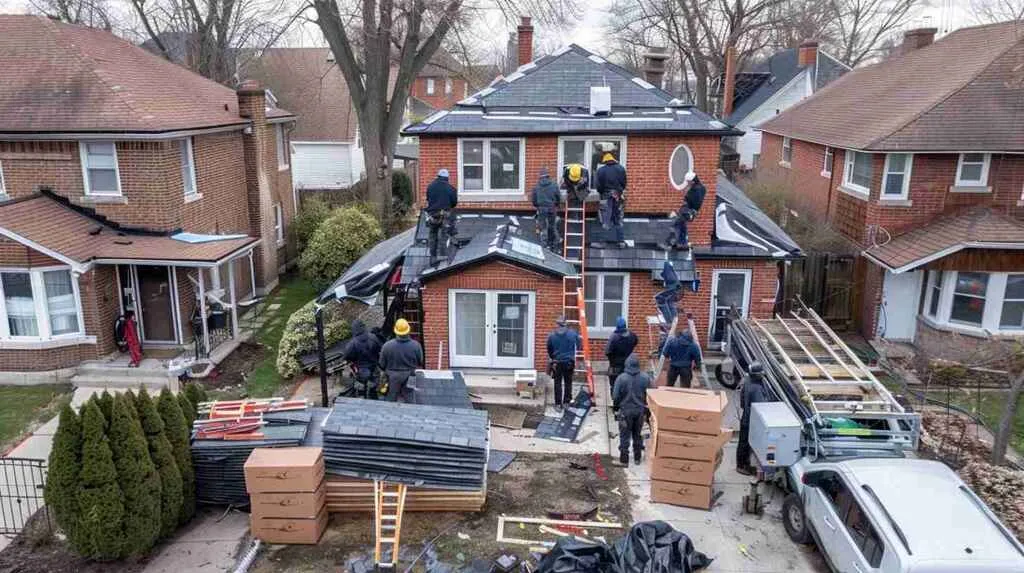
Shingle Over Shingle Roof Queens NY – Rules, Risks, and Results
Blueprint first: in Queens, adding a second shingle layer might save you $2,000-$4,000 today, but if you ignore weight limits and hidden rot, you’re looking at triple that cost when the whole thing fails in five years. I’m Luis “Lou” Cardoza, and I’ve spent 17 years on Queens roofs explaining building codes like they’re recipes your grandma would follow-so let’s walk through whether your roof can actually handle shingle-over-shingle, or if you’re about to make a very expensive mistake.
What a Second Shingle Layer Really Saves-and Really Risks in Queens
On a typical two-family in Elmhurst with a 20-year-old roof, adding a second shingle layer instead of doing a full tear-off might save you anywhere from $2,500 to $4,200, depending on roof pitch and size. That’s real money. But here’s what I don’t say on the phone: those savings evaporate fast if your existing shingles are already holding moisture like a sponge, or if your roof deck is sagging even a little bit. When homeowners ignore those two things, they don’t just waste the money they saved-they end up paying for the second-layer job, plus emergency deck replacement, plus a full tear-off later, which can easily run $12,000 to $18,000 on a typical Queens two-family.
One February morning at 7:15 AM in Flushing, I was standing on a frosty, two-layer shingle roof over a small brick bungalow, watching my breath in the cold while the homeowner argued on FaceTime with his brother in Florida who swore, “We always go three layers down here.” I pulled out my moisture meter, showed the guy the soaked second layer under his boots, and we both watched the reading jump like a broken thermometer. That was the job where I realized most people don’t object to tearing off old shingles-they just need one clear piece of proof that the old layer is already a sponge. Think of your roof like a grocery bag already loaded with milk and cans; adding a second shingle layer is like tossing a watermelon on top-maybe it holds for a while, or maybe it rips on the way up the stairs. You won’t know until you’re standing in a puddle.
Here’s my honest take, even if you don’t like it: I’ll only recommend shingle-over-shingle on structurally solid, relatively young roofs with no leaks, no sagging, and no moisture readings above 15 percent on my meter. If any of those conditions fail, I’d rather lose the job than overload a weak deck and watch it fail in three years. A typical second asphalt shingle layer adds roughly 250 to 350 pounds per square (a 10×10-foot area) on top of whatever your existing shingles already weigh-that’s the equivalent of stacking a full set of encyclopedias on a bookshelf that’s already bending under hardcovers. When I explain that to homeowners in Elmhurst or Jackson Heights, they get it immediately.
Cost Comparison: Second Layer vs Full Tear-Off on Typical Queens Roofs
| Scenario | Home Type / Roof Size | Second Layer Approx. Cost (Queens, NY) | Full Tear-Off & New Roof Approx. Cost | 10-Year Risk Level |
|---|---|---|---|---|
| Single-layer asphalt, no visible sag, under 15 years old | 1-family ranch, ~1,500 sq ft | $4,200-$6,000 | $7,800-$10,500 | Low |
| Single layer, minor curling at edges, ~20 years old | 2-family brick, ~2,000 sq ft | $5,500-$7,500 | $10,200-$13,800 | Medium |
| Already two layers, no active leaks yet | Attached row house, ~1,200 sq ft | NOT CODE-COMPLIANT | $9,000-$12,200 | High (Illegal) |
| Single layer with attic moisture stains or soft spots | 2-family, ~2,200 sq ft | $5,800-$7,800 | $11,000-$15,000 (deck repair included) | High |
| Single layer, steep pitch, excellent condition, 8-10 years old | Colonial, ~1,800 sq ft | $6,200-$8,500 | $12,500-$16,000 | Low |
These are approximate ranges for Queens, NY, in 2025. Your actual costs depend on roof complexity, material choice, and permit fees. Risk level reflects both code compliance and structural safety over a typical 10-year period.
Hidden Weight and Moisture Risks with Shingle-Over-Shingle in Queens
- Exceeding structural load on older wood-framed roofs: Most two-family homes in Elmhurst and Flushing were built in the 1920s-1960s with 2×6 or 2×8 rafters spaced 16 to 24 inches apart-those roofs were never designed to carry 600+ pounds per square. When you add a second shingle layer, you’re doubling the dead load, and if the deck is already sagging even slightly, you’re accelerating failure.
- Trapping moisture and rot in existing shingles and sheathing: Old shingles act like a wet sponge under a new layer, and that trapped moisture rots the plywood deck from the underside-you won’t see it until water is dripping through your ceiling or my foot goes through a soft spot during an inspection.
- Making future leak detection and repairs far more expensive and invasive: When a leak starts under two layers, I have to peel back both to find the source-that turns a $400 flashing repair into a $2,000 mini tear-off, and most insurance adjusters won’t cover “pre-existing conditions” hidden under multiple layers.
Queens Building Rules: When a Second Layer Is Actually Allowed
Here’s what NYC building code actually says, in plain language: you’re generally allowed a maximum of two shingle layers on a residential roof, but only if the existing layer is in decent shape, the deck underneath is solid, and there’s no obvious sagging or rot. That’s not a suggestion-it’s the law. I’ll never forget a late July afternoon in Middle Village, 95 degrees, sun straight in my eyes, when a landlord insisted we just “slap another layer over the old one” because tenants were moving in that weekend. As I walked the roof, my foot went straight through a soft spot above the kitchen-plywood completely rotted, hidden under two layers of shingles. I ended up sitting on the rafters, sweat pouring, yelling down through the kitchen vent to the super, “This is what you’re trying to hide with a third layer,” and that hole in the ceiling became the only argument he needed. Around Queens, you’ll see a lot of brick bungalows in Flushing, attached row houses in Jackson Heights, and two-family wood-frame homes in Elmhurst and Middle Village-most of those were built between 1920 and 1970, and their framing wasn’t designed to carry modern multi-layer roofs indefinitely.
Think of building code limits like a staircase with a posted weight capacity: it’s not there to annoy you, it’s there because someone did the math and knows exactly when the steps start to crack. When I do a pre-shingle-over-shingle inspection, I always check three things first: I walk the deck to feel for any flex or soft spots, I go into the attic to look at the underside of the plywood and the rafters for water stains or sag, and I count the existing shingle layers from an edge or vent. If any one of those checks fails, the conversation about a second layer is over. And honestly, landlords who are rushing to get tenants in are the worst offenders-they’ll push for a quick second layer because it looks fine from the street, but they’re ignoring the fact that the deck is already holding its breath.
Code-Related Checks Before Considering Shingle-Over-Shingle in Queens
| Check | What Lou Looks For | If This Fails, Second Layer Is | Notes for Queens Homes |
|---|---|---|---|
| Current layer count | I lift a shingle at a ridge vent or eave edge and count the visible layers-anything over one means code won’t allow another | Illegal | Many Queens two-families already have two layers from the 1990s-2000s |
| Deck firmness | I walk the entire roof and press down with my boot-any soft spots, visible bounce, or flex means the plywood is compromised | Unsafe | Old 1/2-inch plywood in pre-1970 homes often rots from the underside first |
| Visible sagging or dips | I stand at the gutter line and sight down each roof plane-any dip, wave, or sag means the rafters are overloaded or rotted | Unsafe | Sagging is common on flat or low-slope roofs over attached garages in Queens |
| Attic moisture or stains | I go into the attic with a flashlight and moisture meter, checking for dark stains, soft plywood, or readings above 15% | Unsafe | Bathroom and kitchen vents often leak into attics without showing exterior signs |
| Existing shingle condition | I check for curling, cracking, missing granules, or any active leaks-if shingles are shot, adding weight on top won’t fix anything | Risky | Shingles older than 18-20 years in Queens weather are usually too brittle to overlay |
Common Myths Queens Homeowners Hear About Second Shingle Layers
| Myth | Fact |
|---|---|
| “Adding a second layer makes the roof stronger and more waterproof.” | A second layer only hides problems-it doesn’t fix leaks, strengthen weak decks, or improve ventilation. You’re just stacking weight on top of whatever’s already failing underneath. |
| “You can keep adding layers as long as they look okay from the ground.” | NYC code allows a maximum of two shingle layers, period. A third layer is illegal, voids your homeowner’s insurance, and creates a serious structural hazard. |
| “Shingle-over-shingle lasts just as long as a full tear-off and re-roof.” | In Queens, a second layer typically lasts 8-12 years max because trapped heat and moisture accelerate wear on both the new and old shingles. A proper tear-off and re-roof easily gives you 20-25 years. |
| “If the roof isn’t leaking, you don’t need to worry about what’s underneath.” | Leaks are the last symptom, not the first. By the time water drips through your ceiling, the deck is often rotted, and adding a second layer just traps that moisture and makes the rot spread faster. |
| “Any roofer can tell you if a second layer is safe just by looking from the driveway.” | You can’t see deck rot, moisture content, rafter sag, or hidden flashing problems from the ground. A real inspection requires getting on the roof, into the attic, and using a moisture meter-anything less is guessing. |
How I Decide If Your Roof Can Handle Shingle Over Shingle
When I walk your roof for the first time, I always ask myself one question: “What’s really carrying this weight?” One rainy Tuesday night around 9 PM in Jackson Heights, I got an emergency call from a young couple with a newborn; water was literally dripping onto the crib through a light fixture. When I got there, the superintendent swore he had “fixed” the problem last year by putting a second layer of shingles over the whole top floor. I went up in the drizzle with a headlamp, peeled back a corner of the new shingles by the vent pipe, and found the original cracked flashing still underneath, never replaced-just buried. Standing there with rain running down my sleeve, I promised myself I’d always tell people: your second layer is only as good as the mistakes you didn’t cover up. That same question-what’s really carrying the weight-applies to every inspection I do, because a second shingle layer doesn’t just add pounds, it hides problems. Think of your roof like a grocery bag already loaded with milk and cans; adding a second shingle layer is like tossing a watermelon on top-maybe it holds for a while, or maybe the handles rip on the way up the stairs, and you’re standing in a puddle of broken eggs wondering what went wrong.
During a typical inspection at a Queens home, I spend about 45 minutes on the roof and another 20 in the attic. I bring a moisture meter, a pry bar to lift shingle edges, a tape measure, and a flashlight. I check every vent pipe, every chimney flashing, every valley, and every eave edge-because those are the spots where rot starts and where a second layer will trap moisture instead of shedding it. Then I go into the attic and look at the underside of the deck from below, checking for dark stains, soft spots, and any signs of water intrusion that haven’t shown up on the surface yet. And here’s the truth: a second shingle layer is only as good as the deck and flashing underneath it. If those are compromised, you’re not saving money-you’re renting time until the whole system fails.
Lou’s On-Roof Evaluation Process for Shingle-Over-Shingle in Queens
Should Your Queens Roof Get a Second Shingle Layer or a Full Tear-Off?
Simple Signs Your Queens Roof Isn’t a Good Candidate
Think of your roof like a bookshelf that’s already bending under too many hardcovers-adding another layer of shingles is like stacking a full set of encyclopedias on top and hoping the wood doesn’t crack. If your shingles are curling up at the edges like old potato chips, or if you’ve got brown ceiling stains in the bathroom or bedroom below, or if you can see a visible sag or dip in the roof line from the sidewalk, those are all immediate red flags. Each one tells you that the existing roof can’t carry its own weight anymore, let alone support 300 extra pounds per square of new shingles.
If you can see any sagging from the sidewalk, stop thinking about a second layer.
Quick Red Flags That Rule Out Shingle-Over-Shingle
When to Call Shingle Masters Right Away vs When It Can Wait a Week
🚨 Call ASAP
- Active leak during rain with water dripping through ceiling or light fixtures
- Visible ceiling bulge or sagging drywall under the roof
- Shingles sliding off the roof or large sections blown away after wind
- Soft spots you can feel when walking on the roof-your foot compresses the surface
📅 Can Wait a Bit
- Minor granule loss or a few cracked shingles scattered across the roof
- Aging but not actively leaking single-layer roof that’s 18-22 years old
- Planning a future remodel and want to evaluate if the roof should be replaced at the same time
- Neighbors just got their roofs done and you’re curious if yours needs work soon
Common Questions About Shingle-Over-Shingle in Queens, Answered
It’s normal to be confused about this-neighbors, building supers, and out-of-state relatives all say different things about second shingle layers. My answers here are based on NYC code, structural load limits, and what I actually see when I’m standing on Queens roofs with a moisture meter and a flashlight.
Homeowner Questions About Second Shingle Layers in Queens, NY
Is it legal to put shingles over shingles in Queens?
Will a second layer void my shingle warranty?
How much extra weight does a second layer add?
Can I add a second layer if my roof already leaks?
How long will a second-layer roof realistically last here?
Do I need permits for shingle-over-shingle in Queens?
Why Queens Homeowners Call Shingle Masters for This Decision
-
✓
NYC licensed and fully insured: We carry general liability and workers’ comp, and all our roofing work is permitted through the Department of Buildings-so you’re protected if anything goes wrong. -
✓
17+ years roofing experience in Queens neighborhoods: I’ve worked on roofs in Elmhurst, Jackson Heights, Middle Village, Flushing, Corona, and Astoria-I know the building types, the common problems, and the code quirks that affect older homes here. -
✓
Same-week inspections for non-emergencies: Call me Monday, and I’ll usually be on your roof by Thursday or Friday with a moisture meter, camera, and a clear explanation of what I find. -
✓
Written, photo-backed recommendations showing deck condition and layer count: I don’t just tell you what’s wrong-I show you pictures of the soft spots, the moisture readings, and the existing layers, so you understand exactly why I’m recommending what I recommend. -
✓
No-pressure estimates that compare second layer vs tear-off when both are possible: If your roof is borderline, I’ll give you honest pricing for both options and explain the risks and lifespan of each, so you can make the choice that fits your budget and timeline.
Every Queens roof is different, and guessing about weight limits and hidden moisture is like guessing how much weight a bookshelf can hold before it cracks-you might get lucky, or you might end up with a pile of books on the floor and $15,000 in emergency repairs. If you’re thinking about a second shingle layer, call Shingle Masters and let me check your roof, show you the moisture readings and photos, and lay out a clear choice between a safe second layer and a proper tear-off that’ll last 25 years. You’ll know exactly what you’re getting, what it costs, and why I’m recommending it-no pressure, no guessing, just the truth about what your roof can really handle.