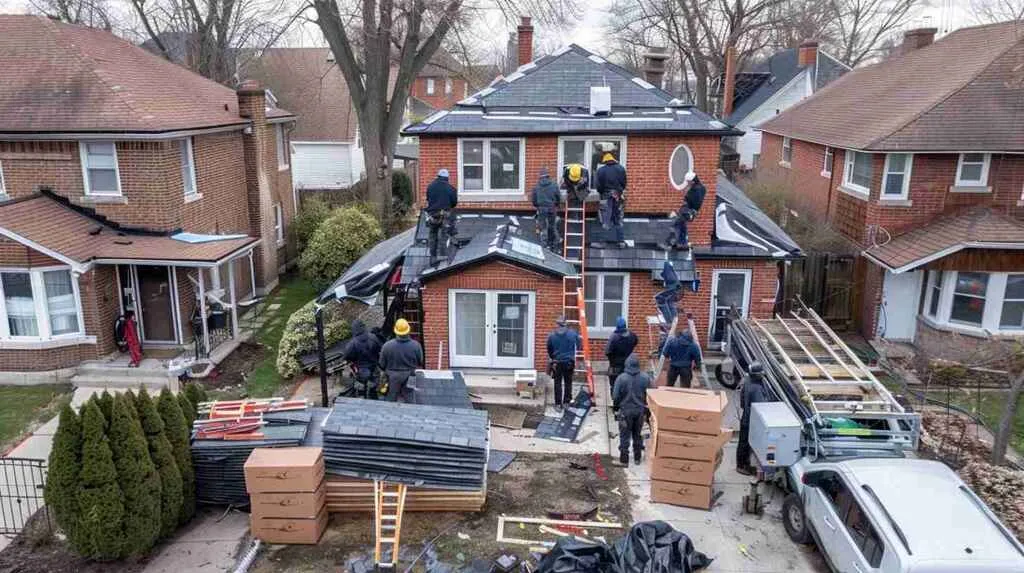
Sideways rain, August heat, winter ice-Queens hits asphalt shingles with everything, and honestly, most of them start breaking down in 10 years or less. But metal shingles last 40-50 years, and synthetic slate holds up just as long, so if you’re planning to stay in your home for the long haul, it’s time to stop treating your roof like a temporary fix and start thinking about a shingle alternative for your roof that actually survives our weather.
Shingle Alternative for Roof Queens NY – When to Look Beyond Asphalt
Why Asphalt Shingles Tap Out Early in Queens
On 69th Street last summer, I stood on a roof that was only 11 years old and already shedding granules like a bad sunburn. The edges were curling, bald patches were forming where the sun hit hardest, and the owner looked shocked-he’d been told asphalt lasts “at least 20 years.” Not in Queens it doesn’t. Between UV rays, wind off the water, and salt air that creeps inland, standard asphalt shingles get cooked, frozen, and ripped apart faster than in most other places. A metal shingle alternative for that same roof? Could’ve gone 40-50 years without breaking a sweat. Here’s my honest take: asphalt is like a cheap non-stick pan-it works great at first, then the coating flakes off and you’re stuck replacing it every few years. Metal, synthetic slate, and composite shingles are the cast-iron options-heavier upfront cost, but you buy once and stop thinking about it.
Queens weather doesn’t mess around. Summer heat softens asphalt and makes it sag; winter freeze-thaw cycles crack the edges; wind whips across open blocks in Corona, Jackson Heights, and Astoria and pries up tabs that weren’t nailed perfectly. That’s why a 15-year architectural asphalt shingle often only makes it to 10-12 years here, and basic 3-tabs sometimes don’t see their eighth birthday. A metal shingle alternative lasts 35-50 years because it doesn’t absorb water or lose granules. Synthetic slate shingles do the same, sitting at 40-50 years with better wind resistance than almost anything else. High-end composite shingles land in the 30-40 year range and look like cedar without the rot risk. The rest of this page walks you across the roof-literally and figuratively-so you can see when it makes sense to skip the asphalt aisle and invest in something built for Queens.
| Roof Material | Realistic Lifespan in Queens | Key Queens Concern |
|---|---|---|
| Basic 3-tab Asphalt Shingle | 8-12 years | Fast granule loss, wind damage |
| Architectural Asphalt Shingle | 15-20 years | Still vulnerable to heat and UV |
| Metal Shingle (Steel/Aluminum) | 35-50 years | Handles wind, reflects heat |
| Synthetic Slate Shingle | 40-50 years | Excellent wind resistance |
| Composite/Cool Roof Shingle | 30-40 years | Better heat performance, lighter weight |
When a Shingle Alternative for Your Roof Makes More Sense Than Another Asphalt Layer
Here’s my honest opinion: if you plan to stay in your Queens home more than 10-12 years, you should at least price out a shingle alternative for your roof. I know asphalt feels familiar-it’s what everyone’s dad or uncle used-but think about it like food for a second. Fast food gets you fed tonight; a real home-cooked meal keeps you satisfied for days. If you’re going to own that two-family in Jackson Heights, that cape in Middle Village, or that brick semi in Astoria for another 15, 20, 25 years, why would you settle for a roof that’ll need replacing twice in that time? Around here, people hold onto their homes-I see multi-generational families, retired teachers, long-term renters turned owners-and those timelines make alternatives way more logical than just slapping down another layer of architectural asphalt and hoping for the best.
Picture your roof like a winter coat: asphalt is the cheap puffy jacket that gets you through a season or two, but a metal or synthetic slate alternative is the heavy-duty parka that outlasts everything in your closet. You’ll want to seriously consider alternatives if you’re staying 15+ years, if your house sits on a windy corner or near the water (think Bayside, Whitestone, Rockaway-facing blocks), or if your current asphalt roof is already curling or losing granules before it hits 12 years old. In those cases, the math isn’t even close-one solid alternative roof beats buying two or three rounds of asphalt, and you stop dealing with leaks, repair calls, and that sinking feeling every time a storm rolls in.
Decision Guide: Asphalt or Alternative?
Start: Do you expect to own your Queens home for more than 10-12 years?
Yes → Do you already see curling shingles, bald spots, or loose granules in your gutters?
• Yes → Strongly consider metal, synthetic slate, or composite alternatives now.
• No → Do you have high wind exposure (near water, open corner lot, taller than neighbors)?
• Yes → Price out wind-rated alternatives along with architectural asphalt.
• No → Compare long-term cost of one alternative vs. two asphalt roofs over 25-30 years.
No → Are you already leaking or missing shingles?
• Yes → Get quotes for both architectural asphalt and at least one alternative; pick based on budget and resale plans.
• No → Basic asphalt repair or a budget re-roof may be fine for now.
Average time Queens owners stay in their home: 15-20 years for many 1-2 family homes
Typical age when asphalt problems start here: 8-15 years depending on exposure and quality
Best time to consider alternatives: When roof is 10-15 years old or first major repair shows up
Resale impact: Buyers notice long-warrantied roofs and energy-efficient materials
The Main Shingle Alternatives I Recommend in Queens (And When They Shine)
Metal Shingles: Cool and Tough for Sunny, Windy Blocks
I always ask people this first-“Are you trying to survive the next five years, or are you trying to stop thinking about your roof for the next thirty?” Metal shingles are the answer when you pick the second option. They reflect heat instead of absorbing it, they’re lighter than slate (which matters on row houses and older two-families where the framing wasn’t built for heavy loads), and they laugh at wind-I’ve seen metal roofs come through nor’easters without losing a single panel. Lifespan? 35-50 years, easy. One August afternoon, it had to be 95 degrees and the tar was practically melting, I was on a two-family in Jackson Heights where the owner swore asphalt shingles were “fine” because that’s what his dad used. When I showed him, in real time, how the sun was curling the edges on his 8-year-old shingles, he finally agreed to go with a cool-color metal shingle alternative for the roof. Two summers later he called me just to say his upstairs tenant’s AC bill dropped and he wished he’d ignored his dad’s advice sooner. Here’s an insider tip: if you pick a light or reflective metal color and your attic is vented right, you’ll cut down on top-floor heat like crazy, especially on those sun-blasted blocks in Corona and Astoria.
Synthetic Slate: Bayside-Level Wind, Brownstone-Level Style
I’ll never forget a windy November evening in Bayside when a panicked customer called at 6:30 p.m.-their brand-new asphalt shingle roof, installed by a bargain crew, had already lost a whole patch along the ridge. I climbed up with a headlamp and found poor nailing and cheap 3-tabs on a roof that got slammed by north winds off the water. We sat at his kitchen table that night and designed a synthetic slate system instead-he wanted something that could take a beating and still look sharp for resale. Synthetic slate nails that brief perfectly: it’s engineered to handle crazy wind (some products are rated for 110+ mph gusts), it looks like real quarried slate so it adds serious curb appeal on higher-end blocks in Bayside, Forest Hills Gardens, and Douglaston, and it lasts 40-50 years without the weight or brittleness of actual stone. The upfront cost runs higher than asphalt-sometimes double-but if you’re in a neighborhood where buyers notice details and you’re not moving anytime soon, synthetic slate pays you back in longevity and resale value.
Composite Shingles: Cedar Look Without the Headache
One rainy Saturday in March, a retired teacher in Forest Hills asked me to come by because her ceiling had a brown ring that wouldn’t go away. Her 25-year-old asphalt shingles were technically “still on,” but when I lifted a few, the granules poured out like sand from a broken hourglass. Because she planned to stay put for good, we switched her to a high-end composite shingle alternative for the roof that mimicked cedar, and she told me it was the first time in 10 years she made a home decision thinking beyond “cheapest for now.” Composite shingles-sometimes called cool-roof or polymer shingles-split the difference between asphalt and the heavy-duty stuff. They look like cedar shake or premium architectural asphalt, they resist UV way better than standard asphalt, and they land in the 30-40 year lifespan range. Think of it like buying one solid cast-iron skillet instead of replacing a cheap non-stick pan every year-you pay more once, but you’re done. Composite is perfect for long-term owners in Middle Village, Rego Park, and Forest Hills who want that upscale cedar vibe without dealing with rot, bugs, or constant maintenance.
| Option | Pros | Cons | Best For |
|---|---|---|---|
| Metal Shingles | Reflects heat, lighter weight, excellent wind resistance, long life (35-50 yrs), good for complex roofs. | Higher upfront cost than asphalt, can be noisy if attic isn’t insulated well, needs experienced installer. | Sunny, wind-exposed blocks in Jackson Heights, Corona, and Astoria with hot top floors. |
| Synthetic Slate Shingles | Very high wind resistance, upscale look, long life (40-50 yrs), strong resale appeal. | Heavier than metal or composite, higher upfront cost, may need structural check on older homes. | Bayside, Whitestone, Douglaston, and more upscale streets where curb appeal and wind resistance matter. |
| Composite/Cool Roof Shingles | Looks like cedar or high-end asphalt, better UV resistance, good lifespan (30-40 yrs), often lighter than slate. | Cost more than architectural asphalt, not as bulletproof as metal or slate in extreme conditions. | Forest Hills, Middle Village, and long-term owners who want a cedar look without cedar maintenance. |
Real-World Costs in Queens: Asphalt vs Alternatives on a Typical Roof
$9,000 to $14,000 is what most people pay for a standard architectural asphalt re-roof on a typical Queens home (1,400-1,800 square feet, one or two layers torn off), and while that sounds reasonable today, remember you’ll likely be buying that roof twice in 30 years, whereas a metal or synthetic slate alternative might cost $18,000-$32,000 up front but you only buy it once-it’s like paying double for one knife that stays sharp forever instead of replacing a drawer full of cheap ones every few years.
Sample Queens Roof Scenarios & Rough Installed Price Ranges
For a typical 1,400-1,800 sq ft Queens roof (2-family or single-family), including tear-off and basic repairs. These are ballpark ranges, not quotes.
What Usually Drives Your Price Up or Down in Queens
-
✓
Number of layers to tear off: Two or three old layers cost more in labor and dump fees than one. -
✓
Roof pitch and complexity: Steep roofs and lots of valleys, dormers, or skylights need more time and safety gear. -
✓
Underlayment and ice-dam protection: Good synthetic underlayment and extra ice-and-water shield add a few hundred to a thousand bucks, but they’re worth it. -
✓
Shingle or material grade: Basic vs premium metal, standard vs high-wind-rated synthetic slate-better specs mean higher material cost. -
✗
Color choice: Most people think fancy colors cost more, but usually color doesn’t change the price much-it’s the material and warranty that drive the number.
How I Help Queens Homeowners Compare Options Without the Sales Pressure
One morning, while I was drawing on a pizza coupon at a kitchen table in Astoria, I realized the homeowner didn’t actually know she had choices beyond “basic” and “better” asphalt. So I walked her “across the roof” in my head-asked how old the current shingles were (14 years), whether she’d seen any leaks or curling (yes, near the chimney), how much sun and wind her block gets (western exposure, full sun all afternoon), and how long she planned to stay (at least another 15 years, maybe longer). Then I sketched out three options on that coupon: stick with architectural asphalt and plan to replace again in 12-15 years, switch to a metal shingle that’d last 40+ and cut her AC costs, or go with a composite that looked like cedar and would outlast her. I showed her the pros and cons of each, tied them to her specific roof and neighborhood (row house in Astoria, attached on both sides, so weight and fire rating mattered), and let her pick based on what made sense for her life, not my sales quota. That’s how I work with everyone-I treat your roof like I’m explaining a recipe, step by step, so you understand exactly what you’re buying and why.
You don’t have to memorize materials or know the difference between polymer and rubber-modified asphalt-you just need to be honest about your budget and how long you’re staying, and I’ll translate that into real options. Some folks are happy with a solid architectural asphalt job if they’re only planning five more years; others need a metal or synthetic slate alternative because they’re raising kids here and retirement is still 20 years out. Both answers are fine, as long as you’re making the call with your eyes open. Below, I’ve laid out the most common questions people ask about shingle alternatives for roofs in Queens, from noise and weight to timing and permits, so you can get a head start before we even talk.
What Happens When You Call Shingle Masters
Quick Phone or Text Chat
Tell me your address, roof age, and any obvious problems (leaks, curling, granules in gutters). I’ll ask how long you plan to stay and what your budget ballpark looks like-no commitment, just context.
On-Site Roof Inspection
I climb up, check the decking, measure, take photos, and look for damage you can’t see from the ground. I’ll also eyeball wind exposure, sun orientation, and any tricky spots like chimneys or skylights.
Kitchen-Table Breakdown
We sit down (literally or over email) and I sketch out 2-3 real options-usually one asphalt and one or two alternatives-with pros, cons, lifespan, and ballpark cost for each. You pick what fits your life.
Written Quote & Timeline
If you want to move forward, I send a detailed written quote with materials, labor, warranty info, and a realistic start date. No surprise fees, no hard sell-just a clear plan you can say yes or no to.
Common Questions About Shingle Alternatives for Roofs in Queens, NY
Are metal shingles really loud when it rains?
Not if your attic is insulated properly. Metal on a bare deck sounds like a drum, but with standard attic insulation and underlayment, rain noise is about the same as asphalt-sometimes even quieter because metal doesn’t flutter or flap in wind like worn asphalt tabs do.
Will a heavier alternative like synthetic slate damage my roof structure?
Most Queens homes built after the 1940s can handle synthetic slate without any problem-it’s way lighter than real quarried slate. On older row houses or homes with questionable framing, I’ll check the structure first and sometimes recommend metal or composite instead, both of which are lighter.
Can I just replace part of my roof with an alternative, or does it have to be the whole thing?
Technically you can mix materials on different roof sections-say, metal on the flat section and asphalt on the pitched front-but it looks odd and complicates flashing. If budget is tight, I’d rather do a full asphalt job now and plan a full alternative replacement in 10 years than patchwork two different systems together.
Do I need a permit or special approval from my insurance for an alternative roof in Queens?
In New York City, any full roof replacement needs a permit, whether it’s asphalt or metal-I handle that paperwork. Your insurance usually loves metal and synthetic slate because they’re more wind- and fire-resistant, which can sometimes lower your premium. If you live in a co-op or condo, check your house rules first; some boards have appearance guidelines.
What’s the best time of year to install a shingle alternative in Queens?
Late spring through early fall-May to October-gives you the most consistent weather and the best adhesive performance for underlayment. Metal and synthetic materials can technically go down in colder weather, but I’d rather not fight ice and frozen decking if I don’t have to. Book early if you want a summer install; everyone else wants the same window.
Why Queens Homeowners Trust Shingle Masters
19 Years Roofing in Queens
Local knowledge of every neighborhood’s weather patterns, building codes, and common roof problems.
Fully Licensed & Insured
NYC Home Improvement License, full liability and workers’ comp-your home and your wallet are protected.
No-Pressure Comparisons
I show you asphalt and alternatives side by side, explain the trade-offs in plain language, and let you decide what fits your life.
Long-Term Warranties
Manufacturer warranties on materials (up to 50 years on some alternatives) plus my own workmanship guarantee.
You don’t need to be a roofing expert to make a smart choice-you just need someone who’ll walk you through your options like they’re explaining a good recipe, step by step, with no tricks. If you’re ready to see whether asphalt still makes sense or if a shingle alternative for your roof is the smarter long-term play, call Shingle Masters for a Queens-specific roof review and a side-by-side estimate with zero sales pressure.