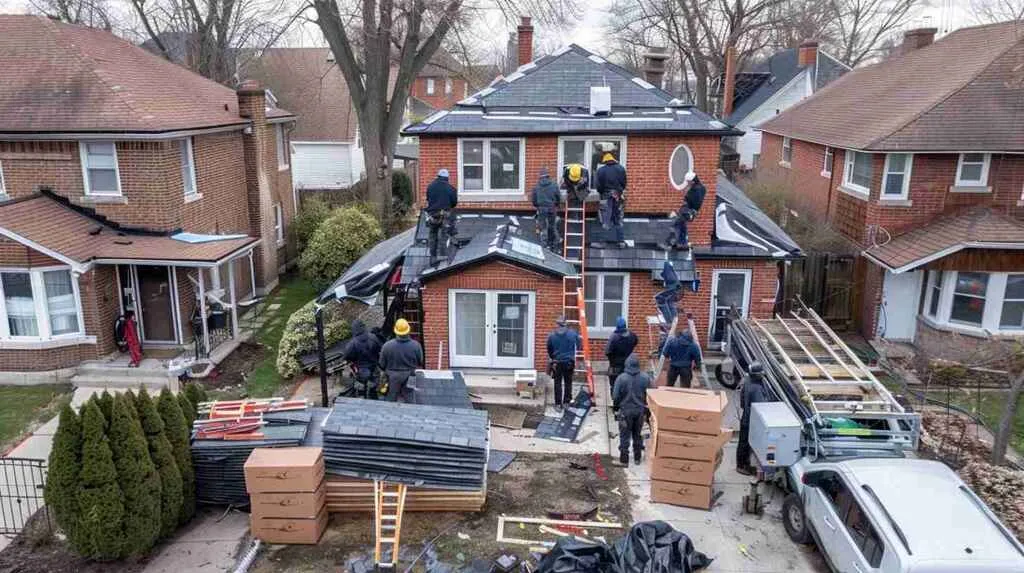
Roof Shingle Definition Queens NY – Clear Answer for Homeowners
Blueprint first: a roof shingle is not your entire roof-it’s just the visible “skin” of a much bigger system underneath. In Queens, confusing those two things leads to blown budgets, repeat leaks, and contractors who quote you for the wrong fix. I explain roofs the same way I used to troubleshoot Wi‑Fi networks back when I sat in server rooms instead of on pitched roofs-everything is layers, connections, and signal paths. Get the definition straight, and you’ll finally see the whole picture clearly.
What a Roof Shingle Really Is (and Isn’t) in Queens, NY
Think of your roof like your smartphone: the shingles are the screen, not the whole device. They’re the visible, weather-shedding outer layer-the part you see from the street and touch when you’re up on a ladder. But they’re useless without the operating system, wiring, and frame underneath. That’s my honest opinion after 19 years on roofs in this borough: confusing shingles with the whole roof is one of the most expensive misunderstandings I see in Queens, and I refuse to just blame the shingles without checking the entire system first.
On a typical block in Woodside, you’ll see rows of attached and semi-attached homes with pitched roofs, each one carrying a field of asphalt shingles-usually black, charcoal, or weathered gray. An asphalt roof shingle is a flat, rectangular tab made of fiberglass mat soaked in asphalt and coated with mineral granules. It sheds rainwater, blocks UV rays, and takes the beating from wind and sun. What it does not do: hold up your roof structure, seal around chimneys and vents, or stop moisture from rotting the wood underneath. That’s the job of decking, underlayment, flashing, and ventilation-layers most homeowners never think about until something goes wrong.
One July afternoon in Corona, it was about 95 degrees and the shingles were so soft you could leave fingerprints in them. I got called to a house where the owner swore “the shingles are defective” because they were curling after only five years. When I pulled a few tabs and showed him the missing underlayment and how the attic vents were literally painted shut, he realized it wasn’t the shingles-it was the whole system failing. That job taught me you can’t define a “roof shingle” without explaining the layers underneath and the air above it. The shingle is just the final finish on a layered structure, and if any other piece is broken, the shingle takes the blame and the heat-literally.
Common Misunderstandings: Myth vs Fact
| Myth about Shingles | Fact in Queens, NY |
|---|---|
| “The shingles are my whole roof.” | Shingles are just the top waterproofing layer; your real roof also includes decking, underlayment, flashing, and ventilation. |
| “If I swap the shingles, I’ve automatically fixed the leak.” | Leaks often start at flashing, vents, or bad plywood seams-shingles may be fine while water sneaks in underneath. |
| “New shingles will solve my attic heat and moisture issues.” | Heat and moisture problems are usually ventilation and insulation issues, not shingle issues. |
| “All shingles are basically the same; just pick a color.” | Queens homes use different shingle grades (3‑tab vs architectural), and weight, wind rating, and warranty matter more than color. |
| “If shingles look okay from the street, the roof is fine.” | Rotten decking, saturated underlayment, or bad nailing patterns can be hidden under ‘good-looking’ shingles. |
Zooming Out: How Shingles Fit Into Your Whole Roof System
Layers from Your Attic to the Sky
When I come to your house and you point up and say, “Is that the shingle part?” this is what I tell you: imagine slicing your roof like a layer cake from your bedroom ceiling all the way up to the sky. Starting from the inside, you’ve got interior ceiling and drywall, then attic space with insulation, then the structural plywood or OSB decking that the shingles physically sit on. On top of the decking comes underlayment-black felt or synthetic sheet that’s your second line of defense against water. Then metal flashing seals around chimneys, walls, and pipes. Finally, the asphalt shingles go on as the outermost skin. In Queens, where most homes are attached row houses or semi-attached pitched roofs in neighborhoods like Woodside, Jackson Heights, and Astoria, you’re dealing with shared walls and limited attic access, which means those ventilation paths and underlayment choices matter even more than usual.
I’ll never forget a windy November night in Whitestone when I was on an emergency call for a retired teacher whose shingles were blowing off in strips. She kept pointing to the shingles and saying, “These things are my roof, right?” I took a frozen-finger moment to show her the difference between the shingles, the decking, and the felt-peeling them back like pages in a book under my headlamp. That conversation changed how I explain shingle roofs to every homeowner since: start with the shingle, but zoom out to the whole “roof story.” Once she could see those three distinct pages-shingle, underlayment, plywood-she understood why I needed to fix all three, not just nail down new tabs. Now I use that same zoom in/zoom out explanation on every job.
| Layer | What It Does | What Homeowners Often Think |
|---|---|---|
| Interior ceiling & drywall | Hides framing and insulation; final finished surface inside. | “Just paint; has nothing to do with the roof.” |
| Attic space & insulation | Controls heat and moisture; lets the roof system ‘breathe.’ | “Storage area; not part of the roof.” |
| Roof decking (plywood) | Structural base the shingles and underlayment sit on. | “Never think about it unless it’s rotten.” |
| Underlayment (felt or synthetic) | Secondary water barrier under the shingles. | “Didn’t know this layer existed.” |
| Flashing & metal components | Seals around chimneys, walls, skylights, and vents. | “Random metal bits; not as important as shingles.” |
| Asphalt shingles | Primary weather‑shedding skin that takes sun, wind, rain. | “The whole roof.” |
Queens-Specific Shingle Issues: When the ‘Skin’ Fails
Blunt truth: if you think shingles are your whole roof, you will overspend or under-fix. The most common shingle-specific problems I see in Queens are wind blow-offs from those Long Island Sound gusts that tunnel down side streets, premature curling from blocked ventilation in hot attics, and homeowners layering three or four generations of shingles on top of each other until the whole thing is a saggy, brittle mess. Here’s an insider tip before you assume your shingles are bad: check your attic vents and soffits for blockages-insulation pushed up against vents, painted-over grilles, bird nests. Then look along the eaves for telltale stripes that show multiple shingle layers. If you spot either, your shingle problem is really a system problem.
There was a rainy Saturday morning in Bayside where a real estate investor wanted me to “just swap the shingles” on a two‑family before listing it. When I lifted a corner, I found three layers of brittle shingles and spongy plywood underneath. He was annoyed when I said no to the quick flip, but I sat with him on the porch and drew a side‑view sketch showing why one more layer would be like putting a fourth winter coat over a cracked collarbone. That situation is why I always define shingles as the “skin” of the roof-not the whole body. In Queens, where older homes already carry extra weight from attached neighbors and decades of patch jobs, adding another shingle layer can violate code, overload rafters, and void warranties. You’ve got to treat the underlying structure first.
⚠️ Warning about ‘shingle-only’ fixes in Queens, NY
- Adding a 3rd or 4th shingle layer can violate NYC code and overload older rafters.
- Re‑roofing over soft, spongy decking hides structural problems and can void warranties.
- Replacing shingles without addressing ventilation can cook the new shingles from underneath and kill their lifespan.
- Storm chasers may quote a cheap ‘shingle swap’ and disappear when leaks from old flashing appear later.
| Option | Pros | Cons |
|---|---|---|
| Overlay (new shingles over old) | Lower upfront cost; faster install; less debris. | Extra weight on structure; hides bad decking; can trap heat and moisture; often shorter life and warranty issues in Queens climate. |
| Full tear‑off | Reveals and fixes rotten wood; allows new underlayment and flashing; best for long‑term performance and resale. | Higher upfront cost; more labor and disposal; slightly longer project timeline. |
Quick Self-Check: Is It a Shingle Problem or a Roof System Problem?
Which situation sounds like yours? Think of it like tracing a signal leak in your home network-you need to narrow down whether the problem is at the last connection point (the shingle) or somewhere deeper in the wiring and routers underneath.
Decision Tree: What Do You Actually Need?
Start: Do you see missing, cracked, or obviously loose shingles from the street?
- Yes → Next: Is water staining your ceilings or walls inside?
- Yes → You likely have both shingle damage and a potential system leak. Schedule a full roof inspection and interior check.
- No → Likely a localized shingle repair issue, but still have flashing and underlayment checked.
- No → Next: Do you notice musty smells, peeling paint, or very hot attic temperatures?
- Yes → Likely a ventilation or system moisture problem, even if shingles look fine.
- No → Next: Is your roof over 20 years old, or do neighbors with similar houses all have newer shingles?
- Yes → Time for a pro evaluation; shingles may be near the end of life.
- No → You can monitor, but schedule a baseline inspection if you’ve never had one.
Before You Call: Quick Self-Checklist
What to look at before calling a Queens roofer about shingles:
- ✅ Stand on the sidewalk and note any missing, curled, or lifted shingles-especially along edges and ridges.
- ✅ Look inside for fresh brown stains or bubbling paint on ceilings or top-floor walls.
- ✅ Check if attic or top-floor rooms feel much hotter or more humid than the rest of the house in summer.
- ✅ Note any past quick “patch” jobs, tar blobs, or silver coatings around chimneys and vents.
- ✅ Write down the last time (year) the roof was replaced or layered over, if you know it.
What It Costs in Queens When Shingles Aren’t the Whole Story
Here’s my honest take as the guy who actually has to fix this stuff: costs jump fast when you move from simple shingle repair to system work in Queens, and most of that jump happens because people misdefine the problem up front. Below are ballpark ranges I see on typical jobs-they shift based on roof size, access, how many layers we’re stripping, and what code requires once we open things up. The key is properly defining whether it’s “shingle only” or “system” before anyone writes a quote, because that’s what keeps estimates honest and your budget sane.
| Scenario (Queens, NY) | What’s Usually Involved | Approx. Price Range* |
|---|---|---|
| Small shingle repair on a 1‑family | Replace a few blown‑off tabs, seal nails, minor flashing touch‑up. | $450 – $900 |
| Moderate shingle & flashing repair | Replace a section of shingles, new step flashing by a wall or chimney. | $900 – $2,000 |
| Full tear‑off and re‑shingle (1‑family pitched roof) | Strip all layers, fix bad decking, new underlayment, flashing, and shingles. | $8,500 – $16,000 |
| Multi‑family or larger steep roof replacement | More safety setup, more materials, possible structural fixes. | $15,000 – $35,000+ |
| Ventilation and system tune‑up with minor shingle work | Add/clear vents, seal key areas, swap a limited number of shingles. | $750 – $2,500 |
*Actual pricing depends on roof size, access, number of layers, and code requirements; these are rough local ranges to illustrate how ‘shingle only’ vs ‘system’ work changes cost.
Homeowner Questions About Roof Shingles in Queens
Are asphalt shingles good enough for Queens weather?
Yes, modern architectural asphalt shingles with the right wind rating hold up well in Queens, as long as they’re installed over solid decking with proper underlayment and ventilation. Most failures I see are from shortcuts under the shingle, not the shingle itself.
How long should my shingles last here?
On a typical Queens pitched roof with decent ventilation, you can expect about 18-25 years from quality architectural shingles. Poor ventilation, multiple layers, and constant shade can cut that down significantly.
Can I just replace the worst-looking shingles?
Spot repairs are fine when the roof is otherwise healthy, but once the whole field of shingles is brittle or curled, patching is like taping a cracked phone screen-you might buy a little time, but you’re not solving the underlying problem.
Does NYC code limit how many shingle layers I can have?
Yes. In most cases, you’re limited to two layers of asphalt shingles; beyond that, a full tear‑off is required. Older Queens homes with existing multiple layers almost always need a complete strip to be safe and legal.
How do I know if I need you to look at the shingles or the whole system?
If you’re not sure, call it a roof system inspection, not a ‘shingle repair.’ I’ll look at the shingles, the flashing, the attic, and the decking, then explain-like tracing a bad Wi‑Fi connection-exactly where the problem starts and which layer needs work.
Getting the definition right-shingle versus full roof system-is the first step to an honest quote and a dry house. If you’re in Queens and you’re not sure whether your problem is at the shingle level or deeper in the layers underneath, call Shingle Masters and let me walk your roof like a network map, sketch it out in my little notebook, and explain exactly which layer needs help and why.