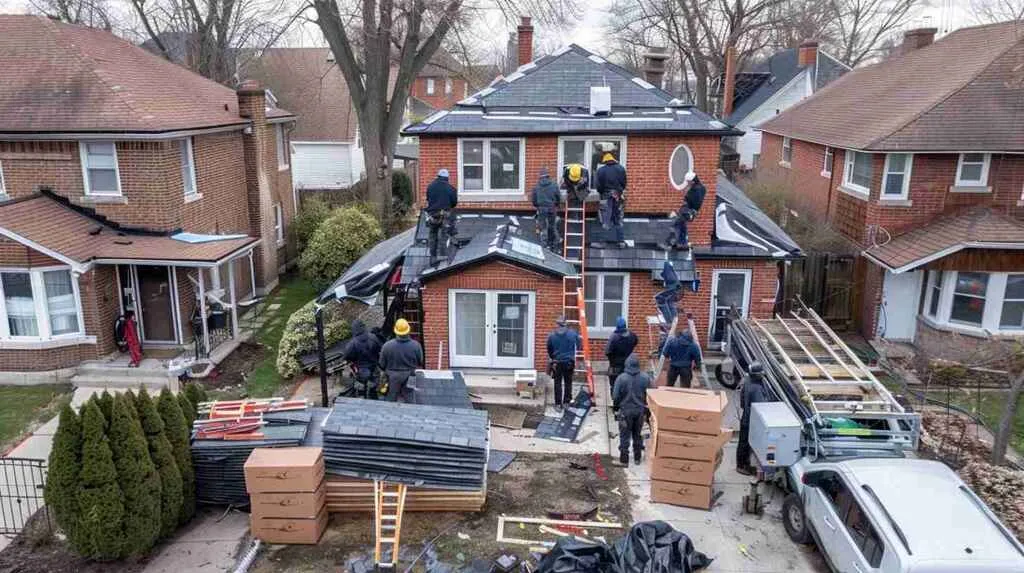
Is Shingle Roof Better Than Tile Queens NY? Honest Comparison | Free Quotes
Frankly, for most homeowners in Queens, a well-installed shingle roof makes more sense than tile on cost, weight, and our local climate-and I can back that up with one hard number: concrete tile weighs about 9-12 pounds per square foot installed, while architectural shingles come in around 3-4 pounds per square foot. After 19 years roofing all over Astoria, Jackson Heights, Bayside, and beyond, I’ve seen nine times out of ten that people ask me about tile because it looks expensive, not because it actually fits their house. I’m Rosa Delgado, and I used to be an architectural drafter in Bogotá, so I still sketch every roof like a little blueprint in my head before I swing a hammer-and that habit has taught me that your beams don’t care about trends; they care about pounds.
When I’m sitting at your dining table and you ask, “Is shingle roof better than tile?” my first question back is, “Better for what-your budget, your beams, or your bragging rights?” This article walks you through that question the same way I’d walk through your house: starting at the street view (curb appeal and looks), then stepping into your kitchen table (budget and real numbers), up into your attic (structure and weight), and finally out onto the roof itself (installation quality and performance). We’re gonna look at hard facts, not sales pitches, so by the end you’ll know exactly which “roof outfit” fits your Queens home.
Shingle vs. Tile in Queens: The Straight Answer (With One Hard Number)
Frankly, when I pull up to a typical Queens rowhouse or two-family home, the first thing I think about isn’t what looks fancier-it’s what the existing structure can safely carry and what our mixed climate demands. Here’s my blunt opinion: in Queens, nine times out of ten, a well-installed shingle roof usually makes more sense than tile on cost, weight, and climate fit. That’s not saying tile is bad; it’s saying that the extra 6-8 pounds per square foot of dead load sitting on old pre-war rafters, combined with our real snow loads and wind gusts between buildings, creates structural risks most homeowners don’t budget for or even know to check. One little habit I have is comparing roof choices to clothing “wardrobes” for your house-shingles are like a solid winter coat that fits almost any frame, while tile is like a designer jacket that only works if it fits the “body” of the house perfectly, and most Queens homes weren’t built with that body in mind.
When I’m sitting at your dining table and you ask, “Is shingle roof better than tile?” my first question back is, “Better for what-your budget, your beams, or your bragging rights?” What I’m about to do here is walk you from the street (curb appeal and first impressions) to your kitchen table (budget and real costs), up into your attic (structure and weight reality), and finally out onto the roof itself (installation quality and long-term performance). It’s the same mental walkthrough I do on every job, and it’s rooted in the same structural thinking I learned drafting blueprints years ago-except now I’m talking to you like family, not an engineer, because this decision affects your home, your wallet, and your peace of mind for the next 20 to 50 years.
| Factor | Asphalt Shingles (Queens Typical) | Concrete/Clay Tile (Queens Scenario) | Quick Take for Queens |
|---|---|---|---|
| Installed Cost per Sq. Foot | $4.50-$7.50 typical range | $9.00-$18.00+ range | Tile costs 1.5-2.5× more upfront |
| Weight per Sq. Foot | 3-4 lbs installed | 9-12 lbs installed | Tile adds 6-8 lbs dead load on old Queens rafters |
| Typical Lifespan | 20-30 years (architectural grade) | 40-50+ years (if properly installed) | Tile lasts longer only if structure and install are perfect |
| Suitability for Older Wood-Framed Queens Homes | Works on most existing frames without reinforcement | Often requires structural engineer review and possible rafter upgrades | Most pre-war Queens homes weren’t designed for tile weight |
| Wind Performance in Queens Gusts | Excellent when properly nailed to code; impact-rated options available | Can perform well but requires careful fastening; loose tiles are dangerous projectiles | Both need proper fastening; tile failures are more costly and hazardous |
| Repair Complexity & Cost | Simple spot repairs; materials widely available; most roofers can handle it | Individual tiles can crack; matching discontinued styles is hard; fewer qualified installers | Shingles are easier and cheaper to fix down the road |
📊
Queens Roofing Snapshot
20-30 years for architectural grade in our mixed climate
6-8 lbs per square foot additional dead load
4/12 to 7/12 pitch range, occasionally steeper on older styles
All Queens neighborhoods-Astoria, Jackson Heights, Bayside, Forest Hills, Flushing, Ridgewood, and beyond
Budget & Curb Appeal: What You See From the Street and Feel at the Kitchen Table
Here’s my blunt opinion: in Queens, nine times out of ten, people ask me about tile because it looks expensive, not because it actually fits their house. I get it-when you’re standing on the sidewalk looking up at your neighbor’s clay tile roof catching the afternoon sun, it has a certain Mediterranean villa vibe that architectural shingles can’t quite match. But here’s the thing: we’re talking about attached rowhouses in Woodside, pre-war two-families in Jackson Heights, and wood-framed detached homes in Bayside, not Spanish haciendas with engineered roof trusses. Most Queens homes were built between the 1920s and 1960s with simple gable or hip roofs designed for slate or asphalt, not heavy concrete tile. The good news is that today’s architectural shingles come in dimensional profiles, shadow lines, and even faux-slate patterns that give you 80% of that “expensive look” from the street without any of the structural headaches. Think of it like fashion: a well-tailored winter coat can look just as sharp as a designer jacket, and it’ll actually keep you warmer when the snow hits.
Now let’s move from curb appeal at the street to real numbers at your kitchen table. When I spread out an estimate, I show you that a quality architectural shingle system for a typical 20-square Queens roof might run $9,000 to $15,000 installed, while a comparable tile system-assuming your structure even allows it-starts around $18,000 and can easily push $30,000 or more once you factor in any rafter reinforcement, upgraded underlayment rated for tile weight, and the longer labor time. That cost difference isn’t just padding; it’s real. And here’s what I tell people: if you’ve got an extra $10,000 to $15,000 in your roofing budget, don’t blow it all on tile material just for looks-invest it in a bulletproof shingle system with premium synthetic underlayment, ice-and-water shield at every valley and eave, proper ridge venting, and a manufacturer-registered warranty. You’ll end up with a roof that performs better in Queens’ mixed seasons than a mediocre tile job ever could.
Rough Cost Scenarios for Queens Shingle vs Tile Roofs
| Scenario | Asphalt Shingle Estimated Range (Installed) | Tile Estimated Range (Installed, If Structure Allows) |
|---|---|---|
| Small attached rowhouse (12-15 squares) | $5,400-$11,250 | $10,800-$27,000 |
| Typical detached single-family (18-22 squares) | $8,100-$16,500 | $16,200-$39,600 |
| Two-family with simple gable roof (20-25 squares) | $9,000-$18,750 | $18,000-$45,000 |
| Larger corner property with hips and valleys (25-30 squares) | $11,250-$22,500 | $22,500-$54,000 |
| Full tear-off plus new decking repairs (per square add-on cost) | +$150-$300 per square | +$200-$400 per square (heavier material = more labor) |
Note: Ranges reflect varying roof complexity, access, and material grade. Tile pricing assumes structure is already adequate; reinforcement costs are additional.
What You Actually Get for Your Money with a Quality Shingle System in Queens
-
✅
Upgraded synthetic underlayment: Better tear resistance and longer exposure time than felt, critical when Queens weather delays installation or when you need multi-day staging on bigger jobs. -
✅
Ice-and-water shield at eaves and valleys: Self-sealing membrane protects where Queens ice dams form on north-facing slopes and where wind-driven rain pools during nor’easters. -
✅
Proper ridge and soffit ventilation: Balanced airflow keeps attics cooler in summer and prevents condensation in winter, extending shingle life and cutting your HVAC costs year-round. -
✅
Manufacturer-registered warranty: Many shingle lines offer 50-year limited coverage when installed by certified crews and registered within 60 days-real protection, not just marketing fluff. -
✅
Local code-compliant fastening for wind: Proper nail count and placement for Queens wind zones means your shingles stay put during those sharp gusts between buildings, especially in exposed corners and along the water.
Attic Structure, Weight & Wind: Where Queens Roofs Win or Fail
On 37th Avenue last winter, I stood in an attic with my flashlight and told the owner, “Your beams don’t care about trends; they care about pounds.” That was one July afternoon in Jackson Heights, actually-it was 94 degrees and the homeowner was convinced he wanted heavy concrete tile because he’d seen it on a YouTube video from Arizona. I brought my little pocket scale and a sample shingle and tile to his kitchen table, weighed them in front of him, then walked him into his attic so he could feel how hot and stuffy it already was. When I showed him his old pre-war rafters-2x6s spaced 24 inches on center, which is typical for homes built in the 1940s around here-and explained how the extra tile weight plus Queens snow load (we’re in a 30 psf snow zone) could bow those beams over time, he changed his mind on the spot and we put on a high-end architectural shingle instead. His roof has been solid for seven years now, no sag, no issues. The lesson? Your attic doesn’t lie, and neither does a pocket scale.
Zooming out from that one Jackson Heights job, the broader structural reality in Queens is this: most of our housing stock was built for lighter roofing materials, and our climate throws mixed punches year-round-heavy wet snow in February, wind gusts funneling between row buildings in March, baking summer sun in July, and fall nor’easters that test every fastener. Shingles are like work boots: they distribute weight evenly, flex a little with thermal expansion, and can be nailed down to code without special reinforcement. Tile, on the other hand, is like high heels-gorgeous when the “subfloor” (your framing) is built to support them, but risky and uncomfortable when it’s not. If your house was designed for tile from day one, or if a structural engineer confirms your rafters, joists, and bearing walls can handle the extra 6-8 pounds per square foot, then tile can absolutely work. But for the vast majority of Queens homes, forcing tile onto a frame that wasn’t designed for it is a gamble with your safety, your ceilings, and your wallet.
| Aspect | Asphalt Shingles in Queens (Pros/Cons) | Tile in Queens (Pros/Cons) |
|---|---|---|
| Weight on Rafters | Pro: Light load (3-4 lbs/sf) works on most existing Queens frames without reinforcement. Con: None significant for weight. | Pro: Adds thermal mass. Con: Heavy (9-12 lbs/sf); many old Queens rafters need costly upgrades to carry it safely. |
| Performance Under Queens Snow Load | Pro: Handles our 30 psf snow zone easily; low profile sheds snow and ice well. Con: Granule loss can happen with repeated freeze-thaw if ventilation is poor. | Pro: Durable material won’t degrade from freeze-thaw. Con: Combined weight of tile + snow can overstress undersized framing; ice dams harder to clear without cracking tiles. |
| Wind Uplift Resistance (when installed correctly) | Pro: Modern impact-rated shingles with proper fastening meet high wind ratings; self-sealing strips lock down. Con: Cheap installs skip nails or use staples, leading to blow-offs. | Pro: Heavy tiles resist uplift by mass if properly clipped or mortared. Con: If fastening is inadequate, loose tiles become dangerous projectiles in Queens gusts; harder to secure on steep pitches. |
| Impact on Older Framing | Pro: Minimal stress; easy to spot-repair or replace sections without major structural work. Con: None significant. | Pro: Can last 50+ years if framing holds. Con: Older Queens 2×6 rafters often sag over time under tile weight; ceilings crack, ridge lines bow. |
| Ease of Reinforcement if Needed | Pro: Rarely needed; if you want to upgrade framing for other reasons, shingles don’t require it. Con: None. | Pro: If budget allows, you can sister rafters or add engineered supports. Con: Reinforcement is invasive, expensive ($3,000-$10,000+), and not always feasible in tight Queens attics. |
Installation Quality: Why Tile Can Fail and Shingles Can Shine
If you’ve ever put on a heavy wool coat in April and regretted it by noon, you already understand the problem with over-building a tile roof in our mixed Queens climate. But the bigger issue I’ve seen isn’t tile vs. shingle as materials-it’s installation quality, period. Early one cold, wet November morning in Bayside, we were called to “fix a leak” on a tile roof someone had installed just three years earlier. Turned out a handyman had done it like a puzzle instead of a system-no proper underlayment, tiles just sitting there pretty but useless. I still remember kneeling there with numb fingers, gently removing tile after tile to uncover a soggy mess underneath: wet plywood, no ice-and-water shield, felt paper that had torn in three places. The owner asked if shingles would have done better, and I had to explain that the problem wasn’t tile vs. shingle; it was whoever thought they were a roofer because they watched three videos. A proper tile system with high-temp underlayment, code-compliant battens, and correct fastening would’ve been fine. A sloppy shingle job with missing starter strips and misaligned courses would’ve leaked just as badly.
That said, once we step from the attic structure out onto the roof surface itself, Queens wind-driven rain and our freeze-thaw cycles demand system thinking-not just pretty material on top. What matters is the unseen layers: underlayment rated for your roof slope, ice-and-water shield lapped correctly at every valley and penetration, flashing detailed to code around chimneys and skylights, and fasteners placed on the proper schedule for our wind zone. Here’s one insider tip I use to spot real pros: when you’re comparing bids, ask the contractor to name the specific underlayment brand and fastening schedule they’ll use, and ask if they’ll provide you a copy of the manufacturer’s installation guide for your specific shingle or tile line. If they can’t answer or if they brush it off with “we just do what works,” that’s your signal to walk. A true professional will pull out the spec sheet right there at your kitchen table and show you line by line how the system goes together, because they know that installation quality is what separates a 15-year roof from a 30-year roof, regardless of whether it’s shingle or tile.
⚠️
Dangers of Hiring Unqualified Installers for Tile or Shingles in Queens
- Tile installed without proper underlayment: Water runs under tiles, soaks plywood, and causes interior ceiling damage and mold-common when handymen skip high-temp synthetic underlayment rated for tile.
- Shingles nailed with too few or misplaced nails for wind zones: In Queens gusts funneling between buildings, under-nailed shingles lift and blow off, leaving bare decking exposed and voiding your warranty.
- No ice-and-water shield at eaves: Ice dams form on north-facing slopes, meltwater backs up under shingles or tiles, and leaks appear at interior walls-expensive interior repairs on top of roof fixes.
- Mixing incompatible components to cut costs: Cheap felt under premium shingles, wrong fastener types, or mismatched flashing metals lead to premature failures and void manufacturer warranties, leaving you holding the bag.
| Myth | Fact |
|---|---|
| Tile never leaks. | Tile is a top layer, not a waterproofing membrane. Leaks happen when underlayment, flashing, or fastening details fail-tile alone doesn’t seal your roof. |
| Shingles are always cheap and flimsy. | Modern architectural and impact-rated shingles carry Class 4 hail ratings, 130-mph wind ratings, and 50-year warranties when installed correctly-far from “cheap.” |
| Tile is automatically better for resale. | In Queens, most buyers care about roof condition and remaining warranty, not material type. A well-maintained shingle roof with transferable warranty often appraises just as well as tile. |
| Queens snow load doesn’t matter for tile. | Wrong. We’re in a 30 psf snow zone; combined dead load (tile) plus live load (snow) can exceed old rafter capacity, causing sag, cracks, and structural damage over time. |
| Any contractor who did a few roofs can install tile. | Tile requires specialized training in batten layout, fastening, mortar application (if used), and proper underlayment-most general roofers have little tile experience, leading to costly failures. |
Deciding for Your Queens Home: A Quick Walk-Through From Street to Attic
$18,000 is not the time to choose based on looks alone.
One little habit I have is drawing two simple roof “outfits” on paper-on the left, the practical shingle system; on the right, the fancy tile system-and then asking you which one actually fits your house’s “body.” That mental sketch is exactly what happened one windy March evening in Astoria, almost dark, when a landlord called me in a panic because a couple of tiles had slid off the edge and hit a parked car. It wasn’t a huge storm, just those sharp Queens gusts between the buildings, but his tile system was never properly fastened for uplift. We ended up redoing the whole thing in impact-rated shingles with proper fastening and ice-and-water shield. I’ll never forget him saying, “I thought tile was the safe, fancy option,” and I had to walk him through how “fancy” means nothing if the structure, fastening, and local weather aren’t part of the decision. Since then, that property has weathered three nor’easters and two heavy snow seasons without a single leak or loose shingle, and the landlord’s insurance premiums actually went down because we documented the impact-rated install. The lesson? In Queens, shingles are usually the practical “everyday uniform,” and tile is a specialty outfit that needs the right structure, the right installer, and the right budget-or it’s just a liability waiting to happen. If you’re still on the fence, nudge yourself toward shingles as the default unless a structural engineer or truly experienced tile roofer confirms tile is appropriate for your specific home.
Should Your Queens Home Get Shingles or Consider Tile?
(Safe, practical, proven for Queens)
(Better ROI, less risk)
Schedule a structural and wind-uplift review with a tile-experienced pro before committing
Will tile make my Queens home cooler in summer than shingles?
Tile does have slightly more thermal mass than shingles, which can help in hot, dry climates like Arizona, but in Queens our humidity and mixed seasons mean the difference is minimal. Proper attic ventilation and radiant barrier (if you add it) will do far more to keep your home cool in summer than the roofing material itself. Don’t choose tile for cooling-choose it only if your structure and budget support it.
Can my older Queens rowhouse safely hold tile?
Most older Queens rowhouses and two-families were framed with 2×6 or 2×8 rafters spaced 16 to 24 inches on center, designed for asphalt or slate, not heavy concrete tile. You’ll need a structural evaluation-either from a licensed engineer or an experienced roofer who actually climbs into your attic with a flashlight and measuring tape. If your rafters are undersized or show any sag, tile is a risky choice without costly reinforcement.
How long will a good shingle roof actually last here with our winters and wind?
In Queens, a properly installed architectural shingle roof with quality underlayment, ice-and-water shield, and code-compliant fastening typically lasts 20 to 30 years-sometimes longer if you maintain it (clean gutters, inspect after storms, replace damaged shingles promptly). The key is installation quality and ventilation; a cheap install might fail in 12 to 15 years, while a premium system can push past 30.
If I already have tile, should I switch to shingles when it’s time to replace?
If your existing tile is reaching end-of-life and your structure has handled it fine, you can absolutely switch to shingles to save money and reduce future repair complexity. Many Queens homeowners do exactly that, especially when tile becomes hard to match or when qualified tile installers are scarce. Switching from tile to shingles also means less dead load on your aging rafters, which can extend the life of your framing and make future roof work simpler and cheaper.
Wrapping up: in Queens, shingles are usually the practical “everyday uniform” your house was built to wear, and tile is a specialty outfit that demands the right structure, the right installer, and a budget willing to pay for both upfront costs and long-term maintenance. If you’ve read this far and you’re still wondering which roof fits your home best, here’s my advice: don’t decide alone at your computer. Call Shingle Masters and schedule a free on-site roof evaluation right here in Queens, NY. I’ll climb into your attic, walk your roof, show you exactly what your structure can handle, and give you a written estimate that spells out every layer-from underlayment to fasteners to warranty. No sales pitch, just honest answers and a blueprint-style breakdown so you can make the right call for your house, your budget, and your peace of mind.