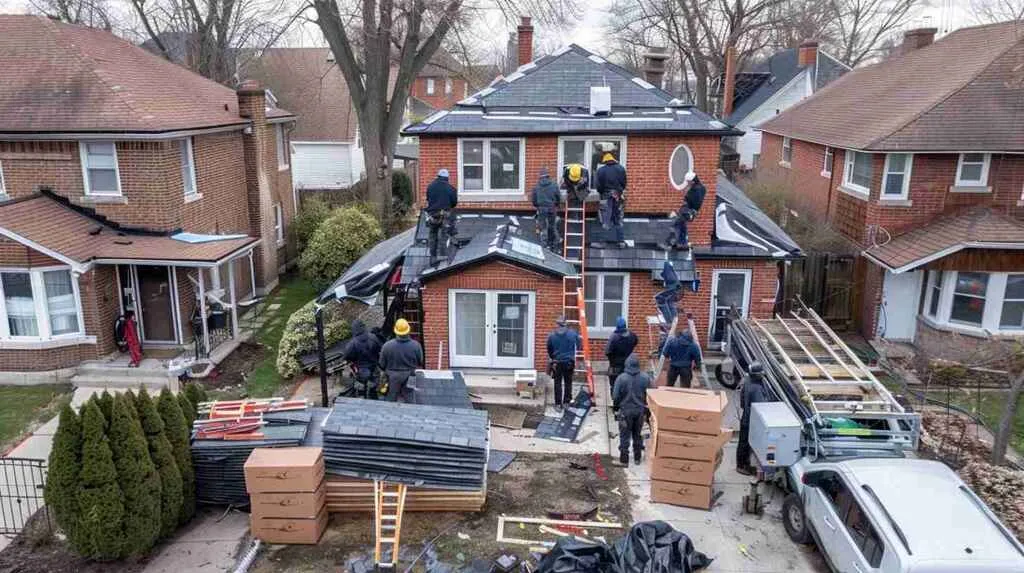
How Many Layers Does a Shingle Roof Have Queens NY – Explained | Call Today
Layers. Queens residential roofs are usually allowed up to two asphalt shingle layers by code, and before you think, “Great, I’ll just save money and add another layer,” you should know that every extra layer is a hidden weight problem, a future leak waiting to happen, and a cost bomb ticking toward your next replacement. On a typical Queens block, if I stand at the corner and look up, I can spot at least three roofs where I can tell the number of layers just from the shingle edges-the way they puff out at the eave, the extra thickness where the rake meets the gutter-and more often than not, those are the same houses calling me two years later with mystery leaks nobody can find.
How Many Layers Can a Shingle Roof Have in Queens, NY?
Let me be crystal clear: more layers does not mean more protection-it usually means more problems. In my opinion, just because code often allows two layers doesn’t mean you should take advantage of it once your first layer is nearing the end or if there’s any structural question underneath. Think of your roof like a bookshelf-you can’t just keep stacking bricks on the top and hope the middle doesn’t sag. Most Queens homes sit on a cap of two asphalt shingle layers legally, and some older neighborhoods-Jackson Heights, Forest Hills, East Elmhurst-will surprise you with hidden cedar shake underneath because someone in the ’80s or ’90s took the “cheap overlay” route instead of tearing it all off. That weight adds up, your nails don’t bite through properly, and you end up calling me when the piano starts getting dripped on.
I still remember the first time I lifted a shingle in Elmhurst and found four layers jammed together like a bad sandwich-well, actually three asphalt layers over an original layer from the late ’70s. The owner swore he “only had one layer,” but when I popped the first shingle on that August afternoon the building inspector happened to drive by, saw our tear-off in progress, and made us stop until we pulled a quick permit revision for a full removal because Queens code won’t let you sit on three layers. That job taught me never to trust what’s “visible from the street” when someone asks how many layers a shingle roof should have. The street view is almost always misleading, code enforcement will catch you mid-job if you try to cheat, and the structural limits on your rafters don’t care what you hoped was up there-they only care about the pounds per square foot pressing down.
| Layer Count | Legality in Queens (Typical 1-2 family) | What It Usually Means on the Roof | What Carlos Recommends |
|---|---|---|---|
| One layer | ✅ Legal, clean slate | Original roof or full tear-off done properly | Maintain and inspect; you’re in the best spot |
| Two layers | ✅ Legal (often), approaching max | Second overlay added to save tear-off costs | Full tear-off at next replacement; no third layer allowed |
| Three layers | ❌ Not legal in most Queens cases | Old handyman shortcuts, often hidden cedar shake under asphalt | Immediate full tear-off; inspector will flag this |
| Four+ layers | ❌ Definitely illegal, unsafe | Structural risk, severe weight overload, leaks everywhere | Emergency tear-off; you’re playing with rafter collapse in snow |
What’s Actually Under Your Shingles? (Roof X-Ray View)
When I come to your house, the first thing I’ll ask you is: “Has anyone ever actually peeled this roof back, or has it just been covered over?” Most people can’t answer, and that’s fine-that’s why I’m here. I explain roofs in “cross-section,” like we sliced your house in half and we’re looking at the layers from the side. Picture it from inside out: your ceiling, then insulation between joists, then the rafters holding everything up, then the plywood or board deck, then the underlayment paper or felt, and finally the shingle layers on top. Only those shingle layers on top count toward the “how many layers” question-the stuff underneath is structure. Around Queens, especially in Jackson Heights and Forest Hills, I’ll find original cedar shake sitting under two newer asphalt layers because someone decades ago decided removal was “too expensive.” That hidden cedar means your total thickness is way over code, your nails are barely grabbing anything solid, and every storm season is Russian roulette.
One November morning just after a heavy rain, I got a call from a retired school principal in Forest Hills-water dripping right onto her piano. On the roof, everything looked neat from the top, but at the eave I could see the shingles were “puffing” out; sure enough, we had two shingle layers sitting over an original cedar shake layer from the 1940s. Nobody had bothered to remove the shakes, which meant the whole assembly was too thick, nails weren’t biting properly, and the latest layer was practically floating. That mess was a perfect example of how too many layers hide structural problems that no amount of patching will fix. I check edges and thickness, not just the surface, to count layers accurately, because the only way to know for sure is to lift a corner or look at the rake where the roof meets the gutter and you can actually see each stripe of material stacked up.
Typical Roof Cross-Section Layers Carlos Explains to Queens Homeowners
- ✅ Interior Ceiling – Drywall or plaster you see from inside your attic or top floor
- ✅ Insulation – Fiberglass batts or blown-in cellulose between the joists
- ✅ Rafters / Joists – The wooden beams that hold the roof structure up
- ✅ Roof Deck – Plywood or skip sheathing nailed to the rafters; this is the base
- ✅ Underlayment – Felt paper or synthetic membrane protecting the deck from water
- ✅ Shingle Layers – Asphalt, cedar, or composite shingles; these are what we count for layer limits
Second Layer vs Full Tear-Off in Queens: Which Makes Sense?
Here’s the blunt truth most roofers won’t tell you because they want the quick overlay job: every extra layer is a loan you’re taking out against your future replacement. An overlay-adding a second layer-can sometimes be acceptable if your deck is solid, the first layer is lying flat, and you’re willing to gamble that nothing’s rotting underneath. But in Queens, where we swing from snow load in January to brutal heat in July, those swings expand and contract every nail hole, and the extra weight over time almost always costs you more at the next replacement because you’ll have double the debris to haul, double the labor to strip, and no chance of a simple overlay fix again. I once stood on a little semi-detached in Glendale on an icy January evening, just before dark, checking a “leak around the chimney.” The tenant kept saying, “Just patch it; landlord doesn’t want to spend money.” When I checked the rake edge, I could feel two layers, but the deck felt soft underfoot near the valley. We pulled a small test section and discovered the second layer had been added right over rotten plywood-cheaper for the previous owner, but now every extra pound of shingles was bowing the rafters. I had to call the landlord, explain that another “cheap second layer” would risk a structural failure under a heavy Queens snow, and walk them through the math on weight per square foot so they’d authorize a full tear-off. That job taught me that every extra layer is like taking a loan out against your future replacement-you save now, but you pay double later when the deck finally gives up.
Second Layer Overlay
- Cost Now: Saves $800-$1,500 on tear-off labor and dump fees
- Cost Later: Double debris removal at next replacement, often another $1,200+
- Risk Level: Medium-high; hides deck rot and structural issues you can’t see
- Carlos’s Warranty: I’ll stand behind it only if deck passes moisture test and first layer is solid
Full Tear-Off
- Cost Now: Higher upfront, but clean slate and peace of mind
- Cost Later: Next replacement is simpler and cheaper; no compounding layers
- Risk Level: Low; you inspect and replace deck where needed now
- Carlos’s Warranty: Full confidence; I’ve seen the bones and know they’re solid
| Pros of a Second Layer | Cons of a Second Layer |
|---|---|
| Saves immediate tear-off labor and debris haul costs | Adds significant weight-up to 750 lbs per roofing square |
| Faster install; usually done in 1-2 days for typical Queens home | Hides deck rot, mold, and structural damage you can’t inspect |
| Can work if first layer is perfectly flat and deck is confirmed solid | Nails may not penetrate deep enough; shingles can lift in wind |
| Less disruption to household during install week | At next replacement you pay double for removal of both layers |
| Lower upfront quote can appeal to tight budgets | Home inspectors and insurers often flag multiple layers as a risk |
Quick Check: Do You Need a Tear-Off, Repair, or Just an Inspection?
If you’re standing on your Queens sidewalk looking up at your roof right now, you probably have a gut feeling something’s off but you’re not sure whether it’s a $500 fix or a $12,000 replacement. Visual clues at the eaves and rakes-where you can actually see the shingle edges stacked-can hint at how many layers you’re dealing with, but a pro confirmation is key before you make any big decisions or sign any contracts.
Deciding Between Inspection, Overlay, or Full Tear-Off for Your Queens Shingle Roof
START: Do you see sagging, dips, or major leaks inside?
YES → Call for urgent full tear-off estimate
Structural damage likely; needs immediate professional inspection and removal
NO → Next question below
Has your roof been replaced in the last 15-20 years?
NOT SURE / NO → Schedule on-roof inspection and moisture test
Carlos will count layers, check deck condition, show you cross-section photos
YES, and it’s only one layer → You might be a candidate for a second layer
But only after Carlos confirms deck is solid and first layer is lying flat
Call Now (Urgent)
- Active leak dripping inside your home
- Ceiling stains spreading or getting darker
- Visible sagging, dips, or “soft spots” on the roof surface
- Shingles missing after a storm; bare deck exposed
Can Wait a Few Weeks
- Minor granule loss in gutters (normal aging)
- Small nail heads popping up, no active leak yet
- Roof looks “thick” or uneven at the edges
Costs, Myths, and What to Ask Your Roofer in Queens, NY
An extra $800-$1,200 for a full tear-off now can easily save you double that on the next replacement. In my opinion, paying for removal is non-negotiable if your deck is soft, you already have more than one layer, or there’s any cedar shake hiding underneath-those situations turn a “quick overlay” into a structural gamble that no homeowner should take in a neighborhood where snow loads and ice dams are real every winter.
When a roofer shows up to quote your job, don’t just ask “How much?” Ask them: “Will you do test pulls at multiple edges to confirm the layer count?” and “Can you show me photos of the cross-section where the shingles meet the rake or eave?” A good contractor-someone who thinks in that X-ray, cross-section style-will pull back a corner, snap a picture on their phone, and walk you through exactly what’s stacked up there. If they hesitate or say “Looks like one layer from here,” that’s a red flag, because the only way to know for sure is to lift and look. I always end up sketching little diagrams on the backs of receipts or pizza boxes while I talk, showing homeowners the exact stack they’re dealing with, because once you can visualize it you’ll understand why I’m recommending a full tear-off instead of another cheap overlay that kicks the problem down the road.
Sample Queens Roofing Scenarios and Ballpark Cost Impact of Extra Layers
| Scenario | Layers Found | Recommended Action | Relative Cost Range |
|---|---|---|---|
| Typical Jackson Heights 1,200 sq ft cape, original roof from 2005 | One layer, solid deck | Consider overlay if budget tight, but tear-off preferred | $ – $$ |
| Forest Hills colonial, two asphalt layers over 1940s cedar shakes | Three layers total | Full tear-off required by code; no overlay allowed | $$$ – $$$$ |
| Glendale semi-detached, two layers with soft deck near valley | Two layers, rotten plywood | Tear-off plus deck replacement (200-400 sq ft) | $$$ – $$$$ |
| East Elmhurst two-family, mystery thickness at eaves | Three asphalt layers found during tear-off | Emergency permit revision, full removal, possible fine | $$$$ + |
| Astoria brick ranch, one layer but installed over old tar paper and boards | One layer, skip sheathing | Tear-off and add plywood deck for modern underlayment | $$ – $$$ |
Common Myths Queens Homeowners Believe About Shingle Roof Layers
| Myth | Fact |
|---|---|
| “More layers = more protection from leaks” | Extra layers trap moisture, hide deck rot, and cause nails to pull out faster-opposite of protection |
| “If it’s not leaking, the number of layers doesn’t matter” | Weight is always working against your rafters; by the time it leaks, the deck may already be damaged |
| “The city doesn’t check layer counts during inspections” | Queens inspectors absolutely check; I’ve had jobs stopped mid-tear-off for unpermitted extra layers |
| “A second layer always saves money in the long run” | You’ll pay double removal costs at the next replacement, often negating any initial savings |
Layer-Count and Queens Roofing FAQs
How can I tell how many layers my roof has without climbing up?
Look at the edge where your shingles meet the gutter or the rake trim on the side of your house-you’ll see horizontal stripes if there’s more than one layer stacked. If it looks thick or “puffed out,” that’s usually a sign of multiple layers. But the only way to be 100% certain is to have a roofer lift a corner and show you the cross-section.
Does Queens code ever allow three layers on a residential roof?
In most typical one- and two-family homes, no-two asphalt shingle layers is the standard maximum. Three layers will get you flagged during an inspection, and you’ll be required to tear off down to the deck. There are rare exceptions for certain commercial or industrial buildings with engineered structures, but for your average Queens house it’s a hard stop at two.
Do roof layers affect home inspections and insurance?
Absolutely. Home inspectors will note multiple layers in their report, and some buyers will ask for a full tear-off as a condition of sale. Insurance companies may charge higher premiums or deny coverage altogether if they spot three or more layers, because the extra weight increases the risk of structural failure during a storm or heavy snow.
How long does a full tear-off take on a typical Queens house?
For a standard 1,200-1,500 square foot roof with one or two layers, my crew usually completes the tear-off, any necessary deck repairs, and the new install in 2-3 full days, weather permitting. If we find three layers or significant deck rot, add another day or two. I always schedule a dumpster drop the morning we start so debris goes straight out and your yard isn’t a shingle graveyard for a week.
Can you add a second layer in winter, or is that a bad idea?
You can, but it’s tricky. Asphalt shingles need warmth to seal properly, so if it’s below 40°F we have to use a torch or special adhesive to get the tabs to stick down. That said, I prefer doing full tear-offs in spring or fall-winter overlays can hide ice dam damage you didn’t know was there, and by spring you’re dealing with leaks you could’ve caught earlier.
Why Queens Homeowners Call Carlos and Shingle Masters for Layer Questions
- Fully licensed and insured in NYC; all permits pulled and inspections passed on every job
- 17 years roofing experience exclusively in Queens-I know Jackson Heights, Forest Hills, Glendale, Elmhurst, and Astoria block by block
- Fast response for active leaks: same-day or next-day site visit to assess damage and count layers
- Photo documentation included: I show you cross-section shots of your layer count and deck condition before we ever sign a contract
If you’re staring up at your roof in Queens right now, wondering whether you’re sitting on one layer or three, wondering if that “cheap overlay” from 2008 is about to cost you thousands in hidden damage, the smartest move is to have someone who thinks in cross-sections come out and actually look. I’ll count your layers, show you photos of what’s under those shingles, check your deck for soft spots, and give you a clear recommendation-full tear-off, overlay only if the bones are solid, or just a repair if that’s all you need. Call Shingle Masters today for a Queens-specific roof evaluation, and let’s get you a real answer instead of a guess from the sidewalk.