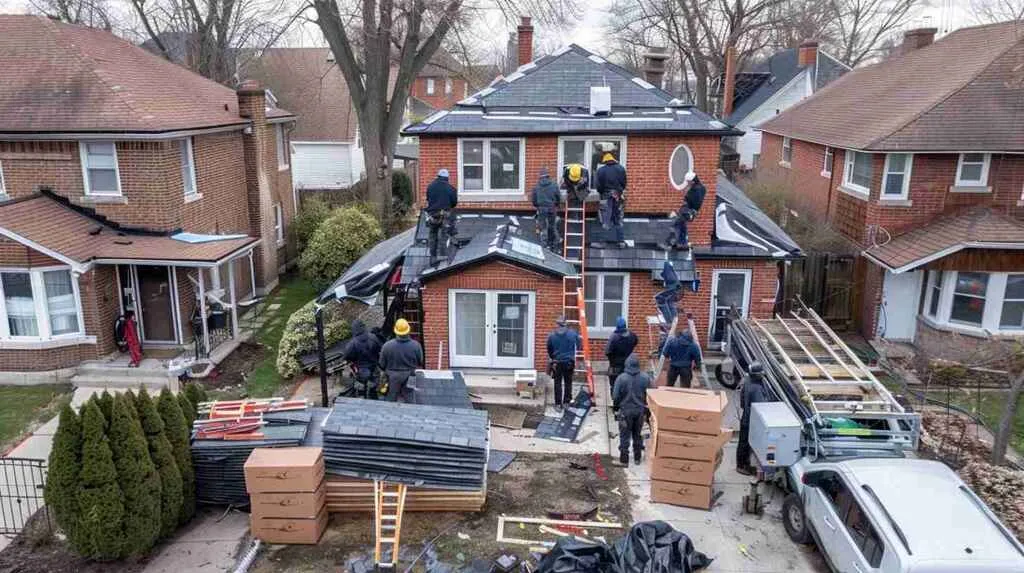
How Long Does It Take to Shingle a Roof Queens NY? Real Answer | Call Today
Clockwork. Most full tear-off-and-reshingling jobs in Queens take about 1-3 days when you do them right-not the six-hour fantasy you see on social media, but actual start-to-finish timelines that account for tear-off, decking inspection, flashing, weather holds, and the reality of working in neighborhoods where parking a dumpster means blocking half the street. If you want to know when your roof will actually be done, keep reading-I’ll walk you through the real schedule, stop by stop.
So, How Long Does It Really Take to Shingle a Roof in Queens?
At 6:45 in the morning on a job day, I’m already thinking about the finish time-not because I’m obsessed, but because I’ve seen what happens when someone promises a homeowner a “one-day roof” and then cuts every corner to hit that deadline. Case in point: one January morning around 6:15 a.m., I was standing on a driveway in Flushing with coffee freezing in my hand, explaining to a homeowner why their “one-day roof” from a guy in Brooklyn took my crew two full days to undo and redo. The old crew rushed the shingle install before a rain, didn’t stagger their courses, and didn’t flash a single wall right. I used that job to remind the owner that yes, we could slap shingles on in a day, but if you want it done to last, you build in time for tear-off, inspection, and the little fixes you only see once the old roof is off. A typical single-family home in Queens-let’s say a standard colonial with 1,500-2,000 square feet of roof-usually runs 1-2 days when everything goes smoothly. I refuse to promise six-hour roofs because that fantasy skips the stops that actually protect your house.
Here’s the range you’re looking at: small rowhouses or Cape Cods might finish in a single long day if there’s only one layer to strip, decent weather, and no surprises under the shingles. Standard colonials and two-family homes typically need 1.5-2 days, especially if we’re replacing flashing, repairing a few sheets of decking, or working around tight access in neighborhoods like Woodside or Astoria. Larger homes-three-family setups, steep pitches, multiple dormers-can stretch to 2-3 days because every penetration, every valley, every wall flashing is a “local stop” on the job line. Think of it like the difference between an express train that hits three stations and a local that makes every stop: the express looks fast on paper, but the local is the one that actually gets the job done right. Proper tear-off, inspection, and flashing add necessary stops to the schedule, but they prevent the kind of “service interruptions” that show up as leaks every time it rains.
📊 Typical Shingle Roof Timelines in Queens, NY
⚡ Shingle Timeline at a Glance
What Actually Controls Your Roof Timeline (Beyond Just Size)
Let me be blunt: if someone promised you a full roof in six hours, they either skipped steps or they’re lying. The real timeline drivers aren’t just square footage-they’re layers of old shingles, condition of decking underneath, number of roof faces and penetrations (chimneys, vents, skylights), access and parking in Queens neighborhoods, and weather. In July of 2019, during that brutal heat wave, we were working on a two-family in Jackson Heights with a super low pitch-looks easy, right? The owner thought it would be “maybe four or five hours” because the roof was small. By noon, the shingles were so hot you could’ve fried an egg on them, and we had to slow the pace so guys didn’t drop from heat exhaustion and the asphalt tabs didn’t smear. What was supposed to be a one-day job turned into a day and a half just because of temperature and safety. Queens-specific stuff adds time too: tight lots, co-op boards that require advance notice, narrow streets where we can’t stage materials close to the house, and neighbors who need their driveways clear by 5 p.m. All of that affects how fast we can move.
Here’s the train metaphor again: each of those factors is a “stop” on the job line that can add minutes or hours. Hidden rotten wood? That’s an unscheduled “service change” where we pause to replace decking before moving forward-adds 2-4 hours depending on how much plywood needs swapping. Extra layers of old shingles? That’s like running a slow “local” segment because tear-off takes longer and disposal gets heavier. Weather is the ultimate signal delay: rain stops work completely, wind over 25 mph means we can’t safely nail shingles (they lift, crews get unsafe), and extreme heat or cold slows both the crew and the shingle adhesive. Temperature impacts are real-below 40°F, shingles get brittle and won’t seal properly; above 95°F, they’re sticky and hard to handle. Wind limits aren’t just about comfort; if gusts are strong enough to turn a shingle into a kite, we’re not installing.
Here’s your realistic spread: best-case is a simple one-layer tear-off on a small, accessible roof with perfect weather-done in one solid workday. Typical case is a standard Queens colonial with one or two layers, a few minor repairs, and cooperative weather-that’s 1.5 to 2 days. Worst-case is multiple layers, rotten decking, complex roof geometry, tight access, and weather delays-easily 3+ days. Anything advertised as faster than the best-case means someone is skipping safety checks, inspection steps, or proper flashing-and you’ll pay for it later when water finds its way in.
✅ Main Factors That Change Your Roof Timing in Queens
🚫 Common Timing Myths vs Real Timelines
| Myth | Fact |
|---|---|
| “All roofs can be done in one day” | Only small, simple roofs with one layer and perfect conditions hit one day. Most Queens homes need 1.5-2 days minimum. |
| “Size is the only thing that matters” | Roof complexity, layers, decking repairs, and weather matter just as much-sometimes more-than square footage. |
| “Faster crews are better crews” | Speed without safety and quality means callbacks. A methodical crew that finishes in 2 days beats a sloppy one that rushes in 6 hours. |
| “You can roof in any weather if you’re careful” | Rain stops work completely. High wind and extreme temps create safety and performance risks no amount of care can fix. |
| “More layers save time-just roof over” | Code allows only 2 layers max in NYC, and roofing over hides problems. Tear-off adds time up front but prevents bigger issues later. |
Phase-by-Phase: Your Roof Job as a Train Schedule
Here’s how I break it down, the same way I used to think about train runs underground-phase by phase, no guesswork. The job starts with arrival and setup: the crew rolls in around 6:30-7:00 a.m., unloads tarps and safety gear, sets up the dumpster or tarp chute, and protects landscaping and windows. Next stop is tear-off, where we strip old shingles down to the decking-this is the loudest, messiest phase and usually takes 2-4 hours depending on how many layers we’re pulling. After that comes decking inspection and repairs: we walk every inch of exposed plywood, mark soft spots, and replace any rotten or damaged sheets. Then it’s underlayment and flashing-we roll out synthetic felt, install drip edge, step flashing at walls, and valley metal. This phase is critical but quiet; it’s where waterproofing actually happens. The shingle install comes next: starting at the eaves, we work our way up in staggered courses, nailing each tab to manufacturer spec. Detail work follows-ridge cap, pipe boots, chimney flashing, and making sure every seam is sealed. Finally, end-of-the-line checks: cleanup, magnet sweep for nails, haul-away, and a final walkthrough with the homeowner. Each phase is a scheduled stop, and skipping one or rushing it throws off the whole line.
I’ll never forget a windstorm job in Howard Beach-we started a re-shingle at 8 a.m. on what was supposed to be a calm October day. Forecast was “breezy,” no big deal. By 2 p.m. the wind kicked up to 40 mph gusts and we had to stop nailing shingles on the windward side because they were trying to turn into kites. We ended up tarping half the roof, re-sequencing the work for the next morning, and I sat at the kitchen table with the homeowner explaining that the extra day was literally to keep their shingles and my guys on the roof. That’s the thing about weather buffers: good crews build them into the schedule instead of gambling on borderline forecasts. If the forecast shows any chance of rain or sustained wind, we either start early to beat it or we reschedule-no exceptions. Homeowners appreciate honesty more than they appreciate a crew that shows up, gets halfway done, and then disappears when conditions turn.
🚉 Roof Shingling Phases and Typical Time Per Phase
Why Rushing a Phase Ruins the Whole ‘Line’
Skip the decking inspection to save an hour? You’ll miss rotten wood that caves in next winter. Rush the flashing to hit a one-day promise? Water will find every shortcut you took. Cut the cleanup short? Nails in the driveway, shingle debris in the garden, and callbacks. Each phase exists for a reason-skipping one to meet an unrealistic deadline is like running express past a safety check. It catches up to you, and it’s never pretty when it does.
When Your Roof Is an Express Run vs a Two-Day Local
Homeowners always ask me the same thing first: “So, how long is my life going to be upside down?” A simple, one-layer, easy-access Queens job runs like an express train-in and out in a day, minimal disruption, smooth ride from start to finish. A more complex job with multiple layers, rotten wood, and weather holds is a two- to three-day “local” that makes every necessary stop, but those stops are what turn a quick patch into a roof that lasts 25 years.
📞 How Urgent Is Your Reroofing Timeline?
Call ASAP (Urgent)
- Active leaks during rain
- Missing or blown-off shingles
- Storm damage with exposed decking
- Roof is 25+ years old and failing
Can Be Scheduled (Not Emergency)
- Roof is 15-20 years old, planning ahead
- Cosmetic wear but no leaks yet
- Selling home, want new roof before listing
- Coordinating with other exterior work
What to Do Before You Call for a Roof Time Estimate
When I pull up to a house in Queens, the first timing question in my head is not “how big is it?” but “what’s hiding under those old shingles?” The more information you can give me over the phone, the tighter I can make your schedule window. Here’s what to check or gather: the age of your current roof (if you know it-look at closing paperwork or ask the previous owner), the number of shingle layers you can see from the ground or attic (sometimes you can spot the edge at a rake or eave), any history of attic leaks or water stains, recent repairs or patches, and access issues like shared driveways, no driveway, narrow streets, or co-op rules that require advance notice. Think of it like planning the right train route before you leave the station-the more intel you give me, the fewer “service delays” we hit once the job starts. If you’ve got photos of problem areas, curling shingles, or suspect rotten spots, send those along. All of that helps me give you a realistic arrival time and finish window instead of a vague “one to three days, maybe.”
📋 Info to Have Ready Before You Call Shingle Masters
❓ Timing Questions Queens Homeowners Ask Most
✅ Why Trust Our Timing Promises
Look, I get it-you want your roof done yesterday, especially if you’re dealing with leaks or planning around a closing date or just sick of looking at curling shingles every time you pull into the driveway. But here’s the thing: a roof that’s done right in two days beats a roof that’s rushed in six hours and fails in two years. Shingle Masters can give you a specific arrival window and a realistic start-to-finish schedule for your Queens home, broken down phase by phase like a train timetable so you know exactly what to expect and when. Call us today to get on the calendar before the next Nor’easter or heat wave throws off every other contractor’s schedule-and leaves you scrambling for a crew that actually shows up when they say they will.