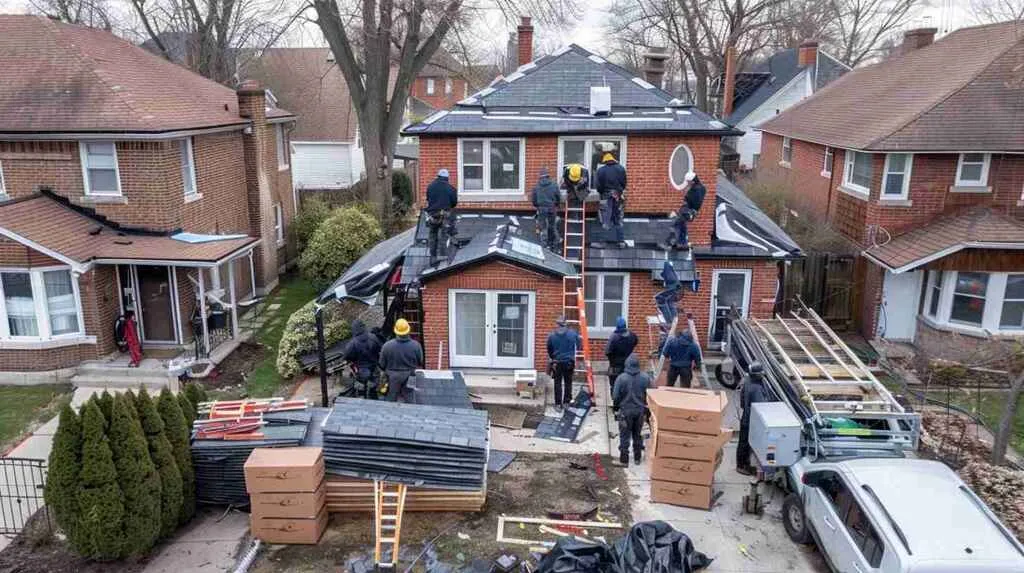
How Do Roof Shingles Work Queens NY – Roofers Explain Simply | Free Quotes
Invisible layers are running the show on your roof right now, and the shingles you can see from the street are actually doing the least of the work. I’m Luis Ortega, and after 19 years installing and repairing shingle roofs across Queens, I’ve learned that most people give shingles way too much credit and the stuff underneath them not nearly enough-shingles are a water-management system, not a waterproof shield, which is exactly why leaks rarely show up directly under the “bad shingle” you spotted from your driveway.
Shingles 101: Your Roof Is a Water Slide, Not a Lid
Here’s my honest take: most people give shingles way too much credit and the underlayment not nearly enough. Shingles don’t seal your house like Tupperware; they’re built to overlap and channel water downhill in a controlled path, like a sloped chessboard where every piece’s only job is forcing water in one direction-down and out. That’s why one August afternoon around 3 p.m. in Woodhaven, at 94 degrees with shingles so hot they felt like soft tires, I had to show a homeowner that his dining room stain wasn’t from the shingles above his table at all-water had traveled from a tiny nail pop ten feet uphill and two rafters over, and we traced the whole route using a garden hose and blue chalk dust. If you don’t understand how shingles move water, you’ll waste money fixing the wrong place every time.
The overlapping shingle system works because each course catches water from the one above and sheds it to the one below, relying on gravity and slope to keep everything flowing out toward the gutters. In Queens, where most homes sit at 4:12 or 5:12 pitches and plenty of older structures in Astoria and Elmhurst have settled or shifted over decades, water will absolutely “argue” its way uphill if shingles are curled, nails are popped, or the slope’s been compromised by sloppy layers. When water finds a gap, it doesn’t politely drip straight down-it travels sideways along rafters, pooling wherever it can until it finally finds a crack to leak through, which is why your ceiling stain is almost never directly below the problem shingle.
What Shingles Actually Do (and Don’t Do) on Your Queens Roof
- ✅ Channel rainwater downhill in controlled paths
- ✅ Protect the underlayment from UV and direct weather
- ✅ Shed most wind-driven rain when properly overlapped
- ❌ Form a completely waterproof seal by themselves
- ❌ Stop leaks if underlayment or flashing is missing
- ❌ Guarantee a dry house if they’re installed over soft, rotten wood
The Layers Under Your Shingles (The Queens Roof “Sandwich”)
One Saturday morning in October, crisp and sunny, we were replacing a roof in Astoria for a young couple who’d just bought their first place, and halfway through tearing off we found the previous roofer had laid shingles directly over an old, curled layer with no underlayment at all-looked like someone threw a tarp and hoped for the best. When I lifted a shingle and you could see kitchen light through the gaps in the decking, I had the perfect visual to show them how shingles are just the outer raincoat; without the right layers underneath, they’re like a hoodie in a thunderstorm. A shingle roof is a stacked system: decking (the plywood or boards), underlayment (synthetic or felt paper that’s your real waterproof barrier), shingles (the visible armor), and flashing (metal or membrane that seals transitions). In Queens’ nor’easters and humid summers, that underlayment is the unsung hero-it keeps water out even when shingles crack, curl, or blow off, buying you time before a small problem becomes a ceiling disaster.
Around older housing stock in Astoria, Elmhurst, and Woodside, I’ve seen three or four shingle layers stacked like geological sediment, sometimes with zero underlayment on the bottom course and shortcuts everywhere in between. That matters because these neighborhoods often have original 1940s and ’50s framing that’s shifted, settled, or been patched over decades, and if you’re laying new shingles over a compromised base, you’re just dressing up a problem. The underlayment is especially critical here-it gives you a clean, sealed plane so water can’t exploit gaps in old decking or sneak through nail holes from previous installs. Insider tip: before you agree to any “overlay” job where they just shingle over the old layer, ask specifically whether they’re tearing down to clean wood and installing fresh underlayment; if the answer’s vague or they say “it’s fine, we do it all the time,” you’re heading for a hidden leak and a denied insurance claim after the next big storm.
| Layer | Main Job | What Happens If It’s Wrong |
|---|---|---|
| Decking | Structural base that holds nails and supports all other layers | Soft, rotten, or spaced boards let nails pull through; shingles sag and leak immediately |
| Underlayment | True waterproof barrier; stops water that gets past shingles | Missing or torn underlayment = direct path to attic; leaks appear fast and spread wide |
| Shingles | Outer weather shield; channels most water downhill and protects underlayment from UV | Curled, cracked, or missing shingles expose underlayment to sun and rain, shortening its life |
| Flashing | Seals transitions (chimneys, vents, walls) where shingles can’t overlap properly | Bad flashing = guaranteed leaks at valleys, sidewalls, and penetrations, no matter how good the shingles |
⚠️ Warning: Skipping Underlayment or Shingling Over a Bad Layer
Laying new shingles over curled or rotted layers, or skipping underlayment entirely, is a common budget shortcut in Queens that leads to hidden leaks, moldy insulation, and denied insurance claims after storms. The shingles might look fresh for a year or two, but water’s already sneaking through gaps in the old decking and soaking your rafters. Ask specifically if old layers are being removed down to clean wood and whether fresh underlayment is part of the quote-if the crew says “we’ll just overlay it, saves you money,” you’re buying a ticking time bomb that’ll cost triple to fix when the ceiling starts dripping.
Nails, Wind, and Nor’easters: How Shingles Stay Put
There was a nor’easter about five years ago-cold sideways rain, 10 p.m.-when a retired teacher in Bayside called because shingles were literally fluttering off her roof like playing cards. She’d had a “budget” install three years earlier, and they’d skipped starter strips and barely nailed into the right spot on the shingles; up on that slick roof with my headlamp, I could see how the wind got under the edges and just peeled them back, the clearest example I’ve ever seen of why the shingle system is only as strong as the way it’s fastened. Correct nailing means four to six nails per shingle, placed in the nailing zone about an inch below the seal strip, driven flush but not over-driven, and starter strips along the eaves and rakes to lock the first course so wind can’t pry underneath. In Queens, where you get gusts off the East River and Jamaica Bay that can hit 50 mph during a coastal storm, proper fastening isn’t optional-it’s the difference between a roof that rides out the weather and one that ends up decorating your neighbor’s yard. Insider tip: if you see shingles lifting or fluttering after a windy night, check whether there’s a starter course at the edges and whether nails are visible above the seal strip; both are signs of sloppy work that’ll fail in the next big blow.
| Proper Nailing | Sloppy Nailing |
|---|---|
| Nails placed in manufacturer’s nailing zone, about 1″ below seal strip | Nails too high (above seal strip) so shingle isn’t locked down; wind lifts it easily |
| Four to six nails per shingle, depending on slope and wind zone | Only two or three nails per shingle to save time; shingle tears at stress points in high wind |
| Nails driven flush to surface, not over-driven into shingle | Over-driven nails break through shingle or punch into soft decking; nail pops and leaks follow |
| Starter strips installed along eaves and rakes to seal first course | No starter strips; wind gets under bottom edge and peels shingles back like a zipper |
| Nails hit solid decking, not gaps between boards or over soft spots | Nails miss rafters or hit rotten wood; shingles pull loose within months |
| Myth | Fact |
|---|---|
| Wind only rips off old, worn-out roofs | Even brand-new shingles blow off if they’re nailed wrong or installed without starter strips; age isn’t the issue, fastening is |
| More nails anywhere on the shingle is always better | Nails in the wrong spot (too high or too low) create leak points and don’t add holding power; it’s placement, not quantity |
| Starter strips are optional or just for looks | Starter strips are structural-they seal the bottom edge so wind can’t pry under the first course; skipping them invites blow-offs |
| Sealing strips alone will save a badly nailed roof | Seal strips bond shingles together but can’t compensate for nails in the wrong zone or missing altogether; they work together, not instead of |
Where Leaks Really Start: Following the Water’s Path
When I first step into your yard, the question in my head is never “Are the shingles pretty?”-it’s “Where can water cheat?” I treat water like a stubborn character in the story, always trying to argue its way uphill around chimneys, vents, and valleys, looking for any gap where gravity stops being the boss. That Woodhaven job I mentioned earlier, the one at 94 degrees in August-we spent an hour with a garden hose and blue chalk dust tracing how water traveled from a nail pop ten feet uphill and two rafters over before it finally dripped onto the dining room table. The homeowner kept pointing at the shingles directly above his stain, absolutely convinced that’s where the problem was, but when I showed him the chalk line snaking sideways along the rafter and pooling at a knot in the wood, he got it: leaks rarely start where you see the damage. Water doesn’t politely drip straight down-it follows the path of least resistance, sliding along structural members, pooling in low spots, and sneaking through any crack it finds until it finally surrenders to gravity and drips through your ceiling, often eight or ten feet away from the actual entry point.
One Saturday morning in Astoria, lifting a shingle and seeing kitchen light through gaps in the decking was the perfect visual proof that leaks aren’t always about the shingles themselves-sometimes the structure underneath is the problem, and no amount of fresh asphalt will fix rotten boards or missing layers. Around Queens, common trouble spots are anywhere roofs meet walls (sidewall flashings in attached homes in Jackson Heights), around skylights (especially in Forest Hills where every third house added one in the 2000s), and in valleys where two roof slopes dump water together and any gap in the metal or membrane becomes a highway straight to your attic. Chimneys are another favorite “cheat” spot for water-if the flashing isn’t stepped and sealed correctly, water runs down the brick, hits the roof plane, and sneaks under the shingles, often showing up as a stain on the opposite side of the chimney from where you’d expect.
$600 in ceiling damage can start with one nail head sitting 1/16 of an inch too high. That’s how precise shingle work has to be if you want a dry house in Queens.
Is Your Shingle Leak Likely From Shingles or From Details Like Flashing/Underlayment?
Likely causes:
- Exposed decking from torn or missing shingles
- Wind damage that broke the seal or pulled nails
- Granule loss and weathering on old shingles
Next step: Call a pro for targeted shingle repair or replacement of damaged sections
Likely causes:
- Failed flashing around chimneys, vents, or sidewalls
- Nail pops or gaps in underlayment
- Clogged gutters causing water backup
- Valley problems where two roof slopes meet
Next step: You may need a full system inspection to trace where water is actually entering
Shingle Leak Situations in Queens: Call Now vs. Can Wait
🚨 Urgent Situations
- Active dripping during moderate rain – means water has a clear path and will get worse fast
- Sagging ceiling or visible bulge – water’s pooling above drywall; collapse risk
- Water near electrical fixtures or outlets – safety hazard; shut power and call immediately
⏰ Can-Wait Situations
- Small stain that hasn’t grown – monitor it through the next rain; may be old damage
- A couple of shingles slightly curled – won’t leak yet, but schedule repair before winter
- Minor granule loss in gutters – normal aging; just means you’re closer to needing replacement
What to Expect When a Queens Roofer Checks Your Shingles
On a typical two-family in Queens Village, I’ll start by following the same path water takes-from the ridge down to the gutters, stopping at every spot where water can “cheat”-so I’m not wasting your money chasing the wrong problem or fixing a symptom instead of the source. This methodical approach means I can tell you, “Your leak is from the chimney flashing, not the shingles you can see from the street,” and actually show you why, instead of throwing a tarp over everything and hoping for the best.
Step-by-step: How I walk your roof, top to bottom
Exterior walk-around from the ground
Check for obvious damage, missing shingles, sagging lines, and gutter condition before I even touch a ladder
Check ridge and highest slopes
Start where water starts-ridge vents, caps, and upper shingles; look for lifting, cracking, and whether nails are popped or sealed
Inspect valleys and where roofs meet walls
These are the “cheat zones” where water concentrates; check metal valley liners, sidewall step flashing, and any membrane transitions
Examine penetrations (vents, chimneys, skylights)
Anywhere something pokes through the roof is a potential leak point; look at pipe boots, chimney step flashing, and skylight curbs for cracks or gaps
Check field shingles for nail pops, blisters, and granule loss
Walk the main slopes looking for high nails, seal-strip failures, blistering from trapped moisture, and bare spots where granules have washed away
Inspect attic (if accessible) for stains and airflow issues
From inside, check for daylight through decking, water stains on rafters, mold growth, and whether ventilation is adequate to prevent condensation
💰 Typical Queens Shingle Work Scenarios and Ballpark Price Ranges
These are rough local ranges for planning only-not quotes. Every roof is different.
| Scenario | Estimated Range |
|---|---|
| Small shingle + nail-pop repair (1-2 roof areas) | $350-$800 |
| Flashing repair around chimney or sidewall | $600-$1,400 |
| Partial slope re-shingle on a two-family | $2,200-$4,500 |
| Full tear-off and new shingle system on a standard Queens detached home | $8,000-$16,000+ |
✓ Before You Call Shingle Masters in Queens
Jot down these details so we can give you faster, more accurate help:
- Where you see the stain or drip inside – room, ceiling or wall, approximate size
- How long it’s been there – showed up after last storm, been growing for months, brand new
- What direction that side of the house faces – helps us think about wind-driven rain and sun exposure
- Any recent storm or wind event – nor’easter, summer thunderstorm, sustained high winds
- Whether the roof has ever been fully replaced while you’ve owned the home – or if it’s original/unknown age
Common Queens Homeowner Questions About How Shingles Work
Why is my leak far from the damaged shingle I can see?
Water doesn’t drip straight down-it travels along rafters, slides under shingles, and pools wherever it finds a gap. The stain on your ceiling might be eight or ten feet downhill from the actual entry point, especially if the damage is near a valley, chimney, or vent where water concentrates. That’s why chasing the “bad shingle” you can see from the ground rarely fixes the leak; you have to trace the water’s path from where it gets in to where it finally drips out.
How long should asphalt shingles last in Queens weather?
In Queens, with our humid summers, freeze-thaw cycles, and coastal storms, properly installed architectural shingles typically last 20-25 years, while basic three-tab shingles might give you 15-20. That assumes correct underlayment, adequate attic ventilation, and no shortcuts during installation. Roofs that were overlaid without tearing off old layers, or installed without proper starter strips and flashing, often fail in half that time. If your roof’s pushing 20 years or you’re seeing widespread granule loss and curling, it’s time to budget for replacement, not just patches.
Can I just replace the visibly bad shingles and be fine?
Sometimes, yes-if a few shingles blew off in a storm and the underlayment and flashing around them are still solid, targeted repair works great. But if the “bad shingles” are symptoms of a bigger issue-rotten decking, failed underlayment, or flashing that’s pulling away-then patching the visible damage just hides the problem until the next rain. A good roofer will tell you honestly whether a repair will hold or whether you’re throwing money at a roof that needs a full replacement; if multiple areas are failing or the roof’s near the end of its lifespan, a patch is like duct tape on a sinking boat.
Do I need a whole new roof or can you repair just part of it?
It depends on how widespread the damage is, the age of the roof, and whether the underlying structure is sound. If you’ve got localized storm damage on a roof that’s only ten years old and the rest of the system is solid, a partial repair or slope replacement makes total sense. But if shingles are curling across multiple slopes, the roof’s over 20 years old, and you’re patching leaks every other year, you’re better off budgeting for a full tear-off and replacement-you’ll spend less in the long run and get a warranty that actually means something. I’ll always walk you through both options with real numbers so you can make the call that fits your timeline and budget.
Why Queens Homeowners Hire Shingle Masters for Shingle Roofs
Full liability coverage and workers’ comp so you’re protected if anything goes wrong on the job
Every neighborhood, every roof type, every weather pattern-we’ve seen it and fixed it
No surprises when the inspector shows up; we pull permits and do it right the first time
In most Queens neighborhoods, if you’re dripping now, we’ll get eyes on it fast and give you a straight answer
If you understand how the shingle system is supposed to move water-overlapping layers forcing rain downhill, underlayment catching what sneaks past, flashing sealing the transitions-you’ll spot problems earlier, ask better questions, and spend a lot less on repairs over the years. Call Shingle Masters in Queens for a simple, straight-talking inspection and a free quote on any shingle roof issue, whether it’s a couple of wind-damaged tabs or a full system that’s ready to retire; we’ll walk your roof the same way water does and tell you exactly what needs fixing and what can wait.