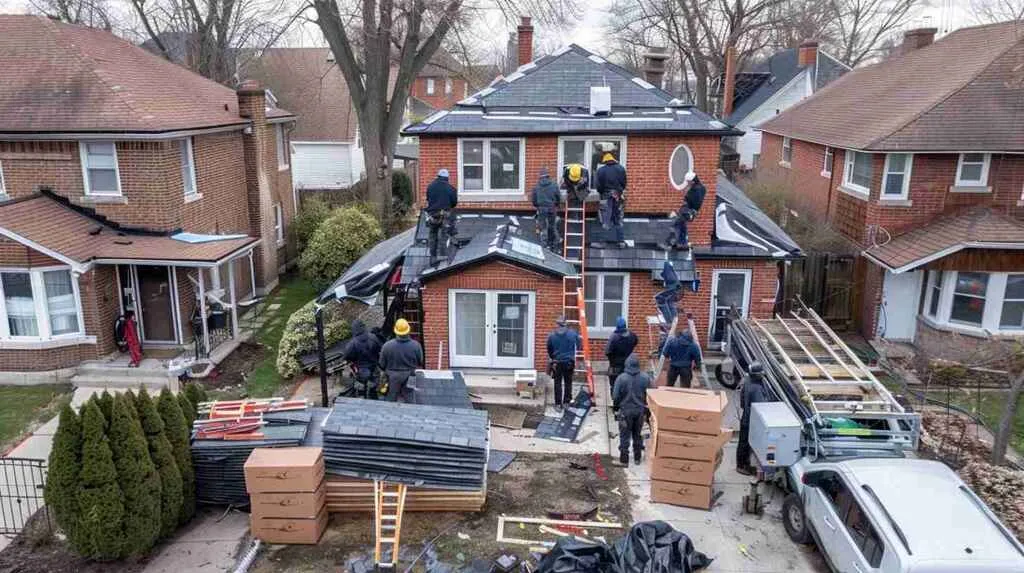
Change Shingle Roof to Tile Queens NY – What the Conversion Needs
Blueprints for a tile conversion tell you something most people hate hearing: when you’re looking at $45,000 to $95,000 or more on a typical two-family in Queens to change shingles to tile, you’re not buying tile – you’re buying structural engineering, rafter reinforcement, new sheathing, DOB permits, and maybe sixty hours of framing work before a single clay piece gets nailed down. The tile itself is honestly one of the smaller line items in the quote, but it’s the one homeowners zoom in on first, and that’s where projects go crooked. I’ve learned, after nineteen years on these roofs from Bayside to Far Rockaway, that thinking only in terms of material price is like judging a photograph just by the camera body instead of the lighting, lens, and time behind the prep that actually makes the shot work.
What It Really Costs to Change a Shingle Roof to Tile in Queens
Here’s my honest take: if your budget is only thinking about tile color, you’re not ready for this conversion yet. The real money disappears into the bones of your house – you’re paying to verify that your roof can hold fifteen to twenty-five pounds per square foot of extra weight and then to make it happen when the answer is “not yet.” In Queens, where most pre-war and mid-century houses were framed for asphalt shingles that weigh maybe four pounds per square foot, we’re talking about sistering existing rafters, adding structural beams in the attic, upgrading plywood sheathing from half-inch to at least five-eighths, sometimes building new collar ties or even installing steel plates where spans are too long. You’ll also pay for a professional engineer’s stamped load calculation because the DOB won’t touch a tile conversion without one, plus permit fees, inspections, and scaffolding rental if your house is taller than one story. That’s your baseline before anyone picks a tile color, and that’s why the phone number I hear most often – “I saw tile at $4 a square foot online” – makes me grab my level and start sketching reality on the nearest flat surface.
One August afternoon in Woodhaven, it was 96 degrees and the shingles were soft like chocolate, and this homeowner swore he could “just switch to Spanish tile” because he saw it on a Miami house on Instagram. I remember standing on his south slope, sweat dripping into my eyes, showing him with a tape measure and a notepad how his 2×6 rafters at 24 inches on center would bow if we dropped that much weight on them. We ended up sistering the rafters and adding a mid-span beam in the attic before a single tile went up, and three months later, after the first nor’easter, he called to say he finally believed me. That reinforcement work was close to half his total invoice, but it’s also the reason his ceiling stayed flat and his doors still close smoothly when the wind picks up off Jamaica Bay.
Estimated Cost Scenarios to Change Shingle Roof to Tile in Queens, NY
| Scenario | Home Type & Roof Size | Structural Condition Assumed | Tile Type | Estimated Price Range |
|---|---|---|---|---|
| Small One-Story, Good Frame | 1,200 sq ft bungalow, simple gable | 2×8 rafters @ 16″ OC, ¾” sheathing already in place | Lightweight concrete tile | $38,000-$52,000 |
| Typical Two-Family, Moderate Work | 2,400 sq ft, hip roof, 1950s build | 2×6 rafters @ 24″ OC; needs sistering, sheathing upgrade | Standard clay barrel tile | $62,000-$84,000 |
| Larger Home, Complex Roof | 3,200 sq ft, dormers, multiple valleys, pre-war | Mixed framing; requires engineered beams, new collar ties, reinforced valleys | High-end clay Spanish tile | $88,000-$125,000+ |
| Small Ranch, Already Over-Engineered | 1,600 sq ft, simple shed, 1970s build with engineered trusses | Existing trusses rated for snow; minimal structural upgrades | Mid-weight composite tile | $40,000-$56,000 |
| Two-Story Colonial, Major Rework | 2,800 sq ft, steep pitch (8:12), turret feature, 1920s frame | Undersized rafters, deteriorated sheathing, requires full structural overhaul and steel supplementation | Premium clay flat tile | $95,000-$145,000+ |
These are ballpark ranges; final pricing depends on in-person structural evaluation, tile selection, and DOB permit/inspection requirements. Labor costs can shift seasonally in Queens, and unforeseen repairs inside the attic or along the eaves will adjust totals.
Is Your Queens Roof Strong Enough for Tile? The Structural Test
On a typical two-family in Jackson Heights, the first thing I look at isn’t the shingles – it’s the bones under them. I’ll climb into the attic before I step on the roof because that’s where the real story lives: rafter size, on-center spacing, how many spans run unbroken, the condition of your sheathing, whether you’ve got collar ties doing actual work or just decorative lumber nailed up by someone’s cousin forty years ago. In Queens, especially in Jackson Heights, Maspeth, and Woodhaven, we’re dealing with a lot of 1930s through 1960s framing – 2×6 rafters at 24 inches on center, sometimes rough-sawn lumber that’s actually stronger than modern dimensional stock, sometimes not. The DOB inspectors focus hard on load calculations because they’ve seen too many tile jobs go bad when someone skipped the engineer, and they’ll red-tag your permit faster than you can say “Spanish profile” if the numbers don’t line up. I walk in with my tape measure and a pad, sketch the framing plan right there in the dust, and if I see anything that makes me nervous – sagging ridge, cracked rafters, sheathing that’s warped or water-stained – I’m telling you that day, not after you’ve already ordered ten palettes of tile.
I’ll never forget a tile conversion in Bayside at 7:30 on a foggy October morning where the neighbor marched over in slippers, furious because “tile doesn’t belong on these houses.” We were mid-demolition on the old three-tab shingles, and I stopped the crew, pulled out my binder of structural notes and historical photos, and walked both homeowners through why we’d chosen a lightweight concrete tile and upgraded the sheathing. That same neighbor ended up recommending me to his sister once he saw the finished roof and realized it was quieter in the rain than his own shingles. The lesson stuck with me: proper structural planning wins over both neighbors and inspectors, but only if you do the homework before the first shingle comes off. Structure dictates what kind of “shot” you can safely compose – if the bones won’t hold the frame, no amount of pretty tile will save the roof from sagging, cracking your plaster, making doors stick, or worse, actually failing during a nor’easter or a heavy March snow.
Typical Structural Checks Before Switching From Shingles to Tile in Queens
| Check | What Lena Looks At | Common Queens Finding | Typical Fix Before Tile |
|---|---|---|---|
| Rafter Size & Spacing | Actual dimensions, on-center measurement, span length from ridge to plate | 2×6 @ 24″ OC with 14-16 ft spans – undersized for heavy tile | Sister every rafter with 2×6 or 2×8, add mid-span support beam in attic |
| Roof Sheathing Thickness | Current material (boards vs plywood), thickness, condition, fastening pattern | ½” CDX plywood or 1× skip sheathing from the 1950s | Tear off old sheathing, install ⅝” or ¾” structural plywood nailed to code |
| Ridge & Valley Framing | Ridge board size, valley rafter condition, any sag or deflection visible | Single 2× ridge board sagging slightly, valley rafters cracked or undersized | Install doubled or tripled ridge, replace valley rafters, add posts or beams below |
| Wall Plate & Connection | How rafters bear on top plate, presence of hurricane ties or toe-nail only | Toe-nailed only; no engineered connectors, common in pre-1980s builds | Retrofit Simpson ties or equivalent to meet current wind-uplift code for tile weight |
Dangers of Skipping Structural Upgrades When Converting to Tile
Overloading existing rafters with heavy tile when they were only ever designed for asphalt shingles can lead to visible sagging along the ridge line, cracked plaster ceilings inside your home, doors and windows that suddenly stick or won’t latch properly, and in the worst cases, actual structural failure during a nor’easter or when twenty inches of wet snow pile up in February.
A licensed structural engineer or an experienced roofing contractor who understands Queens building codes must sign off on the load path and provide stamped calculations before you order the first pallet of tile. Don’t let anyone tell you “it’ll be fine” without showing you the math and a plan – that’s how roofs end up on the evening news instead of on your Instagram feed.
Designing the Look: Tile Types, Layouts, and Queens Weather
I still remember the first bungalow in Far Rockaway where I refused to install tile because the rafters were already smiling at me – you could see the sag from the street, and the homeowner kept insisting “everyone’s doing tile now.” Not on my watch when the bones are already bent. That job taught me early that tile type, profile, and layout have to be composed like a shot: you balance weight, wind exposure coming off the Atlantic, and water flow, especially around the valleys and dormers you see all over Jackson Heights and Bayside. Clay barrel tile looks gorgeous and lasts forever, but it’s heavy – up to 25 pounds per square foot installed – so if your structure can’t handle it, you pivot to lightweight concrete or composite tiles that give you a similar profile at half the dead load. Spanish S-profile tile sheds water fast on steeper pitches but can trap debris in the curves if your roof is low-slope or surrounded by oak trees. Flat clay tile (sometimes called “French” tile) gives you a clean, European look and works well in high-wind zones because there’s less sail area, but the flashing details around penetrations and step-flashing along chimneys get complicated fast. And here’s the truth nobody wants to hear: flashy patterns that ignore proper flashing and drainage might look incredible in a rendering, but they’re just pretty on paper and leaky as hell in real Queens storms with driving rain and ice dams.
Comparing Common Tile Options When Upgrading From Shingles
| Tile Type | Pros | Cons |
|---|---|---|
| Clay Barrel / Spanish Tile |
|
|
| Concrete Tile (Standard & Lightweight) |
|
|
| Composite / Synthetic Tile |
|
|
If you wouldn’t hang a 200-pound framed print on a nail in drywall, don’t hang a tile roof on framing that was only ever sized for shingles.
Step-by-Step: How a Tile Conversion Actually Happens in Queens
When you tell me, “Lena, I want that Mediterranean look,” my first question back is always, “How high is your attic and what size are your rafters?” Because that’s where the process actually starts – not at the tile showroom, not picking colors on Pinterest, but in your dusty attic with a flashlight, a tape measure, and sometimes a reciprocating saw to open up a small section of the ceiling if the framing is hidden behind drywall or old plaster. I’ll take measurements, sketch the framing layout on a pad or the back of my clipboard, shoot photos of the ridge, valleys, and any suspicious sags or water stains, then bring all that data back to either our in-house engineer or a structural PE I trust in Astoria who specializes in Queens residential work. They’ll run the load calculations – existing dead load, new tile dead load, live loads for snow and maintenance, wind uplift per the current code – and give me a stamped set of drawings that show exactly what needs to happen: which rafters get sistered, where we add beams, what size fasteners and connectors, how the sheathing gets upgraded, the whole nine yards. Then I file that package with the Queens DOB along with the permit application, building plans, and contractor info, and we wait. Could be two weeks, could be six, depending on how backed up they are and whether the plans examiner has questions.
Here’s the thing nobody tells you: getting a clean DOB approval in Queens is like nailing the perfect long exposure shot – the prep matters way more than the split second on the shutter. If you walk in with stamped structural calcs and a clear load-path sketch, the review goes smooth. If you show up with a tile brochure and a handshake, you’re getting red-tagged and sent home. Once the permit is approved and posted, we schedule the work in phases to protect your house and your neighbors: full tarping and safety netting, dumpster delivery, careful demo of the old shingles (and sometimes the old sheathing if it’s rotted or too thin), then the structural carpentry – sistering rafters, installing beams, upgrading sheathing, adding hurricane ties. Only after that framing work passes inspection do we start the tile installation: underlayment, battens if the tile profile requires them, then tile from eave to ridge, course by course, with every piece checked for alignment and proper lap. Ridge caps, hip caps, and all the custom flashing around chimneys, vents, and skylights come last. Realistic timeline from signed contract to final inspection: four to eight weeks for planning and permits, then another one to three weeks on site depending on size, complexity, and weather. We stage carefully so you’re never left with an open roof overnight, and we use plywood barriers and drop cloths to keep dust and debris out of your house and off your neighbor’s driveway.
From Shingle Roof to Tile Roof in Queens: Lena’s Exact Sequence
On-Site Structural Inspection & Attic Assessment
Lena or a lead crew member climbs into your attic, measures rafter dimensions and spacing, checks sheathing condition, takes photos of any sag or damage, and sketches the framing plan. This visit also covers roof access, neighbor considerations, and dumpster placement logistics.
Structural Engineering & Load Calculations
Data goes to a licensed PE who runs dead-load, live-load, and wind-uplift numbers per current Queens building code. Engineer produces stamped drawings showing required reinforcements: sistered rafters, new beams, upgraded sheathing, connection details, fastener schedules.
Tile Selection & Material Ordering
With the structural plan locked, you pick tile type, profile, and color. Lena helps you balance aesthetic goals against weight constraints and budget. Tile, underlayment, fasteners, flashing, and battens are ordered with lead times factored in (often 3-6 weeks for specialty tile).
DOB Permit Application & Approval
Stamped engineering drawings, site plans, contractor license, and insurance certificates are submitted to Queens DOB. Approval typically takes 2-6 weeks. No work starts until the signed permit is posted on site and you have the green light from the city.
Demolition, Structural Upgrades & Sheathing Installation
Old shingles and underlayment (and sometimes old sheathing) are stripped off. Rafters are sistered, beams installed, hurricane ties added, and new ⅝” or ¾” plywood sheathing goes down, nailed to engineered schedule. A framing inspection is called before moving to the next phase.
Underlayment, Battens & Tile Installation
High-quality synthetic underlayment (often two layers in critical areas), horizontal battens if required by tile profile, then tile installation course by course from eave to ridge. Every piece is checked for alignment, proper overlap, and secure fastening. Flashing is custom-fit at all penetrations, valleys, and edges.
Final Inspection, Clean-Up & Project Close-Out
DOB inspector reviews the completed roof against the approved plans. Once signed off, the permit is closed, you receive all warranty paperwork and care instructions, the site is swept clean, and Lena walks the roof one last time to confirm every detail matches the original vision – and the engineering that made it safe.
Tile Conversion At-a-Glance for Queens Homeowners
⏱ Typical Project Duration
4-8 weeks for engineering & permits, then 1-3 weeks on-site for structural work and tile installation
📋 Permit Requirement
Always required in Queens for any tile conversion; must include stamped structural drawings from a licensed PE
⚖ Average Added Dead Load
+4 to +21 lb per sq ft over shingles, depending on tile type (lightweight concrete vs heavy clay barrel)
📅 How Far in Advance to Schedule
Plan 10-14 weeks ahead: tile lead time, engineering, permit approval, and crew availability in peak season
Should You Even Do It? Quick Reality Check Before You Call
$25,000 is the lowest I’ve ever seen a real tile conversion in Queens come in at, and that was a tiny, structurally perfect roof on a one-story ranch with engineered trusses already rated for snow. If you’re only centering the shot on curb appeal and not including structure, budget buffer, and code in the frame, tile might not be the right subject – yet.
Should You Move Forward With a Tile Conversion or Stick With Shingles Right Now?
START: Is your total budget (including structural work, engineering, permits, and tile) at least $45,000?
→ YES: Continue to next question ↓
→ NO: Better to stay with high-quality architectural shingles for now and revisit tile when budget allows full structural work.
Do you plan to stay in this home for at least 10-15 years?
→ YES, long-term home: Continue to next question ↓
→ NO, selling within 5 years: Tile adds value, but you likely won’t recoup the full structural investment on resale in Queens – premium shingles might be smarter financially.
Can you handle a 4-8 week permit timeline and potential DOB plan review comments?
→ YES, I can wait for proper approvals: Continue to next question ↓
→ NO, I need a new roof within 2-3 weeks: Tile isn’t feasible on that timeline – go with quality shingles now, plan tile for a future phase if you want it later.
Has a structural professional (engineer or experienced contractor) already inspected your attic framing and confirmed feasibility?
→ YES, and they said it’s doable with upgrades: Good candidate for tile conversion – schedule a detailed estimate and engineering package with Shingle Masters.
→ NO, haven’t had anyone look yet: You need an on-site structural inspection first – call to schedule that before making any tile decisions or getting excited about colors.
→ NO, and they said my framing can’t support tile even with upgrades: Stick with architectural shingles or consider a standing-seam metal roof if you want a premium look without the weight.
Common Questions About Changing Shingle Roofs to Tile in Queens, NY
Can I usually reuse my existing roof framing when converting to tile?
Rarely without upgrades. Most Queens homes built before 1980 were framed with 2×6 or 2×8 rafters spaced 16 to 24 inches on center, sized only for the light weight of asphalt shingles and local snow loads. Tile adds significant dead load – anywhere from 8 to 25 pounds per square foot depending on the type – so you almost always need to sister rafters, add mid-span beams, upgrade sheathing thickness, and install engineered connectors to meet current code. A structural engineer will tell you exactly what’s required after measuring your existing framing and running the load calculations.
How does Queens weather – nor’easters, snow, wind – affect which tile I should choose?
Queens sits in a high-wind, freeze-thaw zone with occasional heavy wet snow and driving rain from coastal storms. Clay and quality concrete tile both handle freeze-thaw cycles well because they’re low-absorption and won’t crack from ice expansion the way cheaper materials might. For wind resistance, you want a profile with a lower sail area – flat or low-profile tiles perform better than high-barrel Spanish tiles in sustained 50+ mph gusts. Your fastening pattern and underlayment also matter: we use more fasteners per tile and staggered laps in high-wind areas like Bayside, Breezy Point, and Far Rockaway. Lightweight concrete or composite tile can be a smart pick if you’re near the water because it reduces the dead load while still giving you the durability you need for nor’easters and ice.
Is a tile roof louder than shingles when it rains?
Actually, tile is usually quieter. When installed over solid sheathing (which you need anyway for code and structural reasons), tile’s mass and the air gap under the tiles dampen sound better than thin asphalt shingles laid directly on plywood. You won’t hear that harsh patter during a downpour – it’s more of a soft, muffled sound, almost like white noise. Metal roofs are the loud ones; properly installed tile is one of the quietest options you can choose, and that’s a selling point I mention to every skeptical homeowner in Queens who’s worried about noise from storms or low-flying planes near LaGuardia.
Does a tile roof actually add resale value in Queens neighborhoods?
It depends on the neighborhood and the buyer pool. In areas like Bayside, Douglaston, Forest Hills, and parts of Jackson Heights where you see a mix of Mediterranean, Tudor, and upscale colonials, a well-done tile roof is a strong selling point and can add $20,000 to $40,000 in perceived value because it signals quality, longevity, and low future maintenance. In more working-class or rapidly flipping neighborhoods, buyers might not appreciate or understand the investment, and you won’t get your money back on resale. The real value comes if you’re staying long-term: you’re done with roofing for decades, your house stands out, and you’re not writing checks for emergency shingle repairs every few years after a storm.
How long is the roof exposed or unusable during the conversion process?
We never leave a roof open overnight or unprotected during rain. The shingle tear-off, structural upgrades, and new sheathing typically happen in one or two carefully staged phases, and we use heavy tarps, temporary weather barriers, and coordinated scheduling so that even if demo runs into the afternoon, everything is sealed tight by the end of each workday. Once the new sheathing and underlayment are down, your house is weather-tight again even before the first tile goes on. Total time with any kind of disruption – noise, crew presence, material staging – runs about one to three weeks on site, but your actual living space stays dry and protected the whole time. We also coordinate with weather forecasts and won’t start a critical phase if heavy rain is in the 48-hour window.
Every Roof Has Different Bones – Let’s Walk Yours
Blunt truth: tile doesn’t forgive laziness the way shingles sometimes do. Every Queens house has different framing, different wind exposure off the water or between buildings, different dormer angles and valley layouts that change how water moves and where weight concentrates. The only honest way to price a tile conversion and know if it’s even safe is an on-site structural and design review where someone who knows what they’re looking at climbs into your attic, measures everything, and sketches out options on the spot instead of handing you a number over the phone based on square footage alone. Call Shingle Masters and let me and the crew walk your roof with a tape measure, a level, and a pencil – we’ll show you exactly what it takes to swap shingles for tile safely, give you a line-by-line plan that’ll pass Queens DOB review, and help you decide if this is the shot you really want to compose or if premium shingles get you where you need to be for a lot less money and headache.