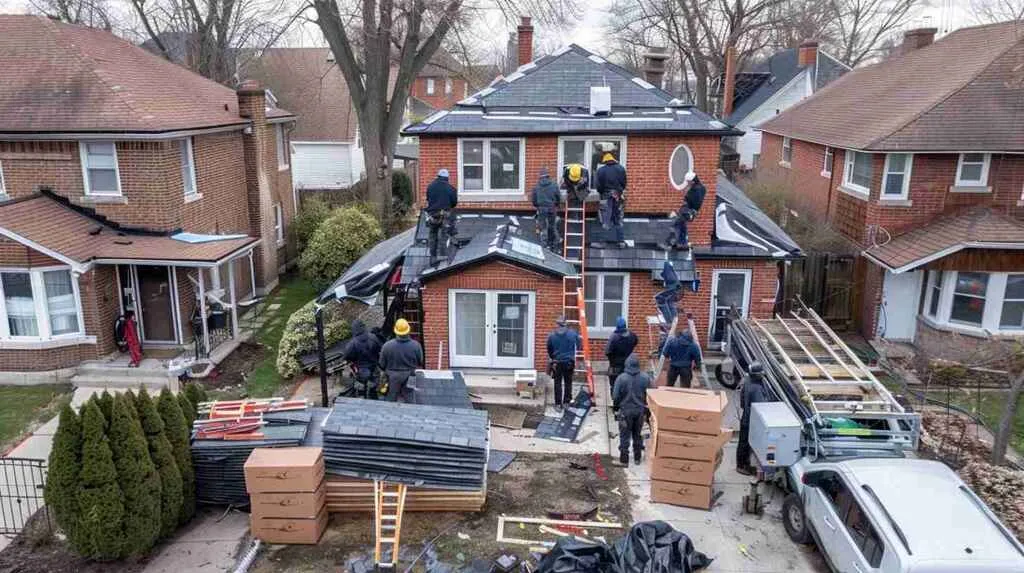
Architectural Roof Shingles Queens NYC – The Residential Standard
Blueprint’s simple: in Queens, most solid architectural shingle roofs on single- and two-family homes land between $9,000 and $18,000, and what you’re about to read explains exactly what pushes that number up or down-roof size, tear-off layers, deck condition, complexity, and the underlayment choices that decide whether your ceiling stays dry on the worst day. I’m Luis Andrade, and for 17 years I’ve been installing shingle systems across Queens, talking like a calm ER tech who’s seen every kind of roof failure and knows that architectural shingles only perform when the structure, water paths, and nailing pattern underneath are built to handle August heat, February ice, and November wind gusts.
What Architectural Shingle Roofs Really Cost in Queens
Let’s talk money first because that’s usually what everyone’s thinking about anyway. In Queens, a properly done architectural shingle roof on a typical single- or two-family house runs between $9,000 and $18,000, and the number moves based on a handful of real factors: your roof’s total square footage, how many old shingle layers need to come off (one layer versus three makes a big difference in dumpster fees and labor hours), the condition of the wood decking once we open it up, how complex your roofline is-hips, dormers, valleys, those quirky Queens additions-and whether you’re upgrading your underlayment and ventilation or just doing the minimum code allows. Those aren’t upsells; they’re the difference between a roof that looks good from the sidewalk and one that keeps your ceiling dry when a nor’easter sits over the borough for 36 hours straight.
One August afternoon in Jackson Heights, the temperature on the roof hit 127°F on my infrared gun, and a homeowner wanted to “just switch the color” of his shingles without touching the wavy, sagging deck underneath. I laid my laser across the roofline, and the red dot disappeared into a dip that was almost an inch and a half low. We ripped it open and found three layers of old shingles and half-rotted plank decking. That job taught me: in Queens, “architectural roof shingle” doesn’t mean anything if the structure under it is a mess. You can pick the fanciest color and the heaviest profile, but if we skip the tear-off, ignore soft spots in the decking, or cheap out on ice and water shield at the eaves and valleys, you’ve just bought an expensive roof that’ll fail the first time snow sits heavy or wind finds a loose edge. Here’s my take: I won’t sell you an architectural shingle upgrade without addressing what’s under it, because looks mean nothing if the roof quits on the coldest night in February.
Queens Architectural Shingle Roof Scenarios & Price Ranges
| Scenario | Key Factors | Estimated Price Range |
|---|---|---|
| Simple single-family ranch, Bayside | One layer to remove, solid deck, basic gable roof, standard underlayment | $9,000 – $12,000 |
| Two-family semi-attached, Astoria | Two layers, moderate hips and valleys, some deck repair, upgraded ice & water shield | $12,000 – $15,000 |
| Corner two-family with dormers, Jackson Heights | Three layers, multiple dormers, chimney flashing, significant deck patching, ridge venting upgrade | $15,000 – $18,000 |
| Attached rowhouse, Woodhaven | One layer, shared party walls, straightforward layout, standard materials | $9,500 – $11,500 |
| Large Tudor with additions, Forest Hills | Complex roofline with multiple pitches, skylights, extensive flashing work, premium underlayment, full ventilation system | $16,000 – $21,000+ |
⚡ Quick Facts: Queens Architectural Shingle Roofs
Why Architectural Shingles Beat 3-Tabs on Queens Rooflines
At 43rd Avenue and 74th Street, standing on a three-family walk-up, you really see why architectural shingles beat 3-tabs in Queens. The difference isn’t just curb appeal-though the shadow lines and dimensional look do make a house stand out on a block where half the neighbors still have flat, washed-out tabs. It’s wind performance and thickness that matter when a nor’easter rolls off the water and finds every loose edge on your roof. Architectural shingles are heavier, usually two to three times the weight of basic 3-tabs, and that extra mass plus the laminated construction means they grip better, flex less, and don’t peel back as easily when wind hits 50 mph gusts funneling down narrow Queens streets. I’ve seen blocks where one house loses shingles every storm and the neighbor with architecturals doesn’t lose a single tab-it’s not luck, it’s physics and better nailing surface.
There was a November job in Howard Beach where a nor’easter was chasing us-rain in the forecast by 4 p.m. The customer had 3-tab shingles torn off by wind, but their neighbor’s newer architectural shingles looked untouched. Standing in the driveway with a storm rolling in, I had to convince them to spend more up front on heavier architectural shingles and ice and water shield rather than just patching cheap tabs again. The storm hit that night, and the only dry ceiling on that block belonged to my client. That’s what I mean by behavior under stress: on the worst wind and rain day, architectural shingles paired with proper ice and water shield at the eaves and valleys and real ridge venting keep your ceilings dry and your insulation from turning into a wet sponge. It’s not about brand names-it’s about how the whole system holds when water’s testing every seam and wind’s lifting every corner.
Architectural vs 3-Tab Shingles for Queens Conditions
| Performance Factor | Architectural Shingles | 3-Tab Shingles |
|---|---|---|
| Wind Resistance | Typically rated 110-130 mph; heavier weight and laminated layers resist lift even in Queens wind tunnels | Usually 60-70 mph rating; lightweight, single-layer construction peels back easily in strong gusts |
| Lifespan in Queens Climate | 25-30 years with proper install; thicker granule layer holds up to freeze-thaw cycles and summer heat | 12-18 years at best; thin profile loses granules faster, curls and cracks sooner |
| Curb Appeal (Attached/Semi-Attached) | Dimensional shadow lines add depth; makes brick and siding pop, especially on narrow Queens lots | Flat, uniform look that blends in; doesn’t enhance house features or stand out positively |
| Performance in Nor’easters | Heavy, layered construction stays put; paired with ice & water shield, keeps interiors dry through multi-day storms | Prone to blow-off and edge lifting; even minor tears let water creep under and into the house |
| Suitability for Complex Roofs | Flexible enough for hips, dormers, and valleys; thicker profile hides imperfections and adapts to pitch changes | Struggles on anything beyond a simple gable; thin material telegraphs deck flaws and doesn’t seal well at angles |
Warning: The Patch Trap on 3-Tab Roofs
Repeatedly patching blown-off 3-tab shingles instead of upgrading creates four serious risks:
- Trapped moisture: Patches cover damage but don’t fix the underlayment tears or deck rot underneath
- Mismatched color and weathering: New patches stand out and age differently, lowering resale appeal
- Compromised water barrier: Each repair disturbs surrounding shingles, creating new weak points for the next storm
- False sense of security: You think the roof is “fixed” until a big storm proves otherwise-usually at 2 a.m.
Design, Color, and Layout: Making Your Roof Match the Block
I still remember a cold January morning in Woodhaven when a simple color choice on architectural shingles made a whole house look 20 years younger. The homeowner had beige vinyl siding that looked tired next to the neighbor’s fresh red brick, and we picked a weathered-wood architectural shingle with charcoal and brown tones that pulled the whole facade together-suddenly the trim popped, the siding looked intentional, and the house stood out in a good way. That’s the thing about architectural shingles: the shadow lines and dimensional profile add depth that changes how light hits your roof all day long, and color isn’t just about matching-it’s about making brick look richer, making stucco look cleaner, and giving siding a backdrop that makes the whole composition work. Layout matters too: how you stagger the shingles, how the ridge line finishes, and how valleys are woven or cut all change the final look and how water sheds.
I’ll never forget a Saturday morning in Astoria when a landlord swore his “new roof” was leaking after just three years. When I climbed up, I saw architectural shingles installed dead flat-no stagger, no proper ridge vent, and nails driven high like the guy was afraid of wood. The roof wasn’t failing; the layout was. I took chalk, drew out how water was jumping from cutout to cutout, then showed him how the architecture of the shingle matters as much as the brand name. We rebuilt it correctly, and suddenly his “bad shingles” turned into a quiet, dry top floor. Here’s an insider tip I’m known for around Queens: I’m the mock-up guy. I bring printed photos of your house, tape together actual shingle samples on a board, and use my laser to show you how afternoon light will hit the shadow lines and how water will move across the stagger pattern we’re planning. You’re not guessing-you’re seeing it before we order a single bundle. And here’s the stress-test part: darker colors can trap heat and hide trouble spots in snow and ice if the layout’s wrong, so we plan every detail-starter strips, ridge caps, valley methods-so the roof behaves right under Queens sun, rain, and freeze.
✓ Architectural Shingle Design Decisions that Matter in Queens
Stand out without clashing; consider what’s visible from the street and side yards
Heavier profiles add shadow depth and perform better in wind and snow
Clean, tight ridge caps seal the peak and complete the dimensional look
Proper starter strips prevent edge blow-off and give a straight, finished appearance
Random stagger looks natural and prevents water channels that accelerate wear
Woven or cut valleys change the look and water flow; hips need tight layering
Suggested Architectural Shingle Colors by Queens House Style
| House Style / Exterior | Recommended Shingle Color Range | Why It Works in Queens Light |
|---|---|---|
| Red brick rowhouse or semi-attached | Charcoal gray, weathered wood, or slate black with brown undertones | Dark neutrals contrast warm brick, make mortar lines crisper, and don’t compete with neighboring facades |
| Beige or cream vinyl-sided single-family | Warm browns, weathered cedar tones, or dual-tone tans | Adds depth to flat siding, plays well with Queens sunlight year-round, hides minor dirt and leaf staining |
| Stucco Tudor or European-style home | Earthy greens, slate grays, or multi-tone moss blends | Complements stucco texture, evokes traditional roofing, and looks intentional rather than generic on ornate homes |
| Mixed-brick corner two-family with trim accents | Mid-tone grays or charcoal with subtle variegation | Neutral enough not to clash with mixed masonry, dimensional enough to add visual interest from multiple street angles |
How Shingle Masters Builds an Architectural Roof that Survives Queens Weather
Here’s my honest take: if your roofline has hips, dormers, or those quirky Queens extensions, architectural shingles aren’t a luxury-they’re the baseline. And the way Shingle Masters approaches these roofs isn’t about rushing through a checklist or just nailing down whatever’s in the truck-it’s about the stress-test mindset I use every single time: what happens on the hottest August day when the shingles are 127°F underfoot, what happens when two feet of wet snow sit on the lowest valley for a week, and what happens when a November gust hits 60 mph and tests every edge and seam. Those three questions-heat, snow, wind-drive how we build the roof, because an architectural shingle system is only as good as the structure and water paths underneath it. We approach it systematically: structure first (deck condition, sagging, soft spots), water paths second (underlayment, flashing, ice and water shield placement), and shingle pattern last (layout, nailing, ridge finish).
Think of your Queens roof like a subway system: architectural shingles are the express tracks, but if the switches and signals-your flashings and vents-are wrong, everything still backs up. On a typical Shingle Masters job, we start with a roof inspection that maps stress points-where snow lingers, where wind funnels, where afternoon sun bakes the deck-and then we work through it in order: full tear-off so we can see what’s really there, deck repair with the same care we’d give to framing a new house, upgraded underlayment and ice and water shield at every vulnerable spot (eaves, valleys, chimneys, vents), then the architectural shingle layout with a nailing pattern that matches the wind zone and roof pitch, proper ridge venting that actually moves air instead of just looking like it does, and finally the detail work-step flashing at walls, counter-flashing at chimneys, drip edge that keeps water off the fascia. And we finish with a walkthrough where I show you mock-up photos for future reference, so if you ever need a repair five or ten years from now, you know exactly what’s under there and how it was built to behave.
Shingle Masters’ Architectural Shingle Install Process in Queens
Walk the roof with laser level and infrared gun; identify where snow sits, wind funnels, and heat bakes; document existing damage and underlayment condition
Remove all old layers down to wood decking; replace any soft, sagging, or rotted plywood or planks; ensure solid, level nailing surface before anything else goes on
Install synthetic underlayment across the field; apply ice and water shield at eaves, valleys, chimneys, and vents; upgrade step and counter-flashing at all wall/roof intersections
Snap chalk lines for alignment; install starter strips at eaves; lay architectural shingles with proper stagger, correct nail placement (not too high, not too low), and attention to valleys and hips
Cut and install continuous ridge vent for proper attic airflow; finish chimney cricket and counter-flashing; seal all penetrations (vents, pipes, skylights) with care
Walk the roof together; show taped shingle samples and printed photos for future reference; explain maintenance checkpoints; clean job site thoroughly; hand over warranty paperwork
Why Queens Homeowners Trust Shingle Masters for Architectural Roofs
Answering Real Queens Roofing Questions
Truth is, if a contractor talks more about the brand name on the bundle than the nailing pattern and underlayment, you’re not getting a real roofing consult. Most Queens homeowners ask the same core questions about lifespan, layers, timing, and whether they can just shingle over-this section answers those directly.
How long does an architectural shingle roof really last in Queens weather?
+
With a proper install-full tear-off, solid decking, quality underlayment, correct nailing-you’re looking at 25 to 30 years in Queens. That accounts for freeze-thaw cycles, nor’easters, summer heat that hits 127°F on the surface, and the occasional heavy snow load. If someone skips the tear-off, leaves bad deck, or nails too high, you’ll see problems in 10 to 15 years instead. It’s not the shingle that fails early-it’s everything under it.
Is it okay to leave existing layers, or why does tear-off matter?
+
Leaving old layers is like painting over rust-looks fine until it doesn’t. Every old shingle layer traps moisture, hides deck damage, and adds dead weight that wasn’t designed into your roof structure. In Queens, I’ve seen roofs with three layers where the bottom two were holding water like a sponge, rotting the deck from the inside out. Code allows one layer-over in some cases, but I don’t recommend it. Full tear-off lets you inspect the deck, fix what’s broken, and start with a clean, flat surface so your new architectural shingles actually perform the way they’re rated to.
How do you tell if decking is bad without ripping everything off?
+
Honestly, you can’t always tell until you open it up, but there are signs. From inside the attic, look for water stains, sagging between rafters, or soft spots when you press on the underside of the deck. From outside, walk the roof carefully-if it feels spongy or bouncy underfoot, that’s deck rot or delamination. I use a laser level to check for dips and sags that shouldn’t be there. When we do the tear-off, we test every section by stepping on it and listening for cracks or feeling for give. Bad deck gets replaced immediately, no exceptions-nailing shingles to rotten wood is like building a house on sand.
Can architectural shingles be installed safely in Queens winters?
+
Yes, but with conditions. Shingles need to be above about 40°F to seal properly, so we watch the forecast and pick mild-weather windows-late morning through early afternoon when the sun warms the roof surface. We store the bundles indoors overnight so they’re not frozen stiff, and we hand-seal tabs with roofing cement in cold conditions to ensure adhesion until spring warmth activates the full seal. I won’t start a winter job if ice, heavy snow, or sub-freezing temps are forecasted for the next 48 hours. Done right, a winter install in Queens works fine; done carelessly, you get shingles that never seal and blow off in the first spring windstorm.
How much noise and disruption should I expect on a typical job?
+
Not gonna lie-tear-off day is loud. You’ll hear scraping, hammering, and the sound of old shingles sliding down into the dumpster. It’s typically one day of heavy noise, then the rest is quieter nailing and cutting. We start around 8 a.m. (respecting Queens noise ordinances) and wrap most single- or two-family jobs in 2 to 4 days depending on size and weather. We tarp off landscaping, use magnetic rollers to pick up stray nails, and do a final sweep with a metal detector before we leave. If you work from home, I’d suggest noise-canceling headphones on tear-off day, but after that it’s just background construction noise.
Post-Install Maintenance Timeline for Queens Architectural Shingle Roofs
A proper architectural shingle roof in Queens is the residential standard when it’s built to handle 127°F heat, two feet of wet snow, and 60-mph gusts-not just to match the color of your neighbor’s siding. Call Shingle Masters to have Luis walk your roof with his laser, map every stress point where water, wind, and heat will test the system, and give you a clear, line-by-line estimate that explains exactly what you’re paying for and why it matters on the worst weather day your Queens home will face.