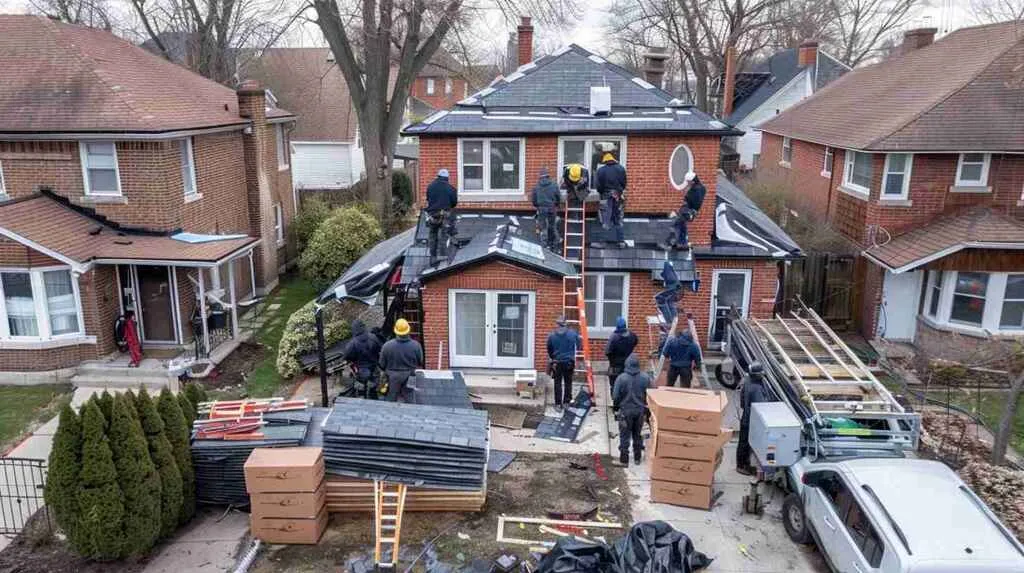
Shingles Blown Off Roof Queens NY – Will It Leak? Act Quickly | Free Quotes
Windshift. Even a single missing shingle can let water in under the right Queens weather conditions, and here’s why: when wind pulls off a piece of asphalt, it doesn’t just create a bald spot-it lifts the edges of neighboring shingles, allowing rain and snowmelt to slide underneath and track across the underlayment toward the softest entry point into your home. One February morning around 6:30 a.m., I got a call from a nurse in Astoria who’d just worked a double shift. Overnight winds had peeled a neat strip of shingles off the edge of her roof. From the street it didn’t look awful, but when I climbed up, I could see bare nail heads and the underlayment flapping like a loose bandage. By 10 a.m. the temperature was rising, snow on the roof was melting, and water started tracking under that exposed edge right into her bedroom ceiling. That job taught me how fast a ‘small’ missing-shingle issue can turn into brown rings and bubbling paint in just a few hours. Here’s my honest take: if shingles have blown off your roof, you should assume it can leak, not that it’s safe until you see water-and I’d treat my own house in Jackson Heights the exact same way.
The thing people don’t realize about Queens wind-driven rain and melting snow is how fast they accelerate leaks once shingles are missing, even if you can still see felt or underlayment sitting there looking intact. Underlayment isn’t a long-term waterproof roof; it’s a backup layer designed to handle short exposures during installation, not weeks or months of direct weather. Water doesn’t need a huge hole-it follows the path of least resistance, creeping under lifted shingle tabs, running down nail shanks, seeping through tiny gaps in decking seams, then soaking into insulation and dripping along ceiling joists. The leak may start invisibly in your attic or inside wall cavities long before you see a single brown spot on your bedroom ceiling, stealing energy efficiency and air quality while you’re thinking everything’s fine.
⚠️ Assuming You’re Safe Because You Don’t See a Drip Yet
If shingles have blown off your roof in Queens, you should assume:
- Water can already be slipping under nearby shingles with the next rain or snow melt.
- Underlayment is not a long-term waterproof roof; it’s a backup layer only.
- Leaks often start in the attic or wall cavities, not as a dramatic ceiling drip.
- Waiting “to see if it leaks” usually means paying more to fix wood, insulation, and interior finishes later.
- Calling for a quick temporary cover (tarp or patch) the same day can save thousands in hidden damage.
Shingles Blown Off in Queens – Is This an Emergency?
Context: Helping Queens homeowners decide if they need same-day help from Shingle Masters or if scheduling in the next few days is okay.
🚨 Urgent situations (call Shingle Masters immediately, ask for emergency tarp service):
- You can see bare wood or nail heads where shingles blew off.
- Missing shingles are near the ridge, valleys, skylights, or around vent pipes.
- Pieces of underlayment are flapping or torn open.
- There is already a brown spot, bubbling paint, or active drip inside.
- Forecast shows rain or snow in the next 24-48 hours.
⏱️ Can-wait (24-72 hours, but still schedule promptly):
- Only one or two shingles are missing in a field area and underlayment looks intact.
- No interior staining yet and dry weather is expected for a couple of days.
- You’re planning a larger roof project soon but need a small, secure patch until then.
How Fast Can a Missing Shingle Turn Into Damage?
One summer evening after a big thunderstorm, I got to a two-family in Corona where the landlord had ignored a previous wind-damage repair because ‘it didn’t leak last time it rained.’ The wind had taken a patch of shingles off around a vent pipe. When I opened the attic hatch, the smell hit me first-damp wood and mold. Water hadn’t poured in; it had been slowly wicking in around those missing shingles for weeks, soaking the insulation. The ceiling never dripped, but the tenants were getting higher electric bills from the ruined insulation and didn’t even know why. That’s when I started telling people: leaks don’t always show up as a dramatic drip-sometimes they steal from you quietly. Summer thunderstorms in Queens can dump over an inch of rain in under an hour, and all that volume hits whatever weak spot exists on your roof, whether that’s a missing tab near a chimney or a lifted ridge cap that looks harmless from the street. Humidity follows the moisture in, turning your attic into a breeding ground for mold spores and wood rot long before you notice anything wrong downstairs.
Add local knowledge about Queens housing and you start to see why these leaks hide longer than they should. Many row houses and two-families around Jackson Heights, Elmhurst, and Corona were built decades ago with limited attic access, shared walls, and roofing systems that weren’t designed for today’s unpredictable weather swings. Water follows the path of least resistance-it runs from the missing-shingle area down along nails, across decking seams, then into insulation and ceiling joints, often traveling several feet horizontally before showing up as a stain in a totally different room. If you share a common wall with a neighbor, moisture can even wick into their side before you ever see it in yours. That stolen energy efficiency, that faint musty smell near the top-floor closet, that slightly higher Con Ed bill-those are the early warning signs that water’s already inside, doing damage you can’t see yet.
| Time After Shingles Blow Off | What the Water Wants To Do | What You Might Notice | Typical Repair Cost Impact in Queens |
|---|---|---|---|
| First 24 Hours | If it rains or snow melts, water slips under neighboring shingles, testing the underlayment for any tiny gap or nail penetration. | Usually nothing visible; maybe a faint damp smell in the attic if you check immediately after rain. | $150-$400 for emergency tarp + minor shingle patch if caught fast. |
| 1-2 Weeks | Water finds decking seams, nail holes, or old caulk joints; starts soaking into fiberglass insulation or wicking along roof deck grain. | Small brown dot on ceiling near a corner or vent; higher electric bill; musty odor upstairs. | $500-$1,200 for shingle repair + insulation replacement + minor drywall patching. |
| 1 Month | Continuous moisture softens decking plywood, encourages mold growth on rafters, and expands into adjacent ceiling joists. | Bubbling paint or wallpaper; visible ceiling stain spreading; soft or spongy feeling if you press gently on drywall. | $1,500-$3,500 for shingle repair + decking replacement + insulation + drywall + mold remediation prep. |
| 2-3 Months | Water spreads horizontally along framing; mold colonies establish; wood loses structural integrity in leak zone. | Large ceiling stains, peeling paint in multiple rooms, mold visible in attic, sagging drywall, health complaints (allergies, asthma triggers). | $4,000-$8,000+ for roof decking repair, framing sister-joists, full insulation replacement, professional mold remediation, ceiling reconstruction. |
| 6+ Months (Ignored) | Chronic moisture creates ongoing mold growth, wood rot extends to rafters and top plates, possible electrical hazard if wires are wet. | Collapsing drywall, visible sagging roof deck from below, black mold colonies, potential short circuits, uninhabitable rooms. | $10,000-$25,000+ for major roof section replacement, full framing repair, certified mold abatement, interior rebuild, possible temporary relocation. |
Queens Weather vs. Missing Shingles
Fact 1: Average Queens wind gusts in Nor’easters easily exceed 40-50 mph, which can lift surrounding shingles once one is already loose.
Fact 2: Summer thunderstorms can dump over an inch of rain in under an hour, overwhelming any weak spot in your roof system.
Fact 3: Freeze-thaw cycles around Rockaway, Bayside, and Jackson Heights let water slip under shingles by day and pry them up with ice at night.
Fact 4: Even a small, slow leak can ruin fiberglass batt insulation in as little as 1-2 weeks, leading to higher cooling and heating bills.
What to Do Today If Shingles Blew Off Your Roof
A job in Bayside still sticks with me: wind gusts around 50 mph took a bunch of ridge shingles off a relatively new roof. The homeowner called at lunchtime, said, ‘It’s not leaking, so can you just come next week?’ while I was literally standing in her driveway looking up at exposed ridge vents. I convinced her to let me at least tarp it same-day. That night, totally unpredicted, we got one of those sideways Queens rainstorms. Neighbors without protection woke up to water spots in hallways and soaked attic boxes. Her house stayed dry. Since then, I tell people: the roof might not leak today, but the weather report doesn’t care about your schedule. Ridge areas, valleys, and anything around vent pipes or skylights are especially vulnerable because they’re designed to channel water away when all the pieces are intact-but the moment shingles are missing, those same channels become express lanes straight into your attic. Acting before the next storm, even if that storm isn’t on today’s forecast, is the difference between a quick fix and a total mess.
Here’s my insider tip on exactly what to do right now. First, grab your phone and take photos from the street showing which part of the roof is damaged-insurance adjusters and contractors both need context shots. If you can safely get closer (like from a second-floor window), snap a close-up of the exposed area, but don’t climb onto a steep or wet roof yourself. Inside, check your attic if you have access: look for daylight peeking through, wet insulation, or dark stains on the underside of the decking. Walk through your top-floor rooms and scan ceilings near exterior walls, around vents, and in closets for any brown spots, bubbling, or soft drywall. When you call your insurance company, use these exact words: “Wind damage caused shingles to blow off my roof; I need to document this and prevent further water intrusion.” When you call Shingle Masters, mention whether you need emergency tarp service today or if you’re scheduling a repair for dry weather-we prioritize Queens storm calls and offer free quotes, so there’s zero reason to wait and hope for the best.
Immediate Steps When You Notice Shingles Blown Off
✓ Quick Checks Before You Call Shingle Masters for Blown-Off Shingles
- Weather forecast: Check the next 48-72 hours. If rain or snow is coming, mention that when you call so we can prioritize emergency tarp service.
- Visible damage from the ground: Note where the missing shingles are (ridge, edge, near chimney, around vents) so we know what equipment to bring.
- Interior signs: Walk through your top floor and attic (if accessible) looking for brown spots, wet insulation, or musty smells. Even if you don’t see anything, mention you checked.
- Photos ready: Have street-level and close-up photos on your phone to text or email-helps us assess urgency and prepare an accurate quote.
- Age and type of roof: If you know roughly when the roof was installed and what kind of shingles (3-tab, architectural, etc.), that speeds up material matching.
- Insurance claim status: Let us know if you’ve already called your insurer or if you need help understanding what to say to them.
- Access concerns: Mention tight driveways, shared alleys, low-hanging wires, or anything that might affect how we get equipment to your roof in Queens neighborhoods.
Queens Roof Repair Costs When Shingles Blow Off
When I come to your door after a storm, one of the first questions I’ll ask you is, ‘Where in the house would you hate to see a brown ceiling spot show up?’ Because that helps frame the real math: spending a few hundred dollars today on an emergency patch or tarp versus spending several thousand later to fix soaked decking, ruined insulation, mold remediation, and interior painting. Prices vary depending on how high your roof is, how tight the access is in typical Queens driveways and alleys, and-most important-how long that area’s been leaking before we get the call. These are typical local ranges for asphalt shingle roofs, and Shingle Masters provides free, written quotes after an on-site inspection, so you’ll know the exact number before any work starts.
$350 today or $4,500 in six weeks. That’s the blunt choice most Queens homeowners face after shingles blow off, and I’m not exaggerating those numbers one bit.
| Situation | Description | Typical Price Range (Queens, NY) | Urgency Level |
|---|---|---|---|
| Emergency Tarp Service | Heavy-duty tarp secured over exposed area with wood battens and fasteners; same-day or next-day service after storm. | $200-$500 | HIGH – Do this immediately if rain is in the forecast. |
| Small Patch (1-5 Shingles) | Replace a few blown-off shingles in a single area; no decking damage; underlayment intact; color-matched shingles. | $300-$650 | MEDIUM – Schedule within 2-3 days; tarp if weather threatens. |
| Medium Repair (Ridge, Valley, or Vent Area) | Wind damage to ridge caps, valley flashing, or shingles around plumbing vents; requires careful flashing work and re-sealing. | $700-$1,500 | HIGH – These areas channel water; repair or tarp same day. |
| Section Replacement + Minor Decking | Larger blown-off area (10-30 shingles); some plywood decking is wet or soft and needs replacement; new underlayment required. | $1,800-$3,500 | MEDIUM-HIGH – Repair promptly; tarping buys time but not weeks. |
| Full Leak Remediation (Ignored Damage) | Missing shingles led to interior leak; decking replacement, insulation removal, mold treatment, drywall repair, repainting. | $4,000-$10,000+ | PREVENTABLE – This is what happens when you wait too long. |
| Option | Pros | Cons |
|---|---|---|
| Temporary Tarp Today, Repair Later |
|
|
| Full Shingle Repair Immediately |
|
|
Common Myths About Missing Shingles in Queens
I still remember a little row house near 74th Street where a couple of ‘harmless’ missing shingles cost the owner thousands in hidden attic damage. The blunt truth is that your roof doesn’t care how busy you are this week; if it’s exposed, water will eventually find the softest way in. People hear things on the block-“it’s only a couple shingles,” “it hasn’t leaked yet so it’s fine,” “the felt paper will hold it”-and those are exactly the beliefs that turn a $400 patch into a $6,000 mess. Water sneaks, crawls, and looks for shortcuts, especially after Queens gets hit with back-to-back rainstorms or a freeze-thaw cycle that pries shingles up even more. If you’ve been tracking “mystery leaks” that three other contractors couldn’t solve, I guarantee you at least half of them started with ignored wind damage weeks or months earlier. Let’s clear up what’s true and what’s neighborhood gossip dressed up as roofing wisdom.
| Myth | Fact |
|---|---|
| “If it’s not leaking yet, I don’t need to worry.” | Water often starts in the attic or wall cavities weeks before you see a ceiling drip. By the time you notice, insulation and wood may already be damaged. |
| “The black felt paper (underlayment) will keep water out.” | Underlayment is a temporary backup layer for installation weather, not a permanent roof. UV, wind, and rain degrade it quickly once exposed. |
| “It’s only one or two shingles-no big deal.” | Even one missing shingle lifts the edges of surrounding shingles, creating entry points for wind-driven rain. Water spreads horizontally under the roof surface. |
| “I’ll wait until I’m ready to replace the whole roof.” | Leaving missing shingles unrepaired accelerates rot and decking damage, which increases the cost of your eventual full roof replacement by thousands. |
| “My neighbor’s roof lost shingles too and he’s fine.” | Your neighbor might have better underlayment, different exposure to wind/rain, or just hasn’t noticed the leak forming yet. Every roof is unique; don’t gamble based on someone else’s timeline. |
Blown-Off Shingles and Leaks in Queens – FAQs
How fast can a roof start leaking after shingles blow off in Queens?
It depends on the weather, but I’ve seen leaks start within hours if there’s rain or snowmelt. Water doesn’t need a huge opening-it slips under neighboring shingles, runs along nail holes, and seeps into the underlayment. If the missing shingles are near a ridge, valley, or vent, the timeline is even faster because those areas naturally channel large volumes of water. Even if you don’t see a drip immediately, moisture can soak insulation and wood within a day or two, leading to hidden damage that shows up later as mold or higher energy bills.
Will my homeowners insurance cover wind damage that blew shingles off?
Most Queens homeowners policies cover sudden wind damage (like shingles blown off in a storm) as long as the roof was in decent condition before the event. You’ll need to document when it happened, take photos, and file a claim promptly. Some insurers require you to protect the property from further damage-meaning you should get a tarp or emergency patch right away and keep receipts. If the roof was already old and neglected, the claim might be denied or only partially covered, so it’s worth calling your agent to understand your specific coverage and deductible before work begins.
Does one missing shingle really matter, or is that overkill?
One missing shingle absolutely matters because it lifts the edges of the shingles around it, creating gaps where wind-driven rain can slip underneath. Asphalt shingles work as an interlocking system-when one piece is gone, the whole section becomes vulnerable. I’ve tracked leaks that started with a single blown-off tab near a chimney and ended up damaging an entire attic corner. It’s not overkill; it’s understanding how water wants to move. If you catch it early with a quick patch, you’re out a few hundred bucks. If you ignore it, you’re looking at thousands in decking, insulation, and interior repair down the road.
Can I just rely on the underlayment until I’m ready to fix the shingles?
No, underlayment is designed as a short-term backup during installation or minor weather events, not as a permanent roof covering. Once it’s exposed to direct sun, wind, and rain, it starts breaking down-UV rays make it brittle, wind tears it, and water eventually finds pinholes or seams. I’ve seen underlayment fail in as little as two weeks when left exposed during a Queens summer. If you’re planning a larger roof project and need time to save up or get quotes, that’s fine-but get a proper tarp or temporary patch over the exposed area so the underlayment doesn’t become the next thing that needs replacing.
How quickly can Shingle Masters respond to blown-off shingles in Astoria, Jackson Heights, or Bayside?
After major storms, we prioritize emergency calls and can usually get a tarp or temporary cover on your roof the same day or within 24 hours, weather permitting. For full shingle repairs, we offer free on-site quotes and typically schedule work within 2-5 days depending on the size of the job and our current workload. If you’re in Astoria, Jackson Heights, Bayside, Corona, or anywhere else in Queens and you need help fast, call us as soon as you notice the damage-don’t wait for the next forecast. We keep common shingle colors in stock for quick-turnaround patches, and we’re licensed and insured to work throughout New York, so you’re covered from start to finish.
Why Queens Homeowners Call Shingle Masters After Windstorms
✓ Licensed and insured in New York for residential roofing
✓ 19+ years of hands-on roofing experience in Queens neighborhoods
✓ Same-day emergency tarp service available after major storms (when weather allows)
✓ Free, written quotes for shingle blow-off repair and leak tracking
✓ Specialists in tracking down “mystery leaks” other contractors missed
Think of your roof like a raincoat with a zipper-if the wind rips the zipper open, it’s not just that one spot that’s in danger, the whole front of your shirt is next. Blown-off shingles in Queens almost always turn into leaks if ignored, whether that leak shows up tomorrow or three weeks from now when you’re dealing with a thunderstorm at 2 a.m. Call Shingle Masters for a free quote and fast emergency protection or repair before the next rain hits-because your roof doesn’t care how busy you are this week, and water will find the softest way in whether you’re ready or not.