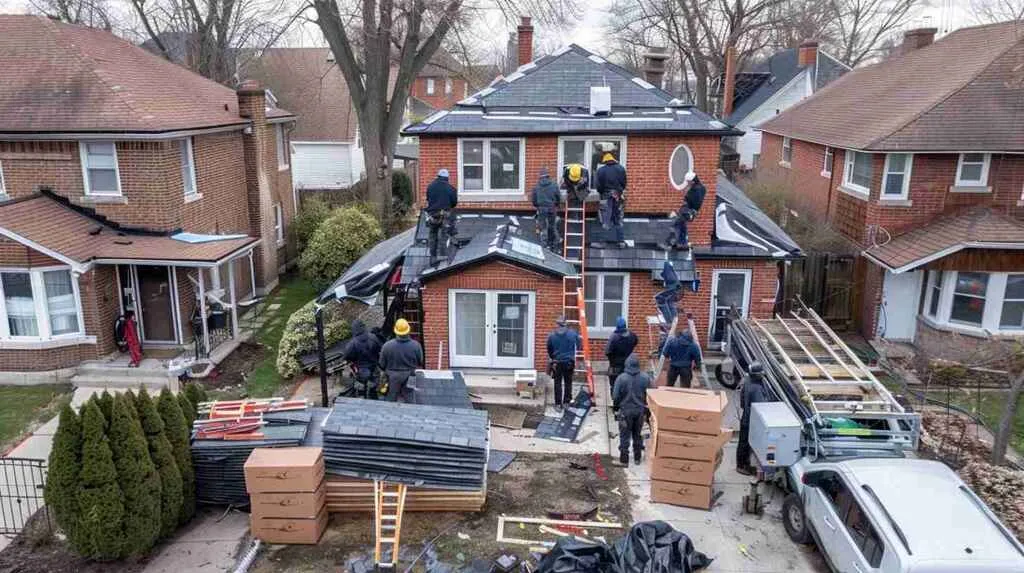
Shingle Roof Fungus Removal Queens NY – Safe Treatment Options | Call Today
Underneath those harmless-looking gray or black streaks on your Queens shingle roof, the most dangerous fungus and algae are usually hiding in plain sight-and because they don’t look like the fluffy green mold in a bathroom, most people pick the wrong treatment or ignore the problem entirely. I’m CJ, and for the last 18 years I’ve worked on shingle roofs across Queens, treating roof fungus and algae the way a forensic scientist approaches lab samples: careful diagnosis first, then the right prescription, so you don’t end up causing more damage than the organisms you’re trying to kill. Shingle Masters specializes in safe shingle roof fungus removal that protects both your roof’s lifespan and your family, because what you can’t see-the roots gripping your shingles-matters way more than the stains you can.
What Those “Dirty” Streaks on Your Queens Shingle Roof Really Mean
On a typical summer day in Queens, when the humidity feels like soup, your shingles are basically running a petri dish experiment on the north side of your roof. The faint gray streaks that show up first aren’t dirt, they’re symptoms-usually Gloeocapsa magma algae that feeds on the limestone filler in asphalt shingles and slowly works its way under the protective granules. And here’s the counterintuitive truth I explain every single day: the most dangerous early-stage growth usually just looks like your roof needs a rinse, not like a science experiment gone wrong, which is exactly why treatment choices matter so much. Spot the wrong “disease” and you’ll pick the wrong “medication,” and that’s how people end up pressure-washing away five years of roof life trying to fix what could’ve been solved with a gentle biocide.
One August afternoon around 3 p.m., it was so humid in Jamaica that my glasses fogged the second I stepped out of the truck, and this older gentleman insisted his roof had “black mold” and everyone in the house was doomed. I climbed up, ran a quick field test spray on a patch, and showed him how the streaks lightened-classic Gloeocapsa magma algae, not toxic black mold. We still treated it carefully, but I remember how his shoulders dropped in relief when I told him his roof needed dermatology, not emergency surgery. The big takeaway is this: you can’t tell severity just by how scary it looks. Fuzzy green moss might be cosmetic if it’s shallow, while silent black streaks could be trapping moisture cycles that’ll rot your decking in three years if left unchecked.
| Myth | Fact |
|---|---|
| “If it just looks like dirt or faint streaks, it can’t be serious.” | Most early-stage algae and fungus on Queens roofs look like dirty gray or black streaks long before they turn fuzzy or green. |
| “Black streaks on shingles are always toxic black mold.” | In Queens, it’s far more often Gloeocapsa magma algae, which still shortens shingle life but isn’t the same as indoor toxic mold. |
| “If the roof isn’t leaking yet, the growth is only cosmetic.” | Algae, lichen, and moss can trap moisture and over time lead to premature shingle failure and leaks. |
| “Any strong cleaner or pressure washer that removes stains is fine to use.” | A method that strips granules or dries out shingles can do more permanent damage than the growth you were trying to remove. |
| “Queens roofs just streak in the humidity; it’s normal and nothing can be done.” | Correct treatments and prevention strategies can keep shingles cleaner for years even in our humid, coastal climate. |
Safe vs. Risky Roof Fungus Treatments: Your Options Explained
Here’s my honest take: most people either massively overreact to roof fungus or ignore it completely-both cost more than they should. The smart middle ground is treating your roof like you’d treat a skin infection: identify the organism, match the right treatment strength, and apply it gently so the cure doesn’t scar. Gentle biocides work at the root level to kill algae, moss, and lichen without stripping the protective granules off your shingles, while low-pressure application keeps moisture from being driven under the seal strips. And yeah, sometimes you do need a stronger “prescription”-like when moss roots have already lifted edges or lichen has bonded so hard it won’t release without manual help-but those cases still don’t justify high-pressure water that voids manufacturer warranties. Across Jackson Heights, Astoria, Flushing, and Jamaica, the shaded north-facing slopes trap way more humidity and stay wet longer after storms, which is exactly why those sides of your roof grow algae faster and need earlier attention than the sunny south-facing slopes that bake dry every afternoon.
There was a cold, windy November morning in Astoria where a DIY job had gone wrong; a young couple had pressure-washed their own shingles at full blast to “get rid of fungus” after watching a video. By the time I got there, granules were stripped off half the roof, and you could see bare fiberglass in spots. I had to explain that the fungus wasn’t what was going to kill their roof-the power washer was-so we had to do a gentle biocide treatment on what was left and then plan a partial replacement in spring. That’s the story I tell everyone who asks why Shingle Masters uses controlled, low-pressure soft-wash methods and manufacturer-safe chemicals instead of just blasting everything clean: because the treatment you pick today decides whether you’re getting another ten years from your shingles or whether you just turned a $600 cleaning into a $9,000 replacement.
| Method | Pros | Cons |
|---|---|---|
| High-pressure washing | Removes visible growth and stains quickly; satisfying instant results. | Strips protective granules, voids warranties, can drive water under shingles and cause leaks. |
| Household bleach mix (DIY) | Cheap and widely available; lightens some algae stains. | Easy to over-concentrate, risks killing plants, corroding metal, and drying out shingles. |
| Professional soft-wash with roof-safe biocides | Targets algae, moss, and fungus at the roots using manufacturer-approved chemistry and low pressure. | Requires trained technicians and safety equipment; slightly higher upfront cost than DIY. |
| Do-nothing / wait-and-see | No immediate cost; avoids any treatment risks in the short term. | Growth spreads, shingles age faster, and later cleaning or replacement becomes more expensive. |
⚠️ WARNING: On aging Queens roofs, aggressive cleaning can turn a treatable “skin infection” into an open wound. Avoid using high-pressure washers, undiluted bleach, or walking steep, damp slopes without fall protection-these are the three fastest ways homeowners damage shingles or get hurt while trying to clean fungus themselves.
How Our Shingle Roof Fungus Removal Process Works in Queens
Truth is, if you attack fungus with brute force-like a pressure washer-you’re doing the microbial equivalent of curing a rash with sandpaper. So when I pull up on a hot Queens afternoon when the humidity is 80% and your roof is basically Petri-dish conditions, I start with diagnosis: what organism are we treating, what stage of growth, and are the shingles still healthy enough that cleaning makes sense? Then I build a treatment plan the same way a doctor would: protect the surrounding area (your landscaping, gutters, and downspouts), apply the appropriate biocide solution at low pressure so it reaches the root systems without forcing water sideways under shingle edges, let it dwell long enough to actually break down the cellular structure, perform a gentle rinse if the roof pitch and weather require it, and finally inspect to confirm we didn’t trade clean shingles for damaged ones. The whole process is as much about stopping moisture traps-where water sits long enough for the next generation of spores to colonize-as it is about making your roof look clean for the next open house.
One evening just after a thunderstorm in Flushing, maybe 7 p.m., a landlord rushed me through a walkthrough because his tenant threatened to move out over “slimy green stuff” falling into the gutters. Turned out the north-facing side was coated with a mix of moss and lichen that had actually bridged into the drip edge and started trapping water back under the shingles. I’ll never forget scraping up a chunk to show him how the roots were gripping the asphalt like Velcro-that visual finally convinced him this wasn’t just a cosmetic issue, it was structural risk if we didn’t treat and clean it properly. And honestly, that’s the kind of situation where fungus stops being a stain problem and becomes a moisture-intrusion problem, because every time it rained those roots were wicking water horizontally into places shingles were never designed to handle.
Our Fungus & Algae Removal Process
-
1
Inspection & Diagnosis: We identify whether you’re dealing with algae, fungus, moss, or lichen, map out affected areas, and document any shingle damage. -
2
Safety & Protection Setup: We set up ladder safety, protect gutters and landscaping, and isolate any sensitive areas like koi ponds or specialty plantings. -
3
Targeted Biocide Application: Using low-pressure equipment, we apply a roof-safe cleaning solution designed for asphalt shingles and New York’s climate. -
4
Dwell Time & Gentle Rinse (if needed): The treatment sits long enough to break down growth; on some roofs we allow natural rainfall to finish the job, on others we perform a light rinse. -
5
Final Check & Preventive Recommendations: We re-inspect shingles, confirm runoff is clear, and discuss prevention options so growth takes longer to return.
What It Costs in Queens & How to Decide If Cleaning Is Enough
$350 to $1,100 is the range most Queens homeowners pay for professional shingle roof fungus removal, depending on roof size, pitch, access constraints in our tight urban lots, and how thick the growth has become. When I walk into a home and ask, “Do you want this fixed for the next real estate listing or for the next 15 hurricane seasons?” it changes the whole conversation. The cheaper end covers small spot treatments on one-story homes with easy ladder access, while the higher end handles heavy moss and lichen removal on steep two-story roofs where we need extra dwell time, repeat applications, and sometimes minor shingle repairs afterward. And honestly, sometimes you’re not paying for cleaning-you’re paying for the diagnosis that tells you the shingles are already too thin and brittle, which means you’d basically be medicating a roof that should be replaced. That’s why we offer inspection-only services for older roofs: better to spend $200 finding out you need a new roof than $800 cleaning one that fails six months later anyway.
Typical Queens Scenarios & Price Ranges
*Actual pricing depends on roof size, pitch, access, and severity of growth; we provide written estimates after on-site inspection.
Should You Clean or Replace? Quick Decision Guide
Start: Are your shingles mostly lying flat with only stains or light growth?
- Yes: Go to Question 2.
- No: Consider cleaning plus targeted shingle replacement.
Question 2: Is your roof under 18-20 years old?
- Yes: Professional fungus removal alone is usually the best first step.
- No: Go to Question 3.
Question 3: Do you see curling edges, missing granules, or exposed fiberglass?
- Yes: Plan for partial or full replacement soon; cleaning can buy short-term time but won’t restore lost life.
- No: Cleaning is still cost-effective, but ask for an honest lifespan estimate before investing.
Keeping Fungus From Coming Back on Your Queens Shingle Roof
Think of your shingles like skin after a sunburn: once they’re thinned out, even a mild infection can do way more damage than it should. That’s why prevention after a professional cleaning matters more on an aged roof than on a brand-new one-you’ve just removed the surface organisms, but the conditions that let them grow (shade, poor ventilation, overhanging branches) are still there. Trim back tree limbs that keep north-facing slopes damp all day, improve attic ventilation so moisture doesn’t build up underneath and work its way out through shingles, and in some cases install zinc or copper strips along the ridge that release trace metals every time it rains and slow down regrowth. And here’s an insider tip on timing: in Queens, the worst fungus and algae growth happens after our humid spring and early summer, so scheduling a maintenance check every September lets you catch new colonies before they survive a whole winter cycle and really dig in. On heavily shaded roofs or homes near Cunningham Park or Alley Pond, you’ll want to inspect those north slopes more often-maybe every six months-because the damp, tree-covered microclimates there can restart growth faster than you’d expect even after a thorough treatment.
✅ Before You Call: Quick Pre-Inspection Checklist
- ✅ Note which sides of the roof look the worst (street side, backyard, facing a neighbor).
- ✅ Look for any shingles that appear curled, missing, or out of line from the ground.
- ✅ Check inside your top floor or attic for any new water stains or musty smells.
- ✅ Take 2-3 clear photos of the stained or green areas from different angles.
- ✅ Write down how old you think the roof is and whether it has ever been cleaned before.
Common Questions About Shingle Roof Fungus Removal
Will the cleaning chemicals hurt my pets, plants, or kids?
We use roof-safe solutions applied in controlled amounts, pre-wet sensitive plants, and thoroughly rinse when needed. Once the treatment has dried and the area is rinsed, normal yard use is typically safe-our crew will walk you through any short-term precautions.
How long will my shingles stay clean after treatment?
Most Queens roofs stay noticeably cleaner for 3-5 years, depending on shade, tree cover, and ventilation. North-facing, heavily shaded slopes may need attention sooner than south-facing, sunnier sides.
Do you need to walk all over my roof to treat it?
We minimize foot traffic and use proper safety routes to avoid unnecessary shingle wear. In many cases, we can treat large areas from ladders or selective access points.
Can you clean the roof in winter?
We can work in cool weather, but we avoid days with ice, snow, or strong winds. Spring through late fall is usually best for both product performance and safety.
Most shingle roof fungus and algae problems in Queens are very fixable if you catch them before the roots have lifted edges or trapped enough moisture to cause rot underneath-that’s the whole reason we treat this like medical triage, not just power-washing everything in sight. If you’re seeing streaks, green patches, or spongy moss on your roof and you want an honest diagnosis plus a written estimate for safe, manufacturer-approved shingle roof fungus removal, call Shingle Masters today and we’ll schedule an on-site inspection that tells you exactly what you’re dealing with and what it’ll take to fix it right.