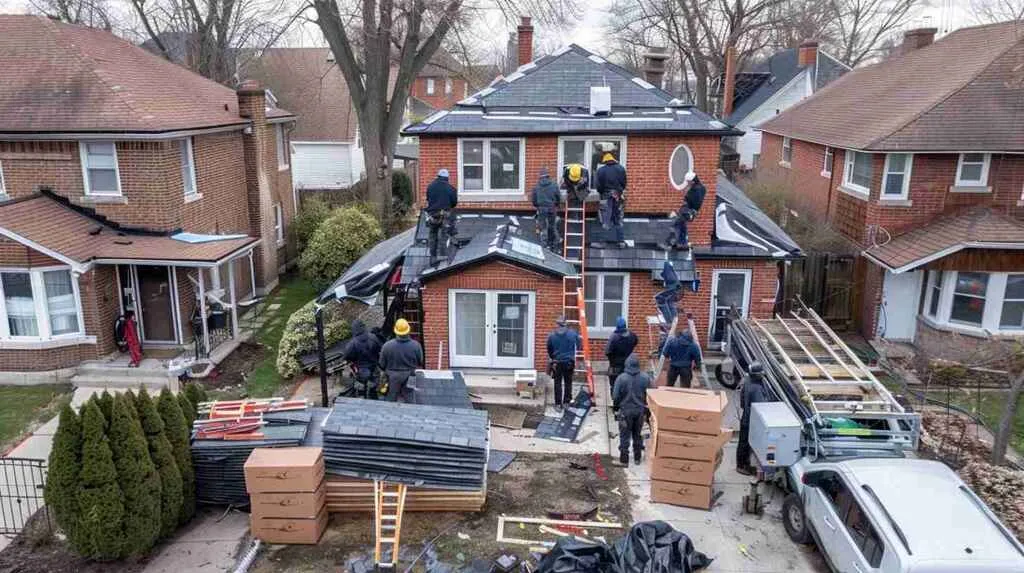
Shingle Roof Damage Assessment Queens NY – Free Pro Inspection | Call Today
Blueprint truth: 80% of the shingle roof damage I find in Queens could’ve been caught a year earlier with a free inspection. The first early-warning sign almost everyone misses? Those thin lines of shingle granules piling up in your gutters and at the base of downspouts-if I were water, that’s where I’d start testing for weak spots, and those granules are proof the rain’s already begun.
Early Shingle Damage Signs in Queens You’re Probably Missing
Most folks think their roof is fine until they see a brown ring on the ceiling, but by then, water’s been having a field day with your underlayment and decking for months. Granule loss isn’t just cosmetic-those tiny ceramic chips protect the asphalt from UV and weathering, and when they wash away in neat lines, it means water is concentrating its attack on specific shingle seams. If I were water, I’d look for the path of least resistance: edges that lift in wind, nail pops that create micro-gaps, and flashing seams where caulk has dried and cracked. In our Queens climate, that’s a big advantage for the rain.
On a typical Jackson Heights two‑story with a 20‑year shingle, the first place I look is never where the homeowner points inside-it’s up-slope, around south-facing slopes and near any penetration like a vent or chimney. One August afternoon in South Ozone Park, it was about 95 degrees and the shingles felt like hot plates under my boots. The homeowner swore the leak was “right above the couch,” but when I did my damage assessment, I traced the water back almost twelve feet up-slope to a tiny shingle crack beside a plumbing vent. He didn’t believe me until I took photos, chalked the water path on the deck, and we hit it with a hose test-watching that first drip appear exactly where I predicted is still one of my favorite “told you so” moments, even if I kept it polite. My opinion? Interior stains are a late-stage warning only, and from the street, these issues usually look harmless.
✅ Subtle Early-Warning Signs of Shingle Roof Damage Most Queens Homeowners Overlook
- Granule accumulation trails: Dark sand-like lines in gutters or piled at downspout bases, especially after heavy rain
- Shingle edge lifting: Corners or tab edges that curl upward slightly on windy days, visible from the ground with binoculars
- Diagonal stain lines on soffits: Faint brown or gray streaks under the roofline where water is wicking sideways through insulation
- Nail head glints: Shiny exposed nail heads catching sunlight where shingles have slipped or lost adhesion
- Uneven snow melt patterns: Sections that clear faster in winter, signaling heat loss from poor sealing or hidden moisture below
⚠
Why Waiting for a Ceiling Stain in Queens Is Usually 12-18 Months Too Late
By the time a stain shows on your living room ceiling, water has already traveled along decking, soaked through insulation, and traced the path of least resistance along joists and framing-sometimes crossing electrical junction boxes or pooling where you can’t see it. In our freeze-thaw climate, that hidden moisture expands and contracts, creating mold pockets and rot long before the drywall gets discolored. If I were water, I’d use that 12-18 month head start to maximize damage while you’re still assuming everything’s dry up there.
How a Free Shingle Roof Damage Assessment Works Step by Step
Here’s how water actually moves once it finds a weakness: it sneaks under a lifted shingle tab, wicks along the underlayment looking for a seam or nail puncture, then follows gravity and capillary action toward flashing joints and soffit vents. My assessment follows that same path in a structured way, because in Queens-where Nor’easters hammer us with wind-driven rain and freeze-thaw cycles split what UV and heat have already weakened-you have to think like the storm. About two winters ago, just after sunrise in January, I did an emergency inspection in Flushing for an older couple who’d just come back from spending a month with their grandkids. Snow had melted and refrozen, and they thought “a few missing shingles” was nothing. When I got up there, I found a long hidden damage line where an unlicensed guy had done a sloppy repair years earlier-no underlayment, nails over-driven, and every thaw was pushing water under the shingles toward their soffit. We caught it just before it got into their electrical panel; that’s the day I started telling people, “Your roof remembers every shortcut anyone’s ever taken.” Local knowledge matters here: older housing stock in Flushing, South Ozone Park, and Jackson Heights reacts differently to weather because of original construction methods and decades of patch jobs.
Clearly, what happens during my free inspection is this: I start with a ground-level scan using binoculars to spot obvious issues-missing tabs, flashing gaps, vent boot cracks-then I get on the roof and walk a systematic grid, checking shingle adhesion by hand, looking for soft spots in the deck, and photographing every concern with close-ups and wide context shots. I inspect every flashing joint, every penetration seal, and every valley where two roof planes meet, because that’s where water pools and tests for entry. If you’ve got attic access, I’ll look for moisture stains on the underside of the decking, check insulation for compression or discoloration, and use a moisture meter on any suspicious framing. Then we talk through findings at eye level in your driveway-I pull up the photos on my tablet and explain exactly what water is doing or could do next, like a neighbor, not a pushy salesman.
Exact Steps in Your Free Shingle Roof Damage Assessment in Queens
Why Queens Homeowners Trust Shingle Masters for Damage Assessments
Should You Repair, Patch, or Plan a Future Replacement?
The worst surprise I ever had on a damage assessment was on a Saturday evening in Woodhaven, just before a forecasted thunderstorm-a real estate investor wanted a “quick look” at a shingle roof before closing, and everything looked decent from the street, no curling, no obvious patches. On the roof, though, I stepped near a dormer and my foot sank almost three inches; the shingles were hiding completely rotted decking from an old satellite dish penetration that was never flashed right. I walked him through it with photos and moisture readings on my tablet, and he ended up renegotiating the deal on the spot-that’s when I realized how powerful a thorough inspection report could be for buyers, not just homeowners in trouble. If I were water, I’d have used that old penetration as a tunnel straight into the framing, and that’s exactly what had happened over years of storms. Insider tip: if you’re buying or refinancing in Queens, a documented roof report with photos and moisture readings can be strong leverage during negotiations or insurance conversations-it’s proof, not just opinion.
Decide If You Likely Need a Minor Repair, Targeted Patch, or to Start Budgeting for Replacement
Important: This flowchart gives you a rough sense of scope, but only a professional in-person assessment can confirm what’s hidden under those shingles and whether decking, underlayment, or framing is involved.
Typical Queens Shingle Roof Outcomes After a Professional Damage Assessment
| Outcome | Typical Roof Age | Common Issues Found | Approximate Scope | Urgency Level |
|---|---|---|---|---|
| Minor Repair Now | Under 15 years | Single shingle blow-off, loose flashing, cracked pipe boot, small sealant failure | 1-3 hours on-site; materials under $200 | Medium – schedule within a week |
| Targeted Section Replacement | 12-22 years | One slope with widespread granule loss, multiple lifted tabs, soft deck spot, or past botched repair zone | Full day to 2 days; one or two roof planes; may include underlayment and deck boards | High – schedule within days, especially before forecast rain |
| Full Replacement Planning | 18+ years | Widespread curling, multiple soft spots, sagging ridge, pervasive granule loss, visible aging across all slopes | Complete tear-off and re-roof; 2-5 days depending on size and complexity; includes new underlayment, flashing, vents | Plan ahead – get estimates, budget for next 6-12 months; patch urgent leaks in the meantime |
When to Call for a Free Roof Check vs When You Can Watch and Wait
Here’s the blunt truth about shingle damage in our Queens climate: UV and wind don’t care how busy your week is or how good your insurance policy looks. From my personal opinion, waiting for visible leaks in Queens is one of the most expensive mistakes homeowners make-a yearly check is as basic as servicing a boiler, because our weather (Nor’easters, summer sun hammering south-facing slopes, freeze-thaw cycles that split what heat has already weakened) creates specific urgent vs non-urgent scenarios. If I were water, I’d exploit every weak shingle, lifted nail, or cracked flashing the moment a storm rolls through, testing for the path of least resistance. Some situations demand a call today; others you can monitor for a few days as long as you’re actually watching.
Think of your roof like a crowded 7 train at rush hour-every weak shingle, lifted nail, or cracked flashing is the path of least resistance for water, and once one passenger (raindrop) finds a gap, the rest follow in a rush. A free assessment is partly about mapping these paths before water “finds” them during the next big storm. I’m not here to scare you, just to lay out the logic: if you see active dripping, brown ceiling rings after yesterday’s rain, or visible missing shingles from your driveway, that’s an urgent call. If you’re noticing slight granule loss or one small nail pop with no leak, you’ve got a few days to schedule-but don’t let “a few days” turn into six months of forgetting.
!
Call Shingle Masters ASAP
- Active dripping inside your home during or right after rain
- Brown or yellow ceiling rings that appeared after last storm
- Visible missing shingles or large bare patches you can see from the street
- Sagging areas, dips in the roofline, or soft spots you can see or feel
- Water staining near electrical panels, outlets, or light fixtures
✓
Can Usually Wait a Few Days
- Slight granule loss or discoloration on a few shingles, no interior signs
- Minor shingle discoloration or algae staining with no structural concern
- One small nail pop or lifted corner with no active leak
- Routine annual inspection to catch small issues early
- Pre-sale or refinance documentation for a roof that looks okay
Common Myths Queens Homeowners Believe About Shingle Roof Damage
| Myth | Fact |
|---|---|
| “No interior leak means no real problem” | Water can travel 10+ feet along decking and framing before it drips inside; by then, hidden damage is already done to insulation, electrical, and wood structure |
| “A handyman patch is as good as a roofer’s repair” | Improper flashing, wrong sealants, and over-driven nails create new leak paths; I’ve traced dozens of “mystery leaks” back to unlicensed shortcuts |
| “New roofs don’t need inspections for 10 years” | Installation errors (improper nailing, missed underlayment, poor flashing) can cause leaks in year two; a post-install check in year 1-2 catches these before warranty expires |
| “Insurance will automatically cover everything if there’s storm damage” | Insurers require proof of storm timing, proper maintenance history, and they often deny claims for “wear and tear”; a documented inspection before and after storms is your leverage |
| “All dark spots on shingles are just cosmetic” | Dark spots can be harmless algae or serious moisture wicking through from below; only a close look with moisture readings tells you which, and waiting assumes the best when water doesn’t |
Simple Checks Before I Arrive and What You’ll Get Afterwards
On a typical Jackson Heights two‑story with a 20‑year shingle, the first place I look is never where the ceiling stain is-it’s where water first had a chance to test your shingles, which means up-slope, around penetrations, and along any seam or flashing joint. Before I arrive, quickly note what you see and where-rooms with stains, when they first appeared, any recent storms-but don’t climb anything or try to diagnose the problem yourself; that’s my job, and I’d rather you stay safe on the ground.
✓ Quick Things to Note Before You Call Shingle Masters for a Free Shingle Roof Assessment
- Which rooms show stains or water marks, and which floor they’re on
- When you first noticed the issue-after a specific storm, gradually over months, or suddenly this week
- Photos of any shingles or debris in your yard after wind events (helps me trace where they came from)
- Approximate age of your roof if you know it, or year the house was built if original
- Any prior repairs or contractors who’ve worked on the roof in the last 5-10 years
- Whether you have attic access and if you’ve noticed any moisture or stains up there
- Recent weather events-Nor’easters, heavy wind, ice dams, or unusual snow loads
Note: You don’t need a ladder or to go on the roof yourself-I’ll handle all the climbing and close-up work. This list just helps me understand the timeline and focus my inspection efficiently.
Common Questions About Shingle Roof Damage Assessments in Queens
How much does a shingle roof damage assessment cost?
The inspection itself is completely free-no hidden fees, no obligation. I provide a detailed walkthrough, photos, and a written summary of findings at no charge. If you decide to move forward with repairs, we’ll give you a transparent quote; if you don’t, you keep the documentation and owe nothing.
How long does the inspection take?
A thorough assessment typically takes 45 minutes to 90 minutes, depending on roof size, pitch, and complexity. I walk every plane, check the attic if accessible, take photos, and then spend 10-15 minutes explaining findings face-to-face. I don’t rush-if there’s hidden damage, I want to find it now, not after the next storm.
Do I need to be home during the inspection?
You don’t have to be home for the roof walk itself, but I strongly recommend it so we can discuss findings right away and I can show you the photos while everything’s fresh. If you absolutely can’t be there, I’ll email a detailed report with labeled images and call you to walk through it-but the in-person conversation is where most homeowners’ questions get answered clearly.
Can you do same-day repairs if the damage is urgent?
Often, yes-for minor issues like a few missing shingles, loose flashing, or a cracked pipe boot, I carry basic materials in the truck and can patch it immediately if weather permits. For larger jobs requiring extensive materials or a crew, I’ll schedule you as soon as possible (usually within 2-3 days) and advise on temporary tarping if rain is forecast before we can start the full repair.
How detailed is the inspection report, and can I use it for insurance or real estate deals?
You’ll get a digital report with labeled photos, moisture meter readings where relevant, a written summary of all findings, and my professional recommendations for next steps. This documentation is detailed enough to submit to insurance adjusters (I’ve had clients use it successfully in claims) and is valuable leverage in real estate negotiations-buyers and sellers both use it to establish roof condition and fair pricing. If you need a formal letterhead version for a specific purpose, just ask and I’ll provide it.
Whether you’re seeing a small stain or just have a hunch something’s off after last week’s storm, a free shingle roof damage assessment can map out exactly what water is doing-or planning to do-to your Queens home before the next round of weather tests those weak spots. Call Shingle Masters today for a no-pressure inspection and clear next steps before the forecast turns ugly again.