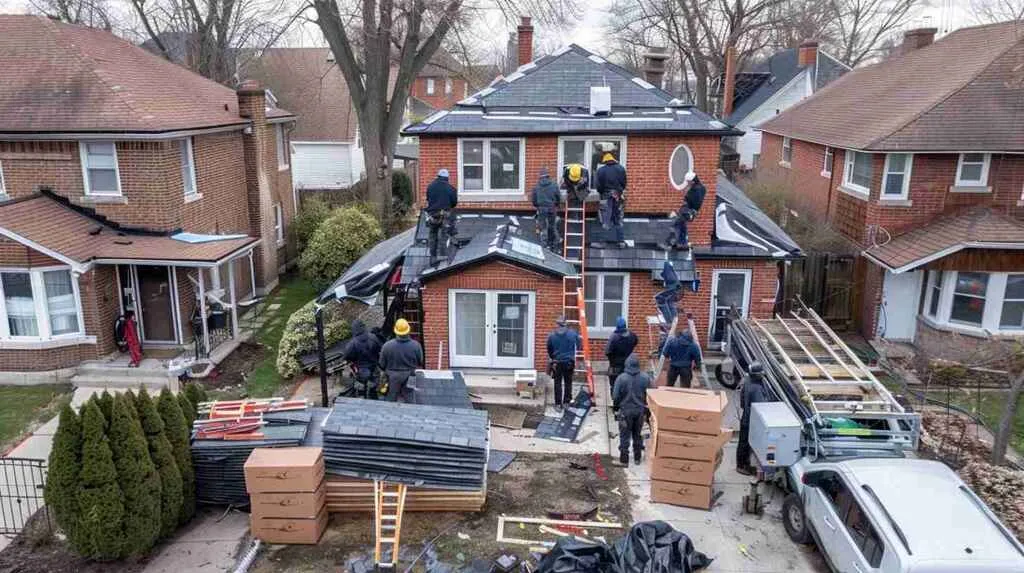
Roof Shingle Blistering Queens NY – Causes and What to Do Now | Free Quotes
Quiet problems are the worst. Nine out of ten “sudden” shingle problems I’m called about in Queens have been quietly forming for years in a hot attic, not overnight in a storm. I can usually tell in under 60 seconds from your driveway whether you’re looking at real storm damage or long-term blistering-kind of like how a mechanic spots an overheating engine before you even pop the hood.
Quiet Roof Shingle Blistering in Queens: What It Really Looks Like
Here’s my honest opinion: if you see little craters and “pimples” on your shingles, you don’t have a cosmetic issue-you’ve got a symptom, the way squealing brakes are a symptom, not the real problem. Most mysterious shingle holes in Queens aren’t storm damage at all. They’re slow-cooked blistering from heat and bad ventilation, and that pattern tells me everything I need to know. When attic air can’t move out, your roof deck acts like an engine running with no airflow through the radiator-eventually something’s going to pop.
One August afternoon around 3:30, I was on a blistering-hot roof in Ozone Park, the shingles too hot to kneel on, looking at what the homeowner swore was “hail damage” for an insurance claim. I could tell in two minutes it was classic blistering-random pock marks, no directional pattern-and I had this déjà vu from my old insurance days when people got denied because nobody explained the difference. I ended up sitting at their kitchen table for 40 minutes drawing little “before and after” sketches, showing them how overheated attic air had basically cooked the shingles from below. They didn’t love hearing the insurance wouldn’t pay, but two years later they called me back to install new shingles and fix the ventilation, and they still mention those drawings.
So from the driveway, here’s what you can spot: random pock marks with exposed asphalt, not directional dents that line up with wind-driven hail. If your gutters have piles of granules-those little colored grit pieces-after a hot week, not just after a storm, that’s blistering talking. If only one slope looks bad while the others are fine, you’re probably watching heat patterns, not weather patterns. The pattern doesn’t lie. Last week’s thunderstorm might’ve made it obvious, but the damage was cooking for years.
| Myth | Fact |
|---|---|
| Those tiny craters on my shingles must be hail damage from the last storm. | Blistering looks like random pock marks with no clear direction, and usually builds up over years of trapped heat, not one afternoon of hail. |
| If the roof just started leaking, the damage must be brand new. | Leaks usually show up after years of quiet damage; the first drip is like the first time you hear your brakes squeal, not the first day they were worn. |
| Blistering is only a cosmetic issue, not a real roof problem. | When blisters pop, they expose bare asphalt and speed up aging and leaks, especially on hot south- and west-facing slopes in Queens. |
| If insurance paid for my neighbor’s roof, they’ll pay for mine too. | Insurance only covers sudden, accidental damage; long-term blistering from poor ventilation is almost always excluded as wear and tear. |
| Queens weather is the main cause of blistering; there’s nothing I can do. | Attic ventilation, bathroom fan routing, and shingle choice have more to do with blistering than the zip code; you can absolutely reduce the risk. |
Top Causes of Roof Shingle Blistering in Queens, NY Homes
I always ask homeowners the same question first: “Have you ever stuck your head in your attic at 3 p.m. on a hot day?” because that one experience tells you more about blistering risk than any brochure. Growing up over a pizza shop in Woodside, I saw how Queens attics in areas like Howard Beach and Flushing trap heat like a car engine with a clogged radiator. When air can’t move out through the ridge and can’t get in through the soffits, temperatures hit 140°F or higher. Your shingles sit on top of that oven, cooking from below. The asphalt starts bubbling, moisture trapped during manufacturing expands, and before long you’ve got a roof full of blisters that look like tiny volcanoes waiting to pop.
One Saturday in late October, with a cold wind off the bay, I looked at a roof in Howard Beach where the blisters were only on one side of the house. The owner kept pointing at planes from JFK, convinced jet exhaust was “melting” his shingles. I climbed up, checked the attic, and found one half of the soffit vents painted shut from a siding job ten years earlier and a bathroom fan dumping steam under that same slope. I remember laughing to myself-quietly-because I’d actually written an insurance memo years back about exactly that combo causing premature blistering. We opened the vents, redirected the fan, and three winters later that new roof still looks like it was installed last month. Fixing airflow is like fixing the radiator and cooling fan on a car-cheap compared to an engine replacement.
| Cause | What You Might Notice | What I Check First | How We Fix It |
|---|---|---|---|
| Trapped attic heat | Upstairs feels like a sauna on summer afternoons; AC runs nonstop. | Attic temperature and airflow paths from soffit to ridge or roof vents. | Add or improve baffles, vents, and insulation to move hot air out. |
| Blocked or missing ventilation | Only one side of the roof has blisters or granule loss; ice dams in winter. | Soffit vents painted over or covered by insulation; number and size of vents. | Open soffits, add proper intake and exhaust vents, reroute fans to the exterior. |
| Improper shingle installation | Blisters and raised areas show up sooner than 10-12 years after install. | Nail placement, shingle layering, and manufacturer’s guidelines vs what’s on the roof. | Correct bad nailing patterns and replace compromised sections when possible. |
| Thin or low-quality shingles aging out | Granules all over the gutters and driveway; shingles look bald or patchy. | Shingle brand, age, and granule coverage by pulling a sample if needed. | Plan a staged or full replacement with higher-quality shingles designed for local conditions. |
Is Your Blistering an Emergency or Can It Wait?
Standing in your driveway, I can usually tell what your attic is doing to your shingles before I even climb the ladder, just by looking at which slopes are blistered and which ones are behaving. The one that sticks with me most was a twilight emergency call in Flushing, right after a summer thunderstorm, when a customer said, “The storm blew holes in my shingles.” I show up, the sky’s turning purple, and I’m on a ladder with a flashlight seeing hundreds of popped blisters that had finally opened up and dumped granules into the gutters. The “storm” just washed everything loose at once, making it look sudden when it had been brewing for years. I took a sample shingle down to their dining room table, tapped the thin spot with a pen like I was showing them a worn-out brake pad, and you could see the moment they realized how long their roof had been on borrowed time.
Here’s a simple insider tip: after a heavy Queens summer rain, check your gutters and downspouts for fresh piles of granules, then peek at your most sun-exposed slope-usually the south or west side-for new bare spots. Think of popped blisters like worn brake pads that have finally started grinding metal on metal. Once you hear that squeal, you’re already late, but you still have a small window before total failure. The same goes for blistering: once blisters pop and expose bare asphalt, water can get in and age your roof at triple speed, but you’ve still got time to act if you move now.
Urgent – Call Now
- You see active leaking inside after rain near areas with popped blisters.
- Large bare asphalt patches where blisters have opened up, especially on low slopes.
- Gutters are suddenly full of granules after one storm, not just a light dusting.
- Blistering combines with curled or cracked shingles on a 15+ year old roof.
Can Schedule – Within a Few Weeks
- You see scattered blisters but no interior leaks or stains yet.
- Only one slope has noticeable blistering and the rest of the roof looks solid.
- Attic is hot but insulation is dry and there are no water marks on the plywood.
- You’re planning exterior work (siding, solar) and want a roof/ventilation check first.
Quick Check: Repair, Ventilation Tune-Up, or Full Replacement?
Start: Are you seeing active leaks inside?
YES → Emergency patch needed now + start planning full replacement within 3-6 months; blistering plus leaks means the deck may be compromised.
NO → Next question: Is the blistering isolated to one slope or scattered across the whole roof?
One slope → Likely a ventilation or fan issue on that side; budget for ventilation upgrades + targeted repair/monitoring.
Whole roof → Next question: How old is the roof?
Under 10 years → Installation or shingle-quality issue; get inspection to determine warranty claim or targeted fix.
10-15 years → Combination of age and ventilation; fix vents now, plan replacement in 2-4 years.
15+ years → Roof is on borrowed time; budget for full tear-off and replacement with better ventilation and higher-grade shingles.
What Happens During a Roof Shingle Blistering Inspection in Queens
Think of my inspection like a good mechanic’s diagnostic check-no sales song-and-dance, just data and a clear explanation of what’s actually going on. I start in your driveway, reading the slopes from the ground to see which sides are taking the most heat and where the blistering patterns show up. Then I’m on the roof walking every section, looking at shingle condition, nail patterns, vent placement, and where moisture or granules are collecting. After that, I head into the attic-usually the part homeowners skip-to check airflow, insulation contact with the roof deck, and whether fans or vents are dumping heat or steam where they shouldn’t. Finally, we sit down, I pull out my beat-up notebook, sketch a simple diagram of what I found, and walk you through your options with rough cost ranges on the spot. No pressure, no mystery-just the same straight talk I’d give my own family.
What am I actually measuring and photographing up there? Blister patterns and how they’re distributed across slopes, the size and number of soffit and ridge vents, where bathroom and dryer fans terminate, shingle brand and age, granule loss by section, and attic temperature versus outdoor temperature if I’ve got my infrared gun. Then I explain it all in plain English-“your west slope is cooking because this soffit got painted over and your bath fan is dumping steam under the deck”-and I give you options: do we patch and monitor, do we fix ventilation and buy a few more years, or is it time to plan a full replacement with better shingles and airflow designed right from the start?
Step-by-Step Queens Shingle Blistering Inspection with Damian
- Driveway assessment (5 minutes): I read your roof from the ground, checking slope orientation, blister distribution, visible granule loss, and gutter condition to form a working hypothesis before I even touch a ladder.
- Roof walk and documentation (15-20 minutes): I’m up on every section with a camera and tape measure, checking shingle condition by zone, nail patterns, flashing, vent type and count, and pulling a sample shingle if age or quality is in question.
- Attic inspection (10-15 minutes): I check airflow from soffit to ridge, insulation contact with the deck, bathroom and dryer fan routing, temperature differential, and any signs of moisture or previous leak damage on the plywood.
- Kitchen-table debrief (10-15 minutes): I sit down with you, sketch what I found in my notebook with simple before-and-after diagrams, explain what’s causing the blistering, and lay out 2-3 realistic options with ballpark costs.
- Free written quote and photos (sent same day): You get a PDF with my findings, photos of problem areas, a plain-English summary, and a detailed quote for each option we discussed-no follow-up sales calls, just the info you need to decide.
Why Queens Homeowners Call Shingle Masters for Blistering Issues
-
✓
19 years of Queens roof experience – not a national franchise that rotates crews every season; I’ve been on roofs in Woodside, Flushing, Howard Beach, and Ozone Park since 2006. -
✓
Former insurance claims background – I know exactly how adjusters classify blistering vs storm damage, so I document everything honestly and won’t waste your time on a claim that’s going nowhere. -
✓
Same-day or next-day inspections – I’m not managing 50 jobs at once; when you call, you get me, and I’ll usually have eyes on your roof within 24 hours. -
✓
No-pressure, notebook-style quotes – I still sketch diagrams by hand, explain options in car-guy terms anyone can understand, and you never get a pushy sales pitch or a bait-and-switch price.
Costs, Insurance Reality, and Your Next Step in Queens, NY
Honest cost range first: $350 to $900 covers most targeted blister repairs and ventilation tune-ups for a typical Queens home; full tear-off and replacement runs $8,500 to $16,000 depending on size, pitch, and shingle grade. Here’s the insurance reality from someone who used to write the denial letters: blistering is almost never covered because it’s classified as wear and tear or a manufacturing defect, not sudden storm damage. If there’s legitimate hail or wind damage mixed in, I’ll document it honestly and help you file, but I won’t sell you false hope-my ex-insurance background means I know the difference and I won’t waste your time.
Typical Queens Blistering Scenarios and Ballpark Price Ranges
Inspection Only (No Repair)
$0 – Free when you’re considering work with us. I’ll give you a full roof and attic assessment, notebook diagrams, photos, and written findings with no obligation.
Minor Blister-Related Spot Repair
$350 – $850 for replacing a few damaged shingles, sealing exposed areas, and fixing small sections where blisters have popped and left bare asphalt.
Ventilation Upgrades (Soffit, Ridge, Baffles)
$900 – $2,200 depending on how many vents need to be added or opened, attic baffles installed, and whether we’re rerouting bathroom or dryer fans to proper exterior terminations.
Partial Slope Replacement (One Problem Side)
$2,800 – $5,500 for tearing off and replacing just the damaged slope, upgrading ventilation on that side, and blending in the new shingles with the rest of the roof.
Full Tear-Off & Replacement (Average Queens Home, 1,500-2,000 sq ft roof)
$8,500 – $16,000 for complete tear-off, new underlayment, architectural shingles, proper ventilation system, and warranty. Price varies with pitch, layers, and shingle grade.
Common Queens Questions About Roof Shingle Blistering and Insurance
What’s the actual difference between blistering and hail damage?
Hail damage shows up as directional dents or bruises with a clear impact pattern-usually all facing the same direction based on wind. Blistering looks like random pock marks or raised bubbles scattered across the shingles with no pattern, and it’s caused by heat and trapped moisture expanding under the surface over time. Hail is sudden and accidental; blistering is gradual and heat-related. That’s why insurance covers one and denies the other.
Should I call my insurance company first or a roofer first?
Call a roofer first-specifically one who knows how insurance actually works. If you file a claim for blistering and it gets denied as “wear and tear,” that claim stays on your record and can affect your rates or renewability. I’ll inspect the roof, document what’s really going on, and tell you honestly if there’s legitimate storm damage worth filing for. If there is, I’ll help you document it properly. If it’s just blistering, you’ll save yourself a pointless claim and know exactly what your repair or replacement options are.
How fast can blistering lead to actual leaks?
It depends on how many blisters have already popped and exposed bare asphalt. Once blisters pop, water can penetrate the shingle mat directly and you’re looking at 1-3 years before leaks show up inside, sometimes sooner on low-slope or high-traffic areas. If the blisters are still raised and haven’t popped yet, you might have 3-5 years, but every summer heat cycle speeds up the process. Think of it like a tire with sidewall bubbles-you can drive on it for a while, but you don’t want to wait until it blows on the highway.
Does blistering affect my home’s resale value in Queens?
Absolutely. Home inspectors flag blistering in their reports, and buyers will either ask for a price reduction, demand you replace the roof before closing, or walk away entirely if the blistering is severe. If you’re planning to sell within 2-3 years, fixing ventilation and doing targeted repairs now-or budgeting for a full replacement-will save you tens of thousands in negotiating power and keep deals from falling apart at the inspection stage. A clean roof report is worth its weight in gold when you’re competing with other listings in Queens.
Ignoring blistering is like driving with worn brake pads-eventually something more expensive fails, and you’re stuck paying for the tow truck and the whole brake system instead of just the pads. Don’t wait until the first drip shows up on your ceiling. Call Shingle Masters in Queens, NY for a free, no-pressure blistering and ventilation inspection so you know exactly where you stand before the next heat wave or storm rolls through. You’ll get my honest assessment, notebook diagrams, and real options-not a sales pitch.