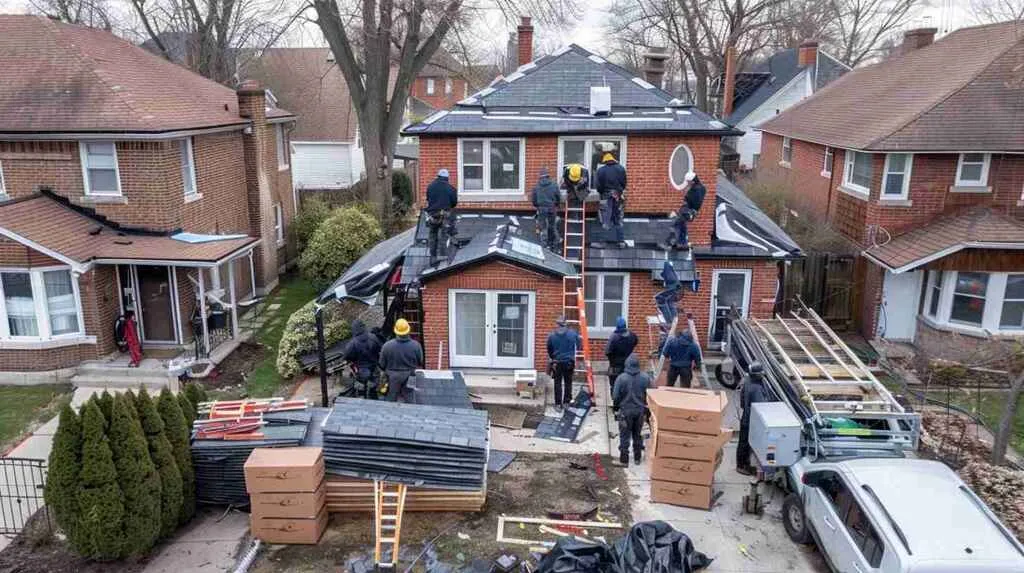
Hail Damage Asphalt Roof Shingles Queens NY – Storm Repair Help
Upshot: Even “small” hail in Queens-pea-sized or quarter-sized-can quietly shave 5 to 10 years off an asphalt shingle roof’s life, and most homeowners never notice until the leaks start a year or two later. I’m going to show you exactly how to spot those early warning signs on your own roof before the next storm rolls through, and how I document every hit like I’m building a legal case so your insurance company can’t brush you off with “normal wear and tear.”
How Queens Hail Quietly Chews Up Asphalt Shingles
On a typical Queens block-say along 35th Avenue in Astoria-you’ll see three houses in a row with the same exact hailstorm, but completely different levels of roof damage. The difference isn’t luck. It’s age, slope, and shingle type. A ten-year-old roof with sun-faded asphalt is going to bruise worse than a two-year-old architectural shingle that’s still flexible and full of protective granules. And here’s my opinion: most people in Queens-and way too many adjusters-underestimate small hail because there’s no dramatic hole in the roof or shingles scattered on the lawn. But those pea-sized impacts crush the granule layer, bruise the asphalt mat underneath, and accelerate UV damage. I refuse to do quick drive-by inspections for that reason-you have to get up there, touch the shingles, and build your case with real evidence.
One July afternoon around 3 p.m., after a fast-moving hailstorm cut across Jackson Heights, I was on a three-story walk-up with a dentist who kept insisting “it doesn’t look that bad.” The roof was dry by then and the sun was out, but I could still see the impact marks from pea-sized hail. I circled about 40 hits with chalk in one 10×10 test square, then had him run his fingers over the spots where the granules were missing and the asphalt felt soft, almost like a pencil eraser. The moment he realized those bruises would turn into leaks over his waiting room in a year or two, he stopped arguing and asked me to help him file the claim. That’s what hail does-it leaves invisible damage that only becomes visible when it’s too late, or when someone with chalk and a camera takes the time to prove it’s there.
Myth vs Fact: Hail Damage on Asphalt Shingles in Queens
| Myth | Fact from the Roof |
|---|---|
| If there are no active leaks, my roof is fine after hail. | Hail bruises often take 1-2 years to turn into leaks, but the shingle’s protective layer is already compromised the day of the storm. |
| Only golf-ball-sized hail can damage asphalt shingles. | Quarter‑size and even pea‑size hail can crush granules and bruise the asphalt mat, especially on sun‑baked Queens roofs. |
| My roof is under 10 years old, so hail can’t really hurt it. | Younger roofs can still get hammered; they just hide damage better, which is why close‑up inspection and photos matter. |
| If I don’t see missing shingles from the street, there’s no hail damage. | Granule loss, soft spots, and cracked mats are usually invisible from the sidewalk and need hands‑on testing. |
| Insurance will automatically tell me if I have hail damage during my policy review. | The burden is on you to document and claim storm damage-insurance adjusters don’t go looking for payouts on their own. |
Quick Self-Check: Is Your Queens Roof Likely Hail-Damaged?
I’m going to be blunt: if someone checks your hail damage from the sidewalk with binoculars, they’re guessing, not inspecting. Real hail assessment means touching shingles, looking at granule buildup in gutters, checking for ceiling stains inside, and asking when the storm hit versus when you first noticed anything wrong. Here’s a simple at-home checklist before you call anyone: walk your property after a storm and look for ice pellets or granules (they look like black sand) piled at downspouts or along the house foundation. If you’ve got a second-floor window or a ladder you’re comfortable with, scan the roof edges for any shingles that look darker or shinier than their neighbors-that’s exposed asphalt where the granule coating got knocked off. In areas like Jackson Heights, Astoria, and Flushing, recent hail tracks have cut across neighborhoods differently; attached homes on typical Queens blocks also funnel wind and ice in weird ways, so one side of your roof might be fine while the other took a beating.
Now, here’s where it gets real: a job in Breezy Point after a March hailstorm mixed with sleet showed me just how fast water can find brittle, hail-shattered shingles. We were tarping at night because the owner had water pouring into his kid’s bedroom, and the wind off the bay kept trying to rip our temporary cover away. That combination-wind-driven hail off open water-creates emergency conditions because the ice hits at an angle and punches through older shingles like they’re cardboard. If your home is near the water or took direct wind-driven hail during the storm, don’t wait a week to check it out.
Should You Call a Hail Damage Specialist Now?
START: Did your home get hit by the recent hailstorm in Queens, NY?
- → No? Monitor only; keep this guide for the next storm.
- → Yes? Continue below ↓
Question 1: Do you see any ceiling stains, drips, or bubbling paint inside?
- → Yes? Call Shingle Masters for urgent same-week inspection.
- → No? Continue below ↓
Question 2: Do you see granules piled in gutters or at downspouts?
- → Yes? Schedule a professional roof inspection within 3-5 days.
- → No? Continue below ↓
Question 3: Is your roof over 8 years old or already sun-faded?
- → Yes? Book a non-emergency hail inspection in the next 2 weeks.
- → No? Take photos from the ground and re-check after the next heavy rainstorm.
✓ Before You Call: Quick Prep Checklist
- Date and time the hailstorm hit your neighborhood-check local news or weather apps for confirmation.
- Walk your property and snap phone photos of any granules in gutters, dark spots on shingles, or ceiling stains inside.
- Locate your insurance policy and note your deductible and storm-damage coverage details.
- Write down any leaks you’ve noticed, even small drips, and when they first appeared relative to the storm.
- Ask neighbors if they’ve had their roofs checked-hail damage claims are easier when multiple homes on the block file together.
- Don’t climb on the roof yourself-wet or damaged shingles are slippery, and you can make existing damage worse by walking on bruised areas.
Our Hail Damage Inspection & Documentation Process in Queens
The first time I saw golf-ball-sized hail hit an old three-tab roof in Middle Village, it sounded like someone was dumping rocks on a metal drum. But the real damage wasn’t the noise-it was what I found when I went up with a coin and a camera. I tap-test every suspicious shingle by tapping it gently with a quarter; a healthy shingle sounds solid and bounces the coin back, while a bruised one feels soft and absorbs the tap like a sponge. Then I pull out my chalk and circle every impact mark I can find in a test square, usually 10×10 feet, and photograph it from multiple angles with my hand or a ruler in the frame for scale. I treat every roof like I’m building a legal case, because that’s exactly what you need when an insurance adjuster shows up with a clipboard and starts talking about “pre-existing wear.” Here’s an insider tip: adjusters pay way more attention when they see consistent 10×10 test squares chalked and photographed, plus close-ups of bruised shingles and tap-test audio or video if you’ve got it. Evidence wins arguments.
Step-by-step: How we build your hail damage case file
-
1
Initial call and storm verification: We confirm the date, time, and hail size reported in your area, cross-reference with NOAA data, and schedule an inspection within 24-72 hours depending on urgency. -
2
Exterior walk-around: Before I even touch a ladder, I check gutters, downspouts, siding, and window screens for hail marks and photograph any granule piles or dents. -
3
Roof access and test-square selection: I climb up, choose multiple 10×10 test areas on different slopes (especially south and west faces that took the most sun), and start my visual and tactile inspection. -
4
Chalk marking and tap testing: Every hail bruise, soft spot, or missing granule cluster gets circled in chalk, and I tap-test questionable shingles with a coin so you can hear-and I can record-the difference. -
5
Photo and video documentation: I take wide shots showing the whole test square, close-ups with my hand or a ruler for scale, and early-morning or late-afternoon angles when low sun highlights texture loss. -
6
Interior attic inspection: If you’ve got attic access, I check for water stains on rafters, wet insulation, or daylight coming through the deck-proof that hail compromised the roof system, not just the surface. -
7
Written report and claim support: You get a detailed PDF with all photos, impact counts per test square, shingle age and type, repair vs replacement recommendation, and a cost estimate-everything you need to hand to your insurance company or adjuster.
Why Queens Homeowners Trust Shingle Masters After Hailstorms
-
✓
Fully licensed and insured in New York State for residential and commercial roofing work. -
✓
19 years of hands-on experience documenting storm damage across Queens and western Nassau. -
✓
Local Queens focus: we know how hail tracks through Astoria, Jackson Heights, Flushing, Corona, and Breezy Point-and how your block’s layout changes wind patterns. -
✓
Same-day or next-day response for active leaks; 2-5 day turnaround for non-emergency hail inspections. -
✓
Insurance-claim support included: we attend adjuster meetings, provide written reports, and help you understand every line of the estimate.
What Repairs Cost After Hail Hits Asphalt Shingles in Queens
From about $350 for minor shingle patching on a single slope to well over $14,000 for a full asphalt replacement on a Queens two-family, hail damage costs swing wide. Scope is the biggest driver-are we talking ten bruised shingles on the garage or an entire roof that took a beating? After that, roof pitch matters because steep slopes in neighborhoods like Woodside or Elmhurst slow us down and require extra safety equipment. Access is another Queens-specific factor: tight driveways, attached homes, and street parking mean we sometimes need permits or coordination with neighbors just to stage materials. And don’t forget code upgrades-if your roof is old enough, the city may require new underlayment, upgraded flashing, or even structural reinforcement before we can legally nail down new shingles, all of which add to the final number.
Now, here’s where it gets real: a retired schoolteacher in Corona had her claim denied as “normal wear and tear” on a nine-year-old asphalt roof that I knew had fresh hail bruises. I went up there on a Sunday morning after a rare mid-May storm, low-angle sun on my side, and took close-up shots of clean impact craters where granules were clearly crushed and displaced downhill. I ended up building a 30-page photo report and sitting at her kitchen table, walking her through every picture-she called back two weeks later to say the claim was approved for a full replacement. That documentation turned a $12,000 out-of-pocket disaster into a $1,000 deductible. Solid photos and a clear narrative are often the difference between paying everything yourself and letting your insurance do what you’ve been paying them to do.
Typical Queens Hail Damage Scenarios & Price Ranges
| Scenario | Estimated Cost |
|---|---|
| Spot repair: 10-20 individual shingles replaced on one slope after small hail, no structural issues | $350-$900 |
| Partial roof replacement: One or two damaged slopes re-shingled, rest of roof intact, typical attached Queens home | $2,800-$5,500 |
| Full single-family roof: Complete tear-off and replacement with architectural shingles, moderate pitch, 1,200-1,600 sq ft | $7,500-$11,000 |
| Full two-family roof: Larger footprint, steeper pitch, code-required upgrades, 2,000-2,800 sq ft | $11,500-$16,500 |
| Emergency tarp & temporary repair: Night or weekend service to stop active leaks until full work can be scheduled | $400-$1,200 |
Prices reflect 2024-2025 Queens, NY labor and material costs. Final estimates depend on access, roof complexity, permit requirements, and whether insurance covers storm damage. All figures include labor, materials, and cleanup.
Patching vs Full Replacement: What Makes Sense After Hail?
Patching Hail-Damaged Areas
- Lower upfront cost, especially if only a few slopes were hit hard.
- Can be done quickly to stop active leaks.
- May be acceptable if damage is isolated and roof is relatively young.
- Less disruption to occupants during work.
Full Roof Replacement
- Addresses all hidden bruises and micro-cracks in one shot.
- Restarts the clock on manufacturer warranty and lifespan.
- Often more cost-effective when insurance covers storm damage.
- Improves curb appeal and can boost home value in tight Queens markets.
When to Call for Emergency Help vs Waiting a Few Days
When I come to your house after a storm, the first question I’ll ask you is, “Where did you see the first leak or stain, and how long after the hail did it show up?” That timing helps me trace the path of water backward through your roof deck, underlayment, and shingles, and it separates old problems from fresh hail damage. In older multi-family buildings around Flushing and Corona, roof lines get complicated-dormers, valleys, chimneys, skylights-and water can travel sideways along a rafter for ten feet before dripping into your ceiling. If a stain appeared within hours or days of the storm, it’s almost always new damage. If it’s been there for months and you’re just noticing it now, we’ve got a different conversation.
Now, here’s where it gets real: there’s a difference between a true emergency-active drips, ceiling sagging, water pouring down a wall-and a situation that can wait three or four days for a proper inspection. Active interior water damage demands same-day or next-day service, even if that means tarping at night like I did in Breezy Point when wind tried to rip everything away. But if you’ve got no leaks, just visible bruises or granule loss on the shingles, you’re better off waiting for daylight, dry weather, and a thorough inspection than rushing into a temporary fix that might make things worse. Temporary work still has to be done carefully, or you end up with blown tarps and more damage than you started with.
Urgent vs Can-Wait: When to Call About Hail Damage
🚨 Call Immediately (Same-Day Service)
- Active water dripping from ceiling or running down a wall
- Ceiling drywall sagging or bulging with trapped water
- Large sections of shingles visibly missing or hanging loose
- Water pooling in attic or soaking insulation
- Storm happened overnight and morning reveals major damage
📅 Schedule Within 3-5 Days
- No leaks inside, but visible hail marks or soft spots on shingles
- Heavy granule accumulation in gutters after the storm
- Neighbors filing claims and you want documentation too
- Roof is over 8 years old and storm was significant
- You see darker, shinier patches where granules are gone
Common Questions About Hail Damage & Insurance in Queens
Q: How long do I have to file an insurance claim after a hailstorm in Queens?
Most New York homeowner policies give you one year from the date of loss, but don’t wait that long-evidence fades, temporary damage turns permanent, and adjusters get skeptical. File within 30-60 days if you can, and document everything the week the storm hits.
Q: Will my homeowner’s insurance rate go up if I file a hail damage claim?
Storm damage is typically considered a no-fault “Act of God” claim, so most carriers won’t raise your premium the way they would for a liability or theft claim. That said, multiple claims in a short period can flag your account, so talk to your agent before filing if you’re unsure.
Q: My roof is 12 years old-can I still get full replacement value or just depreciated coverage?
Depends on your policy. “Replacement cost” coverage pays for new materials minus your deductible; “actual cash value” deducts depreciation based on age and wear. Read your policy’s roof coverage section, and if you’ve got ACV only, prepare to cover the gap or negotiate hard with the adjuster using solid documentation.
Q: Can pea-sized or dime-sized hail really cause enough damage to justify a full roof replacement?
Absolutely, especially on sun-baked, aging asphalt shingles in Queens. Small hail crushes granules, bruises the mat, and accelerates UV breakdown. One storm might not punch a hole, but it shortens the roof’s remaining life by years. If you’ve got widespread bruising across multiple test squares, replacement is often the smarter long-term call.
Q: What if the insurance adjuster says my damage is “normal wear and tear” and denies my claim?
Don’t give up. Get a second opinion from an independent roofer (like us) who can document fresh impact marks, compare pre-storm and post-storm photos if you have them, and build a case file showing clear hail signatures. You can also request a re-inspection or hire a public adjuster to fight the denial on your behalf.
Q: Should I get multiple estimates before choosing a roofer for hail damage repair in Queens?
Yes, but focus on quality and documentation, not just the lowest price. A cheap estimate without detailed photos, test-square data, or insurance-claim support can leave you scrambling when the adjuster shows up. Get two or three written estimates from licensed Queens roofers who will stand by their inspection findings.
Final Thoughts: Don’t Let Hidden Hail Damage Cost You Thousands
Here’s the nasty little secret about asphalt shingles and hail: most of the real damage is invisible from the ground for the first year or two. By the time you see water stains on your bedroom ceiling or feel a drip during a rainstorm, those hail bruises have already let UV rays, wind, and temperature swings break down the shingle’s core. You’re not just paying for the leak repair at that point-you’re paying for secondary water damage, mold remediation, and possibly a full roof replacement that could’ve been covered by insurance if you’d documented the storm damage right after it happened. Think of your roof like a winter coat: one hailstorm doesn’t rip the whole thing off, but it can punch out a bunch of insulation you can’t see until you’re freezing.
If your Queens home took hail in the last storm-or even a storm from six months ago that you never had checked-call Shingle Masters now for a hail damage evaluation on your asphalt shingle roof before the next weather system rolls through. We’ll get up there with chalk, a camera, and a coin, document every bruise and soft spot like we’re building a legal case, and hand you a report that insurance adjusters actually respect. Don’t wait until those hidden bruises turn into expensive leaks-get the proof you need while the evidence is still fresh.