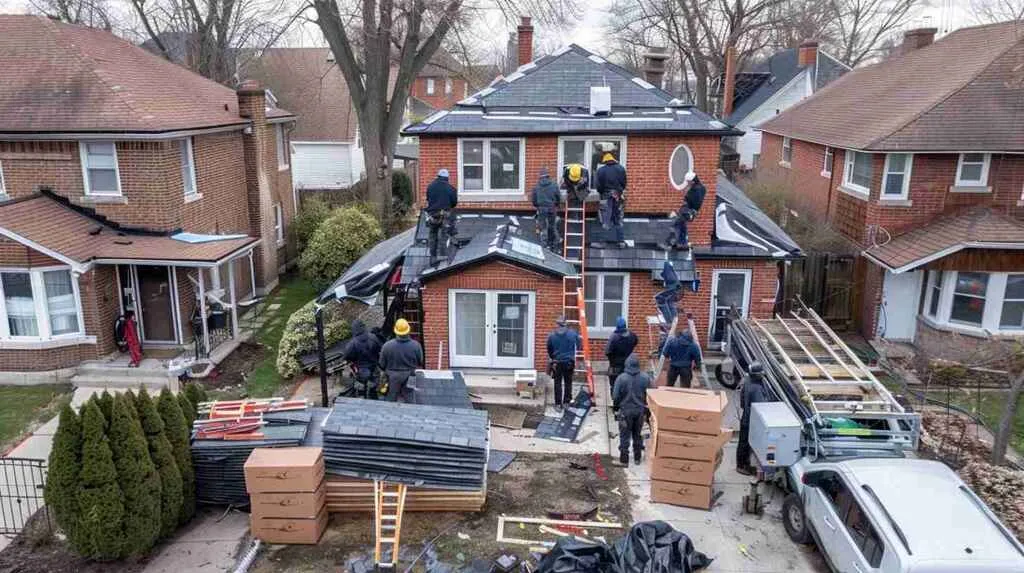
Removing Moss from a Shingle Roof Queens NY – Safe Pro Methods | Call Today
Blueprint for disaster: take a pressure washer to that green fuzz creeping across your shingles and you’ll cut your roof’s lifespan in half before you finish rinsing. The first safer step doesn’t even require a ladder-stay on the ground, take clear photos from two sides of your house, and let someone who knows Queens microclimates figure out which gentle, shingle-safe method fits your roof’s specific weather pattern.
Why Scrubbing Moss Off Your Shingle Roof in Queens Is So Dangerous
On a Cape in Middle Village one February morning, the north slope looked like a Chia Pet-thick moss, wet as a sponge from overnight fog. The homeowner wanted me to “just blast it off” with his new pressure washer, and I still remember the look on his face when I peeled up one moss patch with my gloved hand and half a shingle tab came with it. Let me be blunt: if you’re thinking about scrubbing or using high pressure, you’re about to do more damage than the moss itself ever could. The brittle tabs on older Queens roofs don’t forgive aggressive cleaning, and honestly, fast “blast it off” approaches are how you turn a $600 treatment into a $12,000 re-roof. Start by walking your property line with your phone camera instead-two angles, decent lighting, maybe a zoom shot of the worst patches-and get a pro assessment before you touch a single shingle.
Moss isn’t just sitting there looking shabby. It’s actively holding moisture against your shingles like a damp towel pressed to wood, lifting the edges where water normally rolls off, and re-wiring the whole drainage pattern across your roof. Think of each moss clump as its own little microclimate-shade from that big oak three doors down, wind patterns off Queens Boulevard that leave one side always damp, fog that settles in the pocket between your house and your neighbor’s-and suddenly you see why the green isn’t evenly spread. The north-facing slope stays wet longest, the shingles under overhanging branches never fully dry, and moss reads that moisture map better than any satellite.
⚠️ Stop Before You Scrub or Spray
- High-pressure washing can strip protective granules and void manufacturer warranties on architectural shingles.
- Aggressive brushing breaks brittle tabs, especially on roofs over fifteen years old that have weathered Queens winters.
- Fast “blast it off” methods can cut a shingle roof’s lifespan in half by forcing water under unsealed edges.
- The first safe step: stay on the ground, take photos from two sides of the house, and get a pro roof moss assessment instead of climbing up with tools.
Take Ground-Level Photos
Two angles, decent lighting-no ladder needed.
Note Which Sides Look Greenest
Pattern tells us about shade and wind.
Check for Gutter Overflow
Stains on siding show where water’s escaping.
Call for a Shingle-Safe Assessment
Radar evaluates your roof’s microclimate.
How I ‘Read’ Your Queens Roof Before Removing Moss
When I climb a ladder, the first thing I’m reading isn’t the moss-it’s the direction of the streaks and stains. About five summers ago, during one of those 92-degree afternoons where the tar feels like gum on your boots, I was working on a brick Tudor near Flushing Meadows where the owner had tried a DIY vinegar mix he found online. That stuff ran down into the gutters and killed a whole row of boxwoods-his wife was waiting at the curb with the dead shrubs to show me. I ended up re-treating the roof with a proper, shingle-safe moss control solution and installing zinc strips at the ridge, and I still use that story as Exhibit A on why “homemade chemistry” on a Queens roof is a bad idea. Every roof is its own tiny weather system, and I’m looking at shade from neighboring buildings on blocks off 108th Street, wind tunnels between attached homes in Flushing, and tree canopy patterns in Forest Hills to figure out why moss decided to camp out on *your* shingles specifically.
Before I touch a single green patch, I walk through a checklist that reads like a microclimate report: slope angle, shingle age and brittleness, where water drains versus where it pools, north-facing exposure versus south-facing sun exposure, and moss thickness-is it a light green haze or a two-inch carpet? That evaluation sets up the whole plan, because a steep Victorian in Sunnyside with old three-tab shingles can’t handle the same treatment speed as a low-slope ranch in Bayside with five-year-old architectural shingles. Slow, shingle-safe methods aren’t about being extra careful for fun-they’re about matching the cure to the specific way your roof breathes, dries, and fights moisture.
Professional Moss Inspection & Removal Plan
| Myth | Fact |
|---|---|
| “Pressure washing is the fastest way to clean moss off shingles.” | High-pressure water strips granules, breaks brittle tabs, and forces water under unsealed edges-often voiding your warranty and cutting roof life in half. |
| “DIY vinegar or bleach mixtures are safe and eco-friendly.” | Homemade chemistry can kill plants below, corrode gutters, and doesn’t control dosage-leaving you with streaky results or damaged landscaping (ask the Flushing Meadows boxwoods). |
| “A little green moss adds character and isn’t hurting anything.” | Moss holds moisture like a sponge, lifts shingle edges, and rewrites your roof’s drainage pattern-what looks like “character” is slowly rotting the underlayment. |
| “You can scrub moss off once shingles dry out in summer.” | Scrubbing breaks tabs even when dry, and moss roots into the shingle surface-the only safe approach is chemical treatment followed by gentle manual lifting once the moss is dead. |
Safe Moss Removal & Treatment Methods I Use in Queens, NY
Gentle Cleaning, Not Roof Abuse
A spring storm rolled in early over Astoria two years back while I was mid-job on a three-family walkup with a flat-ish shingle roof and chronic moss near the drains. The super had ignored my warning about clogged scuppers, and as the rain came, I watched a mini pond form right where moss had lifted the shingle edges-we had to emergency-clear the moss, open the drainage, and tarp a section before dark. Ever since, I bring up that building and explain how moss doesn’t just look ugly; it actively changes how water moves across your roof, sometimes in one afternoon. My approach is slow-cure, not shock-and-awe: low-pressure application of a shingle-safe moss control formula, then patience while the moss dries and releases naturally over two to four weeks. Once it’s dead and brittle, I lift it by hand only where the shingles underneath are still sound-no scraping, no force, no shortcuts that peel off tabs or strip granules. Here’s the thing: the worst moss often hides just upslope of drains, skylights, and chimneys-places you can’t see from the ground-so those are always my first checkpoints before any treatment goes down.
Keeping Moss From Coming Back
Long-term prevention is about controlling the roof’s microclimate. I install zinc strips along the ridge-rainwater washes microscopic zinc ions downslope, and moss hates that chemistry-and I recommend trimming overhanging branches that create permanent shade pockets. Gutters and scuppers get cleared so water doesn’t back up and create wet zones where moss can re-establish. Think of it as changing the weather system over your house: more sun exposure, faster drying, cleaner drainage paths. A Queens roof that used to stay damp until noon can start drying by 9 a.m. with just a couple smart adjustments, and that shift is what keeps the green from creeping back year after year.
| Approach | Pros | Cons |
|---|---|---|
| Slow-Acting Chemical Treatment |
• Protects shingle granules and tabs • Preserves manufacturer warranty • Allows natural moss release over weeks • Safe for older, brittle Queens roofs |
• Takes 2-4 weeks to see full results • Requires patience from homeowner • Dead moss stays visible until manually lifted |
| Aggressive Pressure Washing |
• Moss disappears in one afternoon • Immediate visual result |
• Strips protective granules off shingles • Breaks brittle tabs and forces water under edges • Often voids manufacturer warranties • Can cut roof lifespan in half |
What It Costs to Remove Moss From a Shingle Roof in Queens
$450 to $1,200 will cover most residential moss removal jobs in Queens, and honestly, careful treatment now is always cheaper than replacing shingles ruined by scrubbing or years of neglect-re-roofing a section because moss lifted tabs and let water rot the deck underneath can easily hit $4,000 before you’re done. Pricing depends on roof size, pitch, access (scaffolding for a steep Victorian costs more than ladder work on a ranch), moss thickness, and whether we’re also fixing drainage issues that fed the problem. A slow, shingle-safe method might sound like it should cost *more*, but you’re actually saving money by avoiding the repair bills that come after aggressive cleaning breaks your roof.
| Scenario | Roof Type & Condition | Approx. Price Range | What’s Included |
|---|---|---|---|
| Small One-Story, Light Moss | Ranch or Cape, ~1,200 sq ft, early green haze on north slope | $450-$650 | Shingle-safe treatment application, gutter check, drainage assessment |
| Medium Two-Story, Moderate Moss | Colonial or Tudor, ~2,000 sq ft, moss patches on multiple slopes | $750-$1,050 | Treatment, manual lifting after cure, minor gutter clearing, microclimate evaluation |
| Large Steep Roof, Heavy Moss | Victorian or older multi-family, ~3,000+ sq ft, thick moss carpet, steep pitch | $1,200-$1,800 | Scaffolding setup, treatment, careful hand-lift, shingle tab inspection, drainage fixes |
| Flat-ish Multi-Family, Chronic Moss | Walkup or attached home, low-slope shingle roof, moss near drains/scuppers | $900-$1,400 | Treatment, scupper clearing, ponding water diagnosis, moss-lift after cure, prevention plan |
| Add-On: Zinc Strip Installation | Ridge-line zinc strips to prevent moss regrowth (any roof size) | $300-$550 | Material, installation along ridge, creates long-term moss-hostile microclimate |
Why Queens Homeowners Call Shingle Masters
- 31+ years on Queens roofs – Radar knows every microclimate from Flushing to Forest Hills
- Licensed & insured in New York State – full coverage, zero shortcuts
- Same-week moss assessments – ground photos to treatment plan in days, not weeks
- Shingle-safe treatment methods only – slow cure, no pressure washing, no tab-breaking scrubbing
- Focus on drainage & microclimate diagnosis – we fix the weather pattern causing your moss, not just the moss itself
Before You Call, Take These 60 Seconds on the Ground
You don’t need to climb a ladder or grab a tape measure. Walk your property line, take a couple photos from the sidewalk or backyard, and jot down which sides look greenest, whether you see any sagging or missing shingles, and if water overflows your gutters during rain-that’s all I need to start building your roof’s microclimate report and give you a real answer about what’s safe and what’s not.
✓ Quick Ground-Level Checks Before You Call
Frequently Asked Questions
Are moss treatments safe for my pets and plants below the roof?
The shingle-safe formulas I use are low-toxicity and designed to break down after killing moss-I still recommend keeping pets off treated walkways for 24 hours and watering foundation plantings before and after application to dilute any runoff. If you’ve got a dog that licks gutters or kids who play under downspouts, mention it when you call and I’ll adjust timing and coverage zones.
How long does it take for moss to fall off after treatment?
Two to four weeks, depending on weather-dry, sunny days speed it up; damp, overcast stretches slow it down. The moss turns brown and brittle first, then releases naturally as wind and rain work at it. If you’re planning a house showing or event and need faster cosmetic results, I can schedule a gentle hand-lift once the moss is dead, but rushing that step is where damage happens.
Do I need to be home during moss removal?
Not required-most treatment applications take 45 minutes to two hours, and as long as I can access the roof from the outside, you don’t need to rearrange your day. I’ll leave a note on the door with next steps (when to expect moss to release, what to watch for) and follow up by phone if I spot anything unusual like lifted tabs or drainage issues that need attention.
Will removing moss void my shingle warranty?
Gentle, chemical treatment won’t void manufacturer warranties-in fact, most warranties require you to keep moss and debris *off* the roof. What voids warranties fast is high-pressure washing or aggressive scrubbing that strips granules and breaks seals. I use only methods that comply with major shingle makers’ care guidelines, and I can walk you through your specific warranty language if you’re worried.
How often do I need follow-up moss treatments in Queens?
Once we fix the microclimate-zinc strips, trimmed branches, clean gutters-most Queens roofs stay moss-free for three to five years. North-facing slopes with heavy tree cover might need a light re-treatment every two years, but that’s a quick maintenance visit, not a full removal job. I give every customer a custom prevention schedule based on their specific shade, wind, and drainage patterns.
Moss isn’t just ugly-it’s a moisture sponge that can quietly re-route water into your home, lifting shingle edges and turning a $600 problem into a $6,000 emergency when the next rainstorm pushes that trapped water under your roof deck. Shingle Masters can quickly assess your roof, map the microclimates that are feeding the green fuzz, and apply slow-acting, shingle-safe treatments that protect your investment instead of cutting its lifespan in half. Call Shingle Masters today for a Queens-specific moss removal plan before the next rainstorm pushes that trapped water under your shingles-because once moss rewrites your drainage pattern, waiting just makes the repair bill climb.