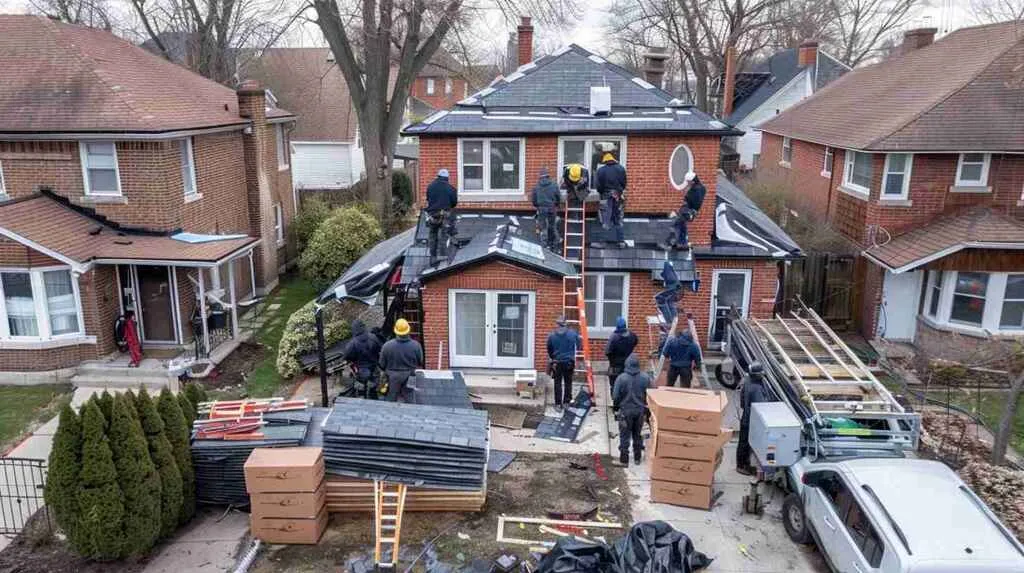
Hail Damage to Asphalt Roof Shingles Queens NYC – Free Inspection
Sideways hail doesn’t look like much damage when you’re standing on the sidewalk in Sunnyside, but climb up with a flashlight and check the south slope where the wind pushed those ice pellets into your asphalt shingles at 60 miles an hour-you’ll find a trail of bruised tabs that just lost three years of service life in six minutes. Most hail-damaged roofs in Queens look totally normal from your front yard, but a free, detailed inspection right after the storm can be the difference between a check from your insurance company and a $12,000 surprise when those hidden fractures finally turn into ceiling stains two winters from now.
From the middle of a Sunnyside roof at 2 pm, Queens hail looks a lot different than it does from your living-room window.
The truth about hail-damaged asphalt shingles is they rarely look “damaged” the way you’d expect. No missing tabs flapping in the wind, no obvious holes punched clean through. Back when I worked on 747s at JFK, we’d inspect wing panels for tiny stress fractures that you couldn’t see unless you knew exactly where to shine your light and how hard to press with your thumb. Hail on an asphalt roof works the same way-it leaves bruises, crushed granules, and hairline fractures in the mat that look fine from your living room but tell me, standing up here in work boots, that this roof isn’t “safe to fly” through the next five years of Queens weather. If I saw this kind of impact pattern on an airplane wing, I wouldn’t sign off on that flight.
One July afternoon, about 4:30 pm, right after one of those freak hailstorms that only seem to hit Middle Village and nowhere else, I was on a two-family brick house with a skeptical uncle watching from the fire escape. He kept saying, “It just sounded like rain.” I angled my inspection light across the south slope and showed him a perfect trail of quarter-sized bruises marching right up the shingle tabs, exactly where the wind drove the hail. The granules were crushed into the asphalt like someone had pressed them with a thumb, and under the right side lighting you could see where the mat underneath had compressed and started to separate from the fiberglass backing. He went from “It’s fine” to “Call my sister, tell her to come up here” in about ten seconds once he saw how those impacts had already started shedding protective granules into the gutter. When you lose those granules, you lose the coating that sheds water and reflects UV-your shingles age faster, absorb more heat, and crack during freeze-thaw cycles, which means leaks show up months or even years before they normally would on an undamaged roof.
Here’s my blunt take: if you waited until you saw missing shingles to worry about hail, you already gave the storm a head start. Queens gets these sudden hail bursts-May, July, sometimes even late September-and they hit specific micro-climates hard while the next neighborhood over gets nothing but heavy rain. A free inspection within a week of the storm can document fresh impacts while your neighbors still remember the noise and your insurance timeline is clear. Wait until the roof starts leaking and you’re looking at an out-of-pocket replacement because the claim window closed, the damage patterns aged into “normal wear,” and nobody can prove when the hail actually hit.
| Myth about Hail Damage | Reality on Queens Asphalt Roofs |
|---|---|
| “If I don’t see missing shingles, there’s no hail damage.” | Most hail damage shows up as bruises, crushed granules, and hairline fractures you only see up close under angled light. |
| “Hail always leaves obvious dents like on a car hood.” | On asphalt shingles, hail more often knocks off protective granules and bruises the mat instead of leaving neat, round dents. |
| “If the roof isn’t leaking today, yesterday’s hail didn’t hurt it.” | Hail often creates micro-fractures that turn into leaks months or years later, especially after freeze-thaw cycles and Nor’easters. |
| “Insurance only pays when there’s huge, obvious damage.” | Insurers often cover full replacements when documented hail patterns meet their criteria, even if the roof looks “mostly fine” from the street. |
| “An adjuster did a quick look from the ladder, so I’m cleared.” | Drive-by or quick inspections frequently miss directional hail patterns; a slow, documented inspection can change claim outcomes. |
Why Trust Lou at Shingle Masters for Hail Inspections in Queens
- ✓ Licensed NYC roofing contractor
- ✓ 19 years inspecting Queens roofs
- ✓ Former JFK aircraft mechanic trained on stress cracks
- ✓ Known locally as the “flashlight guy” for detailed hail documentation
- ✓ Average response time: within 24 hours after a hail report
- ✓ Fully insured for residential roofing work in Queens, NY
Here’s my blunt take: if you waited until you saw missing shingles to worry about hail, you already gave the storm a head start.
Queens doesn’t get hail evenly. Middle Village might take a direct hit from marble-sized ice while Jackson Heights three miles away gets nothing but thunder and heavy rain, all because of how the storm tracks along the Long Island Sound corridor and breaks up over different building densities. I’ve seen hail patterns where only the west-facing slopes took impacts because the wind direction funneled the storm down one specific angle for maybe eight minutes, then it was over. Back in 2018, right before Thanksgiving, I did a hail inspection in Bayside at 7:15 in the morning because the homeowner was a night-shift nurse. It had frozen overnight, and the roof deck had this faint crunch to it from granules loosened in a storm two weeks earlier. I remember one valley where a previous contractor had misaligned the shingles; the hail had found every weak overlap and driven tiny fractures into the mat underneath. That roof passed a quick drive-by inspection from the insurance company, but once I documented the pattern and moisture readings, they approved a full replacement. The adjuster later told me the side-light photos showing the granule crush and the moisture map around the valley made the difference-without that level of detail, they would’ve called it “normal wear” and denied the claim.
When hail hits an asphalt shingle, it doesn’t punch through like a bullet-it compresses the surface, crushes the ceramic granules into the asphalt binder, and sometimes cracks the fiberglass mat underneath if the impact lands on a weak point like an edge, overlap, or old patch. Think of it like a stress fracture in an airplane wing spar: the metal doesn’t snap right away, but every cycle of pressure and temperature change works that crack a little deeper until one day it fails inspection-or fails in flight. On your roof, those hail bruises shed granules faster, absorb more UV and heat, and let water wick into micro-cracks during freeze-thaw cycles. You won’t see a leak today, but two winters from now, after a Nor’easter dumps three inches of rain and the temperature swings from 40 to 15 overnight, that’s when water finds its way through the damaged mat and into your attic insulation. Homeowners need a simple way to decide whether they should call for a free inspection based on what they saw, heard, and can check safely from the ground.
Should You Schedule a Free Hail Damage Inspection for Your Asphalt Shingle Roof in Queens?
Start: Did your neighborhood (within about 10 blocks) get hail in the last 12 months?
If NO: You probably don’t need a hail-specific inspection right now, but consider a routine roof check if it’s 10+ years old.
If YES: Go to Step 2.
Step 2: Did the hail sound louder than normal rain on metal (AC units, window sills, cars)?
If NO: Go to Step 3.
If YES: Schedule a free inspection – likely medium to large hail with impact potential.
Step 3: Do you see any loose granules building up in gutters or at downspout bottoms now?
If YES: Schedule a free inspection – often a sign of hail-bruised shingles shedding granules.
If NO: Go to Step 4.
Step 4: Is your roof 8+ years old, or have you had a previous patch in any valley or around chimneys?
If YES: Schedule a free inspection – older shingles and previously patched areas are more vulnerable to hidden hail fractures.
If NO: You can wait, but photograph your roof from the ground and call if you notice new shingle discoloration, curling, or granule piles after rain.
| Call Immediately (within 24-72 hours) | Can Wait a Few Days (but don’t ignore) |
|---|---|
| Neighbors on your block mention broken skylights or dented metal awnings. | You hear hail on the windows and AC sleeve but don’t see obvious damage from the sidewalk. |
| Granules suddenly show up in handfuls at the bottom of downspouts. | Your roof is 10+ years old and you know hail hit your specific part of Queens. |
| Ceiling stains appear or old stains grow after the storm. | A previous roofer patched valleys, ridge, or around chimneys and that area took direct hail. |
| Insurance adjuster already came and said “minor” but you weren’t on the roof with them. | You’re planning to sell or refinance and hail hit in the last year. |
I still remember a Tuesday in May when a homeowner in Forest Hills asked me, “If I can’t see dents, is there even a problem?”
The one that still bugs me happened in Corona on a humid August evening, right after a short hail burst that lasted maybe six minutes. A landlord decided to “save money” and patch only the visibly cracked shingles on the front, ignoring the soft bruises I pointed out on the back slope over the kids’ bedrooms. Two years later, I got a call during a Nor’easter because water was tracing through those same hail-bruised shingles, down through the insulation, into the ceiling lights. We ended up doing an emergency tarp at 10 pm in driving rain-fixing what should’ve been a simple insurance job right after the hail. That’s the risk when you focus only on what you can see from the front yard and ignore the back slopes, valleys, and areas where previous repairs created weak points. Hail doesn’t care if you’re looking-it hits every surface equally, and the damage compounds quietly until it becomes a problem you can’t ignore anymore.
Before you call for a free inspection, there’s a quick pre-check you can do safely from the ground or an upstairs window. Look in your gutters and at the base of downspouts for fresh piles of black or colored granules-if you see handfuls of gritty material that wasn’t there before the storm, that’s a red flag that shingles are shedding their protective coating. Stand back on the sidewalk and scan each slope you can see for dark spots, shiny bare patches, or randomly discolored shingles; hail bruises sometimes show up as slightly darker or shinier areas where the granules got pressed into the asphalt. Check metal items like AC units, window sills, and railings facing the storm direction for fresh dings-they’re good “witnesses” for how hard the hail hit your roof. But don’t climb up there yourself, especially within the first day or two after a storm. Loosened granules make asphalt shingles as slick as ice, even when they look dry, and one bad step near a bruised shingle or softened valley is all it takes for a serious fall.
Simple Hail-Damage Checks You Can Do Before Calling Shingle Masters
- ✓ Look in your gutters and at the base of downspouts for fresh piles of black or colored granules after a hailstorm.
- ✓ Stand back on the sidewalk and look for dark spots, shiny bare asphalt, or randomly discolored shingles on any slope you can see.
- ✓ Check metal items (AC units, window sills, railings) facing the storm direction for fresh dings – they’re good “witnesses” for roof impact.
- ✓ Take clear photos of any suspicious shingle areas from the ground or from an upstairs window – especially on south and west slopes.
- ✓ Note the date and approximate time of the hail and ask one neighbor if they noticed anything – that helps with insurance documentation.
- ✓ Gather your home insurance policy or login details so we can talk through coverage scenarios while I’m on-site.
⚠️ Dangers of DIY Roof Inspections After Hail
Avoid climbing onto a hail-hit roof, especially within 24-48 hours. Loosened granules make asphalt shingles as slick as ice, even when they look dry. One bad step near a bruised shingle or softened valley is all it takes for a serious fall. Let a pro with proper boots, harness, and inspection lighting take that risk instead.
When I first step onto a hail-hit roof, the question I silently ask is, “Would I trust this surface at 30,000 feet?”
I treat every Queens roof inspection like a pre-flight check on an airplane wing. I walk the surface the same way I used to walk around a 747 on the JFK tarmac-looking for impact zones, checking leading edges, testing flex at weak points, and documenting everything that might compromise performance under stress. From the homeowner’s perspective, you’ll see me move slowly across each slope, stopping to crouch and angle my flashlight along the shingle surface so the side lighting reveals bruises and granule crush that disappear under direct overhead sun. I’ll press suspect shingles gently to feel for soft spots where the mat has compressed, and I’ll trace valleys, ridges, and old patch areas because hail loves to exploit existing weak points. I’ll check around chimneys, vents, and flashing for concentrated impact patterns, and I’ll map out which slopes took the hardest hits based on wind direction and the storm track your neighbors remember. Every finding gets photographed, measured if needed, and explained to you in plain language before I come down-because the point isn’t just to spot damage, it’s to help you understand what that damage means for your roof’s ability to handle the next Queens storm.
My opinion is that a hail inspection should be slow, methodical, and documented with clear photos and moisture readings, not a five-minute ladder glance from the eave. Homeowners should expect me to explain each finding and what it would “mean in flight” in terms of long-term roof performance. If I found this kind of stress pattern on an airplane wing, I’d ground that aircraft until the damaged panels were replaced-and I apply the same standard to your roof, because you’re trusting it to keep your family dry and safe through years of Nor’easters, summer downpours, freeze-thaw cycles, and whatever hail Queens decides to throw at you next.
How a Free Queens Hail Inspection with Shingle Masters Actually Works
Pre-flight style briefing: We talk through when and where the hail hit, how old your asphalt shingles are, and any past leak or patch history.
Exterior walk-around: From the ground, I check siding, gutters, metal flashings, and AC units to read the direction and intensity of the hail – like reading turbulence marks on a fuselage.
Roof surface inspection: I walk each slope, using flashlight side lighting to spot bruises, crushed granules, and hairline fractures, paying special attention to ridges, valleys, and previous repairs.
Moisture and softness checks: I gently press suspect shingles and, where appropriate, use a meter to see if hail impacts are already letting moisture into the roof system.
Photo and pattern documentation: I map out impact patterns and take clear photos that match what insurance adjusters need to see for Queens hail events.
On-the-spot explanation: Before I leave the roof, I talk you through every serious finding in plain language, comparing it to aircraft wing stress so you understand the real risk.
Insurance-ready report: If there’s qualifying damage, Shingle Masters prepares a straightforward summary you can submit to your insurer, and we can be there when their adjuster comes.
| Shingle Masters Detailed Check | Typical Quick Glance |
|---|---|
| Granule loss patterns on specific slopes and exposures. | Only obvious bare spots or color changes. |
| Soft bruises you can feel but barely see in normal light. | Visible cracks or missing tabs only. |
| Fractures at shingle edges, overlaps, and valleys. | General look at the main field of the roof. |
| Condition of flashings, ridge caps, and previous patch areas. | Quick scan of ridge line and chimneys from the ladder. |
| Moisture intrusion signs under suspect impacts. | No testing for hidden moisture. |
Picture the top of your house like the wing of a jet: every tiny impact changes how water and wind move across it.
Hail damage isn’t fundamentally about whether your roof is leaking today-it’s about long-term performance and safety through the next decade of Queens weather. If I wouldn’t trust an airplane wing with stress fractures and compromised leading edges to fly through turbulence, I don’t think you should trust a hail-bruised asphalt roof to shed water reliably through the next five Nor’easters and freeze-thaw cycles.
Common Questions About Hail Damage to Asphalt Shingles in Queens, NY
How soon after a hailstorm should I have my asphalt shingle roof inspected?
In Queens, it’s smart to schedule within a few days, while hail marks are fresh and neighbors still remember the storm. Insurers like clear timelines, and fresh impacts are easier to distinguish from old wear, especially on darker shingles.
Will a free hail inspection with Shingle Masters pressure me into a new roof?
No. The point of the inspection is to document what hail did – or didn’t – do to your roof. If your shingles still look “safe to fly,” I’ll say so, show you the photos, and suggest when to re-check.
Can minor hail damage really shorten my roof’s life?
Yes. When hail knocks off granules and bruises the mat, those spots age faster, absorb more heat, and break down in freeze-thaw cycles. Over time, that turns into cracking, curling, and leaks that could have been addressed under an earlier claim.
Does insurance usually cover full replacement for hail damage in Queens?
It depends on your policy and how clear the damage pattern is. When hail impacts are consistent and well documented, insurers often approve partial or full replacements, especially on roofs under a certain age. My job is to give you the evidence they need to make that call.
What if the adjuster already said there was “no real hail damage”?
That happens. I can perform an independent inspection, document what I see, and walk you through whether a reinspection makes sense. Having someone on the roof who’s comfortable pointing out every bruise under strong light can change the conversation.
Fast Facts About Shingle Masters Hail Inspections in Queens
If I wouldn’t “fly” on your hail-hit roof-if I saw stress patterns and compromised surfaces that make me think this roof won’t perform safely through the next round of Queens storms-then I don’t think you should sleep under it without getting the documentation and repairs your insurance might cover. Call Shingle Masters for a free, detailed hail inspection on your Queens asphalt shingle roof, and I’ll walk you through exactly what the storm did and what it means for the years ahead.