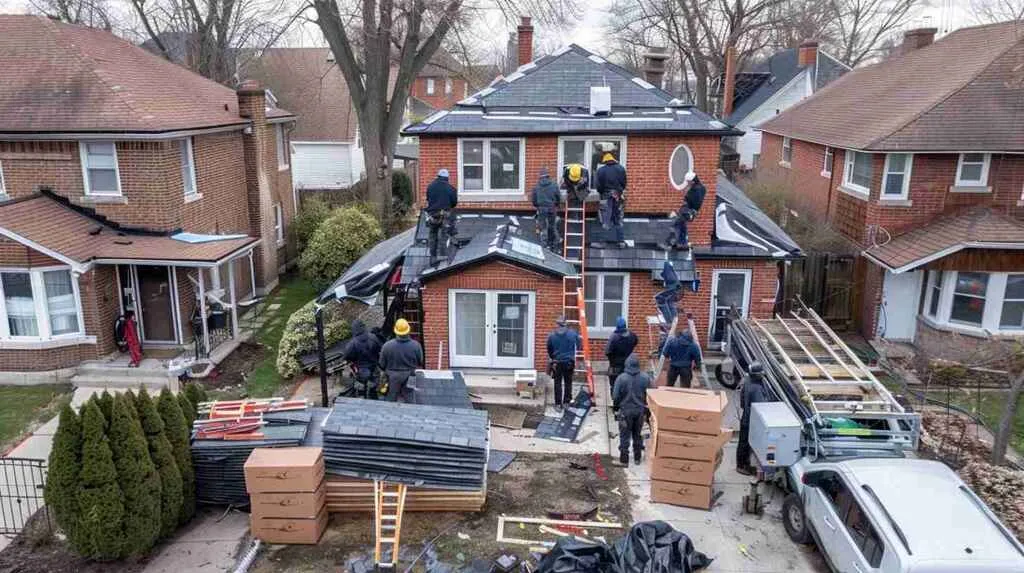
Hail Damage Shingle Roof Queens NY – Assess, Document, Repair | Free Quotes
Blueprint: The most expensive part of hail damage to a shingle roof in Queens isn’t the repair bill-it’s the hidden leaks insurance won’t cover once they decide the problem is “old” instead of storm-related. I approach every hail call like a forensic case because patterns don’t lie, and if you don’t document the evidence quickly, you lose the coverage window completely.
Blueprint: How Hail Really Damages a Shingle Roof in Queens, NY
On a typical Queens block with six attached homes in a row, I can promise you that after a hail event, the biggest financial loss isn’t visible from the sidewalk-it’s the water that’ll wick sideways under crushed shingles for months until your insurance adjuster labels it “wear and tear” instead of storm damage. I treat roofs like crime scenes: every dent, every bruise, every broken mat tells a story, and my job is to collect the evidence before the next rain destroys your narrative. I’ve got this habit of drawing circles and arrows on a scrap shingle with a Sharpie to show homeowners and adjusters exactly where hail landed, what it did, and why it matters to their claim-and honestly, that little diagram has saved more insurance approvals than any fancy software report.
One June afternoon in 2021, right after one of those freak 10‑minute hail bursts over Bayside, I climbed onto a split-level ranch while the deck was still wet and steaming in the sun. The homeowner, a retired NYPD officer, swore the roof was fine because he “didn’t see any holes.” I started showing him how the hail had crushed the granules on the north-facing slope, just above the gutter line, and we found a perfect diagonal trail of impact marks leading to a soft spot where water had already started wicking under a lifted shingle. That job taught me how often hail damage hides in the first two courses where people never look-and why sidewalk checks fail every time.
| Myth | Fact (Queens, NY Reality) |
|---|---|
| If I can’t see cracks or missing shingles from the ground, there’s no hail damage. | Most hail impacts on Queens roofs create internal mat fractures and granule loss that won’t show as visible cracks until weeks or months later-by which time your insurance claim window has closed. |
| Hail damage always causes immediate leaks. | The real danger is delayed failure: bruised shingles hold water under the surface, accelerate aging, and leak 6-18 months later when adjusters won’t connect it to the storm. |
| All hail damage looks the same-dents or punctures. | On architectural shingles common in Queens, hail creates circular bruises that feel soft when pressed, crushed granule patterns that expose the mat, and edge fractures that mimic wind damage if you don’t know what to look for. |
| I can wait a few weeks to get the roof inspected after hail-it’s not urgent. | Insurance carriers often require storm damage claims within 30-60 days, and patterns degrade with each rain and freeze cycle, making it harder to prove fresh impact versus age. |
| Any roofer can spot hail damage just by walking the roof once. | Reading hail patterns requires comparing directional impact zones, understanding shingle construction, and photographing evidence methodically-most emergency patch crews skip all three and miss 70% of the claim-eligible damage. |
Queens Hail Damage Patterns: What You Can (and Can’t) See
From a technical standpoint, I can tell you most hail damage I see isn’t obvious from the sidewalk. At 7:30 in the morning on a cold April day in 2018, I inspected a three-family in Jackson Heights where another contractor had already told the owner there was “no hail damage, just age.” The shingles were only six years old, and the pattern of circular bruises-mostly on the west roof plane facing the schoolyard-didn’t match normal wear at all. When I peeled up one compromised shingle to show the adjuster the broken mat underneath, he changed his report on the spot and the owner went from a denied claim to a full replacement. I still remember my fingers going numb from that wind while I held the shingle open so he could take his photos. Here’s what I’ve learned about Queens hail patterns: west- and north-facing slopes in neighborhoods like Jackson Heights, Bayside, and Ridgewood tend to show the most distinct hail patterns because of local wind and storm tracks, and adjusters change their minds fast when you can explain why one plane is hammered while the other three barely show marks.
Think of your shingle roof like a layered pastry-when hail hits, it doesn’t have to punch all the way through to ruin the structure. Zoom in close on a single impact: you’ll see a circular depression where granules have been crushed into the asphalt layer below, leaving the fiberglass mat exposed to UV and water. Press your thumb into that spot and it feels soft, almost spongy, because the internal layers have separated. That soft bruise won’t leak today, but freeze-thaw cycles over one winter will turn it into a crack, and by then your insurance carrier sees “deferred maintenance” instead of storm evidence. If you don’t document these patterns within days of the hail event, you’re gambling that the next adjuster will believe your timeline instead of his database.
| Roof Plane Orientation | Typical Hail Pattern Raul Sees | What Homeowners Often Think It Is |
|---|---|---|
| West-facing slope | Dense clusters of circular bruises in the upper third of the slope, heaviest near ridge vents and dormer edges where wind drives hail at steeper angles | “Manufacturing defects” or “spots where the shingles didn’t seal right” |
| North-facing slope | Linear trails of granule loss running diagonal from ridge to eave, often matching the direction hail was blown during the storm; broken mat visible under magnification | “The shingles are just old and losing granules naturally” |
| South-facing slope | Lighter, scattered impacts because storms typically come from northwest in Queens; damage concentrates around penetrations (vents, chimneys) where turbulence multiplies force | “Just a few bad shingles we can patch” |
| East-facing slope (protected by prevailing wind) | Minimal visible damage at first glance, but critical edge fractures where shingles overhang the rake and caught hail rebounds off siding or gutters | “Nothing wrong on this side, must have been lucky” |
Warning: Why Sidewalk or Attic-Only Checks Fail After Hail in Queens
By the time ceiling stains or shingle cracks are visible from the ground, granule loss and mat fractures from hail have often progressed past what insurance will consider fresh storm damage. The hail impact happened weeks or months ago, but the failure shows up later-and that gap is exactly what adjusters use to deny coverage. Attic checks only catch leaks that have already started; they don’t reveal the soft bruises and crushed granule patterns still sitting on your roof, slowly wicking water sideways under perfectly intact shingles. You need a roof-level forensic inspection with photos while the evidence is fresh, not a flashlight sweep from below after the damage has cascaded into secondary failures.
Step-by-Step: My Forensic Hail Roof Inspection & Documentation
I still remember standing on a Ridgewood roof in 30‑mph winds, realizing I’d made a mistake I couldn’t take back. The only time I’ve ever regretted trusting my gut was a late-night emergency call in Ozone Park after a summer hailstorm in 2015. It was 10:45 p.m., the streetlights were reflecting off wet cars, and a panicked landlord wanted to patch what he thought was a hail puncture causing a leak over his tenant’s bedroom. Up there with just a headlamp, I misread a poorly installed vent boot as hail damage, did a temporary patch, and left it at that-two weeks later we were back because the actual hail-bruised shingles upslope had finally split and started leaking. Since then, I never finish a hail damage call in the dark without scheduling a full daylight re-inspection. Here’s my insider tip: any emergency hail patch done at night should always be followed by a scheduled daylight pattern inspection, because true hail bruises often don’t show as clear cracks until days later when drying and thermal cycling reveal the internal damage.
I treat the roof like a crime scene now: I lay out a mental grid, mark impacts with circles and arrows on a scrap shingle so the homeowner can see what I’m seeing, and take photos at each slope angle for insurance. The pattern tells the story-dense clusters mean sustained bombardment from one direction, scattered hits mean brief exposure, and edge fractures tell me which way the wind was blowing hail against vertical surfaces. When I connect this forensic process to the adjuster’s report, claims get approved faster because the evidence is irrefutable: direction, density, fresh versus aged damage, all documented before the next storm can muddy the timeline.
Raul’s 6-Step Hail Damage Inspection & Documentation Process
Initial Phone Assessment & Storm Timeline
I ask when the hail hit, what size you saw, whether you heard impacts on gutters or cars, and if any neighbors reported damage-this builds the baseline timeline for your insurance claim before I even climb the ladder.
Ground-Level Pattern Survey (All Four Sides)
I walk the perimeter with binoculars, checking gutters for fresh granule piles, examining siding and window trim for impact dents, and noting which roof planes face the suspected storm direction-all before touching a shingle.
Roof-Level Grid Inspection (Daylight Only)
I divide each slope into mental sections-ridge, field, eave-and systematically look for circular bruises, crushed granule patterns, soft spots under thumb pressure, and edge fractures; I never skip the low-slope areas above gutters where damage hides.
Impact Marking & Shingle Evidence Collection
I grab a scrap shingle and draw circles with a Sharpie to mark representative impacts, then photograph each marked spot with a reference object (coin, ruler, my thumb) so the scale is obvious in the insurance photos-this is the “crime scene diagram” that wins claims.
Multi-Angle Photo Documentation Set
I shoot wide overviews showing the entire slope, mid-range shots of damage clusters, and extreme close-ups of individual bruises with exposed mat-always in bright daylight, never backlit, so adjusters can’t claim the photos are unclear or inconclusive.
Written Narrative & Repair Scope for Insurance
I deliver a PDF report that connects the storm date, pattern direction, impact density, and estimated repair scope (spot repair vs. full replacement), so your adjuster has everything they need to approve your claim without a second site visit.
🚨
Urgent: Call Immediately
- You see active water stains on ceilings or walls that appeared within 48 hours of the hail event
- Hail was golf-ball size or larger and you heard loud impacts on your roof, gutters, or cars
- You notice granules piling up in gutters or on the ground near downspouts right after the storm
- Neighbors on your block are already filing claims and you’re in the same storm path
- Your insurance carrier has a 30-day claim window and you’re already at day 15 or later
⏱
Can Wait a Few Days (But Don’t Ignore)
- Hail was marble-size or smaller but you still heard distinct impacts on metal surfaces
- Your shingles are older than 12 years and you’re worried hail accelerated existing wear
- You can see minor dents on aluminum gutters, siding, or vents but no obvious roof punctures
- A contractor mentioned “possible hail damage” during a routine inspection months after the storm
- You’re planning to sell the house in 6-12 months and want documentation for disclosure or pre-listing repair
What Hail Damage Repair or Replacement Really Costs in Queens
Here’s the blunt part nobody likes hearing: by the time you see a ceiling stain, the hail already won the first round. Early documentation often means more of the cost is covered by insurance because you can prove the timeline and pattern before secondary damage confuses the narrative. Pricing depends on how widespread the pattern is across your roof, not just one obvious impact-if hail bruised 40% of the west slope but you only patch the three shingles that cracked, you’re setting yourself up for another leak in eight months and zero insurance help the second time.
| Scenario | Typical Scope | Estimated Price Range (Queens, NY) | Insurance Involvement (Typical) |
|---|---|---|---|
| Isolated Impact Repair | 5-15 shingles replaced on one slope; minor flashing adjustment; no structural damage | $650-$1,400 | Often out-of-pocket; below most deductibles unless part of larger claim |
| Single-Slope Replacement | One roof plane (west or north) shows dense hail pattern; replace ~400-600 sq ft; match existing shingles if possible | $2,800-$5,200 | Covered if forensic documentation shows storm-specific pattern and timeline is fresh (under 60 days) |
| Two-Slope Partial Replacement | North and west planes compromised; south and east minimal; replace 800-1,000 sq ft; ridge cap and valley work included | $5,500-$9,800 | Usually covered after deductible if adjuster sees directional pattern proof; may require supplemental photos |
| Full Roof Replacement (Hail + Age) | All slopes damaged or shingles over 15 years old with hail acceleration; complete tear-off and re-roof; typical Queens 1,500-2,000 sq ft home | $11,000-$18,500 | Covered if impact evidence is documented across multiple planes; adjuster may depreciate for age unless Raul shows fresh mat fractures |
| Emergency Tarp + Delayed Full Claim | Immediate tarp after hail leak, followed by full inspection and claim filing; final scope depends on pattern findings | $400-$900 (tarp) + repair/replacement cost | Tarp often out-of-pocket; subsequent work covered if hail evidence is preserved and reported within carrier deadlines |
✓
Why Queens Homeowners Trust Shingle Masters for Hail Damage Claims & Repairs
Licensed & Insured in NY
Fully bonded with NYC Department of Buildings credentials and general liability coverage that protects your property during every inspection and repair.
19 Years on NYC Shingle Roofs
Raul started post-Hurricane Georges in Puerto Rico and has spent nearly two decades reading hail patterns, wind damage, and insurance disputes across all five boroughs.
Same-Day or Next-Day Storm Response
After major hail events in Queens, we prioritize emergency inspections within 24 hours so your evidence is fresh and your claim timeline starts immediately.
Insurance-Ready Photo Documentation
Every hail inspection includes a detailed photo set with impact markings, scale references, and a written narrative that adjusters from major carriers accept without delay or dispute.
Quick Self-Check, Then Let Me Handle the Evidence
If I walked your roof today and asked you where the hail hit hardest, what would you point to first? You don’t have to be the expert-you just need to do a quick safe self-check and call me for the forensic work.
✓ Before You Call: Safe Ground-Level Checks for Queens Homeowners
-
☑
Check gutters and downspouts for fresh piles of asphalt granules (looks like coarse sand) that weren’t there before the storm. -
☑
Walk around the house and look for dents on aluminum siding, window trim, garage doors, or AC units-if hail hit those, it hit your roof too. -
☑
Use binoculars from the sidewalk to scan the roof for any obvious missing shingles, lifted edges, or dark spots that might be exposed underlayment. -
☑
Check your attic during the next rainy day for new water stains on rafters, wet insulation, or daylight visible through the roof deck. -
☑
Note the storm date and hail size from local weather reports or your own observations-this timeline is critical for your insurance claim. -
☑
Ask neighbors if they’ve called roofers or filed claims-if three houses on your block are damaged, yours likely is too.
Frequently Asked Questions: Hail Damage to Shingle Roofs in Queens
❯
How soon after a hail storm should I get my Queens shingle roof inspected?
Ideally within 3-7 days of the hail event, while the evidence is fresh and before the next rain can obscure impact patterns or cause secondary damage. Most insurance carriers require claims within 30-60 days, but the sooner you document, the stronger your case. If you wait weeks or months, adjusters often argue that wear, UV exposure, or additional storms have altered the damage pattern, making it harder to prove the hail event caused the problem.
❯
What happens if hail damage was missed during the first inspection?
If the original inspection was done hastily, at night, or by someone without hail-pattern experience, you can request a re-inspection or supplemental claim as long as you’re still within your carrier’s reporting window. I’ve seen adjusters reverse denials when a second set of forensic photos clearly shows circular bruises, broken mats, and directional patterns that weren’t documented the first time. The key is proving the damage existed at the time of the storm, not that it developed later from normal wear.
❯
Do small hail dents on shingles really matter, or can I ignore them?
Small dents absolutely matter. Even marble-size hail can fracture the internal fiberglass mat and crush granules enough to expose the asphalt layer to UV and water. Over 6-18 months, those “minor” bruises turn into cracks, curling edges, and leaks-but by then your insurance carrier considers it aged damage, not storm damage. If you ignore them now, you’ll pay out-of-pocket later for repairs that could have been covered if documented immediately after the hail.
❯
How long does a professional hail damage inspection take on a typical Queens house?
For a standard 1,500-2,000 sq ft Queens home, my forensic hail inspection takes 45-90 minutes on-site: 15-20 minutes for ground-level survey, 30-50 minutes on the roof doing grid inspection and photo documentation, and another 10-15 minutes reviewing findings with you and marking representative impacts. Rush inspections done in under 30 minutes almost always miss critical damage patterns, so don’t trust anyone who says they can “eyeball it in ten minutes and give you a price.”
❯
Will my insurance cover hail damage if my shingles are older than 10 years?
Yes, but expect depreciation. Most carriers will pay for storm-related damage even on older roofs, but they’ll reduce the payout based on the roof’s expected remaining lifespan. If your shingles are 15 years old and rated for 25 years, the adjuster might depreciate 60% of the replacement cost and only cover 40%. However, if I can document that the hail created fresh mat fractures and bruises distinct from age-related wear, you stand a better chance of a higher settlement-because the damage is provably storm-caused, not just “time to replace anyway.”
Get Your Free Hail Damage Assessment in Queens Today
Don’t let undocumented hail impacts cost you thousands in denied insurance claims and future leaks. Call Shingle Masters now for a forensic hail damage inspection on your Queens shingle roof-I’ll document every impact like a crime scene, provide insurance-ready photos, and give you a clear repair or replacement plan with no surprises.
Licensed, insured, and trusted across Queens for 19 years • Same-day storm response available