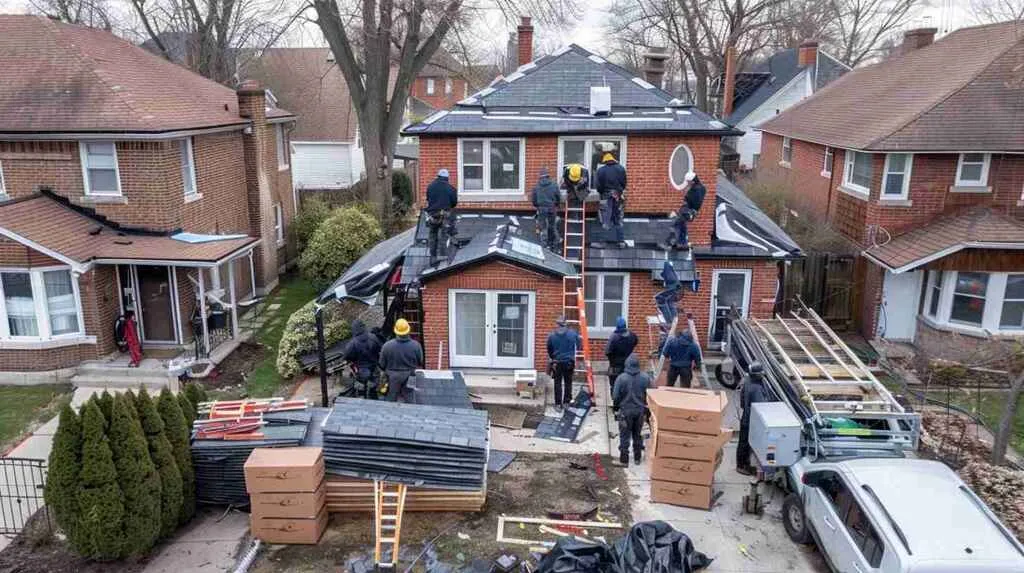
Hail Damage on Architectural Shingles Queens NY – What to Know | Call Today
Patterns. That’s what I see when I walk a Queens roof after a hailstorm – subtle circular bruises along rafter lines, diagonal bands of crushed granules, and soft spots you can’t spot from the sidewalk, each one a clue about exactly how the ice came down. By the time water drips through your bedroom ceiling or stains show up in the attic, most insurance carriers have already closed the door on that storm date, and you’re left paying for damage that could have been documented and covered weeks earlier.
What Hail Really Does to Architectural Shingles in Queens
On a typical Queens block, I can usually spot the first clue from the sidewalk: the way the light hits one slope differently after a hailstorm. But here’s my honest take – if you’re waiting to see a hole in your shingle, you’re waiting way too long. Most serious hail damage on architectural shingles isn’t visible from the street, and insurance deadlines move faster than leaks. I constantly frame hail damage like reading a crime scene – talking about impact “clues,” “patterns of attack,” and “suspects” like wind direction, hail size, and roof age – and every mark on an architectural shingle tells part of the story of what the storm really did to your house. When people call me expecting to point out missing shingles or obvious craters, I have to explain that the real damage is usually hiding in plain sight: fractured fiberglass mats, soft bruises that feel squishy under your palm, and granule loss that only shows under the right afternoon sun.
One July afternoon, right after one of those surprise hailstorms that hit Elmhurst around 3 p.m., I got called to a semi-detached house where the homeowner swore “only three shingles” were damaged. Up on the roof, I saw that the north-facing slope of their architectural shingles looked fine at a glance, but under the 5 p.m. sun, I caught a pattern of faint circular bruises right along the rafter lines. When I lifted a few shingles, the mat was fractured – not everywhere, just in a diagonal band. Insurance had already tried to deny their claim, but my photos and a simple chalk test changed the inspector’s mind and got them a full slope replacement instead of a useless patch. That job taught me something I tell every homeowner now: hail attacks in patterns, and reading those patterns before they turn into leaks is the difference between a claim and an out-of-pocket disaster.
Myth vs Fact: Hail Damage on Architectural Shingles in Queens
| Myth | Fact |
|---|---|
| “If I don’t see missing shingles from the sidewalk, my roof is fine.” | Architectural shingles can be badly bruised with fractured mats while looking “normal” from the street, especially on north-facing slopes in Queens. |
| “Hail damage always shows up as big obvious craters.” | In Queens, most storms leave small, soft bruises and granule loss that only show under the right light or with a close-up inspection. |
| “I’ll wait until it leaks, then call insurance.” | By the time leaks appear, many carriers’ hail claim windows have closed, especially if the storm was months ago. |
| “Architectural shingles are too thick to be hurt by smaller hail.” | Even mid-size hail can crush granules and crack the fiberglass mat, quietly shortening the shingle’s life. |
Simple Ways to Spot Possible Hail Damage Before You Call
When I meet a homeowner after a hailstorm, the first thing I ask is, “Has anyone actually walked your roof since it hit, or just taken pictures from the ground?” Most people haven’t climbed up – and honestly, on a steep three-story walk-up in Corona or a colonial in Bayside, that’s smart. But you can do a lot from the driveway. Check your gutters and downspouts for fresh piles of colored shingle granules; scan any metal surfaces you can see – downspouts, fascia covers, AC sleeves – for small circular dings. Walk around your house and look at siding, window sills, and balcony railings for chipped paint or tiny impact marks. In neighborhoods like Elmhurst and Howard Beach, where tree cover and exposure vary block by block, hail might pound one slope and skip another, so don’t assume your whole roof is fine if the front looks perfect. And if you see neighbors getting tarps or inspections on similar homes, that’s your sign to move.
I still remember a Saturday morning in Howard Beach, blue sky, cool breeze off the water, where a retired engineer walked the roof with me arguing that the small dents on his shingles were “just cosmetic.” I did my usual – ran my hand over the granules, showed him the crushed spots where the fiberglass mat flexed, and then I pointed to his gutter full of colored granules from that same hailstorm two weeks before. We pulled one “perfectly fine” architectural shingle, bent it in half, and he watched it crack along a hidden fracture line; that moment turned him from skeptic to someone who tells his neighbors not to wait after hail. The reality is that granules in gutters, soft dents you can press with your thumb, and shingles that reflect light differently are all early warnings, and catching them before they leak saves you money and headaches.
✓ Before You Call: Ground-Level Checks After a Queens Hailstorm
- → Look in gutters and at the bottom of downspouts for fresh piles of colored shingle granules.
- → Scan metal surfaces you can see – downspouts, fascia covers, metal awnings – for small circular dings.
- → Check window sills, AC sleeves, and balcony railings for chipped paint or tiny impact marks.
- → Walk around and look for shingles that reflect light differently or look “dusty” or scuffed on one slope.
- → Note any neighbors getting roof inspections or tarps on similar homes on your block.
- → Write down the date and time of the hailstorm and take a few wide photos of your house and yard conditions.
⚠️ Safety Warning: DIY Roof Walking & Quick-Patch Risks
Don’t climb a steep or multi-story Queens roof after a storm – wet architectural shingles and hidden bruises are slippery and unstable.
Avoid smearing roofing cement over suspected hail hits – it can void warranties and ruin evidence for an insurance adjuster.
Be cautious about out-of-town storm chasers offering free “instant fixes” without documenting damage properly first.
How I Document Hail Damage So Your Claim Holds Up
Here’s the thing about insurance adjusters: they respect a consistent story. The most convincing claims show photos of roof hits, metal dings, attic signs, and a clear diagram all tied to the same storm date. That’s why I walk every slope like I’m mapping a crime scene, chalking impact points, checking patterns of attack, and pulling out my notebook to sketch exactly where the damage clusters. I’ll inspect both the roof surface and the attic because moisture stains on the deck from below tell me if an old hail bruise has already started letting water through, and that changes whether we’re talking repair or emergency replacement. My reputation around Queens as the “pattern guy” comes from this obsessive attention to detail – I don’t just slap new shingles on and call it done; I trace the whole story so you and your carrier both understand what happened and why it matters.
Around 10 at night one spring, during a cold rain in Bayside, I got an emergency call from a landlord who said a “hail hole” was pouring water into the attic. When I climbed into the attic, I realized the actual hail damage had happened a year earlier during a storm in Flushing; what we were seeing now was the result of moisture slowly rotting the OSB under a cluster of impacted architectural shingles. That job went wrong for the previous contractor because they’d only swapped out the visibly cracked pieces, not the surrounding bruised shingles, and I ended up tearing off a whole section in the dark, tarping it, and rebuilding it properly two days later when the weather cleared. The lesson? Partial repairs around hidden bruises are risky, and documentation plus full-scope repair matter more than a quick cosmetic fix.
Shingle Masters Hail Damage Inspection & Documentation Process
Phone Intake – Confirm storm date, roof age, and immediate leak or ceiling stain issues; schedule an on-site visit.
Exterior Walk-Around – Photograph siding, gutters, soft metals, and neighboring roofs to establish hail impact patterns on your block.
Roof-Level Inspection – Walk every accessible slope, mark and photograph hail hits on architectural shingles, check ridge caps, vents, and flashing, and sketch a roof diagram noting damage clusters.
Attic & Structure Check – Inspect deck from below for dark spots, moisture, and previous patchwork; document any active leaks or rot linked to impact zones.
Documentation Package – Assemble labeled photos, diagram, and written summary you can share with your insurance adjuster, plus a clear repair or replacement estimate.
| Situation | Typical Timeline | Notes |
|---|---|---|
| No leaks, recent hailstorm (last 0-7 days) | Inspection within 24-72 hours | Best time to document fresh impacts and granule loss before weather and foot traffic disturb the evidence. |
| Minor ceiling stain, suspected past hail (weeks to months ago) | Inspection within 3-5 days | Still time to trace damage patterns and help with a claim if your carrier’s hail window is open. |
| Active dripping or visible interior damage during rain | Same-day emergency tarp if possible, full repair scheduled in 1-3 days | Focus first on stopping water intrusion, then completing a full assessment for structural damage and insurance documentation. |
Do You Need a Repair, a Full Slope, or Just Monitoring?
$14,000 later, that “cosmetic” hail damage didn’t look so minor anymore. The blunt truth is hail doesn’t usually announce itself with dramatic craters; it quietly shortens your roof’s lifespan one bruise at a time. Deciding between watch-and-wait, targeted repair, or full slope replacement depends on impact density, shingle age, and whether the fiberglass mat is fractured or just scuffed. If you’ve ever seen a chessboard, that’s how I think about a hail-damaged roof – every square tells you how the storm moved across your house, and each slope has its own story. A young architectural shingle roof with a handful of isolated hits might only need spot repairs and monitoring, but if I see clusters following rafter lines, soft bruises, and a roof that’s already midway through its life, then replacing the damaged slope (or the whole roof) is usually the smarter play than patchwork that voids warranties and fails in three years.
Targeted Repair
-
✓
Isolated hail hits (under 6-8 hits per 100 sq. ft.) on a relatively young architectural shingle roof -
✓
No visible mat fractures or soft bruises around each impact when gently pressed -
✓
No history of repeated hailstorms on the same slope in the last 2-3 years
Full Slope Replacement
-
✓
Clusters of hits follow rafter lines or form a clear pattern across one slope -
✓
Bruised areas feel soft, and lifted test shingles show cracked or broken mats -
✓
Roof is already midway or later in its life, and hail damage will likely void manufacturer coverage anyway
Call Shingle Masters ASAP
-
▸
You see active dripping or new ceiling stains during or right after a storm -
▸
Shingle pieces or large amounts of granules appear suddenly around downspouts -
▸
Neighbors on your block are getting roofs tarped after the same hailstorm -
▸
Your insurance company has notified you of a limited window to file a hail claim
Schedule an Inspection Soon
-
▸
You notice subtle scuffing or “dusty” patches on one slope but no leaks yet -
▸
Gutters or splash blocks show fresh granules, but the interior looks dry -
▸
Your roof is 10+ years old, and you’ve had at least one recent hailstorm in Queens
Queens Hail Damage Questions I Answer Every Week
These are real questions I hear in Corona, Bayside, Elmhurst, and Howard Beach after storms, and understanding the answers helps homeowners move faster and avoid losing claim opportunities.
Can hail damage my architectural shingles even if the hailstones were only the size of marbles?
Yes, absolutely. Even marble-size hail can crush granules, fracture the fiberglass mat underneath, and leave soft bruises that shorten the shingle’s life. In Queens, repeated impacts and wind-driven angles make the problem worse – it’s not just the size of the ice, but how many times it hits and from what direction. I’ve seen roofs with no dramatic craters still need full replacements because dozens of small impacts quietly destroyed the integrity of the mat layer.
How long do I have to file a hail claim in New York?
It depends on your policy, but most carriers give you 6-12 months from the date of loss. The catch is that you need documented proof – photos, diagrams, and a clear storm date – to back up your claim. If you wait six months and then call saying “I think hail hit my roof last spring,” adjusters will push back hard. That’s why getting a professional inspection with time-stamped photos within a few weeks of the storm is so important; it locks in the evidence while it’s fresh.
Will an inspection from Shingle Masters hurt my chances with insurance?
No – thorough documentation actually helps by clearly separating legitimate hail damage from normal wear and tear. When I walk a roof, I’m building a consistent story with labeled photos, a diagram, and notes about impact patterns that an adjuster can verify independently. Carriers respect evidence, and having a detailed third-party inspection often speeds up claims and prevents denials based on vague “cosmetic damage” arguments.
Do you only look at shingles, or do you check gutters and flashing too?
I check the entire system – shingles, ridges, vents, flashing, gutters, soft metals, siding, and the attic deck from below. Hail tells a story across the whole house, and to build a complete claim, you need to show consistent damage on multiple surfaces. Metal dings, granule piles, scuffed siding, and roof bruises all corroborate each other, and adjusters notice when everything lines up with the same storm date.
What if the adjuster says the damage is only “cosmetic”?
Functional damage means the shingle’s lifespan or waterproofing ability has been compromised – crushed granules that expose the mat, fractured mats that will leak sooner, or soft bruises that trap moisture. Cosmetic damage is purely visual with no impact on performance. When an adjuster claims bruises are “cosmetic,” I’ll walk the roof with them, lift shingles to show mat fractures, and point out patterns of attack that prove the damage is functional. In many cases, having a detailed inspection with close-up photos before the adjuster arrives changes the conversation completely.
Why Queens Homeowners Call Shingle Masters After Hail
Licensed & Insured in New York
Fully compliant with NYC and NYS requirements for roofing and exterior work.
18+ Years on Queens Roofs
From Corona and Elmhurst walk-ups to Bayside colonials and Howard Beach bungalows.
Fast Response After Storms
Priority scheduling for hail and leak calls, with same-day tarping when needed.
Insurance-Friendly Documentation
Photo sets, diagrams, and written reports tailored for adjusters, not just quick quotes.
If your Queens home has seen hail recently – or if you suspect hidden damage from a past storm – the safest move is a focused, documented inspection before deadlines close and hidden bruises turn into rotten decking and emergency tear-offs. Call Shingle Masters today to have Luis walk your roof, map the hail patterns in his notebook, and give you a straightforward plan for whether you need monitoring, targeted repairs, or a full slope replacement backed by insurance.