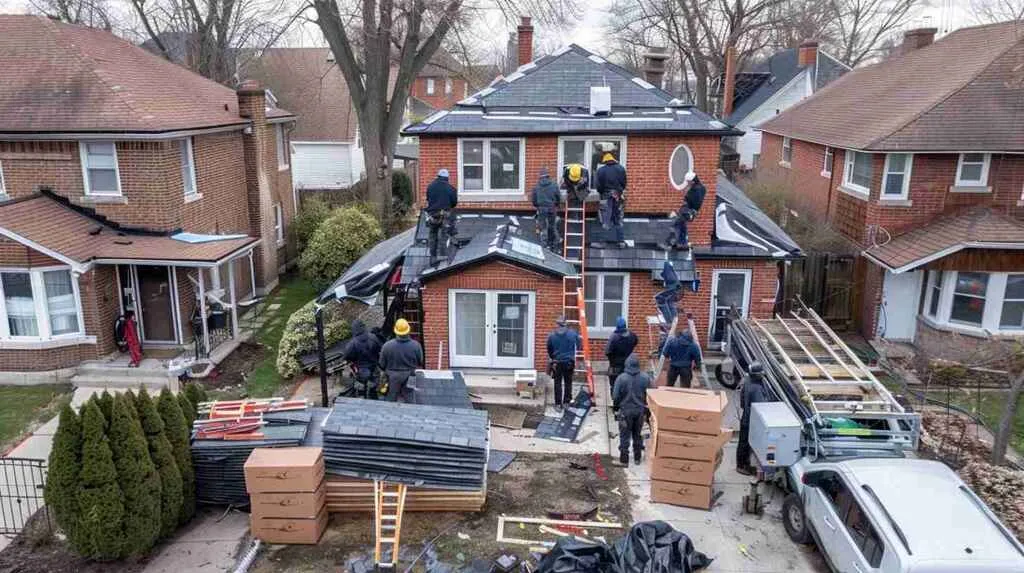
Does Algae Damage Roof Shingles Queens NY? What Roofers Say | Free Quotes
Magnified under a phone camera or from a second-story window, those dark streaks running down shingles don’t look like much more than dirt-but in Queens’ humid climate, they’re actually mapping out exactly where moisture settles and where your roof will age first. The algae itself isn’t drilling holes or ripping off shingles overnight, but here’s what I’ve learned after 19 years: it’s how homeowners react to that algae, or completely ignore it, that turns a $500 cleaning into a $12,000 replacement years ahead of schedule.
Does Algae Really Damage Roof Shingles in Queens, NY?
On a typical Queens block at 3 p.m., you’ll see it: every third roof with those dark, river‑like streaks sliding down the shingles. Homeowners ask me all the time whether algae is actually hurting anything or if it’s just ugly, and the honest answer is both-but not in the way most people think. The algae organism itself weighs almost nothing and doesn’t physically tear into asphalt the way ice or wind does. What it does do is show you a perfect heat map of where moisture lingers longest on your roof, and in those damp lanes the shingles age faster: granules loosen, asphalt softens in summer heat, and freeze-thaw cycles hit harder in winter. The real damage comes when folks either leave it alone for years until those lanes are visibly worn, or panic and blast the roof with a pressure washer that strips off more protective granules in an afternoon than ten years of algae ever would.
One August afternoon in Jackson Heights, it was about 94 degrees and the humidity felt like a wet blanket-I was inspecting a 12-year-old roof with those classic dark streaks the owner thought were “just dirt.” I peeled up one shingle in a shaded area to show him the underside, and you could actually see where the asphalt had started to pit and crumble under my fingernail, right along the path of the algae streak. That was the day I stopped calling it “cosmetic” in any shade; I saw in real time how algae plus trapped moisture had shaved years off a roof that should’ve gone another five easily. From that point on, I tell every Queens homeowner the same thing: those black streaks are like reading a damage map before the damage becomes obvious, and your job is to catch it early and clean it the right way, not the aggressive way.
| Myth | Fact |
|---|---|
| Algae is just dirt-it can’t hurt shingles | Algae itself is light, but it points to where moisture lingers and can speed up wear in those specific lanes over time. |
| If you have algae, you need a full roof replacement | Most algae-covered roofs in Queens can be cleaned and monitored if the granules are still mostly intact and there’s no widespread curling or cracking. |
| The harsher the cleaning, the better the result | High-pressure washing and strong chemicals can strip protective granules and do more damage than the algae ever would on its own. |
| Black streaks mean you have mold inside your home | Roof algae is an exterior surface issue and doesn’t automatically mean interior mold, though both are moisture-related and worth investigating separately. |
How to Read Those Black Streaks Like a Roof Damage Map
Let me put this bluntly: algae doesn’t have to destroy your shingles, but neglect and bad cleaning habits absolutely will. Around 7 a.m. one Saturday in Forest Hills, an older couple called me out after a home inspector threatened to tank their sale because of “mold infested shingles.” It had rained all night, the roof was still damp, and the black runs down the north side looked terrible in photos. I got up there, took close-up shots, and showed them on my tablet that it was algae, not mold, and more importantly, that the granules under the growth were already thinned out where the streaks were densest. We cleaned it properly, documented the condition, and I wrote a letter explaining that algae hadn’t structurally ruined the roof yet-but it was accelerating wear in predictable lanes. That letter saved their deal and convinced me how confusing this algae topic is for non-roofers. What most people don’t realize is that algae streaks almost always follow the same paths on Queens roofs: starting at the ridge, running down north-facing or heavily shaded slopes, following the coolest, dampest routes like water finding the easiest channel-it’s like a subway map of moisture.
I teach homeowners to see their roof surface as a weather map: the streak patterns show you where water lingers longest, where shade keeps things cool and damp through the afternoon, and where you can expect the shingles to start aging first. A thin, light-gray streak on the north side only? That’s early growth, granules are probably fine, and you’ve got time to plan. Dark, well-defined black rivers running from ridge to gutter? That’s established algae following moisture paths, and there’s likely some granule thinning happening underneath that you can’t see from the sidewalk. Very dark, wide streaks with a dull, almost patchy texture? That’s a red flag-possible granule loss and exposed asphalt along those lanes. And if you’re seeing those streaks overlapping with curled, cracked, or missing shingles, you’re past the algae-only stage and into combined age plus moisture damage that needs attention soon.
| What You See From the Sidewalk | What It Usually Means | How Soon to Call a Roofer (Queens Conditions) |
|---|---|---|
| Thin, faint gray streaks on north side only | Early algae growth, granules mostly intact | Schedule an inspection within 6-12 months |
| Dark, well-defined black rivers from ridge to gutter | Established algae following moisture paths, likely some granule thinning | Inspection within 1-3 months |
| Very dark, wide streaks with dull, patchy texture | Possible granule loss and asphalt exposure along those lanes | Call within 2-4 weeks |
| Streaks overlapping with curled, cracked, or missing shingles | Combined age + algae + potential leaks | Treat as priority and call within a few days |
Cleaning Algae: Safe Methods vs Roof-Killing Mistakes
I still remember the first time I realized those black stains were mapping out the weakest paths on a roof, almost like cracks on a subway map. The scariest algae job I’ve seen was a two-family in Flushing in early spring, right after a thaw, around 5 p.m. with the light hitting the roof just right. The owner had been power-washing those black stains every other year for a decade because his cousin told him that was the “cheap way” to deal with it. When I walked the roof, you could feel soft spots with each step along those washed areas-the granules were almost polished off, and in one valley I put my hand down and the shingle surface literally sloughed away like wet sand. He thought algae was the enemy, but it was really his aggressive cleaning of the algae that had done more damage than the growth itself. Here’s my insider tip, and I give this to every Queens homeowner who calls: insist on low-pressure cleaning, ask your roofer what PSI they’re actually using (it should be under 500-600 PSI for shingles), and verify they’re following the shingle manufacturer’s guidelines before anyone even touches your roof-and always, always test a small hidden area first.
The whole goal of cleaning algae is to remove the growth while preserving the protective granule layer that keeps your shingles waterproof and UV-resistant. Think of those granules as the tough outer fabric on a winter coat-they’re what stands between the elements and the asphalt core underneath. High-pressure washing or scrubbing with stiff brushes is like taking sandpaper to that fabric; you might get it clean, but you’ve weakened the material in the process and now the cold (or in this case, sun and rain) is going to get through a lot faster.
| Method & Pros | Cons & Risks |
|---|---|
|
High-pressure power washing • Fast results • Visibly removes dark stains immediately • DIY-friendly equipment rental |
• Strips protective granules off shingles • Can void manufacturer warranties • May force water under shingles, creating hidden leaks • Shortens overall roof lifespan significantly |
|
Bleach-heavy DIY mix and scrub brush • Inexpensive materials • Kills algae effectively on contact • Feels proactive and hands-on |
• Scrubbing loosens and removes granules • Strong bleach can weaken shingle adhesive over time • Runoff damages landscaping, kills grass and plants • Risk of falls and roof surface scuffing |
|
Low-pressure professional cleaning with manufacturer-approved solution • Preserves granule layer and shingle integrity • Safer for roof surface and warranty compliance • Protects landscaping with proper rinsing and barriers • Often includes inspection and documentation |
• Higher upfront cost than DIY approaches • Requires scheduling and coordination • May take longer to see full cleaning results |
⚠️ Roof-Damaging Algae Cleaning Mistakes to Avoid in Queens
- Using a pressure washer over 500-600 PSI directly on shingles, which blasts away protective granules
- Scrubbing shingles with stiff brushes that loosen and sweep away the granule layer
- Mixing strong bleach solutions without thoroughly rinsing gutters, downspouts, and nearby plants
- Walking repeatedly on warm, algae-slick shingles, creating scuffs, dents, and potential punctures
When Algae Means “Watch It” vs “Fix It” on Your Queens Roof
When I sit at a kitchen table in Bayside and ask, “Do you care more about appearances or lifespan?” most folks look at me like it has to be one or the other-it doesn’t. The right approach to algae on your Queens roof gives you both: a clean-looking surface and shingles that last their full expected life, sometimes even longer. The key is knowing when algae is just a cosmetic watch-and-wait situation versus when it’s signaling real wear that needs attention now. I walk homeowners through three simple decision cues: the age of the roof (under or over 15 years), the spread and density of the algae (light streaks versus thick, dark lanes), and the presence of other damage signs like curling edges, missing tabs, or piles of granules collecting in gutters and at downspout exits.
$650 spent on the right cleaning and minor repairs at year 12 can easily delay a $10,000-$15,000 full replacement by several seasons. Catching algae-related wear early, before it becomes structural damage, is one of the most cost-effective moves a Queens homeowner can make-period.
Decision Tree: Cleaning, Repair, or Replacement?
→ Is your roof under 15 years old?
YES: Are the shingles lying flat with no curling, cracking, or soft spots?
✓ YES: Likely a candidate for professional low-pressure cleaning and routine inspections.
✗ NO: Combine cleaning with targeted repairs in worn areas.
NO (over 15 years): Do you see widespread algae plus missing or brittle shingles?
✓ YES: Schedule a full roof evaluation; you may be approaching replacement.
✗ NO: Plan for cleaning and a 3-5 year replacement window, depending on inspection results.
Call a Roofer Soon (Within Days-Weeks)
- Dark streaks plus interior ceiling stains or water marks
- Soft or spongy spots when lightly walked by a professional
- Algae concentrated in valleys or around chimneys where leaks often start
Can Usually Schedule (Within Months)
- Light streaks on north slopes only, no other issues
- Even discoloration without curling, cracks, or missing tabs
- Algae noticed during a routine home inspection with no other red flags
Queens-Focused Maintenance Plan & What to Do Before You Call
Here’s an unglamorous truth nobody puts in the brochures: trapped moisture is the real villain; algae is just the graffiti that tells you where it lives. In Queens, where humidity hangs around from May through September, tree cover shades entire blocks, and a lot of the housing stock dates back 60-100 years with minimal attic ventilation upgrades, you’ve got the perfect recipe for moisture pockets on roofs. Those pockets are where algae thrives, and they’re also where shingles age the fastest-curling earlier, losing granules sooner, and eventually cracking or developing soft spots that let water through. Simple maintenance steps reduce both the algae growth and the underlying shingle stress: keeping gutters clear so water doesn’t back up under the lower edge, trimming back branches that keep sections of roof damp and shaded all day, and making sure your attic has decent airflow so heat and moisture aren’t cooking the shingles from below.
Think of your shingles like a good winter coat: a little dirt won’t kill it, but if you scrub the fabric raw every season, don’t be surprised when the cold starts getting through. A practical, Queens-specific maintenance rhythm looks like this: a quick visual check from the sidewalk or a safe window every spring and fall, looking for new or spreading black streaks and any obviously missing shingles; gutter cleaning at least once a year, twice if you’re near trees, with an eye out for excess shingle granules that signal wear; a professional roof inspection every 2-3 years or after any major storm, where a trained eye checks for granule loss along algae streaks, soft spots, and flashing issues; and professional low-pressure cleaning as needed when streaks are visible and verified as mainly algae, not structural failure. If you’re seeing algae on your Queens roof and you’re not sure whether it’s time to act or just keep an eye on it, calling a local shingle specialist like Shingle Masters for an eyes-on evaluation and a tailored plan is the smartest first step-you’ll get a clear answer, a photo-documented report, and a free quote with no pressure to sign anything on the spot.
| Task | How Often in Queens | What You’re Looking For |
|---|---|---|
| Quick binocular or smartphone zoom check from the sidewalk | Every spring and fall | New or spreading black streaks, missing or displaced shingles |
| Gutter cleaning | At least once a year (twice if you’re near trees) | Excess shingle granules in gutters and at downspout exits, indicating wear |
| Professional roof inspection | Every 2-3 years or after major storms | Granule loss along algae streaks, soft spots, flashing issues, signs of hidden leaks |
| Professional low-pressure cleaning | As needed when streaks are visible and verified as mainly algae | Effective stain removal without granule loss or surface damage |
✓ Before You Call a Queens Shingle Roofer About Algae
- Take 2-3 clear photos of the streaks from the sidewalk or a safe window
- Note which sides of the house (north, south, east, west) show the worst staining
- Check the approximate age of your roof from paperwork or past owners
- Look in gutters or at downspout bottoms for piles of shingle granules
- Check inside ceilings for any fresh stains, bubbling paint, or peeling
- Write down any prior cleaning methods used (power washing, chemicals, or none)
Why Queens Homeowners Call Shingle Masters for Algae and Shingle Issues
- 19+ years of hands-on shingle work across Queens neighborhoods-from Forest Hills to Flushing
- Licensed and insured in New York City, focused exclusively on asphalt shingle systems
- Same-week inspections available for algae and streaking concerns
- Written photo report showing where algae is cosmetic vs where it’s accelerating wear, plus free, no-pressure quote for cleaning or repairs
Common Algae and Shingle Questions from Queens Homeowners
Does my homeowner’s insurance cover algae removal on my shingles?
Most homeowner’s insurance policies treat algae as cosmetic maintenance, not a covered peril like storm damage or fire, so cleaning costs usually come out of pocket. However, if the algae has contributed to documented water damage-like a leak that’s stained ceilings or caused rot-your policy may cover the resulting repairs, though not the cleaning itself. It’s worth reviewing your specific policy language and taking photos to document progression if you’re concerned about future claims.
Will algae-resistant shingles stop this from ever happening again?
Algae-resistant shingles use copper or zinc granules embedded in the surface to slow algae growth, and they work especially well in humid areas like Queens by releasing trace amounts of metal ions when it rains. They won’t guarantee you’ll never see a single streak-especially if you have heavy tree shade or poor drainage-but they can reduce growth significantly and keep your roof looking cleaner for longer. Even with algae-resistant shingles, you’ll still want to stick to basic maintenance like keeping gutters clear and branches trimmed.
Can I just install zinc or copper strips at the ridge and ignore the rest?
Zinc or copper strips installed along the ridge can help reduce new algae growth on the slopes below by washing metal ions down the roof when it rains, and they’re a decent preventive measure if installed early. But they don’t restore granules that are already worn, fix existing damage lanes, or clean off established algae colonies-so if you’re already seeing thick black streaks, you’ll want to clean those first and then consider adding strips as part of your long-term maintenance plan.
How long does a professional algae cleaning usually take on a Queens house?
For an average single-family roof in Queens, professional algae cleaning typically takes anywhere from half a day to a full day, depending on roof size, access, the severity of the streaks, and weather conditions. A meaningful chunk of that time goes into setup-protecting landscaping with tarps, mixing and applying the cleaning solution carefully, and rinsing thoroughly without blasting shingles with high pressure. If your roof has multiple levels, steep pitches, or heavy tree overhang, expect the job to lean toward the longer end of that range.
A Queens roof streaked with algae is rarely an emergency if you catch it early, but it is a clear signal to get a professional eye on it before those cosmetic streaks turn into real wear, granule loss, and eventually leaks. Call Shingle Masters today for a photo-documented inspection and a free quote on safe algae cleaning, targeted repairs, or replacement options tailored to your specific Queens block-no pressure, just honest answers and a plan that makes sense for your roof and your budget.