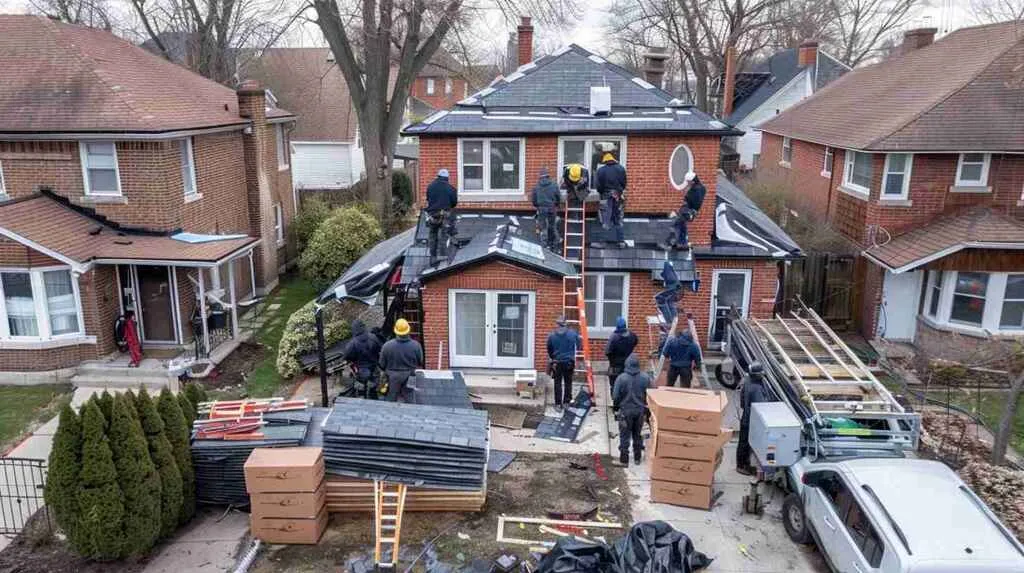
Assess Wind Damage to Asphalt Shingles Queens NY – Free Check | Free Quotes
Evidence of wind damage on Queens asphalt shingle roofs rarely announces itself with a parade of missing tabs – more often, it hides in plain sight, telling a quiet story most homeowners walk right past. I’m Lena Ortiz, and for 19 years I’ve been reading those stories on rooftops all over this borough, offering free on-roof checks and photo-documented quotes so you’re not left guessing from the sidewalk whether that last windstorm just shortened your roof’s life.
The Hidden Evidence of Wind Damage on Queens Asphalt Shingle Roofs
Evidence is what I look for – not drama, not obvious disaster, but the small, specific clues that wind leaves behind when it flexes shingles past what they’re designed to handle. Here’s my blunt opinion: if you only scan for missing shingles after a windstorm, you’re gambling with your house, because the worst damage I find often comes with every single tab still nailed down. Wind doesn’t have to rip anything off to wreck it; it just has to bend, lift, and crease the asphalt until those factory sealant strips crack and those granule-coated surfaces start to bruise.
On more Queens rooftops than I can count, the first thing I do is crouch down at the eave and look for granules piled in the gutter like someone dumped out a sandbag. One February morning in Flushing, I stood on a Colonial just after sunrise, the homeowner swearing the windstorm “did nothing” because he saw zero missing shingles. When I got close on the north slope, I found perfectly straight creases across several tabs – classic high-wind flexing – and micro-cracks running along those crease lines like fault lines on a map. I snapped photos, showed him the evidence, and two weeks later his insurance adjuster used my pictures to approve a full slope replacement he’d almost talked himself out of claiming.
The subtle clues wind leaves behind tell the story better than any missing tab ever could. Creased shingle tabs that fold and then relax back down become permanent weak spots, splitting open the first time water works under them during a rainstorm. Lifted but not missing shingles mean the sealant strips failed under uplift pressure, and now those tabs are flapping loose in every gust, waiting for the next storm to finish the job. Granule piles – those dark, sand-like heaps at the bottom of downspouts or along the gutter – point to fresh bruising where wind flexed the shingles hard enough to knock protective granules off the surface, exposing the fragile asphalt mat underneath to UV and water. Each of these clues is a sentence in the story your shingles are telling about what happened up there when the wind hit 40, 50, or 60 miles per hour.
✅ Subtle Signs Your Queens Asphalt Shingles May Have Wind Damage Even If None Are Missing
- ✅ Straight horizontal creases across shingle tabs – like someone folded them and laid them back down, often running in parallel lines on one slope
- ✅ Tabs that lift easily when gently tugged – the factory sealant strip has broken loose, and wind has already started the separation
- ✅ Fresh-looking granule piles in gutters or at downspouts – a sudden spike right after a windstorm, not the slow trickle of normal aging
- ✅ Shiny black asphalt exposed where granules used to be – bare patches that catch the light, especially near edges, ridges, or where tabs flexed
- ✅ Sealant strips that look cracked or split – visible when you lift a tab gently, showing the adhesive has failed along the strip
- ✅ Edge shingles at eaves and rakes slightly curled or uplifted – corners or edges that don’t sit flat anymore, even if they’re still nailed
| Myth | Fact |
|---|---|
| If I don’t see missing shingles, the windstorm didn’t hurt my roof. | Many of the worst wind issues I find are creases and loosened sealant with every shingle still in place. |
| Granules in the gutter are just normal aging, not storm damage. | A sudden spike in granules right after a windstorm points to fresh shingle bruising or flexing. |
| Only the side that faced the wind can be damaged. | Turbulence and uplift can flex shingles on leeward slopes too, especially near ridges and edges. |
| If it stopped leaking after the storm, I’m in the clear. | Wind can weaken shingles today and leaks may not show up for months as water slowly finds the new gaps. |
How I Systematically Assess Wind Damage on Asphalt Shingles in Queens
Here’s my blunt opinion: if you only look for blown-off shingles after a windstorm, you’re gambling with your house. I move through a Queens roof inspection the way I used to walk a crime scene when I did forensic photography for the NYPD – following one clue to the next, building a case from the ground up. Queens building stock gives me patterns I can count on: two- and three-story attached homes in Astoria and Jackson Heights, Colonials in Flushing, all sitting at heights and exposures that channel wind in predictable ways. Late one August evening in Astoria, I was on a small roof over a mom-and-pop grocery, checking what they thought was heat damage. Wind had peeled back the edge shingles months earlier, but someone had smeared black mastic along the edges like frosting to hide it. One gusty thunderstorm, water rode straight under that mess and into the store – they called me when the deli case lights started flickering. Standing there under the orange glow of the streetlight, I explained how that first edge failure in a wind event started the whole chain reaction, and if we’d caught it earlier with a systematic look, they’d have saved thousands.
I start every assessment with an exterior perimeter walk, scanning for the obvious but also watching debris patterns, checking soffits and siding for impact marks that tell me how hard the wind hit. Then I move to gutters and eaves, looking for those granule piles and bent drip edges. If I can safely get on the roof – and I stress that only a pro should be up there – I check each slope for creases, lifted tabs, sealant failure, and soft spots, paying extra attention to edges and ridgelines where wind pressure peaks. Next clue: the attic or top-floor ceilings, where new stains, damp insulation, or a musty odor can show me that water’s already finding its way through wind-compromised shingles. Finally, I document everything with dated photos and written notes that match each visible clue to wind direction and recent storm data, building an evidence file you can hand to your insurance company if needed.
Step-by-Step: How I Assess Wind Damage to Asphalt Shingles in Queens, NY
- Exterior perimeter walk-around – noting missing shingles, debris patterns, and checking soffits and siding for impact marks that show wind force
- Gutter and eave check – for fresh granule piles, bent drip edge, and lifted starter shingles at the bottom edge of the roof
- On-roof inspection (only by a pro) – checking for creases, lifted tabs, sealant failure, and soft spots; extra attention to edges and ridgelines
- Attic or top-floor ceiling check – for new stains, damp insulation, or musty odor, especially under upwind slopes
- Photo documentation and written notes – matching each visible clue to wind direction and recent storm data for insurance-ready evidence
| Wind Scenario | Likely First Damage Areas | What I Look For |
|---|---|---|
| Nor’easter with sustained 35-45 mph from the northeast | North and east eaves, rakes, and ridges on 2-3 story homes | Creased tabs near edges, lifted ridge caps, granules collected on downwind side |
| Summer thunderstorm microburst | Random patches on one slope, especially near roof penetrations | Isolated creases, torn sealant around vents, localized granule loss |
| Gusty 50+ mph winter front from the west | West-facing slopes and corners on taller attached homes | Edge shingles flexed back, flashing displacement, starter course loosening |
| Tropical storm remnants swirling over Queens | Multiple slopes, ridges, and transition lines | Mixed direction creasing, widespread loose tabs, compromised hip and ridge shingles |
Quick Self-Check: Is Your Queens Roof Telling a Wind Damage Story?
When I walk into a home after a wind event, the first question I ask is, “Where did you first notice something sounded or felt different?” That answer – a flapping noise over the nursery, a new drip near the bathroom fan, a whistling sound during gusts – gives me a starting point for tracing the clues your roof is already telling. Before you call, you can do a safe, ground-level self-check that won’t put you at risk on a ladder or steep pitch. A few years back, during one of those freak April windstorms, I got a late-night call from a young couple in Jackson Heights who heard flapping over the nursery. When I climbed up the next day, the shingles all looked fine from a distance, but when I tugged on the tabs, half of them popped right up because the factory adhesive had never bonded properly and wind finally exploited it – the baby’s room ceiling had a faint water ring just starting. That kind of early clue, that sound or that first small stain, shouldn’t be ignored. Here’s my insider tip: if you hear flapping over a specific room during gusts, write down the room and the wind direction; that detail helps me pinpoint exactly where wind uplift started.
✅ Safe Wind-Damage Self-Check for Queens Homeowners Before Calling Shingle Masters
- ✅ Walk the perimeter and look for shingles that look crooked, lifted, or out of line
- ✅ Check the base of downspouts for fresh-looking piles of dark roof granules
- ✅ Look at ceilings under upper floors for new stains, rings, or bubbling paint
- ✅ Note any new drafts, whistling, or flapping sounds during wind
- ✅ Inspect around skylights and chimneys from inside for damp spots or musty odors
- ✅ Look at neighbors’ roofs – if they have visible damage after the same storm, your roof should be checked too
- ✅ Write down the date and time of the wind event and any noises or leaks you noticed to share with your roofer
Should You Call Shingle Masters for a Wind Damage Inspection Now or Wait?
START: Did you notice any new noises (flapping, banging) from the roof during or after a recent windstorm?
- → YES: Is there any visible interior staining, dripping, or musty odor near ceilings or top-floor walls?
- → YES: Call immediately for urgent inspection
- → NO: Do you see granule piles or any shingles that look lifted or creased from the ground?
- → YES: Schedule a free on-roof inspection within a few days
- → NO: Was the storm reported with gusts over 40-50 mph in Queens?
- → YES: Consider scheduling a precautionary free check, especially if your roof is 10+ years old
- → NO: Monitor for changes but you can wait and recheck after the next major wind event
- → NO: If no new noises and no recent strong wind, routine annual inspection is usually sufficient
In under 24 hours of steady rain after a windstorm, a single creased shingle can turn into a visible ceiling stain. That’s why I tell Queens homeowners not to wait for the next storm to find out how bad the last one was.
When Wind Damage Is an Emergency vs. Can Wait a Few Days
The uncomfortable truth is that wind doesn’t need to rip shingles off to wreck them; it just needs to bend them past what they’re designed to handle. Once those asphalt tabs crease or the sealant strips crack open, you’re on borrowed time before the next rainstorm – and Queens gets plenty of those. Some wind damage means imminent leak risk: exposed sheathing, sagging deck sections, active dripping, or large areas of flapping shingles all demand same-day attention because water’s already finding its way in or will the moment it rains. Other damage is serious but not a middle-of-the-night crisis – creased tabs without leaks yet, small granule piles, occasional flapping sounds – these still need a professional look within a few days before the problem escalates.
Shingle Masters offers free checks and can prioritize urgent Queens calls, getting someone out the same day if you’ve got active leaks or visible structural sagging. If your roof shows mildly compromised shingles – creases, lifted tabs, or subtle granule loss – we’ll usually schedule you within a few days, depending on the weather and call volume. Here’s the thing: waiting too long turns easy, insurance-covered repairs into structural nightmares that cost thousands more and take weeks to fix. Think of your shingle roof like a deck of cards in a stiff breeze – if the edge card starts to lift, the rest are suddenly a lot easier for the wind to pick up, and that cascading failure doesn’t wait for your schedule.
🚨 Call ASAP (Same Day / Emergency)
- Active leak or dripping inside after a wind event
- Sagging or visibly warped roof deck areas
- Large section of shingles visibly flapping or missing
- Strong musty odor suddenly appearing in top-floor rooms
- Exposed wood sheathing visible from the ground
📅 Can Usually Wait a Few Days
- Creased shingles but no leak yet
- Small granule piles that started after a specific storm
- Occasional flapping noise without visible ceiling stains
- Neighbors with storm damage but your roof only shows subtle lifting
- Roof older than 12-15 years that went through a 40-50 mph storm with no obvious leaks
⚠️ Warning: Dangers of DIY Roof Inspections and Temporary Fixes After Wind Damage
Do not climb onto steep or two-story roofs after a storm. Queens roofs get icy, wet, and slippery fast, and falls are the leading cause of homeowner injuries during post-storm inspections. Do not smear roofing cement or tar over suspected wind damage – you’ll trap moisture under sloppy patches and make it impossible for an inspector or adjuster to see the real evidence. Do not nail down lifted tabs without understanding why they lifted – you may void manufacturer warranties, complicate insurance claims by altering the damage, or just make the problem worse by driving nails through already-compromised shingles. Let a licensed pro document and repair it the right way.
What to Expect from a Free Wind Damage Check and Quote in Queens, NY
I still remember a Tuesday afternoon in Woodside when a homeowner swore his roof was “solid” because he’d “seen worse on YouTube.” He’d watched a couple of storm-chaser videos and convinced himself that since his shingles weren’t ripped clean off, there was nothing to worry about. When I got up on his roof with my camera, I found a grid of creases across the north slope, lifted tabs all along the ridge, and granule piles in both gutters – clear wind damage that would have turned into leaks by the next nor’easter. I walked him through every photo on my tablet right there on his driveway, showed him exactly where the wind had flexed the shingles beyond their design limit, and explained his repair options in plain English. That’s the structured, photo-documented inspection that changed his mind and saved him from a ceiling full of water stains.
When you schedule a free check and quote with Shingle Masters, here’s exactly what happens: we arrive on time, I or one of my trained techs climbs onto your roof with a camera and checklist, and we systematically document every clue – creases, lifted tabs, granule loss, sealant failure, soft spots. We take dated, high-resolution photos of each issue, then come back down and walk you through what we found in plain English, right there on the ground or at your kitchen table. You’ll see the story your shingles are telling about the recent wind event, and if work is needed, you’ll get a clear written estimate that breaks down materials, labor, and timeline. Our goal isn’t to upsell you – it’s to decode the evidence your roof is showing us and give you honest options so you can make an informed decision about repairs, insurance claims, or just monitoring things for now.
Shingle Masters Wind Damage Inspection Basics in Queens
Service Area
All Queens neighborhoods including Astoria, Flushing, Jackson Heights, Woodside, Forest Hills, and nearby
Inspection Cost
Free on-roof wind damage checks for asphalt shingle roofs
Typical Visit Length
About 45-75 minutes on site, depending on roof size and access
Scheduling
Same-day or next-day appointments often available after major wind events
Why Queens Homeowners Trust Shingle Masters for Wind Damage Assessments
- ✓ Licensed & Insured in New York State – Fully compliant with NYC and state requirements
- ✓ 19+ Years on Queens Roofs – Specialized in reading wind damage on asphalt shingles
- ✓ Forensic-Style Photo Reports – Clear, dated photos you can send to your insurance company
- ✓ No-Pressure Quotes – We explain options; you decide when to move forward
- ✓ Emergency Response – Priority scheduling for active leaks after windstorms
Common Questions About Wind Damage Checks and Insurance in Queens
If I don’t see missing shingles, will insurance still take wind damage seriously?
Yes – documented creases, lifted tabs, and granule loss tied to a specific dated wind event can absolutely support a claim. I’ve worked with dozens of Queens adjusters over the years, and the photo evidence I provide – showing exactly where wind flexed the shingles, where sealant strips cracked, and where granules piled up after a documented storm – often makes the difference between a denial and an approval. Insurance companies care about cause and proof, not just drama.
How soon after a windstorm should I schedule an inspection?
If you notice visible issues – flapping, leaks, missing shingles – call within a few days so we can document fresh damage before another storm complicates the picture. For precautionary checks, within one to two weeks is fine, especially if your roof is over ten years old or you know Queens had gusts above 40-50 mph. The sooner we document it, the clearer the evidence trail for you and your insurer.
Can you meet or coordinate with my insurance adjuster?
Absolutely. I’ve met adjusters on Queens roofs more times than I can count, pointing out the same creases, lifted tabs, and granule evidence I documented for the homeowner. I’ll provide a detailed photo report you can submit on your own, or if your adjuster wants to schedule a joint inspection, I’m happy to walk them through exactly what the wind did and why it matters.
Do you only work on asphalt shingles?
This wind damage assessment service focuses specifically on asphalt shingle roofs, which is what I’ve specialized in for 19 years and know inside-out. If you have a different roof type – metal, tile, flat membrane – I’m happy to refer you to trusted local contractors who know those systems as well as I know shingles.
What if you don’t find any serious wind damage?
Then you get peace of mind and documentation of your roof’s current condition at no cost. I’ll still take photos, note the overall health of your shingles, and give you recommendations for future monitoring or maintenance. You’re not out anything, and you’ll know exactly where your roof stands going into the next storm season.
Every crease, lifted tab, and granule pile is part of a story your roof is telling about the last windstorm – a story most people can’t read from the ground but that could mean the difference between a quick repair and a flooded ceiling. Shingle Masters can decode that story with a free, photo-documented inspection anywhere in Queens, giving you the evidence you need to make smart decisions about repairs, insurance claims, or just knowing your home is safe. Don’t wait for the next nor’easter to rewrite that story into a leak – call Shingle Masters today or request your free on-roof check online, and let’s see what your shingles have been trying to tell you.